
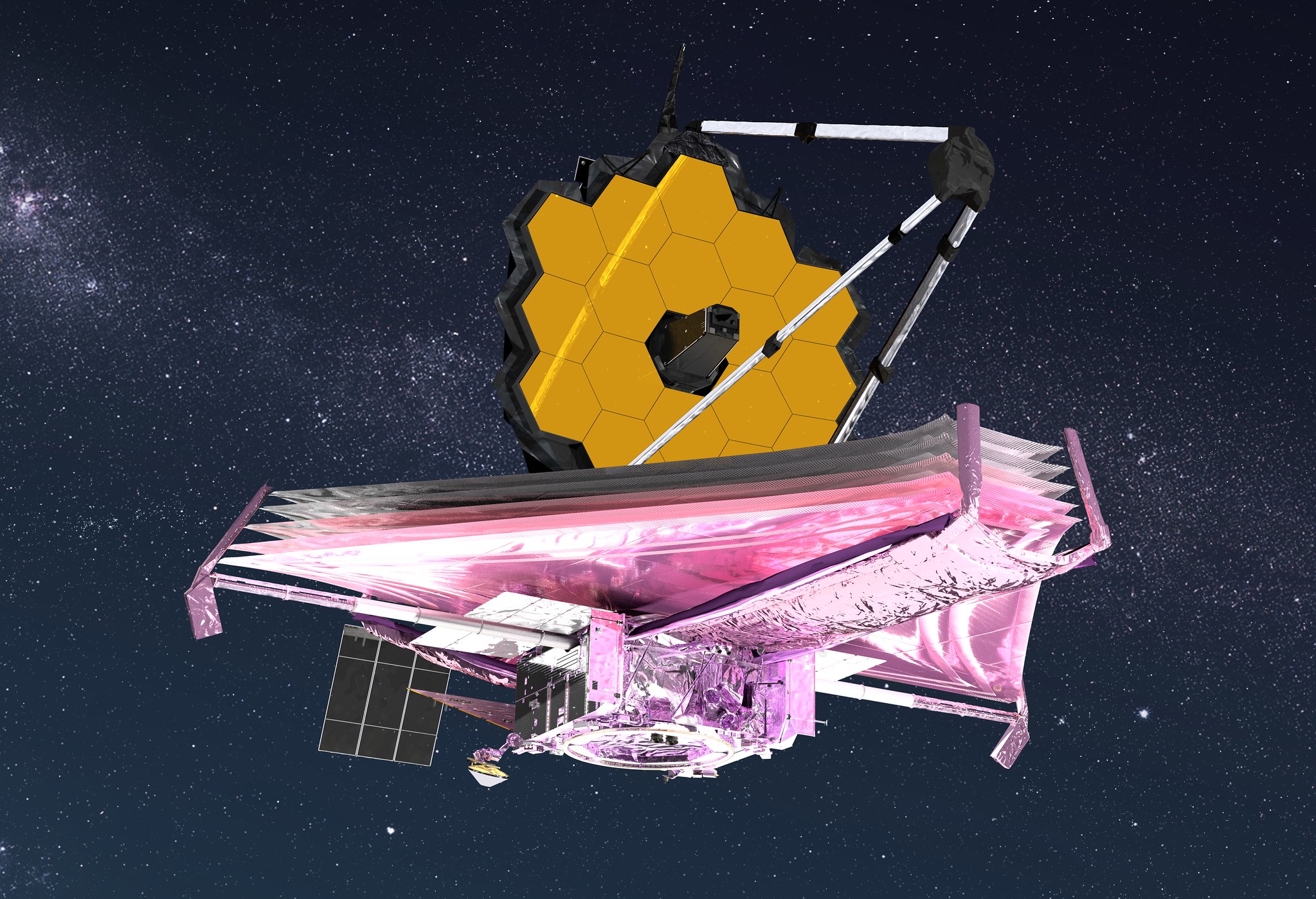
NASA’s James Webb Space Telescope (JWST) is one of the most ambitious space science projects ever undertaken. Launched on December 25, 2021, it is the successor to the famous Hubble Space Telescope, and its mission is to study the earliest stars, galaxies, and other objects in the universe, looking farther back in time than ever before.
With its powerful instruments and unique location in space, Webb is helping scientists unlock mysteries about the origins of the universe and the formation of celestial bodies.
Launch and Journey to Space
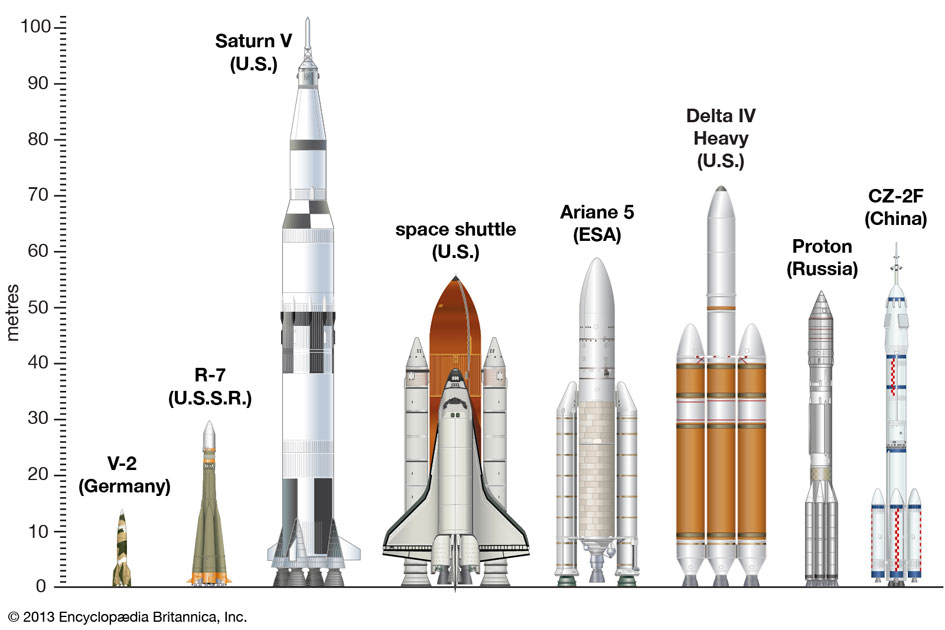
James Webb was launched aboard an Ariane 5 rocket from French Guiana. The launch was the result of years of planning, engineering, and international collaboration.
Key points about the launch and journey:
- The telescope was carefully folded to fit inside the rocket’s fairing.
- It traveled nearly 1 million miles (1.6 million km) to reach its observing spot.
- The journey included a series of carefully timed deployments, including unfolding the sunshield and mirror segments.
Every step of this journey was critical because even a small mistake could affect the telescope’s operation.
Observing Spot: Lagrange Point 2 (L2)
JWST is positioned at Lagrange Point 2 (L2), a unique spot in space about 1 million miles from Earth.
L2 is special because:
- It allows the telescope to remain in a stable orbit relative to Earth and the Sun.
- It provides a cold and dark environment, ideal for infrared observations.
- It minimizes interference from Earth’s heat and light, improving the telescope’s sensitivity.
This location is unlike Hubble, which orbits much closer to Earth, and allows Webb to see the universe in ways Hubble cannot.
Size and Power
James Webb is the largest and most powerful space telescope ever launched. Its most notable features include:
- Primary mirror: 21 feet (6.5 meters) in diameter, made of 18 hexagonal segments.
- Sunshield: About the size of a tennis court, protecting the telescope from heat.
- Instruments: Advanced infrared cameras and spectrographs that detect faint light from distant objects.
The size and sensitivity allow JWST to detect light from stars and galaxies formed just a few hundred million years after the Big Bang.
Science Goals
The main goal of James Webb is to explore the early universe, but its capabilities extend to many areas:
- Early Galaxies and Stars: Study the first galaxies and how they formed.
- Exoplanets: Observe atmospheres of planets outside our solar system.
- Star Formation: Understand how stars and planetary systems form from gas and dust.
- Cosmic Evolution: Track how galaxies, stars, and planetary systems have changed over billions of years.
Webb’s infrared vision allows it to see objects hidden behind dust clouds, giving scientists a clearer picture of the universe.
How Infrared Helps
Webb is an infrared telescope, meaning it sees heat rather than visible light. This is important because:
- Early galaxies are extremely far away, and their light is stretched into infrared wavelengths.
- Infrared can pass through dust that blocks visible light, revealing hidden stars and planets.
- It allows scientists to measure chemical compositions and temperatures of distant objects.
This gives a more complete understanding of the universe than telescopes that only see visible light.
International Collaboration
JWST is a result of cooperation between NASA, the European Space Agency (ESA), and the Canadian Space Agency (CSA).
- NASA: Led the project, built the spacecraft and instruments.
- ESA: Provided the Ariane 5 launch vehicle and some scientific instruments.
- CSA: Contributed key instruments for precision measurements.
This collaboration brought together expertise, technology, and funding from multiple countries.
Engineering Challenges
Building and launching JWST was extremely challenging. Engineers had to solve problems that Hubble never faced, including:
- Folding and unfolding a massive sunshield in space.
- Aligning 18 mirror segments to act as a single mirror.
- Keeping instruments extremely cold to detect faint infrared light.
Success required years of testing, careful design, and meticulous attention to detail.
First Images and Observations
Once fully deployed and calibrated, JWST began capturing images and data. Some of its early observations include:
- Distant galaxies formed shortly after the Big Bang.
- Detailed views of star-forming regions obscured by dust.
- Exoplanet atmospheres, revealing water vapor and chemical signatures.
These images are already reshaping our understanding of the universe.
Importance for Astronomy
James Webb is transforming astronomy by:
- Pushing the boundaries of how far back in time we can see.
- Allowing detailed study of exoplanets and their potential habitability.
- Revealing processes hidden from Hubble, like early star formation in dust clouds.
- Providing data for new theories about galaxy evolution and cosmic history.
It is expected to remain operational for at least a decade, producing discoveries for many years.
Comparing Webb to Hubble
Hubble and Webb have different strengths:
| Feature | Hubble | JWST |
|---|---|---|
| Orbit | Low Earth Orbit | L2, 1 million miles away |
| Light range | Visible & UV | Infrared |
| Mirror size | 2.4 meters | 6.5 meters |
| Focus | Near and distant universe | Earliest stars & planets, dust-obscured regions |
| Launch | 1990 | 2021 |
While Hubble revolutionized visible-light astronomy, JWST is extending our reach into the infrared universe.
Future Discoveries
The potential discoveries with JWST are immense:
- Finding the very first stars and galaxies.
- Learning more about exoplanet atmospheres and potential life.
- Understanding how stars and planets form.
- Studying the chemical composition of the early universe.
These insights will answer some of the biggest questions about the origin and evolution of the cosmos.
Public Engagement
NASA shares JWST discoveries widely, inspiring the public and students around the world. Early images have captured global attention, showcasing:
- Stunning galaxy clusters
- Star nurseries in vivid detail
- Exoplanets with complex atmospheres
The mission is also encouraging interest in STEM fields and international collaboration.
Challenges Ahead
Although JWST is operational, scientists face challenges:
- Processing and interpreting huge amounts of data.
- Coordinating multiple research teams worldwide.
- Maintaining the telescope remotely over millions of miles.
These challenges are expected, and the teams are well-prepared.
Legacy of James Webb
JWST is building a legacy that will last for generations:
- Expanding our understanding of the universe’s earliest moments.
- Complementing and extending the work of Hubble.
- Demonstrating what international collaboration can achieve.
- Inspiring new generations of scientists, engineers, and space enthusiasts.
It is a defining telescope for the 21st century.
Conclusion
The James Webb Space Telescope is more than just a telescope—it is a window into the earliest history of the universe. From its launch on December 25, 2021, to its current position at Lagrange Point 2, JWST is providing unprecedented insights into the formation of stars, galaxies, and planets.
Its powerful infrared instruments, large mirror, and careful engineering allow scientists to peer back farther than ever before. Every image and observation brings humanity closer to answering fundamental questions about where we come from and what the universe looks like in its earliest stages.
Read Also: Keep your face towards the sunshine and shadows will fall behind you
Watch Also: https://www.youtube.com/@TravelsofTheWorld24





Leave a Reply