
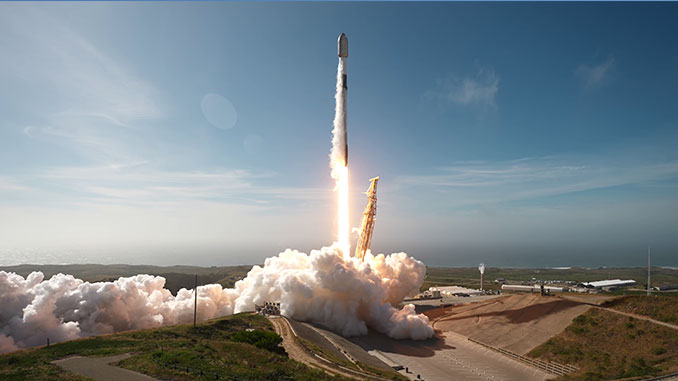
The pace of space activity keeps increasing, and once again SpaceX has taken another big step by launching a fresh batch of internet satellites into orbit. This launch, carried out from the west coast of the United States, is part of the company’s ongoing effort to expand its global internet network known as Starlink.
These missions may seem routine now, but each one plays a very important role in building a system that aims to provide fast internet access across the entire planet—even in remote and hard-to-reach areas.
Let’s break everything down in a simple way so you can understand what happened, why it matters, and what it means for the future.
What Happened in This Launch?
In this mission, SpaceX sent a group of Starlink satellites into low Earth orbit using its trusted rocket, the Falcon 9.
The rocket lifted off smoothly from Vandenberg Space Force Base, which is commonly used for missions heading into polar orbits. These types of orbits allow satellites to cover more of the Earth’s surface over time.
After liftoff:
- The rocket climbed into space
- The first stage booster separated and returned to Earth
- The upper stage carried the satellites into orbit
- The satellites were deployed in a controlled sequence
Everything went according to plan, showing once again how reliable these missions have become.
What Is Starlink?
Starlink is a satellite-based internet system designed to provide high-speed internet anywhere on Earth. Instead of relying only on ground-based towers or cables, it uses thousands of small satellites orbiting the planet.
These satellites work together to:
- Send and receive internet signals
- Connect remote areas
- Reduce delays in communication
- Provide coverage where traditional internet is not available
This makes Starlink especially useful in rural regions, oceans, deserts, and disaster zones.
Why Launch So Many Satellites?
You might wonder why SpaceX keeps launching new batches of satellites again and again. The reason is simple: the system needs a large number of satellites to work properly.
To provide global coverage, Starlink requires:
- Thousands of satellites working together
- Backup satellites in case of failure
- Continuous upgrades with newer technology
Each launch adds more satellites to the network, improving speed, coverage, and reliability.
The Role of Falcon 9
The Falcon 9 rocket is the backbone of these missions. It is one of the most advanced and cost-effective rockets in operation today.
Its biggest advantage is reusability. After launching the satellites, the first stage booster returns to Earth and lands safely, either on land or on a drone ship in the ocean.
This reuse helps:
- Reduce costs
- Increase launch frequency
- Make space travel more sustainable
Because of this, SpaceX can launch satellites more often than most other companies.
Why Launch from the West Coast?
Launching from the west coast, especially from Vandenberg, is ideal for certain types of orbits.
Polar orbits allow satellites to:
- Pass over both the North and South Poles
- Cover the entire Earth over time
- Provide better global coverage
This is important for a system like Starlink, which aims to serve users worldwide.
How the Satellites Work
Once in orbit, the satellites don’t start working immediately. They go through several steps:
- They deploy their solar panels
- They adjust their position using onboard thrusters
- They move into their assigned orbit
- They begin communicating with ground stations
Over time, they become part of the larger Starlink network.
Benefits for People on Earth
Starlink is already being used in many parts of the world. It offers several benefits:
1. Internet in Remote Areas
People living in villages, mountains, or islands can access fast internet.
2. Emergency Communication
During natural disasters, when normal networks fail, Starlink can provide backup connectivity.
3. Support for Businesses
Companies in remote locations can stay connected and operate more efficiently.
4. Education and Healthcare
Students and doctors in underserved areas can access online resources and services.
Growing Competition
SpaceX is leading the satellite internet race, but other companies are also working on similar systems. This includes projects from different countries and private companies.
However, SpaceX has a strong advantage because:
- It launches its own satellites
- It controls its rocket system
- It has already deployed thousands of satellites
This gives it a big head start.
Concerns and Challenges
While Starlink is impressive, it also comes with some concerns:
Space Debris
With thousands of satellites in orbit, there is a risk of collisions.
Astronomical Impact
Some scientists worry that bright satellites can affect observations of the night sky.
Regulation
Different countries have different rules about satellite internet services.
SpaceX is working on solutions, such as making satellites less reflective and improving tracking systems.
A Fast-Paced Launch Schedule
One of the most interesting things about SpaceX is how often it launches rockets. Starlink missions happen regularly, sometimes multiple times a month.
This fast pace helps:
- Build the network quickly
- Replace older satellites
- Test new technologies
It also shows how much the space industry has evolved in recent years.
What Makes This Mission Important?
Even though this is one of many Starlink launches, it is still important because:
- It adds more satellites to the network
- It improves global coverage
- It supports millions of users worldwide
Each launch brings the system closer to full operation.
The Future of Starlink
Looking ahead, SpaceX plans to:
- Launch even more satellites
- Improve internet speeds
- Expand services to more countries
- Introduce new technologies
There are also plans to use larger and more advanced satellites in the future.
A Step Toward Global Connectivity
The idea of providing internet to the entire world is a big goal. Starlink is one of the first systems trying to make this a reality on a large scale.
If successful, it could:
- Reduce the digital divide
- Connect underserved communities
- Support global communication
This makes it more than just a space project—it’s a global infrastructure effort.
Public Interest and Excitement
Every SpaceX launch attracts attention from people around the world. Many watch live streams of the launch and landing.
The sight of a rocket lifting off and then landing again is still exciting, even after many successful missions.
It also inspires interest in science and technology, especially among young people.
Conclusion
The recent launch of a new batch of Starlink satellites from the west coast shows how quickly space technology is advancing. With the help of the Falcon 9 rocket, SpaceX continues to expand its satellite internet network and move closer to its goal of global coverage.
These missions may happen often, but each one is an important piece of a much larger plan—to connect the world in a way that was not possible before.
From remote villages to busy cities, the impact of Starlink is already being felt, and it will only grow in the coming years.
Read Also: Keep your face towards the sunshine and shadows will fall behind you
Watch Also: https://www.youtube.com/@TravelsofTheWorld24









Leave a Reply