
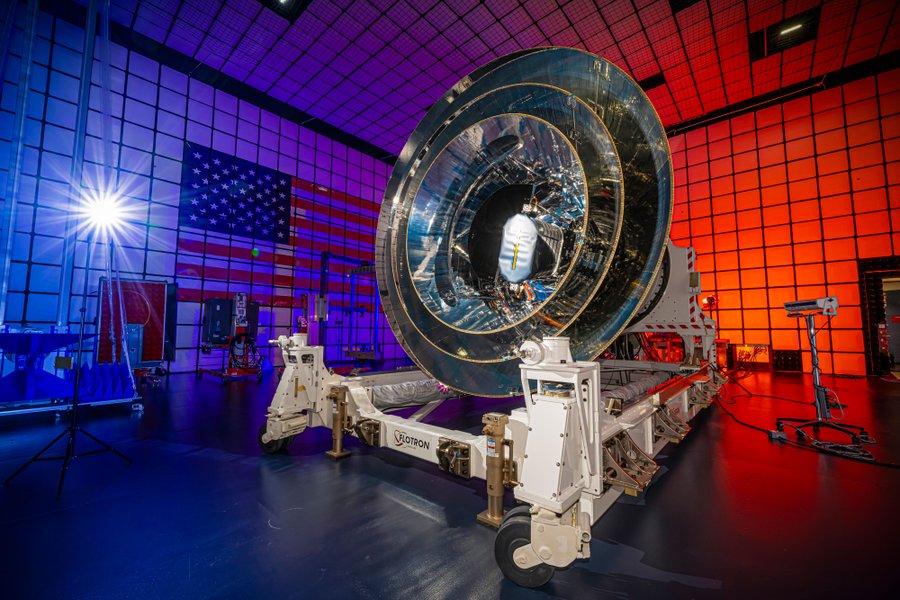
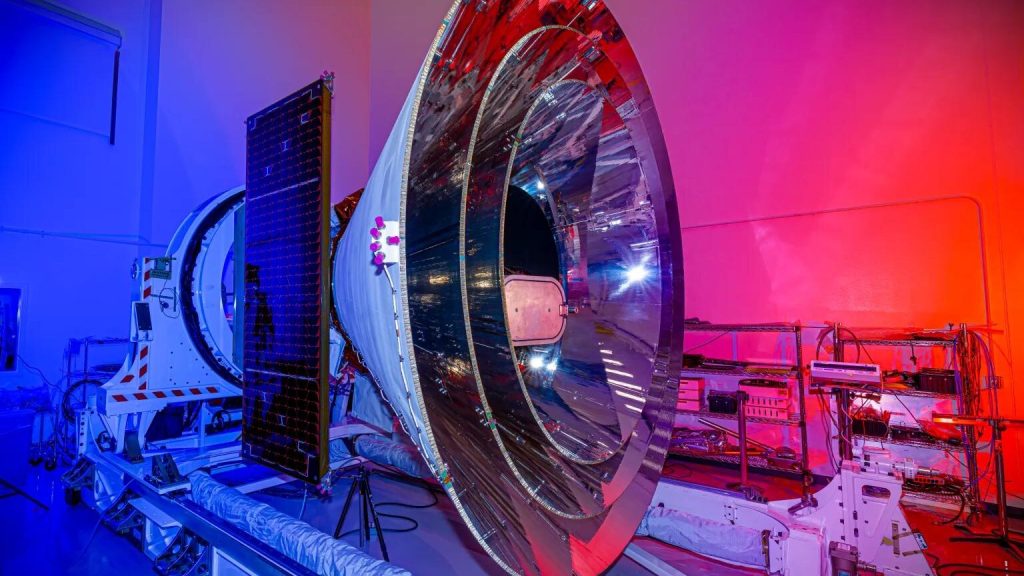
NASA has successfully launched a new space telescope called SPHEREx. This telescope is designed to study the origins of the universe, looking at how stars, galaxies, and cosmic structures formed over billions of years. Scientists are excited because SPHEREx will provide new insights into the early universe and help answer some of the biggest questions about our cosmic history.
What Is SPHEREx?
SPHEREx stands for Spectro-Photometer for the History of the Universe, Epoch of Reionization, and Ices Explorer. While the name is long, the mission is simple:
-
Study galaxies and stars to understand how the universe began
-
Map cosmic light to see how matter and energy evolved
-
Detect ices and molecules in space that may be important for life
It is a small but powerful telescope, able to see things invisible to other telescopes because it uses infrared light.
Why Infrared Light Matters
Infrared light is crucial for studying the universe because:
-
It can pass through dust clouds that block visible light
-
Light from distant galaxies is stretched to longer wavelengths due to the universe expanding
-
It allows scientists to see faint, ancient objects far away in space
This means SPHEREx can see some of the first galaxies and stars ever formed.
The Launch
The SPHEREx telescope was launched on a reliable rocket into space, where it will operate for several years. The launch included:
-
Careful preparation of the telescope and instruments
-
Precise calculations to place it in the correct orbit
-
Coordination with ground stations to monitor the mission
The successful launch is a major step for NASA and international astronomy.
The Science Goals
SPHEREx has several goals:
-
Understand the first billion years of the universe
-
Study how the first galaxies formed
-
See how cosmic light evolved over time
-
-
Map cosmic matter and energy
-
Measure dark energy and dark matter effects
-
Understand how galaxies cluster and grow
-
-
Study ices and molecules in space
-
Look for water, carbon compounds, and other chemicals
-
Help scientists understand how life-building materials form
-
This combination of goals makes SPHEREx a unique and important mission.
How SPHEREx Works
The telescope uses spectroscopy, which breaks light into its component colors. This allows scientists to:
-
Measure chemical composition of galaxies
-
Determine distance and age of stars and galaxies
-
Map the universe in a new and detailed way
It will scan the entire sky, covering millions of galaxies and billions of stars.
Studying the Universe’s Origins
One of the biggest mysteries in astronomy is how the universe began and evolved. SPHEREx will help answer questions like:
-
How did the first galaxies form?
-
When did stars begin producing light?
-
How did matter and energy create the large-scale structures we see today?
By observing ancient light, SPHEREx allows scientists to look back in time, billions of years ago.
Mapping the Entire Sky
SPHEREx will conduct a full-sky survey, meaning it will observe every part of the sky visible from its orbit. This is important because:
-
It allows scientists to see patterns and structures in the universe
-
Helps detect rare or unusual objects
-
Provides a catalog of stars, galaxies, and cosmic features for future research
This data will be useful for decades to come.
Collaboration and Technology
SPHEREx is a NASA mission, but it also involves:
-
Universities and research centers around the world
-
Advanced infrared detectors
-
Precise instruments for measuring light and spectra
This collaboration ensures the best possible science results.
Studying Cosmic Ices
SPHEREx will also study ices in space, like water and carbon compounds, which are important because:
-
They exist in comets, asteroids, and interstellar clouds
-
They may contain ingredients for life
-
Understanding them tells scientists how planets and life-building materials form
This makes SPHEREx not only a tool for astronomy but also for astrobiology.
Advantages Over Other Telescopes
While other telescopes like Hubble or James Webb look at visible or infrared light, SPHEREx has unique advantages:
-
Full-sky coverage
-
Focus on spectral mapping
-
Ability to detect faint light from distant galaxies
It complements other missions and gives a more complete picture of the universe.
How It Helps Scientists
The data from SPHEREx will help scientists:
-
Understand galaxy formation and evolution
-
Study dark matter and dark energy
-
Discover new celestial objects and phenomena
-
Map cosmic chemical composition
It’s like creating a detailed map of the universe that has never been seen before.
Early Universe Discoveries
SPHEREx is expected to reveal:
-
Ancient galaxies that formed shortly after the Big Bang
-
Clusters of stars and galaxies in their early stages
-
Information about cosmic expansion and matter distribution
These discoveries will refine our understanding of cosmology.
Education and Public Interest
Missions like SPHEREx inspire people worldwide:
-
Students become interested in science and astronomy
-
Researchers gain new tools and data
-
The public sees the universe in new ways
Space telescopes remind us how vast and mysterious the cosmos is.
Future Implications
SPHEREx will:
-
Serve as a foundation for future missions
-
Provide data for next-generation telescopes
-
Help plan missions to study galaxies, stars, and exoplanets
Its discoveries may change our understanding of the universe forever.
NASA’s Commitment
NASA continues to invest in missions like SPHEREx to:
-
Explore the origins and evolution of the universe
-
Collaborate internationally for scientific progress
-
Inspire future scientists, engineers, and explorers
SPHEREx is part of a larger effort to answer fundamental questions about space.
Summary
The SPHEREx telescope is:
-
Launched successfully into space by NASA
-
Using infrared light to study the early universe
-
Mapping the entire sky and millions of galaxies
-
Studying ices and molecules important for life
It represents a major step in understanding how the universe began and how it evolved over billions of years.
Conclusion
NASA’s SPHEREx mission opens a new chapter in space exploration. By studying ancient light, mapping galaxies, and examining cosmic ices, it will help answer some of the biggest questions in astronomy and science.
With SPHEREx in orbit, we are closer than ever to understanding:
-
How the first galaxies and stars formed
-
The chemical origins of life-building materials
-
The structure and evolution of the universe
It is a reminder that space is full of secrets, and with new technology, we can explore and understand the universe like never before.
SPHEREx is not just a telescope; it is a window into the cosmic past, helping humanity uncover the story of our universe.
Read Also: Keep your face towards the sunshine and shadows will fall behind you
Watch Also: https://www.youtube.com/@TravelsofTheWorld24








Leave a Reply