
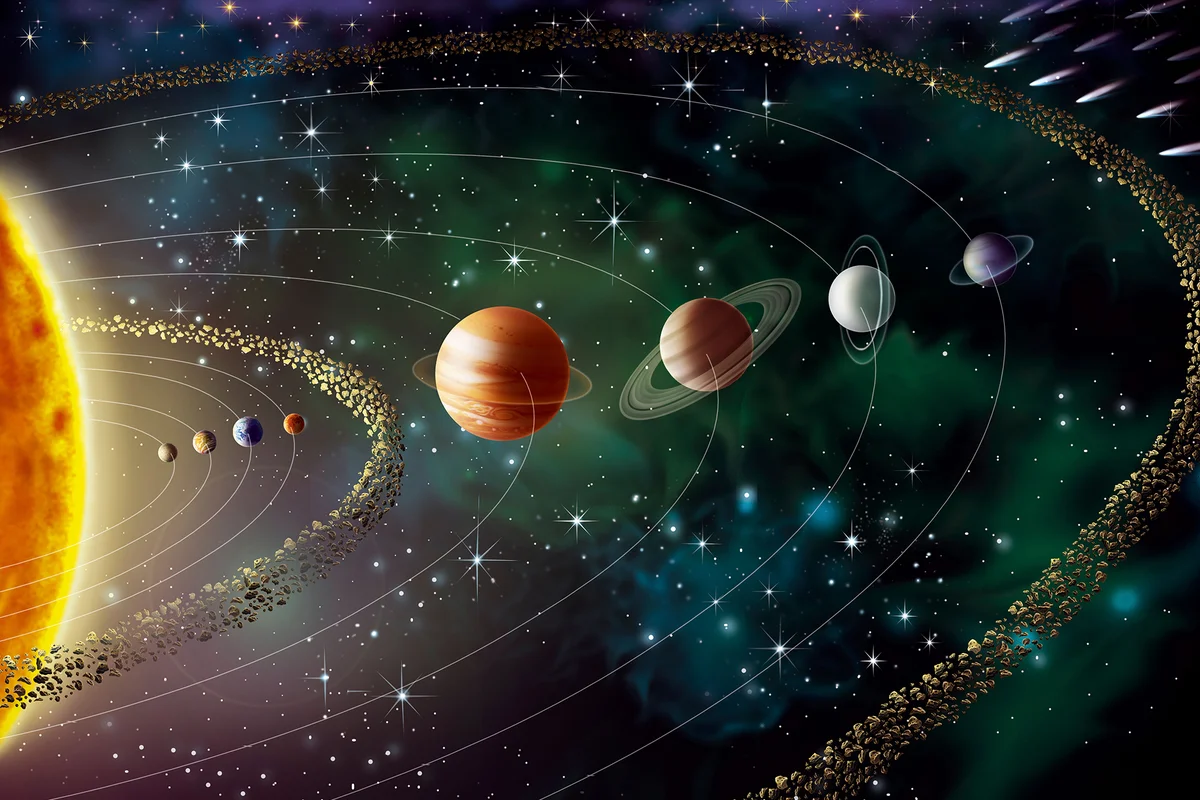
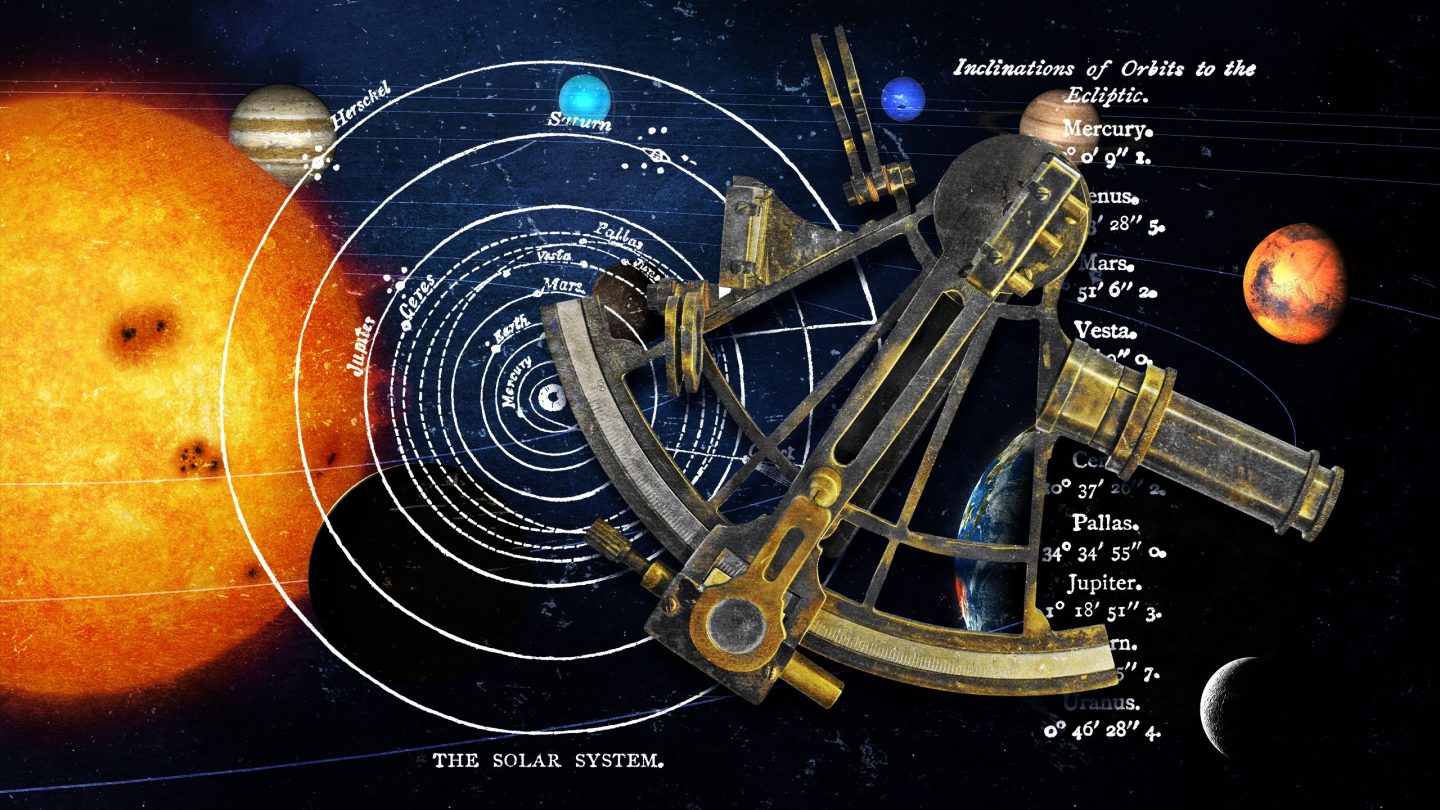
The question “Where does the solar system end?” sounds simple, but the answer is actually quite complex. The solar system does not have a clear, solid boundary like a wall or a fence. Instead, its edge is defined by how far the Sun’s influence reaches into space.
To understand this properly, we need to look at what the solar system is made of and how far its different parts extend.
What is the Solar System?
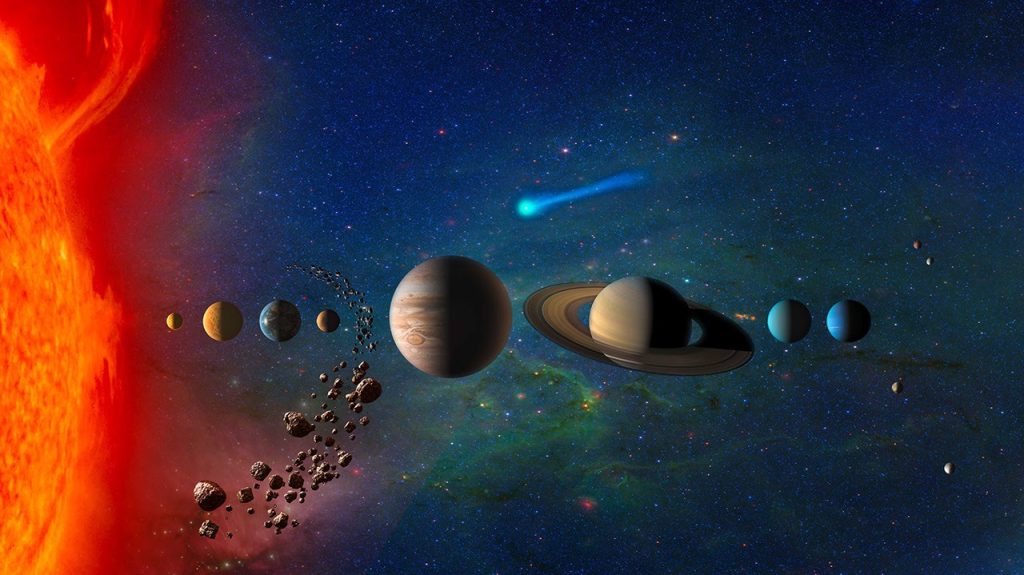
The solar system is made up of the Sun and everything that orbits it. This includes:
- Planets like Earth, Mars, and Jupiter
- Moons that orbit planets
- Asteroids and comets
- Dust and small space rocks
Everything in the solar system is held together by the Sun’s gravity.
The Sun’s Influence
The Sun is the center of the solar system. It gives light, heat, and energy to all the planets. But its influence goes far beyond just light and heat.
The Sun also creates something called the solar wind, which is a stream of charged particles that flows outward in all directions.
So, the “end” of the solar system is often defined by where the Sun’s influence becomes very weak compared to the rest of space.
The First Boundary: The Kuiper Belt
One of the outer regions of the solar system is the Kuiper Belt. This is a large ring-shaped area beyond Neptune.
It contains:
- Dwarf planets like Pluto
- Icy objects
- Comets
The Kuiper Belt starts around 30 astronomical units (AU) from the Sun and extends to about 50 AU.
Even though it is far away, it is still considered part of the solar system.
The Second Boundary: The Heliosphere
The Sun creates a giant bubble around itself called the heliosphere. This is formed by the solar wind pushing against interstellar space.
Inside the heliosphere:
- The Sun’s particles dominate
- Space is influenced by solar wind
Outside the heliosphere:
- Interstellar space begins
- The Sun’s influence becomes weak
The boundary where the solar wind slows down is called the termination shock.
The Heliosheath and Heliopause
After the termination shock, there is a region called the heliosheath. Here, solar wind becomes weak and turbulent.
Finally, we reach the heliopause, which is often considered the “edge” of the solar system.
The heliopause is the point where:
- The Sun’s solar wind is balanced by interstellar space
- The Sun’s influence is no longer dominant
This is one of the most accepted boundaries of the solar system.
Voyagers Crossing the Edge
NASA’s spacecraft have helped us understand this boundary better.
The spacecraft Voyager 1 became the first human-made object to cross the heliopause and enter interstellar space.
Its twin, Voyager 2, also crossed this boundary later.
These missions showed that the solar system is larger than we once thought and that its edge is not a sharp line but a gradual transition.
After the Solar System Ends
Once you pass the heliopause, you enter interstellar space. This is the space between stars.
In this region:
- The Sun’s influence is very weak
- Particles from other stars dominate
- Space becomes much emptier
But even here, we are still inside the Milky Way galaxy.
The True Edge of the Solar System Explained
The Oort Cloud: The Far Edge
Some scientists believe the solar system may extend even farther than the heliopause. This is because of a region called the Oort Cloud.
The Oort Cloud is:
- A giant spherical shell of icy objects
- Located far beyond Pluto
- Possibly up to 100,000 AU from the Sun
It is thought to be the source of long-period comets.
However, the Oort Cloud has never been directly observed. Its existence is based on scientific models.
So Where Does the Solar System Really End?
There is no single answer, but scientists use different definitions:
1. Heliosphere boundary (heliopause)
- Most practical definition
- End of solar wind influence
2. Outer edge of the Kuiper Belt
- Includes planets and icy objects
3. Oort Cloud boundary
- Theoretical outer limit of the Sun’s gravitational influence
So, the solar system does not end at one exact point. It slowly fades into interstellar space.
Why There Is No Clear Edge
Unlike planets or buildings, space does not have hard boundaries.
The solar system is defined by:
- Gravity
- Solar wind
- Magnetic fields
These forces slowly weaken with distance, so the “edge” is more like a transition zone than a clear line.
How Far is the Edge?
To understand the scale:
- Earth is 1 AU from the Sun
- Neptune is about 30 AU away
- The heliopause is around 120 AU away
- The Oort Cloud may extend up to 100,000 AU
This shows just how huge the solar system really is.
Why Studying the Edge Matters
Studying the edge of the solar system helps scientists understand:
- How the Sun interacts with space
- How cosmic radiation behaves
- How solar systems form and evolve
- What lies between stars
It also helps prepare for future deep-space exploration.
Role of Space Missions
Space missions like Voyager have been very important in exploring these outer regions.
The Voyager 1 mission continues to send data back to Earth even after leaving the solar system, helping scientists learn about interstellar space.
Final Thoughts
The solar system does not have a sharp end. Instead, it slowly transitions from the Sun’s influence into the vast space between stars.
In simple words:
The solar system doesn’t really end—it fades into interstellar space.
This makes it one of the most fascinating structures in the universe, full of mysteries that scientists are still trying to understand.
Read Also: Keep your face towards the sunshine and shadows will fall behind you
Watch Also: https://www.youtube.com/@TravelsofTheWorld24






Leave a Reply