
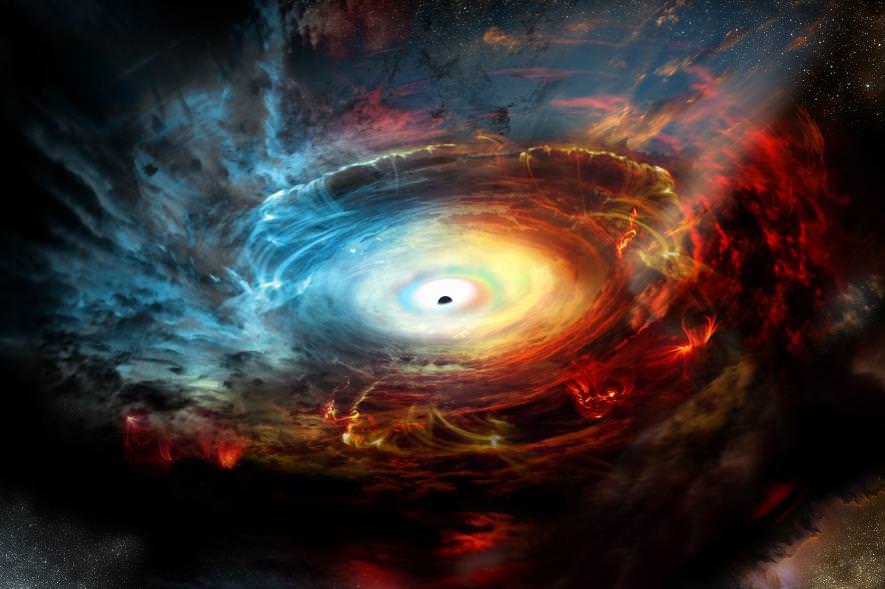
The first-ever image of a black hole is one of the most exciting discoveries in modern science. It changed how we understand space and proved ideas that scientists had only imagined for many years.
This historic achievement was made by the Event Horizon Telescope (EHT), a global network of powerful radio telescopes working together like one giant Earth-sized telescope.
Let’s understand this amazing discovery in a simple and clear way.
What is a Black Hole?
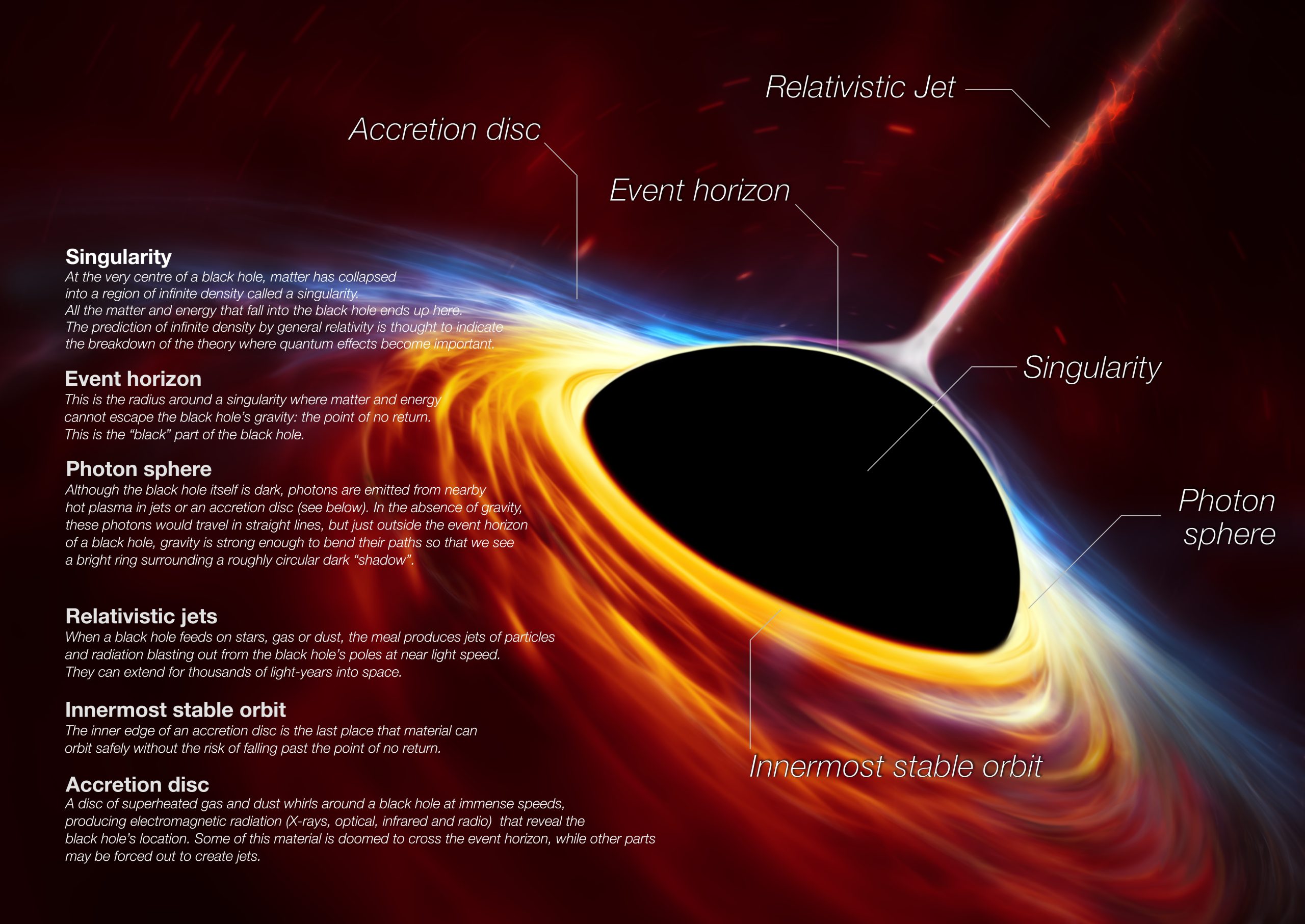
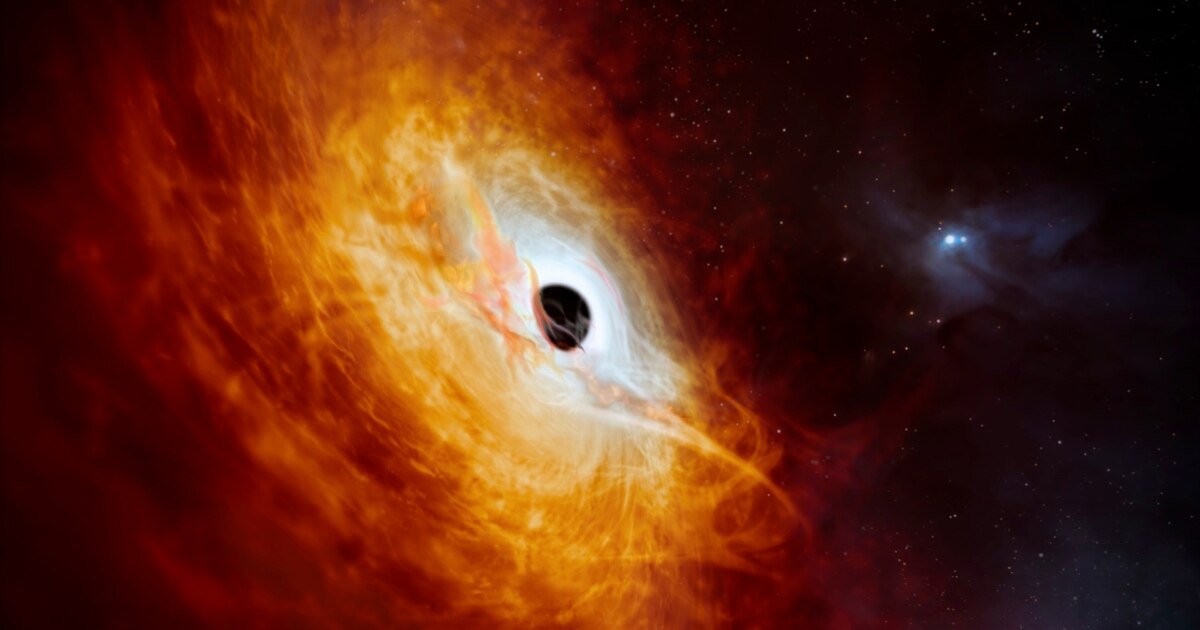
A black hole is a region in space where gravity is extremely strong. So strong, in fact, that nothing can escape from it—not even light.
Black holes form when very massive stars collapse under their own gravity after they die.
A black hole has:
- A center called a singularity
- A boundary called the event horizon
Once something crosses the event horizon, it cannot escape.
What is the Event Horizon Telescope?
The Event Horizon Telescope is not a single telescope. It is a network of radio telescopes placed all around the world.
These telescopes work together to form one huge virtual telescope the size of Earth.
Its goal is simple:
To capture images of black holes for the first time.
The First Black Hole Image
In 2019, scientists released the first-ever image of a black hole located in a galaxy called M87.
This black hole is:
- Extremely massive
- Very far from Earth
- Surrounded by hot glowing gas
The image showed a bright ring of light with a dark center. That dark center is the black hole itself.
Why the Image is So Important
Before this discovery, black holes were only theoretical. Scientists knew they existed, but no one had ever seen one directly.
This image proved:
- Black holes are real
- Einstein’s theories about gravity are correct
- Space can be observed in new and powerful ways
It was a major milestone in astronomy.
How the Image Was Captured
Black holes cannot be seen directly because they do not emit light. So how did scientists take a picture?
The answer is radio waves and advanced technology.
The Event Horizon Telescope collected data from multiple telescopes around the world and combined it using supercomputers.
This process created a single image, like stitching many pieces of a puzzle together.
What the Image Shows
The famous black hole image shows:
- A bright glowing ring
- A dark center (the black hole)
- Hot gas moving around it at high speed
The bright ring is caused by gas and dust being heated to extreme temperatures as it falls toward the black hole.
Where is This Black Hole?
The first black hole image came from a galaxy called M87, which is:
- Very far from Earth
- Located millions of light-years away
- Much larger than our Milky Way galaxy
Inside it is a supermassive black hole, millions of times heavier than our Sun.
Why It Was So Hard to Capture
Capturing a black hole image was extremely difficult because:
- Black holes are invisible
- They are very far away
- Earth’s atmosphere can interfere with signals
- Huge amounts of data had to be processed
Scientists worked for years to make this possible.
Role of Scientists and Technology
Thousands of scientists from around the world worked together on this project.
They used:
- Advanced telescopes
- High-speed data processing
- Supercomputers
- Complex mathematical models
This global teamwork made the discovery possible.
What This Discovery Tells Us
The first black hole image taught us many things:
1. Black holes are real objects
They are not just theories—they exist in space.
2. Gravity behaves as predicted
Einstein’s theory of general relativity was supported by this discovery.
3. Technology can reveal hidden space objects
With better tools, we can explore even deeper parts of the universe.
Connection to Modern Astronomy
This discovery opened a new chapter in astronomy. Scientists now aim to:
- Take clearer images of black holes
- Study how they grow
- Understand how they affect galaxies
- Explore more distant space objects
The Event Horizon Telescope continues to improve and capture more data every year.
Why Black Holes Matter
Black holes are important because they help us understand:
- How stars die
- How galaxies form
- How gravity works in extreme conditions
- The structure of the universe
They are one of the most mysterious and powerful objects in space.
Future of Black Hole Research
Scientists are now working on:
- Taking sharper images
- Studying black hole shadows
- Understanding how matter behaves near them
- Exploring their role in galaxy evolution
Future discoveries may even change our understanding of physics.
Final Thoughts
The first image of a black hole by the Event Horizon Telescope is a historic achievement. It proved that even the most invisible and mysterious objects in space can be studied with science and technology.
In simple words:
We have finally seen something that was once invisible to humanity.
This discovery shows the power of teamwork, technology, and human curiosity.
Read Also: Keep your face towards the sunshine and shadows will fall behind you
Watch Also: https://www.youtube.com/@TravelsofTheWorld24





Leave a Reply