
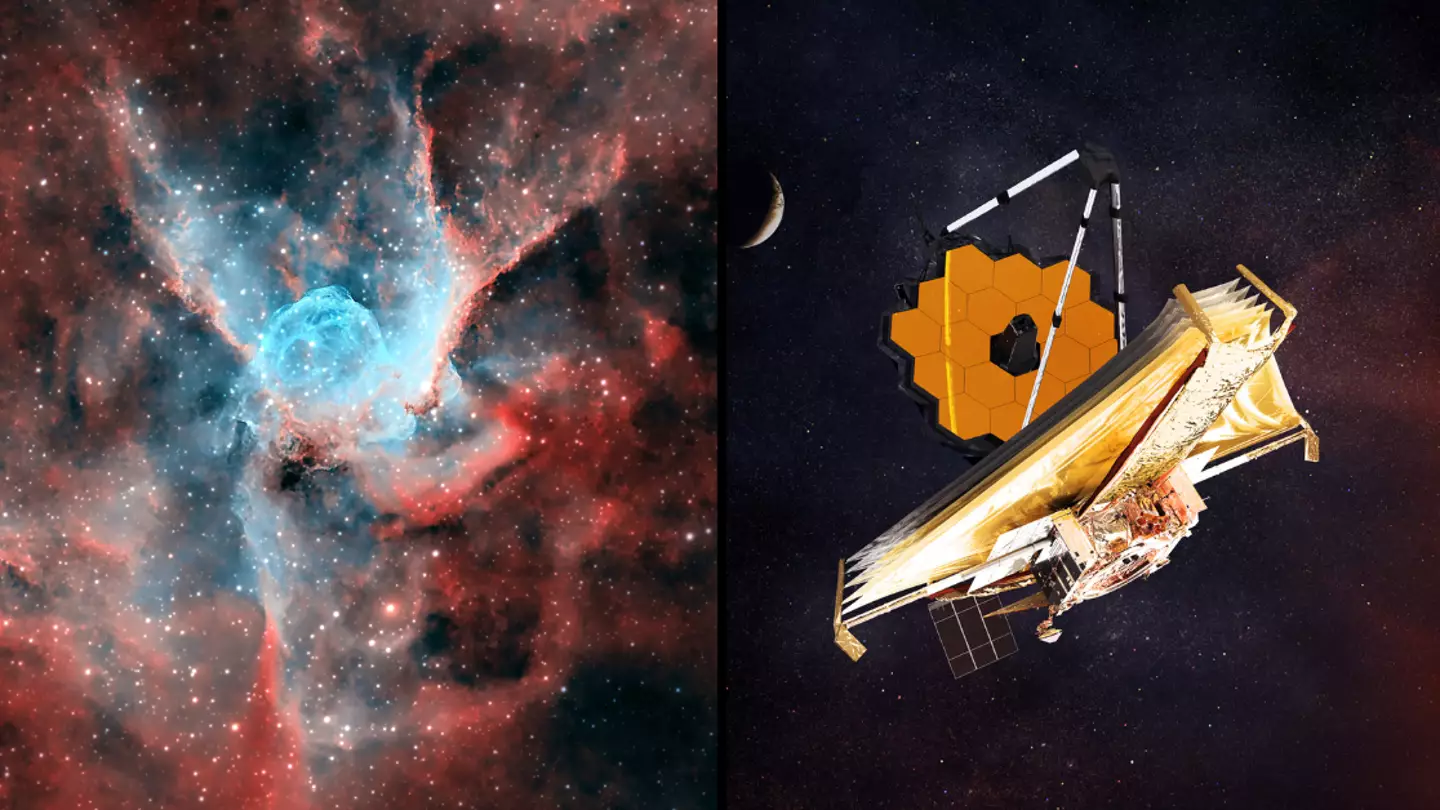
NASA’s James Webb Space Telescope (JWST) has made a discovery that has excited scientists around the world. While observing the earliest galaxies in the universe, JWST spotted something unexpected—a “real surprise” that challenges our understanding of how the universe began and evolved.
This discovery gives us a closer look at the first moments of cosmic history and could reshape our ideas about how galaxies formed after the Big Bang.
What Is the James Webb Space Telescope?
JWST is the most advanced space telescope ever built. It is different from the Hubble Space Telescope because it sees in infrared light instead of just visible light. Infrared light lets scientists:
-
See through dust clouds that hide stars and galaxies
-
Observe distant galaxies billions of light-years away
-
Study the early universe and how the first stars and galaxies formed
JWST is equipped with a giant sunshield the size of a tennis court, which protects it from heat and sunlight. This allows it to capture extremely faint signals from very distant objects.
Looking Back in Time
One of the amazing things about space telescopes like JWST is that they let us look back in time. Light from distant galaxies takes billions of years to reach Earth. So when JWST observes these galaxies, we are seeing them as they were billions of years ago, not as they are now.
This means JWST is literally showing us the universe when it was very young, only a few hundred million years after the Big Bang.
The ‘Real Surprise’
The scientists were expecting to see galaxies that were small and faint, because in the early universe, stars and galaxies were just starting to form. But JWST found galaxies that are surprisingly large and bright.
This is a “real surprise” because:
-
These galaxies are bigger and more mature than models predicted
-
They contain more stars than expected
-
Their structure and composition challenge current theories about galaxy formation
In short, the universe may have formed stars and galaxies faster than scientists thought.
Why This Matters
This discovery is important because it could change our understanding of:
-
How quickly the first galaxies formed
-
The rate of star formation in the early universe
-
How galaxies evolved over billions of years
It also helps answer big questions, such as:
-
Did galaxies grow gradually, or did some form quickly and fully?
-
How did early galaxies influence the evolution of the universe?
JWST is now helping scientists rewrite the story of the cosmos.
How JWST Made This Discovery
JWST uses infrared cameras and spectrographs to detect light from distant galaxies. Here’s how it works:
-
It captures infrared light that has stretched over billions of years due to the expansion of the universe
-
It detects chemical signatures in the galaxies, such as hydrogen, oxygen, and carbon
-
It measures the distance and age of these galaxies
By combining these observations, scientists can estimate the size, mass, and age of early galaxies.
Galaxies Bigger Than Expected
The most surprising finding is that some galaxies already had millions or billions of stars when the universe was very young. Scientists expected galaxies at this time to be smaller and simpler.
This means:
-
Star formation may have started earlier than thought
-
Galaxy formation processes could be more efficient
-
Current models of the early universe may need adjustment or revision
It’s a reminder that the universe still holds many secrets.
What JWST Sees in Detail
JWST’s infrared vision allows scientists to see:
-
Dust clouds and stellar nurseries inside early galaxies
-
Bright, mature stars forming earlier than predicted
-
Galactic structures, like spiral arms and dense cores, in surprisingly young galaxies
This detailed view helps scientists understand how stars, planets, and galaxies come together.
The Role of Infrared Light
Infrared light is essential for studying the early universe because:
-
It can pass through dust and gas that block visible light
-
Light from distant galaxies is redshifted (stretched to longer wavelengths) due to the universe expanding
-
JWST’s infrared instruments can detect this redshifted light, revealing galaxies we couldn’t see before
Without infrared observations, these early galaxies would remain invisible.
Collaboration Makes It Possible
JWST is an international project. NASA worked with:
-
European Space Agency (ESA)
-
Canadian Space Agency (CSA)
Together, they contributed instruments, technology, and expertise. International collaboration allows:
-
Sharing of data and resources
-
Faster development of advanced technology
-
Broader scientific participation worldwide
This teamwork is helping humanity understand the universe like never before.
Challenges in Observing the Early Universe
Observing galaxies from billions of years ago is extremely difficult because:
-
The galaxies are faint and distant
-
Infrared observations require extremely cold temperatures
-
Data must be transmitted over millions of kilometers from JWST to Earth
Despite these challenges, JWST has succeeded in capturing clear and detailed images of early galaxies.
Implications for Science
The discovery of larger-than-expected early galaxies could:
-
Force scientists to update models of galaxy formation
-
Change our understanding of how quickly stars form
-
Influence future research on dark matter and cosmic evolution
It shows that the universe may be more dynamic and surprising than previously thought.
Inspiring the Public
This discovery is exciting not only for scientists but also for the public. It:
-
Provides stunning images of distant galaxies
-
Sparks interest in astronomy and space science
-
Inspires students to pursue careers in STEM fields
JWST shows the power of exploration and curiosity, reminding us that the universe is full of surprises.
Future Observations
JWST will continue to explore:
-
Other distant galaxies to see if they also defy expectations
-
The chemical composition of early galaxies
-
Star formation rates in the first billion years of the universe
These observations will refine our understanding of cosmic history and guide future telescopes and missions.
Why It’s Called a ‘Real Surprise’
Scientists call it a “real surprise” because:
-
Current theories did not predict these large galaxies so early
-
It challenges our understanding of how quickly stars and galaxies formed
-
It opens new questions about the early universe
Discoveries like this remind us that science is constantly evolving.
Comparing JWST to Previous Telescopes
-
Hubble Space Telescope: Provided stunning images of distant galaxies but mostly in visible and ultraviolet light. Could not see many early galaxies in detail.
-
James Webb Space Telescope: Infrared vision allows it to see further, older, and hidden galaxies. Provides more detailed observations of early cosmic history.
JWST is redefining what we know about the universe.
How This Affects Our Understanding of the Universe
The discovery may lead scientists to:
-
Recalculate the timeline of galaxy formation
-
Reconsider how stars and galaxies interact in the early universe
-
Update models of dark matter influence on galaxy growth
It’s a major step in understanding the origin and evolution of the cosmos.
Technology Behind the Discovery
JWST’s instruments include:
-
NIRCam (Near-Infrared Camera) to capture detailed images
-
NIRSpec (Near-Infrared Spectrograph) to analyze light from stars and galaxies
-
MIRI (Mid-Infrared Instrument) to see cooler objects and dust
-
FGS/NIRISS for precise navigation and measurement
These tools make it possible to see galaxies that are billions of light-years away.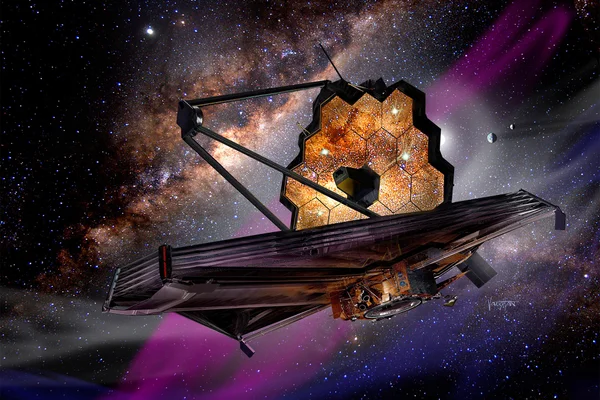
Looking Forward
Scientists are excited because JWST is just beginning its mission. The telescope will:
-
Reveal more galaxies from the universe’s first billion years
-
Help identify early star formation patterns
-
Provide insight into the evolution of cosmic structures
We are entering a new era in understanding the universe.
Public Engagement and Education
NASA shares JWST’s findings with the public, helping:
-
Inspire students and future scientists
-
Provide educational resources for schools
-
Show the importance of international collaboration and technology
JWST is not only a scientific tool but also a source of wonder for everyone.
Summary
JWST’s discovery of larger-than-expected early galaxies shows:
-
The universe may have formed stars and galaxies faster than predicted
-
Infrared observations are revolutionizing astronomy
-
Our understanding of the early universe is changing
This “real surprise” reminds us that the universe is full of mysteries waiting to be discovered.
Conclusion
The James Webb Space Telescope continues to push the boundaries of knowledge. Its discovery of unexpected galaxies in the early universe:
-
Challenges previous theories
-
Provides insight into galaxy formation
-
Inspires scientists, students, and the public
JWST is proving that exploring the universe leads to new questions, surprises, and discoveries. The early universe is more dynamic than we imagined, and we are only just beginning to uncover its secrets.
With JWST, humanity is seeing the universe as it has never been seen before, and this is only the start of many more surprises to come.
Read Also: Keep your face towards the sunshine and shadows will fall behind you
Watch Also: https://www.youtube.com/@TravelsofTheWorld24





Leave a Reply