

In a major milestone for space exploration, NASA’s planet-hunting efforts have returned remarkable results. Astronomers working with NASA’s Transiting Exoplanet Survey Satellite (TESS) announced that their mission has identified 21 new exoplanets — planets orbiting stars beyond our own Sun — within its first year of observations. This achievement not only demonstrates the incredible capabilities of modern space telescopes, but also “exceeds expectations” for the mission’s early performance and strengthens hopes of finding worlds that could someday host life.
What Are Exoplanets and Why Do They Matter?
Exoplanets are planets that orbit stars other than our Sun. The first confirmed exoplanet discovery occurred in the early 1990s, and since then, astronomers have confirmed thousands of such worlds in our galaxy. These planets come in many sizes and types, ranging from gas giants larger than Jupiter to rocky, Earth-sized planets. As of late 2025, the number of confirmed exoplanets has reached more than 6,000, a tally maintained and tracked by NASA’s Exoplanet Science Institute in collaboration with scientists around the world.
Scientists are especially interested in exoplanets that orbit within the “habitable zone” of their star — the region where conditions might allow liquid water to exist on a planet’s surface. Liquid water is considered one of the key ingredients for life as we know it, so finding planets in this zone is central to the search for life beyond Earth.
The discovery of exoplanets is made possible through a variety of methods, but one of the most successful is the transit method. This technique detects tiny dips in a star’s light that occur when a planet passes — or transits — in front of it from our point of view. By measuring these periodic dimmings and combining them with other observational data, astronomers can infer the size, orbit, and other properties of a distant planet.
NASA’s TESS Mission and the 21 New Worlds
Launched in April 2018, NASA’s Transiting Exoplanet Survey Satellite (TESS) was designed to survey nearly the entire sky for exoplanets orbiting bright, nearby stars. Unlike its predecessor, the Kepler Space Telescope, which focused on a small patch of the sky, TESS scans almost the whole sky, significantly increasing the number of stars under observation.
Within its first year of operations, TESS identified 21 new exoplanets — a discovery that was not only scientifically exciting but also far beyond what the mission’s planners had initially anticipated for that early stage of its work. “The pace and productivity of TESS in its first year … has far exceeded our most optimistic hopes for the mission,” said George Ricker, principal investigator for TESS at the Massachusetts Institute of Technology.
These 21 new worlds vary in size and orbital characteristics, and many orbit stars that are relatively close to Earth in cosmic terms. While not all of these newly discovered planets may be suitable for life, the sheer number and diversity of these worlds offer valuable opportunities for detailed study. Future observations using powerful telescopes — especially the James Webb Space Telescope (JWST) and next-generation observatories — may reveal more about their atmospheres, compositions, and potential habitability.
How These Discoveries Exceed Expectations
When TESS was designed, scientists expected it to find hundreds of planet candidates over the course of its primary mission. Planet candidates are initial detections that require follow-up verification to confirm whether they are true planets. Many exoplanets remain “candidates” until additional observations — often from ground-based telescopes or other space observatories — confirm their existence.
The fact that TESS was able to detect 21 confirmed exoplanets so early in its mission speaks volumes about the satellite’s sensitivity and effectiveness. The data collected already has helped astronomers refine techniques for exoplanet detection and classification, and it stands as proof that the mission is producing high-quality results much sooner than expected.
Moreover, TESS doesn’t just find planets — it also detects other astrophysical phenomena, such as supernovae (exploding stars) and variable stars. As mission scientists review and analyze the growing wealth of data, they continue to identify new potential worlds for follow-up study.
What These Discoveries Mean for the Search for Life
While discovering planets is an exciting achievement in itself, the search for exoplanets is driven by a deeper scientific goal: finding life beyond Earth. This search hinges on identifying planets that not only orbit in the habitable zone but that also potentially have conditions favorable to life.
Some of the most intriguing exoplanets found to date include those that are roughly Earth-sized and orbit within their star’s habitable zone. For example, past missions like NASA’s Kepler and its extended K2 mission have identified hundreds of Earth-sized candidates, some of which reside in habitable zones around their stars.
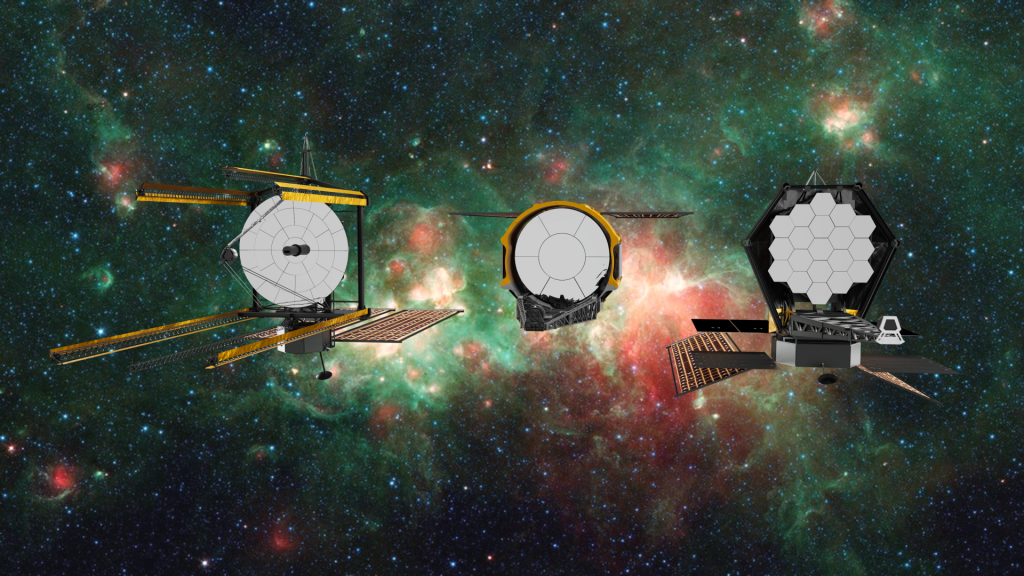
Even so, the discovery of habitable-zone planets doesn’t by itself mean we have found life — it simply means we have found places where life might be possible. Determining whether a planet truly supports life requires analysis of its atmosphere, surface conditions, and potential biosignatures — chemical indicators that could hint at biological processes. This is where telescopes like the James Webb Space Telescope and future missions like the Habitable Worlds Observatory come into play.
NASA’s upcoming observatories aim to directly image exoplanets and analyze their atmospheres for signs of water, oxygen, methane, and other molecules that are associated with life. The Habitable Worlds Observatory, for example, is designed specifically to search for and study potentially habitable exoplanets in unprecedented detail.
The increasing number of known exoplanets — now in the thousands — gives astronomers a larger sample of worlds to study. The more planets discovered, the greater the chance that some may exhibit conditions favorable to life. In other words, every new exoplanet adds a piece to the puzzle of whether life exists elsewhere in the universe.
The Broader Context of Exoplanet Exploration
The discovery of 21 new worlds by TESS is part of a much larger story of humanity’s exploration of distant planets. Over the past three decades, missions like NASA’s Kepler, TESS, Hubble Space Telescope, and now the James Webb Space Telescope have reshaped our understanding of the universe. What once seemed like speculative science fiction — that planets orbit other stars — has become a well-established fact.
These missions have confirmed that exoplanets are common. Every star we see in the night sky likely has at least one planet orbiting it — if not many. Some planetary systems might look nothing like our own, hosting gas giants close to their stars or tightly packed systems of small rocky planets.
This diversity challenges and expands our understanding of planetary formation and evolution. It also informs the search for life by revealing which types of stars and planetary environments might be most promising for habitability. For example, some small, cool stars — called red dwarfs — have been found to host multiple small planets in their habitable zones. These worlds are prime targets for atmospheric characterization and further study.
What Comes Next for NASA and the Search for Life?
The discoveries from TESS and other missions are just the beginning. NASA’s planetary science program continues to push the boundaries with new technologies and observatories aimed at deeper investigation. The next steps involve:
-
Follow-up Observations: Using telescopes such as JWST to study the atmospheres of promising exoplanets for molecules that could indicate habitability or life.
-
Future Missions: Building and launching next-generation observatories like the Habitable Worlds Observatory that can directly image Earth-like exoplanets and search for biosignatures.
-
Interdisciplinary Research: Combining atmospheric science, astrobiology, and planetary science to interpret data and refine models of planetary environments and habitability.
-
Public Engagement: Inspiring a new generation of scientists and space enthusiasts by sharing discoveries and engaging people around the world with the quest to understand our place in the universe.
The search for life beyond Earth is among the most profound scientific endeavors of our time. Each new discovery — like the 21 worlds found by TESS — brings us closer to answering one of humanity’s oldest questions: Are we alone?
Conclusion
NASA’s announcement of 21 new exoplanets is a landmark achievement in the ongoing exploration of worlds beyond our solar system. By exceeding expectations for early performance, the TESS mission has demonstrated both the power of modern astronomical instruments and the vastness of planetary diversity in our galaxy. While none of these individual discoveries confirm extraterrestrial life, they represent important steps toward locating planets that might one day reveal signs of life.
As technology advances and new missions take flight, scientists will continue to examine these distant worlds with increasing precision. With each new exoplanet added to the growing catalog, our understanding of planetary systems broadens, and the possibility of finding a truly habitable world — or one teeming with life — becomes ever more compelling.
Read Also: Keep your face towards the sunshine and shadows will fall behind you
Watch Also: https://www.youtube.com/@TravelsofTheWorld24








Leave a Reply