
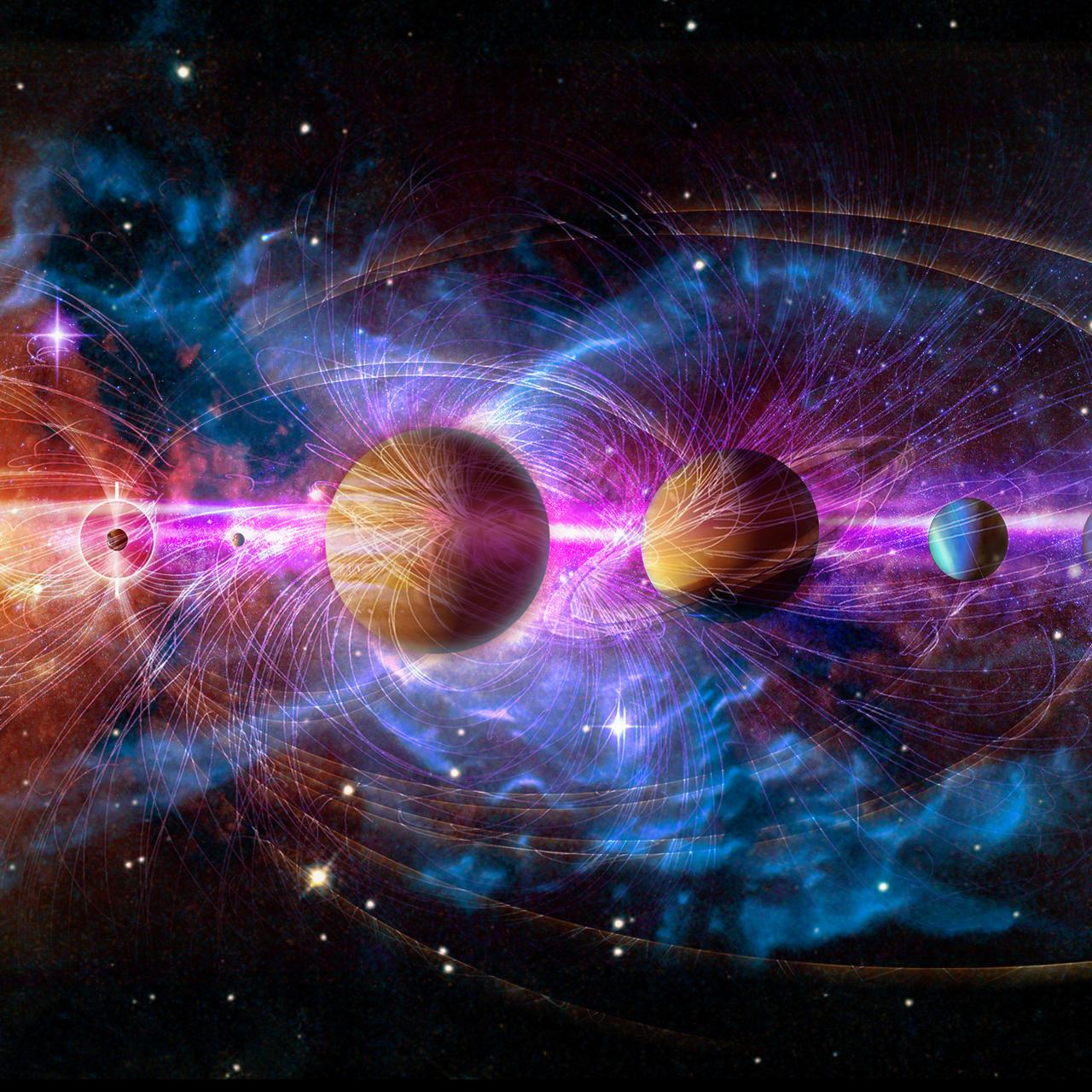
You may have heard people talking about planets being “in retrograde.” It often comes up on social media, in horoscopes, or in casual conversations. Now imagine this: six planets are in retrograde at the same time. That sounds like a big deal, right?
But what does it actually mean? And does it really affect your life?
Let’s break it down in a simple way so you can understand both the science and the popular beliefs around it.
What Does “Retrograde” Mean?
In simple words, retrograde means that a planet appears to move backward in the sky when viewed from Earth.
Normally, planets move across the sky in one direction. But sometimes, due to the way Earth and other planets move around the Sun, it looks like a planet is going in reverse.
This is just an optical illusion. The planet is not actually changing direction.
For example, when Mercury goes into retrograde, it only appears to move backward because of Earth’s motion.
Why Does This Happen?
All planets orbit the Sun at different speeds.
- Earth moves faster than some planets
- Other planets move slower or faster depending on their distance from the Sun
When Earth passes another planet in its orbit, that planet may seem to slow down, stop, and then move backward for a while.
A simple way to imagine this is:
When you are in a fast car and overtake a slower car, the slower car may appear to move backward for a moment—even though it is still moving forward.
That’s exactly what happens in space.
Which Six Planets Are Retrograde?
During this rare period, these six planets are in retrograde:
- Mercury
- Venus
- Mars
- Jupiter
- Saturn
- Neptune
Sometimes even Uranus joins in, making it even more interesting.
The Scientific View: Does It Affect You?
From a science point of view, retrograde motion does not directly affect your daily life.
Planets are extremely far away from Earth. Their gravitational pull is very small compared to things around you, like the Earth itself or the Moon.
So:
- Retrograde does not change your mood
- It does not cause bad luck
- It does not affect your decisions
Scientists study retrograde motion to understand how planets move—not to predict personal events.
6 Planets Moving Backward? Here’s What You Should Know
The Astrology View: Why Do People Care?
Even though science says retrograde has no personal effect, astrology gives it meaning.
Astrology connects planet movements with human behavior and emotions.
According to astrology:
- Mercury retrograde is linked to communication problems
- Venus retrograde relates to relationships and feelings
- Mars retrograde is about energy and actions
- Jupiter retrograde connects with growth and learning
- Saturn retrograde is about responsibility and discipline
- Neptune retrograde relates to dreams and imagination
When many planets are retrograde at once, astrologers believe it’s a time for reflection and slowing down.
Common Beliefs During Retrograde
You might hear people say things like:
- “Don’t sign contracts”
- “Avoid big decisions”
- “Expect delays or confusion”
These ideas mostly come from astrology, not science.
Still, some people use this time as a reminder to:
- Think carefully
- Review past actions
- Take things slowly
And honestly, that’s not a bad habit—even without retrograde.
Why Six Planets Retrograde Feels Special
Having one or two planets in retrograde is common. But six at the same time feels rare and dramatic.
This creates a lot of attention online and in astrology communities.
It gives people a feeling that:
- Things might slow down
- Life might feel confusing
- It’s a time to reflect
But again, this is more about belief than scientific fact.
Should You Be Worried?
No, there is nothing to worry about.
Retrograde motion is a normal part of how planets move. It has been happening for billions of years.
Life on Earth continues the same way whether planets appear forward or backward in the sky.
A Healthy Way to Look at It
Instead of fear, you can use this time in a positive way:
- Take a break from rushing
- Think about your goals
- Fix past mistakes
- Focus on self-improvement
Even if retrograde doesn’t affect you physically, it can still be a good reminder to slow down.
The Beauty of the Sky
Retrograde also has a scientific beauty.
Astronomers use it to:
- Track planet motion
- Understand orbits
- Study how our solar system works
Watching planets move over time can be fascinating.
Fun Fact: Retrograde Helped Change Science
In ancient times, retrograde motion confused scientists.
They thought planets moved in strange loops. Later, astronomers like Nicolaus Copernicus and Galileo Galilei helped explain that planets orbit the Sun, not Earth.
This was a major breakthrough in science.
How Often Does This Happen?
Planets go into retrograde at different times:
- Mercury: about 3–4 times a year
- Mars: every 2 years
- Jupiter: once a year
- Saturn: once a year
- Neptune: once a year
Having many at once is less common, which is why it gets attention.
Final Thoughts
Six planets in retrograde may sound intense, but it’s really just a natural space event.
From a scientific point of view, nothing unusual will happen to your daily life.
From an astrology point of view, it’s seen as a time to slow down and reflect.
At the end of the day, how you feel and what you do depends on you—not the planets.
So instead of worrying, you can simply enjoy learning about space and maybe take this as a chance to pause and think about your own journey.
Read Also: Keep your face towards the sunshine and shadows will fall behind you
Watch Also: https://www.youtube.com/@TravelsofTheWorld24





Leave a Reply