
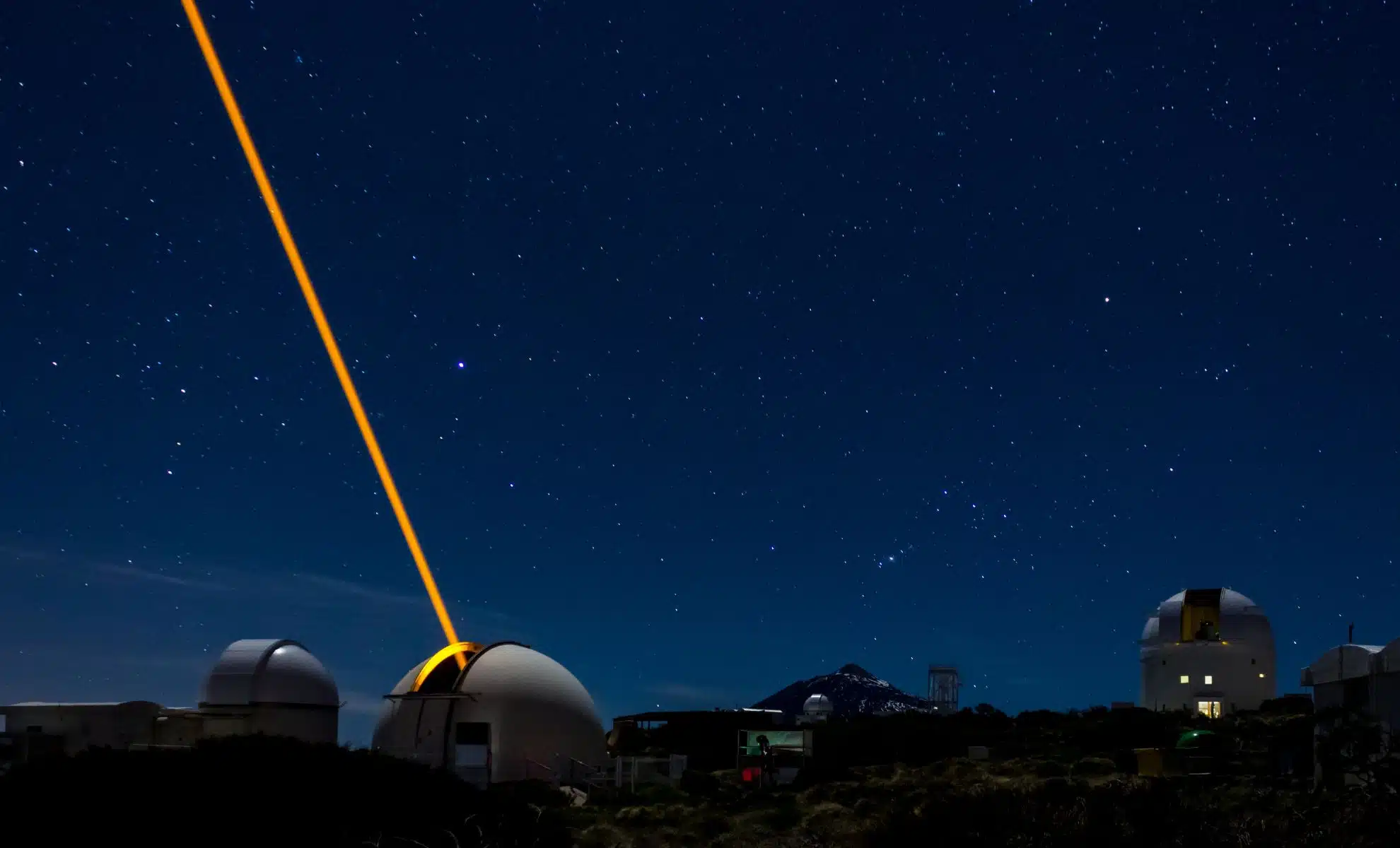
Science and technology are moving forward at an incredible speed. Every few years, we hear about a new invention that pushes the limits of what is possible. One of the latest breakthroughs comes from Japan, where a research team has developed an extremely powerful optical system that can detect very tiny objects from a very long distance.
According to reports, this system is so precise that it can spot an object as small as 3.5 millimeters from 1 kilometer away. That is almost like seeing a grain of rice from a distance of several football fields.
This discovery is not just impressive—it could change the future of imaging, surveillance, space observation, and many other fields.
Let’s understand it in simple terms.
What Did the Japanese Team Build?
A research team in Japan created a highly advanced optical imaging system, often described as a next-generation telescope or ultra-precision camera system.
It is designed to:
- Detect extremely small objects
- Work over long distances
- Capture highly detailed images
- Reduce distortion and blur
This system uses advanced optics, sensors, and data processing to achieve its incredible accuracy.
How Small Is 3.5 Millimeters?
To understand the achievement, let’s think about size.
3.5 millimeters is:
- Smaller than a grain of rice
- About the size of a small ant
- Very hard to see clearly even up close
Now imagine trying to see that object from 1 kilometer away—that is 1,000 meters. Normally, even powerful cameras would struggle to detect something so small at that distance.
Why This Technology Is So Important
This breakthrough is important because it pushes the limits of optical science.
It can be useful in many areas:
1. Security and Surveillance
It could help monitor large areas with extreme precision, detecting small objects or movements from far away.
2. Space Observation
It may improve how we observe small objects in space, such as debris or tiny satellites.
3. Industrial Inspection
Factories could use it to detect tiny defects in machines or structures from a safe distance.
4. Scientific Research
It can help scientists study small-scale movements or objects in remote environments.
How Does It Work?
Although the full technical details are complex, the system works using a combination of advanced technologies:
High-Precision Lenses
Special lenses are used to reduce distortion and focus light very accurately.
Sensitive Image Sensors
The system uses highly advanced sensors that can capture even very weak signals from distant objects.
Image Processing Algorithms
Powerful software improves the image after it is captured, removing noise and enhancing details.
Stabilization Systems
Even small vibrations can affect long-distance imaging, so the system is designed to stay extremely stable.
Why Traditional Telescopes Cannot Do This Easily
Normal telescopes are designed to observe:
- Stars
- Planets
- Distant galaxies
They are not built to focus on extremely small objects on Earth at long distances.
The challenge is:
- Atmospheric distortion
- Light scattering
- Motion blur
- Distance limitations
This new system overcomes many of these problems using modern technology.
The Role of Japanese Research in Technology
Japan is known for its advanced engineering and precision technology.
Research institutions and companies in Japan often focus on:
- Robotics
- Optical science
- Electronics
- Imaging systems
This new development continues that tradition of high-precision innovation.
Could This Be Used in Space?
Yes, this technology could eventually help in space-related applications.
For example:
- Tracking small space debris around Earth
- Monitoring satellites
- Improving deep-space imaging systems
Space is full of tiny objects that are hard to detect, so better imaging systems are very valuable.
Challenges in Long-Distance Imaging
Capturing clear images from far away is very difficult because of:
Air Distortion
Air is not completely stable. Heat and wind can bend light slightly.
Light Loss
The farther the object, the weaker the light becomes.
Motion Problems
Even small movements in the camera system can blur images.
Noise in Data
Sensors can pick up unwanted signals that reduce clarity.
This is why achieving such precision is a big scientific achievement.
Possible Military and Civil Uses
Like many advanced technologies, this system could have both peaceful and security-related uses.
Civil Uses:
- Environmental monitoring
- Infrastructure inspection
- Scientific observation
Security Uses:
- Border monitoring
- Surveillance of large areas
However, researchers often focus on peaceful and scientific applications first.
What Makes This Breakthrough Special?
This system is special because it combines:
- Extremely high resolution
- Long-distance capability
- Advanced computing
- Optical precision
Most systems can do one or two of these well, but not all at the same time.
Could We See Even Better Systems in the Future?
Yes, this is likely just the beginning.
Future improvements may allow:
- Even smaller objects to be detected
- Greater distances
- Real-time high-resolution imaging
- Better clarity in bad weather conditions
Technology is improving very quickly in this field.
Impact on Science and Engineering
This invention may inspire:
- New types of cameras
- Better telescopes
- Smarter imaging software
- Advanced optical research
It also shows how combining hardware and software can create powerful results.
Why Precision Matters So Much
In science, precision is everything.
Even a small improvement can:
- Change research results
- Improve safety systems
- Help discover new things
This system shows what happens when precision reaches a new level.
Real-World Example to Understand It
Imagine standing at one end of a long road.
At the other end:
- You can clearly see a small coin
- Or even a tiny insect
That is roughly the level of precision this system aims for, but over a much larger distance.
Final Thoughts
The development of this ultra-precise imaging system by a Japanese research team is a major step forward in optical technology.
Being able to detect a 3.5 mm object from 1 kilometer away shows how far science has come.
This breakthrough could help in:
- Security
- Industry
- Space exploration
- Scientific research
It also opens the door to even more advanced technologies in the future.
As technology continues to improve, we may soon reach a point where even the smallest details of the world—and beyond—can be seen with incredible clarity.
Read Also: Keep your face towards the sunshine and shadows will fall behind you
Watch Also: https://www.youtube.com/@TravelsofTheWorld24





Leave a Reply