
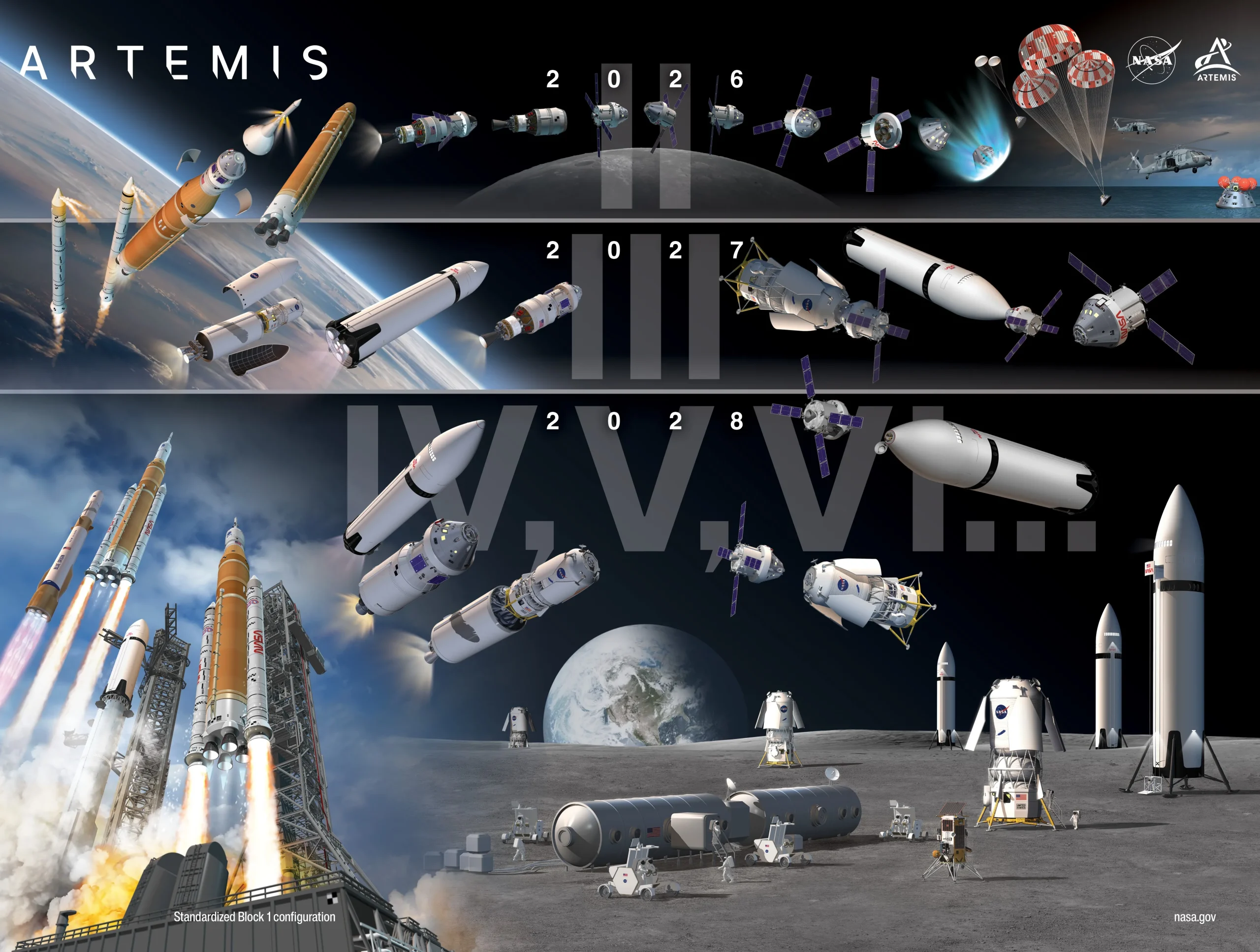
NASA is taking big steps to make its Artemis program even stronger. The space agency recently announced updates that include adding a new mission and refining the overall architecture of the program. This effort shows NASA’s commitment to returning humans to the Moon safely and sustainably, while also preparing for future deep space exploration.
Let’s break down the news in a simple way, so anyone can understand what’s happening and why it’s important.
What Is the Artemis Program?
The Artemis program is NASA’s long-term plan to send humans back to the Moon. It aims to go further than the old Apollo missions.
Main Goals:
- Send the first woman and next man to the Moon
- Establish sustainable exploration on the lunar surface
- Test technology and systems for future Mars missions
- Foster international collaboration in space
Artemis is more than a single mission—it’s a series of coordinated efforts over many years to explore the Moon and beyond.
New Mission Added to Artemis
NASA recently added a new mission to the Artemis program.
Why This Is Important:
- Adds flexibility to the program schedule
- Tests new systems and spacecraft before a Moon landing
- Provides additional opportunities for astronauts to practice operations in deep space
This new mission ensures the Artemis program stays on track, even if there are delays or unexpected challenges in other parts of the program.
Refining Overall Architecture
NASA is also refining the architecture of Artemis, which means making adjustments to how missions, rockets, and spacecraft work together.
Key Improvements:
- Better scheduling of launches
- Improved coordination between spacecraft and rockets
- Enhanced safety systems for astronauts
- Streamlined logistics for cargo and supplies
These changes make the program more efficient and safer, while keeping the long-term goals intact.
The Role of Orion and SLS
Two major elements of Artemis are the Orion spacecraft and the Space Launch System (SLS) rocket.
Orion Spacecraft:
- Carries astronauts to and from the Moon
- Has advanced life support and navigation systems
- Provides comfort and safety for the crew
SLS Rocket:
- One of the most powerful rockets ever built
- Lifts Orion and cargo into deep space
- Designed to support heavy payloads for long missions
Refining the program architecture ensures Orion and SLS work together seamlessly for each mission.
Why NASA Strengthens the Program
NASA wants Artemis to be more than a one-time mission. Strengthening the program ensures:
- Safety for astronauts
- Long-term sustainability on the Moon
- Reliable support for experiments and lunar habitats
- Better preparation for future Mars missions
By refining architecture and adding missions, NASA reduces risks and increases the chances of success.
Artemis vs. Apollo
It’s important to see how Artemis differs from the older Apollo missions.
Apollo Missions:
- Focused on short visits to the Moon
- Limited technology and support
- Few opportunities for extended research
Artemis Missions:
- Longer-term goals and sustainability
- Advanced spacecraft and rockets
- Opportunities for building lunar habitats and infrastructure
Artemis is more about long-term exploration and preparation for deeper space.
Global Collaboration
Artemis is not just a NASA project. It involves international partners.
Key Partners:
- European Space Agency (ESA)
- Japan Aerospace Exploration Agency (JAXA)
- Canadian Space Agency (CSA)
- Other nations contributing technology and research
This collaboration ensures the program benefits from shared expertise, resources, and innovation.
Technology Updates in Artemis
NASA is constantly improving technology to support Artemis missions.
Examples:
- Enhanced communication systems for deep space
- Modern navigation and guidance for spacecraft
- Advanced spacesuits for astronauts
- Robotic systems for lunar surface exploration
Adding a new mission helps test and validate these technologies before full-scale Moon landings.
Safety Measures
Safety is a top priority for NASA. Refining Artemis architecture helps minimize risks.
Safety Enhancements:
- Redundant systems for life support
- Real-time monitoring of spacecraft and astronaut health
- Emergency procedures for space and lunar operations
- Thorough testing of rockets and spacecraft before each launch
These precautions ensure astronauts can focus on exploration without unnecessary risks.
Mission Timeline
Here’s a simple view of the Artemis program timeline:
- Test Flights – Uncrewed missions to test Orion, SLS, and systems
- Initial Crew Missions – Crewed flights around the Moon for practice
- Moon Landing – Astronauts land and explore lunar surface
- Sustainable Operations – Establish longer-term presence and infrastructure
- Future Exploration – Use experience for Mars and deep space missions
Adding a mission and refining the architecture helps make this timeline more achievable.
Importance for Science
Artemis missions support scientific research on the Moon and beyond.
Research Benefits:
- Study lunar geology and resources
- Test equipment and habitats for Mars missions
- Conduct experiments in microgravity and lunar conditions
- Collect data on space environment impacts on humans
Every mission adds valuable knowledge that supports future exploration.
Public Engagement and Inspiration
NASA also focuses on inspiring the public.
- Live coverage of launches and missions
- Educational programs for students
- Updates on new technologies and discoveries
- Engagement through social media and events
Artemis is as much about inspiration as it is about science and technology.
Challenges and Solutions
Space missions are never easy. Artemis faces challenges such as:
- Budget and Funding – NASA balances costs across multiple missions.
- Technical Complexity – Rockets, spacecraft, and life support systems are highly advanced.
- Scheduling and Timing – Launch windows must be precise.
- International Coordination – Collaboration requires careful planning and communication.
By refining the program and adding missions, NASA addresses these challenges and ensures a smoother path forward.
Future Impact
Artemis sets the stage for humanity’s future in space.
Long-Term Goals:
- Sustainable presence on the Moon
- Use of lunar resources
- Preparation for Mars missions
- Development of new space technologies
Strengthening the program increases the likelihood that these goals will be achieved safely and efficiently.
Inspiration for Students and Future Scientists
The Artemis program encourages students and young people to pursue careers in:
- Science
- Technology
- Engineering
- Mathematics (STEM fields)
It shows that space exploration is an achievable dream and that international teamwork can accomplish great things.
Final Thoughts
NASA’s decision to add a mission and refine Artemis architecture demonstrates its commitment to safe, sustainable, and long-term space exploration. Artemis is more than a trip to the Moon—it’s a foundation for humanity’s future in deep space.
By continuously improving technology, safety systems, and mission planning, NASA is building a program that not only returns humans to the Moon but also prepares for even more ambitious journeys, like sending humans to Mars.
As Artemis progresses, the world watches with excitement, inspiration, and curiosity, ready to see the next chapter in human space exploration unfold.
Read Also: Keep your face towards the sunshine and shadows will fall behind you
Watch Also: https://www.youtube.com/@TravelsofTheWorld24













Leave a Reply