
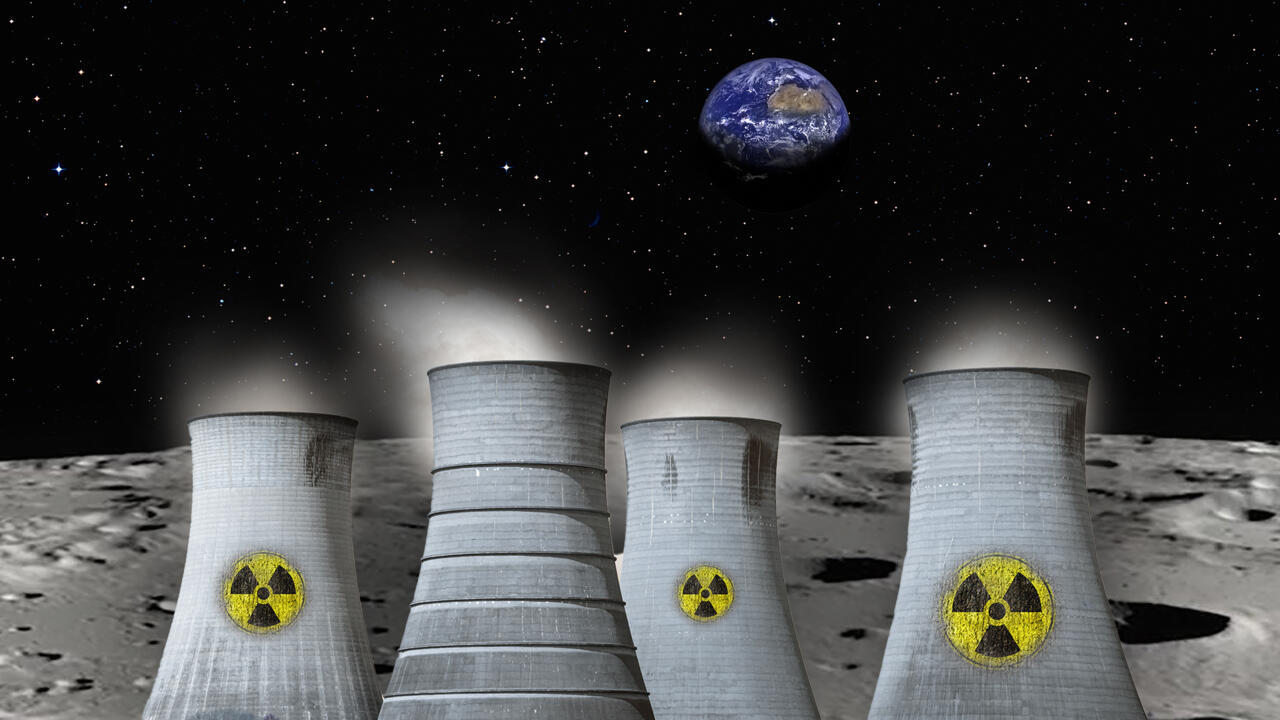
The idea of a space race goes way back to the Cold War, when the U.S. and the Soviet Union competed to do big things in space like launching satellites and landing on the Moon. Back then, beating the other side was a show of strength and technology.
Today, things aren’t the same as the 1960s, but a new kind of competition is happening. Countries like the United States, China, and Russia are pushing to build bases and big projects beyond Earth — especially around the Moon. For these nations, getting there first now could mean scientific leadership, economic benefits, and even political influence.
What the U.S. wants to do on the Moon
The United States, through NASA and the Department of Energy, is planning to build a nuclear reactor on the Moon by around 2030. The idea is to use a nuclear fission power system there.
Here’s why this matters:
1. Power for a Moon base
The Moon is a harsh place. One day there lasts about two Earth weeks, and then comes two weeks of total darkness. That makes relying on solar panels difficult. A nuclear reactor could give continuous power day and night, which would be very important for things like life support, communication, research labs, and future habitats.
2. Supporting long‑term exploration
NASA is working through its Artemis program to bring astronauts back to the Moon and eventually build a lasting presence there. Having reliable power is a big step toward that goal, and a nuclear reactor could help not just the Moon work but future missions to Mars too.
3. Beating other countries
China and Russia have also announced plans to put nuclear power systems on the Moon — possibly together — in the 2030s. If either country builds one first, they might claim the best spots on the Moon for their own bases and research. The U.S. wants to be first to avoid losing influence in space.
This isn’t just about pride — it’s also about strategy. Whoever has a working lunar power system first could shape agreements, technology standards, and who gets to invest in lunar resources.
Why nuclear power and not just solar
People sometimes think of satellites or rovers running on solar energy, but the Moon’s long nights make that hard. Solar panels can’t provide steady power during the two‑week lunar night.
A small nuclear reactor would produce a steady, reliable flow of electricity no matter what time it is. That’s exactly why NASA and the Department of Energy want to use fission — it doesn’t matter if the Sun is shining or not.
In the past, NASA even tested small nuclear systems for space use (like the Kilopower concept) to see how well they work. Those earlier projects helped prove the basic idea could work.
What the competition looks like
Right now, the U.S. is pushing hard to hit the 2030 mark. China and Russia haven’t set a firm date yet, but their plans suggest mid‑2030s is likely. They are also working together on a joint lunar research station and nuclear power ideas.
Each country sees this kind of technology as part of power — not just energy, but influence in space. If one nation builds the first working system, it could help set the rules or expectations for future bases and missions there.
Is this like the old space race?
In a way, yes. It’s still about technology and leadership. Back in the 1960s, the big achievements were things like the first satellite or the first person walking on the Moon. Now, the focus has shifted to sustained presence — building infrastructure that can support life and research beyond Earth.
So while it’s not exactly the same race as before, the spirit of who can do it first and best is still there. Countries want to be the leaders of this next chapter of space exploration.
In simple terms
-
The U.S. wants to put a nuclear reactor on the Moon by 2030 to support future bases and Mars missions.
-
Solar power alone isn’t enough on the Moon because of long, dark nights.
-
China and Russia are planning similar tech for the Moon in the 2030s and are working together.
-
Whoever does it first could shape how space exploration grows in the future.
Read Also: Keep your face towards the sunshine and shadows will fall behind you
Watch Also: https://www.youtube.com/@TravelsofTheWorld24





Leave a Reply