
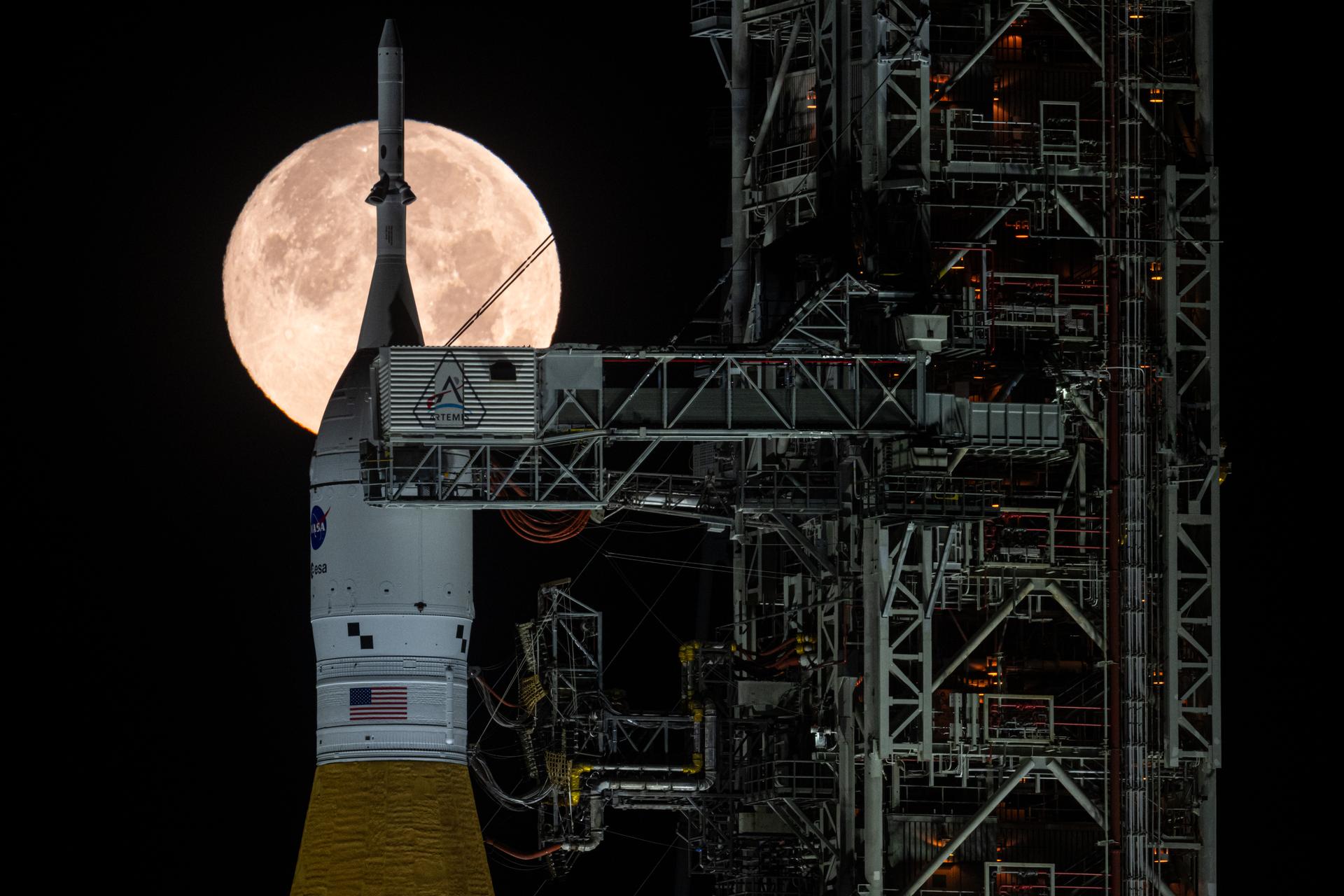
NASA is getting ready for one of the biggest space events in decades — the first crewed mission around the Moon since the Apollo era. The rocket and spacecraft for this mission, called Artemis II, are sitting tall on the launcher at the Kennedy Space Center in Florida, waiting for final tests before liftoff.
One of the most important steps before launch is something called a wet dress rehearsal. This is basically a full dress rehearsal of all the pre‑launch steps except actually flying into space. It’s a big deal because it helps NASA find and fix any problems before astronauts climb aboard. In early 2026, NASA carried out this rehearsal — and it had some bumps along the way.
In this article, we’ll walk through what the wet dress rehearsal is, what NASA did during it, the issues that came up, how NASA handled them, and what people can expect next as the mission moves toward its hoped‑for April 2026 launch.
What Is a Wet Dress Rehearsal?
A wet dress rehearsal (WDR) is one of the final big tests before a space launch. In this practice, engineers fill the rocket’s fuel tanks with real propellants (cryogenic liquid hydrogen and liquid oxygen — super‑cold rocket fuels) and run through a simulated countdown just like they would for a real launch. This test helps teams check whether the rocket, spacecraft, and ground systems work together as expected.
It’s called “wet” because fuel is actually loaded into the rocket — and “dress rehearsal” because it rehearses nearly everything that would happen on launch day, except the rocket actually lifting off.
Doing a wet dress rehearsal helps NASA:
-
Test fueling systems
-
Check countdown procedures
-
Practice draining fuel safely if needed
-
Watch how the rocket behaves with full tanks
-
Catch technical problems before the real launch
All of this happens while the rocket stands on the launch pad at Launch Complex 39B at the Kennedy Space Center. A big full Moon often makes a dramatic backdrop for this giant rocket — a powerful image of humanity’s next trip to deep space.
The First Wet Dress Rehearsal — Partial Success and a Leak
NASA began the wet dress rehearsal in early February 2026. The teams worked to load more than 700,000 gallons of cryogenic propellant into the rocket’s tanks — a massive task that requires careful handling and extreme caution.
However, during this first rehearsal on Feb. 2–3, something unexpected happened. As the rocket’s engines were being fueled and the countdown reached near the “T‑5 minute” point, engineers detected a liquid hydrogen leak at the connection between ground systems and the rocket. This leak was larger than acceptable safety limits, and for safety reasons the countdown was terminated at about T‑5:15 — meaning there were just over five minutes left in the simulated final countdown.
NASA routinely practices these rehearsals very carefully, but hydrogen leaks are hard to avoid because liquid hydrogen has extremely tiny molecules that can escape through small seals. Still, detecting this issue before a real launch was exactly what the test was for — so NASA could pause, assess and fix the problem without risking the crew.
Fixing the Problems and the Second Rehearsal
After the leak was found, engineers worked on fixing the seals and replacing a clogged filter. They also looked at other parts of the rocket’s systems to be sure everything would work safely.
NASA then scheduled a second wet dress rehearsal. On Feb. 19–20, 2026, teams again filled the rocket’s tanks, ran the countdown procedures, and tested all systems. This rehearsal completed as planned, going all the way down to about T‑29 seconds before the simulated launch point. That’s very close to the moment when the rocket would actually start its engines.
Ending at around T‑29 seconds is expected for these tests, and it showed that NASA’s systems and fueling procedures worked well once the earlier problems were fixed.
What NASA Learned and What Comes Next
Running two wet dress rehearsals back to back gave NASA valuable information.
1. Finding Problems Ahead of Time Helps Safety
The first rehearsal showed that even when everything is checked, problems can still show up under real stress. Finding the hydrogen leak early was important because it stopped NASA from attempting a launch when the issue still existed. NASA didn’t rush — they paused, fixed, and tried again. This is exactly the kind of caution required for crewed missions.
2. The Second Rehearsal Went Well
The successful completion of the second rehearsal proved that the fixes worked. It also showed that the ground teams know how to safely load and drain fuel and run through all the steps of launch preparations.
3. NASA Still Needed to Check Other Systems
Even after the second wet dress rehearsal, NASA continued to check other parts of the rocket’s systems. At one point, a helium flow issue was spotted in another part of the rocket’s propulsion system, and engineers looked into it carefully to be sure the rocket would be ready for launch.
NASA briefly rolled the rocket back from the pad to the Vehicle Assembly Building (VAB) to complete these checks and adjustments. This kind of careful work can delay launch dates, but it also increases confidence that everything will work safely once astronauts are on board.
Moving Toward the Artemis II Launch
As the wet dress rehearsals and technical checks completed, NASA set new launch target windows. The earliest official launch date now is April 1, 2026, with additional opportunities through April 6 and later periods.
NASA has confirmed that four astronauts will travel on this mission:
-
Commander Reid Wiseman (NASA)
-
Pilot Victor Glover (NASA)
-
Mission Specialist Christina Koch (NASA)
-
Mission Specialist Jeremy Hansen (Canadian Space Agency)
The spacecraft they will ride in is called Orion, and the giant rocket that will launch them is the Space Launch System (SLS) — one of the most powerful rockets ever built. This flight will not land on the Moon, but it will carry the crew on a free‑return path around the Moon and back to Earth — a similar plan to the Apollo 8 mission in the 1960s.
Before launch, the astronauts will go through a quarantine period to keep them healthy and free from any illness before heading into space. NASA takes this step seriously because even a common cold in space can cause problems.
Why This Mission Matters
Artemis II is not just another spaceflight. It is the first crewed flight of the Artemis program. That means:
-
It’s the first human journey beyond low‑Earth orbit since Apollo 17 in 1972.
-
It’s the first time an Orion spacecraft will carry astronauts around the Moon.
-
It lays the groundwork for future missions that aim to land humans on the Moon and stay there for longer periods.
This mission stands between years of work and the future of lunar exploration. The success of this rehearsal and upcoming launch will show that NASA’s teams, hardware, and procedures are ready to take humans into deep space again.
Live Views, Coverage, and Public Interest
While engineers work behind the scenes, people around the world have been watching live feeds of the rocket on the launch pad with a rising Moon behind it — a striking sign of the mission’s goal. NASA provided live views and updates online during the wet dress rehearsals, so anyone could see progress as it happened.
This kind of public coverage is part of how NASA connects people with space exploration. It builds excitement and reminds us all why we explore — to learn more about our place in the universe and push the boundaries of what humans can do.
What Happens After the Wet Dress Rehearsal?
After the wet dress rehearsal was completed and the results analyzed, NASA teams moved ahead with final preparations for launch:
-
Final checks on rocket systems
-
Ground support testing
-
Flight Readiness Reviews
-
Astronaut training and final briefings
-
Rolling the rocket back out to the pad once checks are done
All of this leads to the launch window starting April 1, 2026, when the Artemis II crew could lift off and begin their roughly 10‑day journey around the Moon and back.
In Simple Terms: What This All Means
NASA’s wet dress rehearsal was a full practice run of launch preparations for Artemis II. The first attempt found a fuel leak and was stopped — but that was part of the point of the test. Teams fixed the issue and ran a second rehearsal, which went well. Now NASA is moving forward with launch planning.
This mission is historic because it marks humans returning to lunar space after more than half a century. The careful testing and checks show how serious NASA is about safety and success. As April 2026 gets closer, the world will be watching this big step toward returning humans to the Moon and pushing exploration further than ever before.
In Summary
-
NASA conducted two wet dress rehearsals for Artemis II as practice before launch.
-
The first was cut short due to a liquid hydrogen leak.
-
The second rehearsal was completed successfully.
-
Launch is now eyed for April 1, 2026 and later windows.
-
Artemis II will carry four astronauts around the Moon — a landmark mission for human spaceflight.
Read Also: Keep your face towards the sunshine and shadows will fall behind you
Watch Also: https://www.youtube.com/@TravelsofTheWorld24











Leave a Reply