
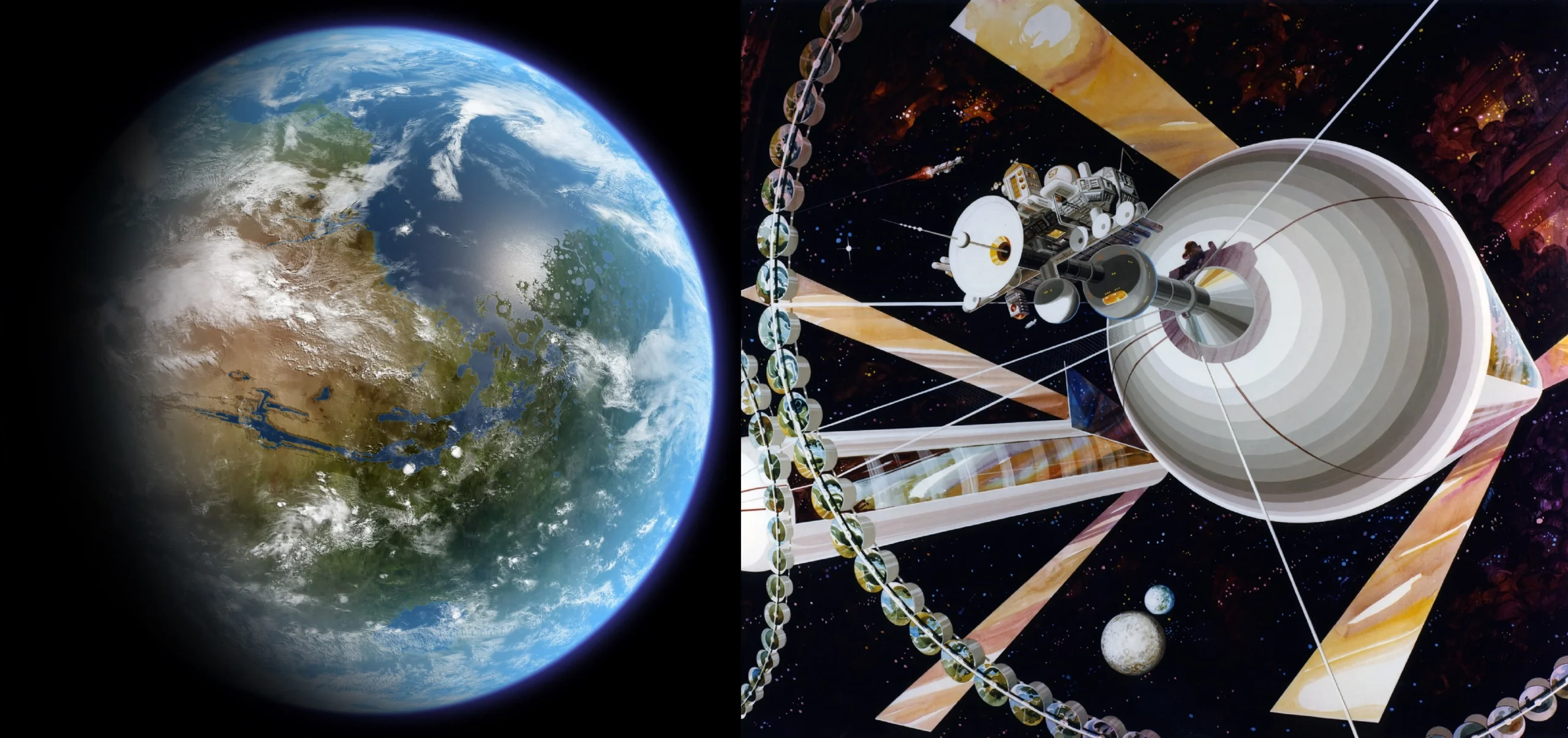
A new scientific study suggests that solar panels in space might provide up to 80% of Europe’s renewable energy by 2050 — and this could be a big help in reaching climate goals and cutting reliance on weather‑dependent land‑based wind and solar power.
In this article, we’ll explain the idea, how space‑based solar power works, what the study found, why this matters, and what challenges still stand between the idea and reality.
What Is Space‑Based Solar Power?
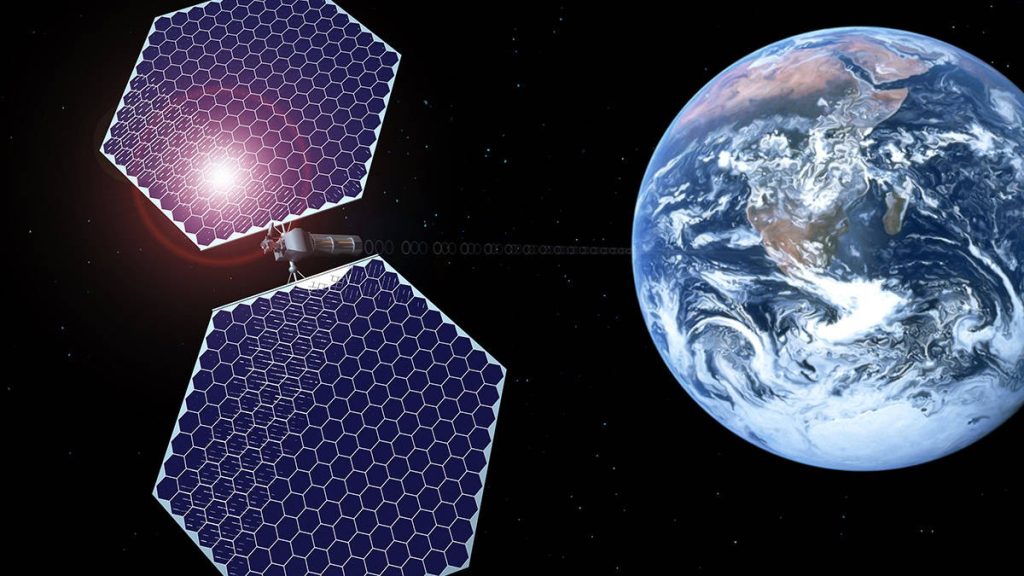
Space‑based solar power (often called SBSP) is a concept where very large solar panels are placed in orbit around Earth. These panels would collect sunlight far above the atmosphere, where light is stronger and constant — there’s no night or clouds to reduce production.
Once the panels collect energy in space, it’s turned into a form that can be sent down to Earth, usually as microwave or laser beams, and then converted back into electricity for use on the ground.
Imagine giant solar stations circling the planet, always pointed toward the Sun, capturing energy all day and all night — that’s the promise of SBSP.
Why Space Power Could Be So Valuable
Solar power on Earth has big advantages: it’s clean, cheap, and increasingly efficient. But it also has limitations:
-
It stops producing energy at night.
-
Clouds and weather reduce output.
-
Different places on Earth get different amounts of sunlight.
Wind power, while valuable, also depends on changing weather patterns. Because of this, Europe and other regions that want to rely more on renewable energy must build lots of energy storage systems like batteries — and still deal with interruptions.
Space‑based solar power, in theory, could produce clean energy continuously — day and night, rain or shine — because panels in orbit wouldn’t be affected by weather or nighttime.
This continuity could help solve one of the biggest problems facing renewable energy: intermittency (times when power production drops due to weather or time of day).
What the New Study Found
Researchers, including scientists from King’s College London, looked at how SBSP — if fully developed — might fit into Europe’s energy system by 2050. They used detailed computer models that take into account how much energy Europe will need, how the electricity grid works, and how different energy sources perform.
Here’s what the study suggests:
1. Space Solar Could Replace Most Land‑Based Renewables
The study found that, in the right conditions, space‑based solar power could replace up to 80% of Europe’s need for wind and solar energy generated on Earth by 2050. That doesn’t mean space power would generate all Europe’s energy, but it could take over most of the role currently expected from land‑based renewables.
2. This Would Reduce Storage Needs
One reason renewable energy depends so much on batteries and storage is because of the natural day‑night and weather cycles. If space solar can provide consistent power, the need for massive energy storage could be cut by more than 70%, according to some parts of the study.
3. It Could Lower Energy System Costs
The research also suggests that if space solar power systems can meet expected performance and cost projections, they could reduce the overall cost of Europe’s power system — especially by reducing the need to build and maintain large storage and backup systems.
4. It Can Help Europe Reach Net‑Zero by 2050
Europe has strong climate goals, including reaching net‑zero greenhouse gas emissions by 2050. Many studies have already shown that energy from wind, solar, and other renewables needs to grow massively to hit this target. Space solar power could play a role by providing a steady stream of clean energy that’s not tied to weather patterns.
How Space Solar Power Would Work
You might be wondering how this interesting idea could actually operate. The basic process involves several parts:
Solar Panels in Orbit
Huge arrays of solar panels would be launched into orbit around Earth. These might be built in space or assembled in orbit using robots. Once in position, the panels would always face the Sun to collect maximum sunlight.
Some designs even use heliostat mirrors — devices that reflect sunlight — to direct light onto the panels more efficiently.
Sending Power to Earth
Once electricity is generated, it needs to get down to Earth without wires. This would be done by turning the energy into beams of microwaves or lasers aimed at large receiving stations on the ground. These stations contain special antennas called rectennas that capture the beams and turn them back into electricity for the grid.
This method sounds like science fiction, but smaller versions have already been tested successfully in early experiments, most notably by agencies like JAXA in Japan.
Integration With the Grid
Once the energy reaches the ground, it would be fed into existing electrical grids to provide power to homes, businesses, and industries — much like electricity from solar farms or wind turbines does today.
Why This Idea Isn’t Already in Place
If space solar power sounds so great, why isn’t it already up and running?
The honest answer is that technology and cost are still huge hurdles. The concept has been known since the late 1960s, but:
-
We still need better ways to build large structures in space.
-
We need reliable ways to transmit energy from orbit to Earth.
-
Cost of launching and building these large systems is still very high.
Space solar power is not ready for commercial use yet. The study shows what could happen if technology continues to improve and costs come down significantly.
Many experts think that some version of SBSP might start with smaller test stations or demonstration systems before full‑scale deployment can be considered.
Space Solar Power Could Change Europe’s Energy Future by 2050
Why Space Solar Power Matters for Europe
Europe already uses a growing amount of renewable energy. In 2024, nearly half of the electricity consumed in the EU came from renewable sources, led by wind, solar, and hydro power.
But hitting the EU’s future clean energy targets will be hard. Plans aim for renewables to grow even more by 2030 and 2050, and that means very fast build‑outs of wind and solar installations, plus massive energy storage systems.
Space solar power could ease some of that pressure by providing:
-
More constant energy generation than ground systems.
-
Less need for costly batteries and storage systems.
-
A backup or complement to on‑Earth wind and solar farms.
This wouldn’t make traditional renewables useless — wind and solar on Earth would still play an important role. But space solar could supply a steady base of clean energy that helps keep the grid stable and reliable.
What Europeans Might See by 2050
If space solar power becomes viable by 2050, Europe could look very different in terms of energy:
-
Rooftops, fields, and seas would still host solar panels and wind turbines.
-
Giant space solar stations could send power down from orbit.
-
Electricity grids might rely less on batteries for balancing supply and demand.
-
Carbon emissions from electricity generation could fall dramatically.
In this scenario, Europe would use a mix of ground‑based renewables, energy storage, and space solar power to meet most of its electricity needs with minimal fossil fuels.
This would be a major achievement — and it shows how creative solutions can help with climate goals.
Challenges and What Still Needs to Happen
Although the study points out real potential for space solar power, several things still need to be solved before it becomes practical:
1. Lowering Cost of Space Construction
Right now, building and launching massive solar arrays is very expensive. To be competitive with terrestrial renewables, costs must fall dramatically.
2. Improved Wireless Power Transmission
Microwave or laser power transmission needs to be safe, efficient, and reliable at large scales.
3. Testing and Prototypes
Before large space systems, smaller test versions must prove the technology works over long periods.
4. Policy and Regulation
Global rules on power beaming, space debris, and orbital traffic would need to be developed.
Even though these challenges are big, the study shows they might be overcome with long‑term effort and investment.
In Simple Terms: What This Means
-
A new study suggests that solar panels in space could provide up to 80% of Europe’s renewable energy needs by 2050.
-
The idea is to put huge solar panels in orbit where sunlight is always strong.
-
Energy would be sent down to Earth using beams like microwaves and turned into electricity.
-
If this works, it could make Europe’s energy supply more constant, cheaper, and cleaner.
-
But the technology has to improve a lot, and costs must fall before this becomes real.
Space solar power is still a long way from being built, but this new study shows scientists are taking it seriously as a possible piece of the future energy puzzle.
Read Also: Keep your face towards the sunshine and shadows will fall behind you
Watch Also: https://www.youtube.com/@TravelsofTheWorld24





Leave a Reply