
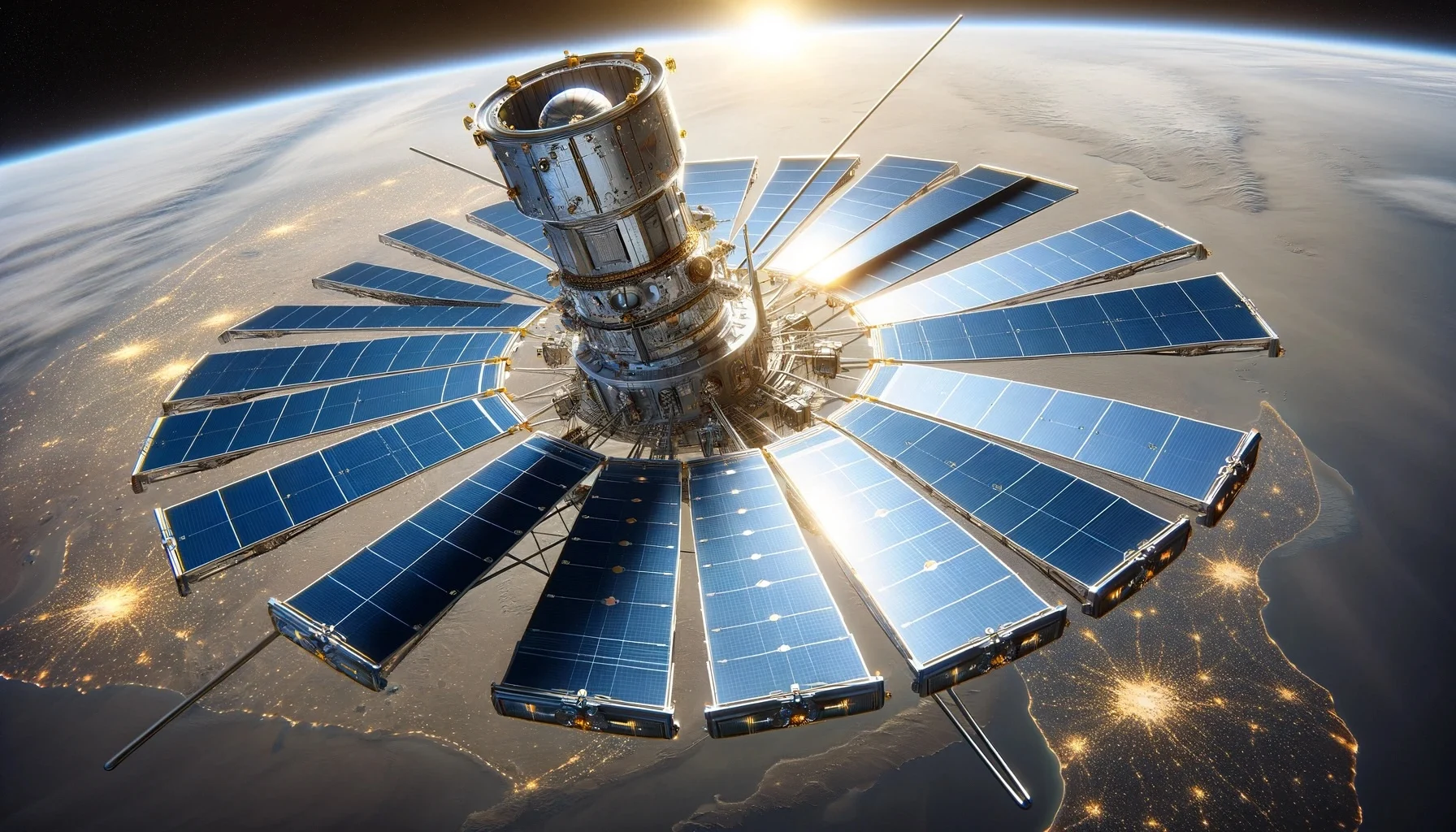
NASA has released a report saying there’s a real chance we could have solar power stations in space providing electricity back to Earth — but probably not until after 2050. This idea has been talked about for decades, but it’s never been seriously studied by NASA at this scale until now. The report looks honestly at where the technology stands, what challenges remain, and what it would take to bring space‑based solar power into the real world.
This article breaks down what the report says, why NASA thinks space solar power is possible but difficult, how the systems would work, the benefits and downsides, and what it might mean for our future energy supplies.
What Is Space‑Based Solar Power?
The idea is simple in concept but tricky in execution: instead of building huge solar panels on the ground, put them up in space where they can collect the Sun’s energy all the time, without clouds or night getting in the way. Once the energy is captured, it would be sent down to Earth — usually by microwave or laser beams — and then converted into electricity for homes, cities and factories.
In space, solar panels get sunlight without interruption, which means they could generate more electricity more consistently than solar panels on Earth. Some studies even suggest that a space power system could support big swaths of a continent’s energy needs if it ever became affordable and practical.
But nothing like that exists yet at commercial scale — and the NASA report explains why it probably won’t be ready before mid‑century.
Why NASA Is Studying This Now
NASA doesn’t always study energy systems for everyday use on Earth. So why did the agency take a close look at space‑based solar power?
There are three big reasons:
-
Climate and Energy Goals: The world is pushing hard to find cleaner, more reliable power sources. Solar power on Earth works well, but it has limits — it stops at night and slows down when it’s cloudy. Space solar power doesn’t have those limits.
-
Advancing Technology: In recent years, both NASA and private companies have tested small pieces of what space solar power would need — like how to beam energy wirelessly, or how to build structures in orbit. These tests make the idea less science‑fiction and more real.
-
Long‑Term Planning: NASA looks ahead decades to understand how new technologies might benefit humans. The agency wants to know what obstacles exist, so scientists and engineers can start tackling them now.
So the report isn’t a promise that space power will be deployed soon. It’s more like an honest roadmap of what would need to happen before space power could become real.
What the NASA Report Says
NASA’s new report focuses on a form of space solar power called SBSP, short for Space‑Based Solar Power. The report looks at how such systems could work, and what the cost and timeline might be.
Here are the key points from the report:
1. Possible, But Not Cheap Yet
The report says that space solar power could start operating by around 2050 — but it would cost much more than solar power on Earth does right now. In fact, early systems would likely be many times more expensive per unit of electricity than ground‑based renewables.
That’s mainly because we’d need:
-
Huge solar arrays launched into space
-
Large receivers on Earth
-
Technology to beam energy safely and efficiently
-
Ways to build and service the systems in orbit
Right now, launching and building these structures in space is expensive. But the report highlights that those costs could fall over time if technology and space infrastructure improve.
2. Technology Is Getting Better
NASA points out that some parts of SBSP technology already exist or are in development:
-
Systems to beam power wirelessly through the air
-
Autonomous robots that could assemble structures in orbit
-
Methods for in‑space servicing and manufacturing
These advances don’t solve everything, but they make building a space solar system more realistic than it was decades ago.
3. Cost Comes First
The report clearly states that cost is the biggest hurdle. Right now, it would be far more expensive than building solar farms and wind turbines on Earth. Until launch, manufacturing, and space construction costs come down, big space power systems aren’t likely to happen.
NASA and others are already working on improvements in these areas — but it will take time. The report doesn’t say space solar is impossible, just that it won’t be cheap or simple for many years.
How Space Power Would Work in Real Life
To understand how space solar power could work, it helps to think about the steps involved:
1. Building In Space
If you want to collect sunlight in orbit, you need massive solar panels. These would likely be built in space because launching giant structures from Earth would be extremely costly. One idea is to use robots that can assemble the arrays once they’re in orbit.
2. Collecting Solar Energy
In space, panels can soak up sunlight continuously because they aren’t affected by day and night or weather. This means they could generate far more power than identical panels on Earth.
3. Beaming Power to Earth
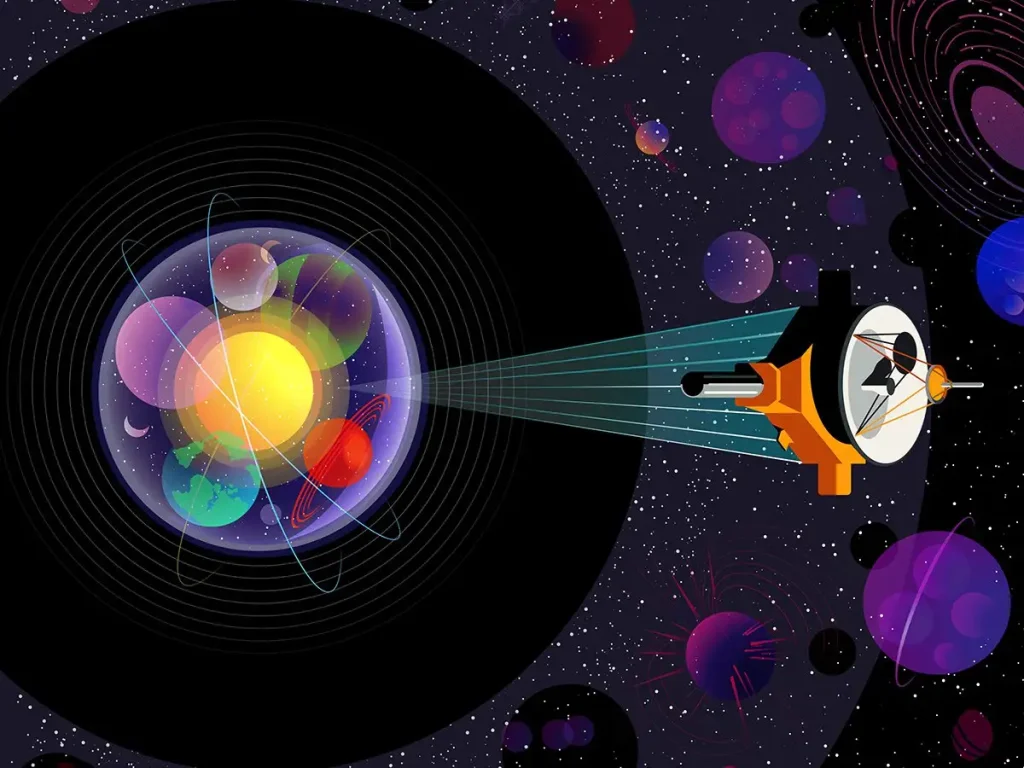
Once the sunlight is converted into electricity, the challenge is getting that energy down to Earth. Scientists propose using microwave beams or lasers aimed at receiving stations on the ground. These stations would convert the microwave or laser energy back into electricity and feed it into the grid.
This wireless power transfer is one of the trickiest parts — the system needs to be safe, reliable, and efficient. NASA and other groups have already done small tests, but building a full‑scale station is a big step up.
Big New NASA Report Says We Might See Solar Power From Space After 2050
Benefits of Space Solar Power
If it ever becomes practical, space‑based solar power could offer some big advantages:
1. Constant Power
Unlike wind turbines and ground solar panels, space solar wouldn’t stop producing power at night or when clouds roll in. It could give a steady supply of energy day and night.
2. Very High Output
In space, panels receive much more sunlight than on Earth’s surface — because the atmosphere doesn’t filter the rays. That means more energy per square meter.
3. Support for Climate Goals
A reliable, round‑the‑clock source of clean electricity could help countries reduce reliance on fossil fuels and meet climate targets. Some studies suggest that if space solar systems were built at large enough scales, they could replace a large share of Earth‑based renewable needs.
So while the idea isn’t cheap or simple yet, the potential benefits are huge. That’s why people keep studying it.
Challenges and Downsides
Of course, there are big challenges that NASA and others are trying to understand:
1. Cost Is High
Everything in space is expensive. Right now, SBSP systems would cost much more than ground‑based systems, and it will take years of technology and manufacturing improvements to narrow that gap.
2. We Don’t Have All the Tech Yet
Some parts of space solar power are still at early testing stages. Scientists know the idea works in principle, but they haven’t yet built reliable long‑range power beaming systems or large orbit factories.
3. Launch and Construction
You’d need to launch tons of material into orbit and build massive structures up there. Even with reusable rockets getting cheaper, this is still a huge undertaking that will take decades of effort.
4. Competition With Earth Technologies
Solar panels on Earth are getting cheaper every year. If that continues, space power might never become competitive unless space infrastructure costs fall dramatically.
So while the idea is promising, there’s still a long road ahead.
Where We Are Now
Right now, researchers around the world — including NASA, engineers in Japan and Europe, and private companies — are doing smaller experiments that build toward the bigger goal. For example:
-
Some space solar demonstration projects are planned where satellites will beam small amounts of power back to Earth.
-
Universities are modeling how space solar could fit into future power grids.
-
Engineers are designing robotic systems that could build and service large space structures.
All these steps are helping people understand what works and what doesn’t, and they lay the groundwork for larger systems decades down the road.
So What Does This Mean for You?
If you live in a city or town powered by electricity today, nothing will change tomorrow. Space‑based solar power is not something that will show up in the next decade.
But looking further ahead — toward 2050 and beyond — this new NASA report says the idea could be real if enough challenges are solved. That means engineers and scientists may focus more on this technology in the coming years, since the potential payoff is huge.
In the long run, space power might become part of our global energy mix — alongside wind, ground solar, nuclear, and other renewables — helping the world meet future energy and climate goals.
Read Also: Keep your face towards the sunshine and shadows will fall behind you
Watch Also: https://www.youtube.com/@TravelsofTheWorld24





Leave a Reply