
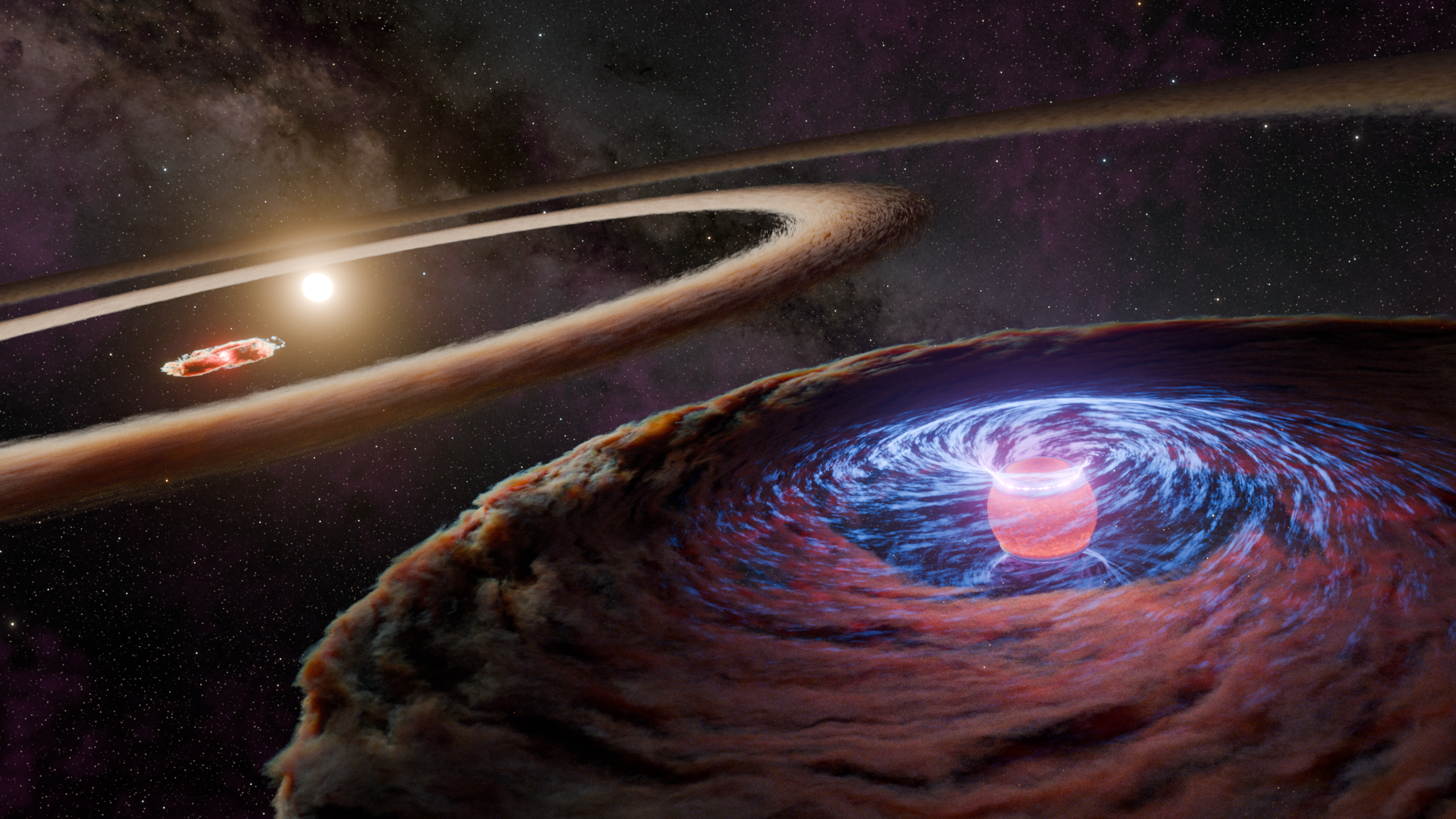
Space exploration continues to surprise scientists with new discoveries. Recently, astronomers announced an exciting breakthrough: a young or “baby” planet has been photographed forming inside a ring of dust around a distant star. This discovery gives scientists a rare chance to see how planets are created in real time.
The finding was made with the help of powerful telescopes and advanced imaging technology. It offers important clues about how planets like Earth, Jupiter, and others formed billions of years ago.
For scientists studying the origins of planets, this discovery is a major step forward.
A Rare Look at Planet Formation
Planets are believed to form from disks of gas and dust that surround young stars. These disks are often called protoplanetary disks.
Over time, tiny particles inside the disk collide and stick together. These particles slowly grow into larger objects. Eventually, they become planetary bodies.
However, observing this process directly has been extremely difficult. Planet formation takes millions of years, and the early stages are hidden inside thick clouds of dust.
Now, astronomers have managed to capture an image that appears to show a young planet forming within one of these dusty rings.
The Star at the Center of the Discovery
The discovery involves a young star known as AB Aurigae. This star is located hundreds of light-years away from Earth and is surrounded by a large disk of gas and dust.
Scientists have been studying this star for years because its disk shows distinct rings and spiral shapes, which often suggest that planets are forming inside it.
Using powerful telescopes, researchers finally spotted a bright structure inside the disk that appears to be a forming planet.
The Telescope That Made It Possible
The discovery was made possible with the help of the Hubble Space Telescope.
Hubble has been observing the universe for decades and has helped scientists study distant galaxies, stars, and planets.
In this case, the telescope captured detailed images of the disk around AB Aurigae. Inside one of the rings, scientists noticed a bright spot that looks like a planet forming.
This young world is still gathering material from the surrounding disk, which is why scientists refer to it as a “baby planet.”
What Makes This Discovery Special
Astronomers have discovered many exoplanets in the past, but this one is unique.
Most exoplanets are found indirectly by observing how they affect their stars. For example, scientists may notice a star dimming when a planet passes in front of it.
In this case, however, scientists believe they have directly photographed the planet while it is still forming.
This is extremely rare and gives researchers valuable information about the early stages of planetary development.
A Giant Planet in the Making
Scientists believe the forming planet is likely a gas giant, similar to Jupiter.
Gas giants are large planets made mostly of hydrogen and helium. They often form far from their stars where colder temperatures allow gases to collect.
The “baby planet” observed around AB Aurigae appears to be gathering material from the surrounding disk. Over time, it may grow much larger as it continues collecting gas and dust.
This process could take millions of years before the planet becomes fully formed.
How Rings Form in Planetary Disks
The rings seen around young stars often provide clues about hidden planets.
When a forming planet moves through the disk, its gravity can push dust and gas aside. This creates gaps or rings in the disk.
These rings act like fingerprints that reveal where planets may be forming.
In the case of AB Aurigae, the ring structure helped scientists focus their search on the most likely location for a forming planet.
Technology Behind the Discovery
Capturing images of forming planets requires extremely advanced technology.
Astronomers use techniques such as:
-
High-resolution imaging
-
Light filtering to block the brightness of stars
-
Computer processing to analyze faint signals
These tools allow scientists to detect objects that are normally hidden by bright starlight and thick dust clouds.
Without these techniques, the discovery of this young planet would not have been possible.

Scientists Photograph ‘Baby’ Planet for the First Time Around Star
Why This Discovery Matters
This discovery helps answer an important scientific question: How do planets actually form?
While scientists have developed several theories about planetary formation, direct observations are still rare.
Seeing a planet forming inside a disk provides strong evidence that these theories are correct.
It also helps scientists understand the timeline of planetary development and how different types of planets evolve.
The Search for More Young Planets
Astronomers believe there are many young planets forming around stars across the galaxy.
However, spotting them is difficult because they are usually hidden inside dusty disks.
New telescopes are making this search easier. One of the most powerful is the James Webb Space Telescope.
This telescope can see through dust clouds using infrared light, allowing scientists to study young planetary systems in greater detail.
Future observations may reveal many more “baby planets” in the early stages of formation.
Learning About Our Own Solar System
Studying young planets also helps scientists understand how our own solar system formed.
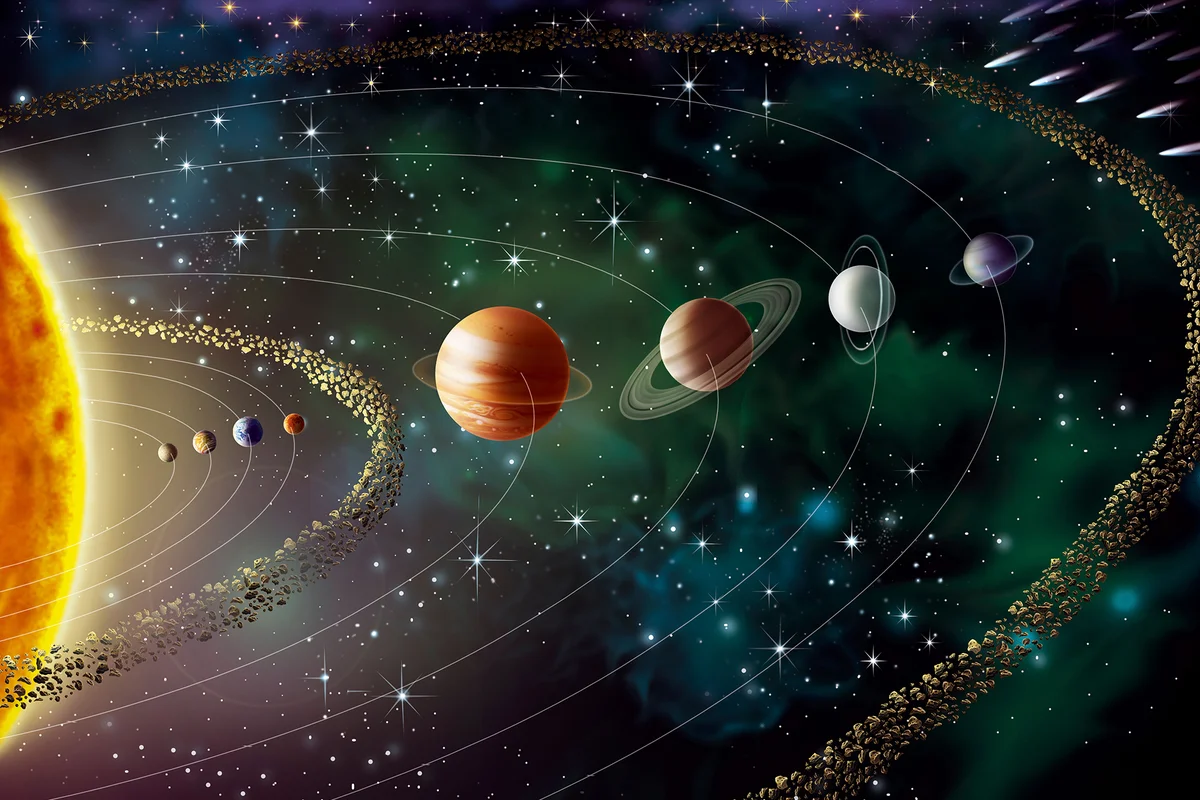
Billions of years ago, the Sun was surrounded by a similar disk of gas and dust. From this disk, the planets Mercury, Venus, Earth, Mars, Jupiter, Saturn, Uranus, and Neptune eventually formed.
By observing young stars today, astronomers can look back in time and see processes similar to those that created our planetary system.
In a way, discoveries like this allow scientists to witness the birth of worlds.
A Growing Field of Discovery
Planet discoveries have increased dramatically over the past two decades.
Thousands of exoplanets have been discovered around distant stars. Some are extremely large, while others are rocky planets similar in size to Earth.
Each discovery helps scientists understand the diversity of planetary systems in the universe.
Some systems look similar to our solar system, while others are completely different.
The Future of Planet Discovery
The coming years promise even more exciting discoveries.
New telescopes and space missions will allow scientists to observe distant planetary systems in greater detail.
Astronomers hope to:
-
Discover more forming planets
-
Study planetary atmospheres
-
Search for planets with conditions suitable for life
These efforts may eventually help answer one of humanity’s biggest questions: Is life common in the universe?
Conclusion
The discovery of a “baby planet” forming in a ring around a distant star marks an important moment in astronomy.
For the first time, scientists have been able to capture what appears to be a young planet still growing inside its birth disk.
This discovery provides valuable insight into how planets form and evolve. It also shows how powerful modern telescopes have become in revealing the hidden processes of the universe.
As technology improves and new telescopes begin observing the cosmos, scientists expect to uncover many more young planets forming around distant stars.
Each discovery brings humanity closer to understanding how worlds are created and how our own planet came into existence.
Read Also: Keep your face towards the sunshine and shadows will fall behind you
Watch Also: https://www.youtube.com/@TravelsofTheWorld24








Leave a Reply