
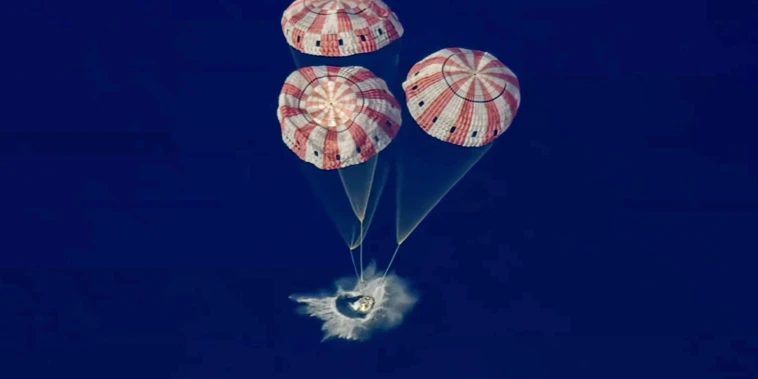
When it comes to human space missions, one question matters more than anything else: were the astronauts safe? With the Artemis II mission, led by NASA, this question becomes even more important because it is the first time in over 50 years that humans are traveling beyond low Earth orbit toward the Moon.
Artemis II is not just about reaching the Moon — it is mainly a test mission to make sure the spacecraft can safely carry astronauts into deep space and bring them back. So, did it protect the crew well enough? Let’s break it down in a very simple and clear way.
What Spacecraft Is Being Used?
The astronauts on Artemis II are traveling inside the Orion spacecraft.
Orion is specially designed for deep space missions. It is very different from older spacecraft used during the Apollo missions.
Its main job is simple:
Keep astronauts safe in one of the most dangerous environments humans can face.
Main Safety Systems Inside Orion
To understand how well the crew is protected, we need to look at the key safety features built into Orion.
1. Radiation Protection
One of the biggest dangers in deep space is radiation.
Outside Earth’s atmosphere, astronauts are exposed to:
- Solar radiation from the Sun
- Cosmic radiation from deep space
Orion is built with protective materials that reduce radiation exposure. It also has special areas where astronauts can stay during solar storms for extra protection.
While it cannot block all radiation, it reduces it to safer levels for short missions like Artemis II.
2. Life Support System
The spacecraft must provide everything needed to survive.
Orion’s life support system includes:
- Oxygen supply
- Carbon dioxide removal
- Temperature control
- Water management
During the mission, these systems are carefully tested to make sure astronauts can live comfortably for the entire journey.
3. Heat Shield for Re-entry
One of the most dangerous moments is coming back to Earth.
When the spacecraft re-enters the atmosphere, it faces extreme heat.
Orion uses one of the most advanced heat shields ever built. It protects the capsule from temperatures hotter than lava.
This system is critical, and it performed successfully in earlier uncrewed tests, giving confidence for Artemis II.
4. Launch Abort System
Safety starts even before reaching space.
If something goes wrong during launch, Orion has a launch abort system that can:
- Pull the crew capsule away from the rocket
- Carry astronauts to safety within seconds
This system gives astronauts a strong chance of survival even in worst-case situations.
5. Strong Structural Design
Orion is built to handle:
- Strong vibrations during launch
- Extreme temperatures in space
- Pressure changes
- Micrometeoroid impacts (tiny space rocks)
Its design focuses heavily on durability and reliability.
How Did It Perform During the Mission?
So far, all reports from NASA show that Orion performed very well during Artemis II testing phases.
Key points include:
- Stable environment inside the spacecraft
- Reliable communication with Earth
- Proper functioning of life support systems
- Safe navigation beyond Earth’s orbit
These are all strong signs that the spacecraft is doing its job.
What About the Translunar Journey?
During the trip toward the Moon, the spacecraft goes far beyond Earth’s protective magnetic field.
This is where risks increase.
Even in this environment:
- Orion maintained stable conditions
- Radiation levels stayed within expected limits
- Systems continued to function normally
This shows the spacecraft can handle deep space conditions, at least for short missions.
Crew Comfort and Safety
Safety is not just about survival — it is also about comfort and usability.
Astronauts need to:
- Move around
- Work efficiently
- Stay mentally stable
Orion is designed with:
- Better seating and space compared to Apollo
- Modern control systems
- Improved lighting and display panels
These features help reduce stress and improve overall mission safety.
Challenges That Still Exist
Even though Orion performed well, space travel is never risk-free.
Some challenges remain:
Radiation Over Long Missions
For short trips like Artemis II, protection is enough. But longer missions (like Mars) will need better shielding.
Limited Space
The cabin is still small, which can be uncomfortable for long durations.
Emergency Situations
Even with strong systems, unexpected problems can still happen in space.
Comparison with Apollo Missions
Compared to Apollo spacecraft, Orion is much safer.
Here’s why:
- More advanced materials
- Better computer systems
- Improved life support
- Stronger safety features
In simple terms, Orion is a modern upgrade designed for longer and safer missions.
Role of Private and Global Support
NASA is not working alone. Companies like SpaceX and international partners help improve mission safety.
They contribute:
- Technology development
- Testing support
- Backup systems
This teamwork increases overall reliability.
So, Did It Protect the Crew Well Enough?
Based on everything we know so far:
Yes, the Artemis II spacecraft has shown that it can protect the crew effectively for its mission.
It successfully:
- Maintained a safe internal environment
- Managed radiation within limits
- Supported life systems properly
- Stayed stable during deep space travel
But Is It Perfect?
No spacecraft is perfect.
Orion is:
- Very safe for short deep-space missions
- Still being improved for longer missions
That’s exactly why Artemis II is a test mission — to find and fix any remaining issues.
Final Thoughts
The Orion spacecraft used in the Artemis II mission by NASA represents a major step forward in human spaceflight safety.
After more than 50 years, humans are once again traveling toward the Moon — and this time with much better protection, technology, and preparation.
While challenges still exist, the mission shows that we are ready to move forward.
In simple words:
The spacecraft did its job well — and it brings us one step closer to living and working beyond Earth.
Read Also: Keep your face towards the sunshine and shadows will fall behind you
Watch Also: https://www.youtube.com/@TravelsofTheWorld24





Leave a Reply