
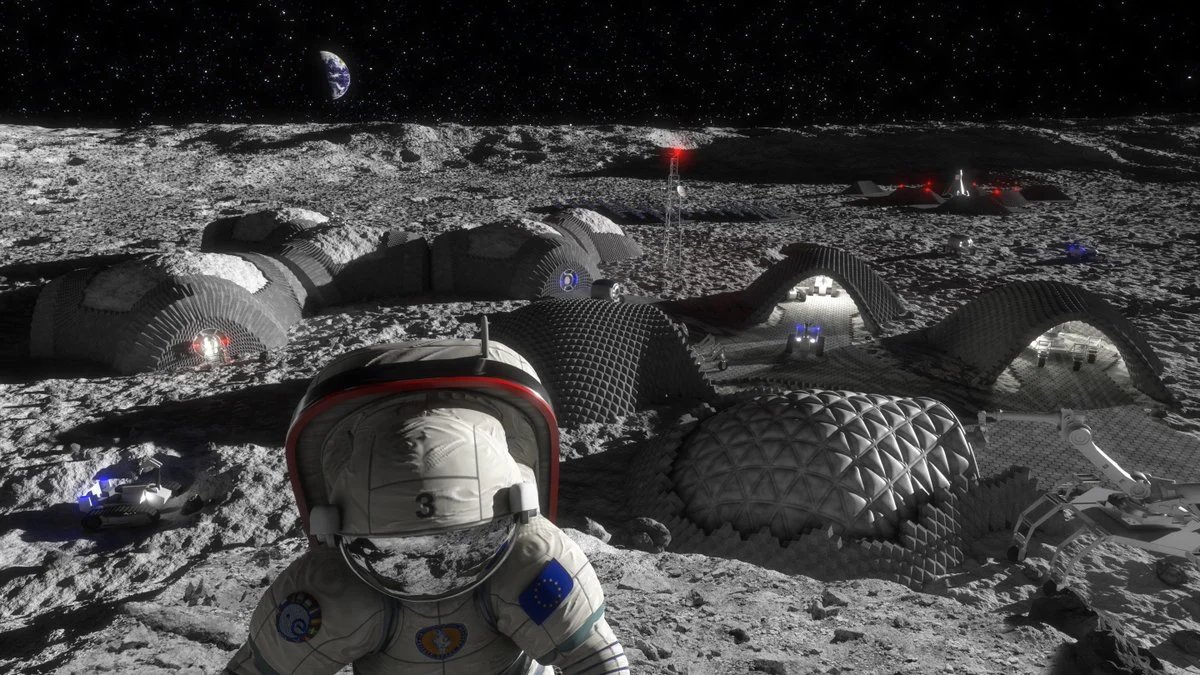
Humanity is entering a new space race, but this time it is not just about planting flags or short visits. The real goal now is to build a permanent outpost on the Moon. This means a place where humans can live, work, and do research for long periods of time.
But the big question is simple: who will build an outpost on the Moon first?
Right now, several countries and private companies are working toward this goal. The main players are the United States (through NASA), China, and private companies like SpaceX. Other countries like India, Russia, Japan, and the European Space Agency are also part of the bigger plan, but the first lunar outpost will likely come from a few top contenders.
Let’s explore this in a very simple way.
What Does a Moon Outpost Mean?
A Moon outpost is not just a lander or a temporary camp. It is a long-term base on the Moon where astronauts can:
- Stay for weeks or months
- Conduct science experiments
- Test new space technology
- Prepare for Mars missions
- Use Moon resources like ice and minerals
Think of it like a small research village, but on the Moon.
Building something like this is extremely difficult because the Moon has no air, extreme temperatures, and dangerous radiation.
The Main Race: Who Are the Top Contenders?
1. United States – NASA and Artemis Program
The strongest candidate right now is the United States, led by NASA.
NASA is building its future Moon program called Artemis. The goal is not just to land astronauts, but to build a long-term presence.
NASA’s plan includes:
- Landing astronauts on the Moon again
- Building the Lunar Gateway (a space station around the Moon)
- Creating a base near the Moon’s south pole
- Using Moon ice to make water and fuel
NASA is working with private companies like SpaceX and international partners to speed things up.
The biggest advantage NASA has is experience. It already landed humans on the Moon in 1969 during the Apollo missions.
But this time, the goal is more advanced: not just visit, but stay.
2. China – Fast and Focused Space Program
The second strongest competitor is China, through China National Space Administration (CNSA).
China is moving very fast in space exploration. It has already:
- Landed rovers on the Moon
- Collected Moon samples
- Built its own space station in orbit
China has announced plans to build a Moon base with Russia in the future. Their long-term goal is a permanent research station on the Moon.
China’s advantages:
- Very fast development speed
- Strong government funding
- Clear long-term space strategy
If NASA slows down, China could catch up quickly.
3. SpaceX – The Private Space Giant
A very important player is SpaceX, owned by Elon Musk.
SpaceX is not a country, but it is changing the space industry completely.
Its Starship rocket is designed to:
- Carry humans to the Moon
- Carry heavy cargo
- Be reusable (lower cost missions)
- Eventually go to Mars
SpaceX is working closely with NASA for the Artemis program. In fact, SpaceX is building the lunar lander that will take astronauts to the Moon.
Why SpaceX matters:
- It builds rockets faster than governments
- It focuses on cost reduction
- It pushes innovation quickly
Some experts believe SpaceX could help NASA build the first Moon base faster than expected.
What About Other Countries?
Europe – ESA
The European Space Agency (ESA) is playing a support role.
Europe is helping NASA with:
- Building spacecraft modules
- Supporting Moon missions
- Scientific research
ESA is not leading the Moon base race, but it is a key partner.
India – ISRO
India’s space agency Indian Space Research Organisation (ISRO) is growing fast.
India has:
- Successfully landed a spacecraft near the Moon’s south pole
- Built low-cost space missions
- Strong scientific talent
ISRO is not currently aiming for a Moon base first, but it could become a major partner in future lunar projects.
Russia
Russia has long experience in space, but currently it is working more slowly compared to China and the U.S. It may still contribute in future international Moon projects.
Where Will the First Moon Outpost Be Built?
Most experts agree on one key location:
👉 The south pole of the Moon
Why?
Because it has:
- Water ice hidden in craters
- Constant sunlight in some areas
- Useful resources for fuel and oxygen
This makes it perfect for a long-term base.
What Will the First Moon Outpost Look Like?
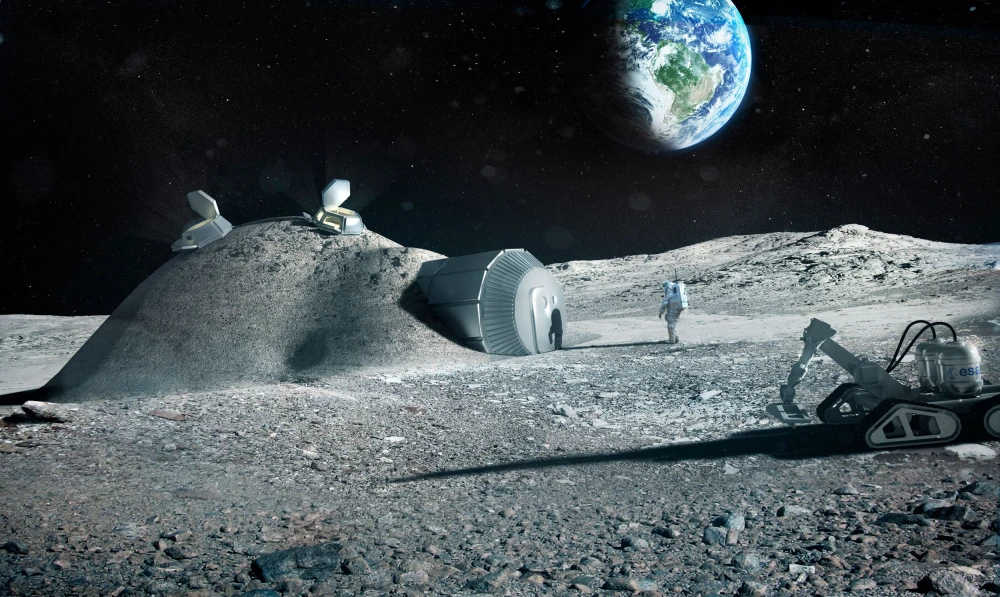
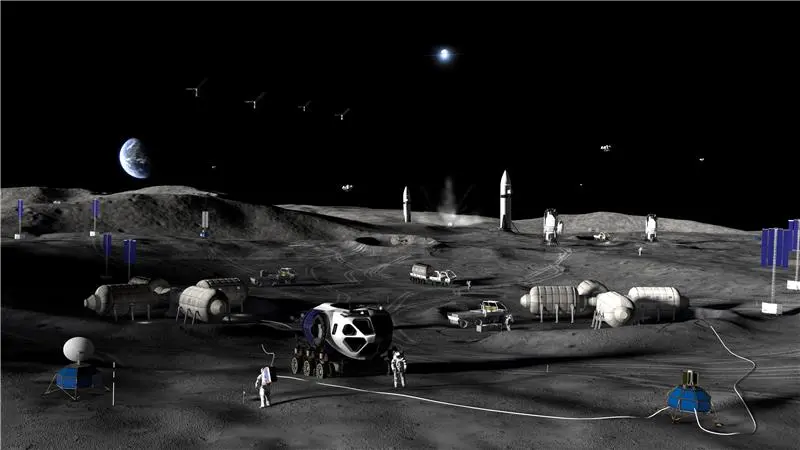
It will not look like a big city. At first, it will be very simple:
- Small living modules
- Solar power systems
- Research labs
- Storage areas
- Communication towers
Astronauts will likely stay for weeks or months, not permanently at the beginning.
Over time, it could grow into a larger base.
Big Challenges in Building a Moon Base
Even though many countries are trying, building a Moon outpost is extremely hard.
1. No Atmosphere
There is no air, so humans must live in sealed habitats.
2. Extreme Temperatures
It can go from very hot to extremely cold.
3. Radiation
Space radiation is dangerous for human health.
4. Distance from Earth
Help from Earth takes time, so everything must work perfectly.
5. High Cost
Building and sending equipment is very expensive.
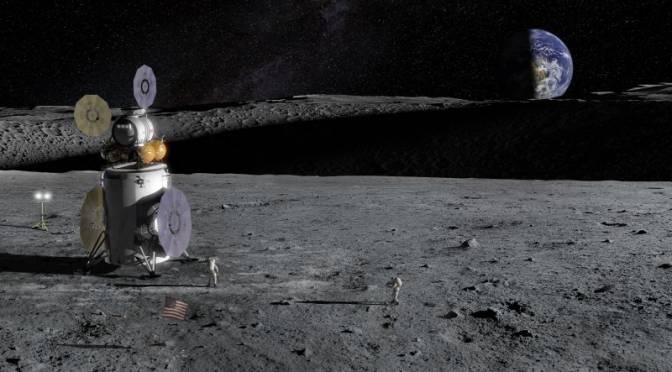
Who Will Build the First Moon Outpost? The Space Race Explained
Who Will Win the Race First?
Right now, there is no single clear winner, but we can make a realistic view:
Most likely first Moon outpost:
👉 NASA (with SpaceX and international partners)
Why?
- Strong funding
- Existing Artemis program
- Experience from Apollo missions
- Private sector support
Fastest rising competitor:
👉 China (CNSA)
Why?
- Very fast development
- Strong long-term planning
- Focus on Moon base goals
So the real answer is:
The United States is slightly ahead, but China is very close behind.
Could It Become a Shared Base?
Yes, and this is actually very possible.
Instead of one country winning alone, we might see:
- A joint NASA–ESA–SpaceX base
- International astronauts working together
- Shared research stations
Space is becoming more cooperative than competitive in some areas.
Why This Race Matters So Much
Building a Moon outpost is not just about the Moon. It is about the future of humanity.
It will help us:
- Learn how to live off Earth
- Prepare for Mars missions
- Develop new technologies
- Understand space better
- Use space resources
In the long run, the Moon could become a stepping stone for deeper space exploration.
Final Answer
So, who will build an outpost on the Moon first?
Most likely, it will be:
👉 NASA, supported by SpaceX and international partners under the Artemis program
But China is also moving very fast and could reach the same goal soon after.
Instead of one clear winner, the future may actually be shared — with multiple countries building parts of a Moon base together.
One thing is certain:
The Moon is no longer a distant dream. It is becoming the next home for human exploration.
Read Also: Keep your face towards the sunshine and shadows will fall behind you
Watch Also: https://www.youtube.com/@TravelsofTheWorld24










Leave a Reply