
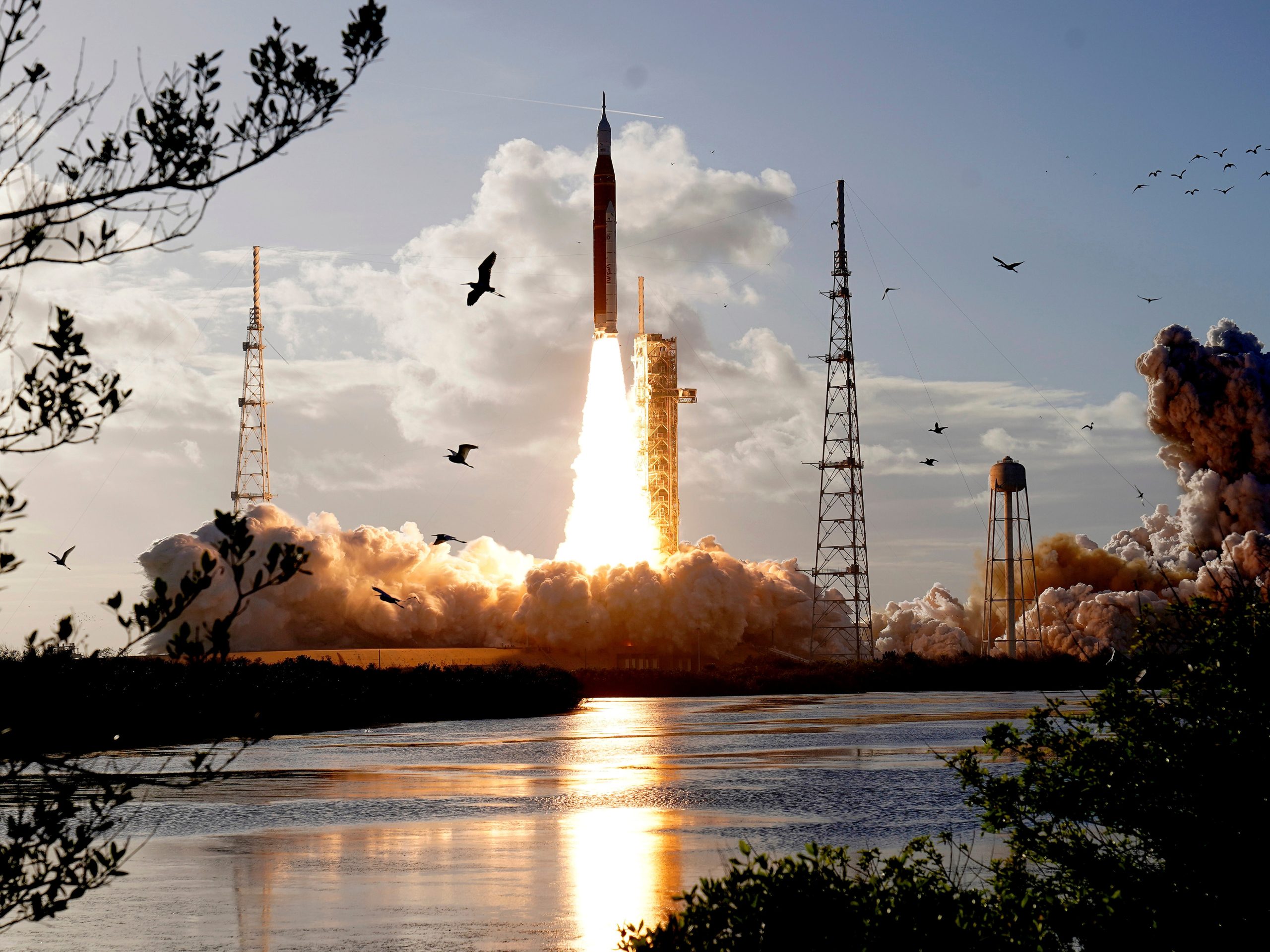
On Wednesday evening, NASA launched the Artemis II mission from Cape Canaveral, sending four astronauts on a journey around the Moon and farther into space than humans have ever traveled. This mission is historic, marking the first crewed lunar flight in more than 50 years, and represents a new era of human space exploration.
A key part of this achievement is New Orleans, where the core stage of NASA’s Space Launch System (SLS) was built. The SLS is the most powerful rocket NASA has ever developed, capable of lifting Orion and its crew safely toward the Moon.
Michoud Assembly Facility: America’s Rocket Factory
NASA’s Michoud Assembly Facility has been at the heart of American spaceflight for over five decades. Located in New Orleans East, Michoud has earned the nickname “America’s Rocket Factory” for its critical role in building hardware that powers human space missions.
Key facts about Michoud:
- The facility has supported human spaceflight for more than 55 years
- About 1,800 people work on-site
- Michoud has historically contributed to national priorities, including producing Higgins boats during World War II and tank engines for the Korean War
- In 1961, NASA Administrator Wernher von Braun chose Michoud as the home for building the nation’s rockets
From the Apollo program to the Space Shuttle and now the SLS, Michoud has been essential to America’s journey into space.
Key Mission Details of Artemis II
Artemis II carries four astronauts on a 10-day mission around the Moon. Highlights include:
- Launch Date: April 1
- Scheduled Return: Friday, April 10
- Historic Significance: First crewed lunar flight in over 50 years, described as this generation’s “Apollo 8 moment”
- Future Missions: Artemis III and IV will land the first woman and the first person of color on the lunar surface
This mission demonstrates the capabilities of the SLS and Orion spacecraft while preparing for future lunar landings.
New Orleans’ Contribution to Artemis II
The SLS core stage, built at Michoud, is critical to the mission. Its functions include:
- Storing super-cooled liquid hydrogen and liquid oxygen
- Fueling the four RS-25 engines that provide the thrust to lift Orion into space
- Supporting a 322-foot-tall rocket structure
Boeing leads production of the SLS core stage, ensuring quality and performance for deep-space missions.
Orion Spacecraft and Crew Modules
Lockheed Martin is responsible for the Orion spacecraft, which houses the astronauts and includes:
- Crew Module: Where astronauts live and operate the spacecraft
- Service Module: Supplies propulsion, electricity, and thermal control
- Launch Abort System: Ensures crew safety in case of emergencies
Orion’s advanced systems and protective measures are vital for the success of Artemis II.
Workforce and Local Support
New Orleans provides more than just facilities—it supplies skilled talent and workforce support:
- Programs like the Nunez Advanced Manufacturing Technology Program train local students and workers for aerospace careers
- Companies like Vivace build next-generation commercial space station structures on-site at Michoud
- Greater New Orleans, Inc. (GNO, Inc.) works to maintain the facility, connect residents to jobs, and promote the region’s aerospace contributions
These efforts ensure that local expertise and community support continue to play a critical role in space exploration.
Greater New Orleans, Inc. (GNO, Inc.)
GNO, Inc. has been actively involved in keeping Michoud operational and supporting Artemis II through initiatives like:
- Advocacy to keep the facility open after the Space Shuttle program ended in 2011
- Workforce programs such as GNO RAAMP (Regional Aerospace & Advanced Manufacturing Partnership)
- Organizing internships for local students to gain hands-on aerospace experience
- Supporting projects like Propel Park at Michoud
- Promoting the space story, including designing the Artemis logo projected on the Super Dome
Their work helps ensure that New Orleans remains a key player in American space exploration.
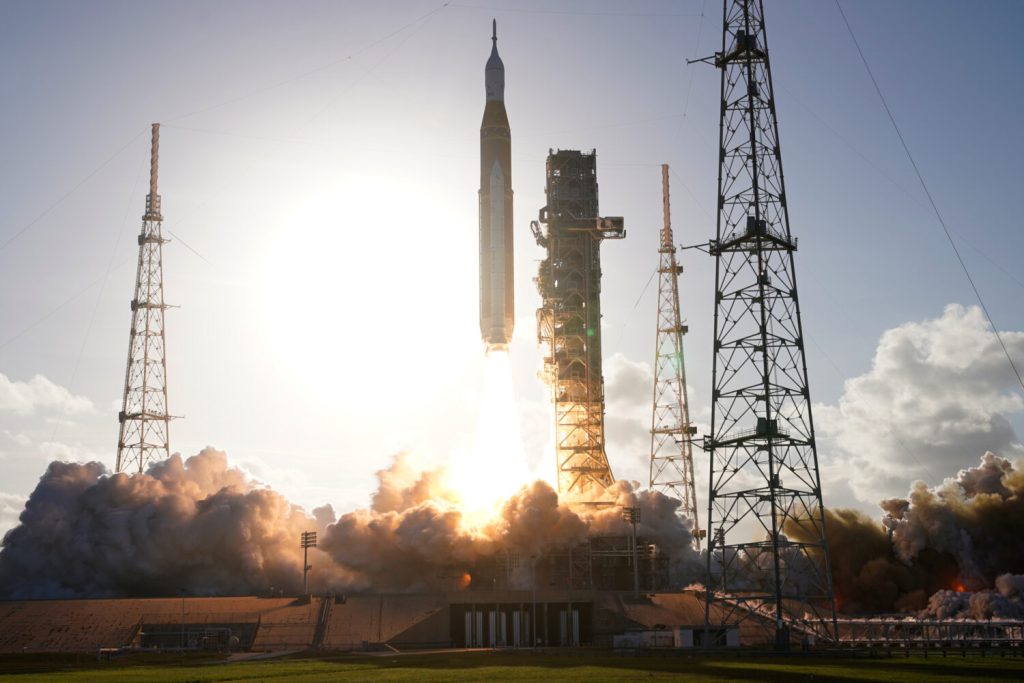
Artemis II Launch: New Orleans’ Role in Humanity’s Return to the Moon
International and Industrial Collaboration
Artemis II benefits from collaboration among multiple companies and international partners:
- Boeing: Builds the SLS core stage
- Lockheed Martin: Develops Orion’s modules and safety systems
- NASA and ESA Partnerships: Provide technical expertise, instruments, and mission support
This coordinated effort allows NASA to tackle the technical complexity of deep-space missions.
Historic Significance
Artemis II represents:
- Humanity’s return to deep-space exploration
- The next step toward landing astronauts on the Moon (Artemis III and IV)
- A demonstration of American engineering and international collaboration
- A milestone for the local workforce and New Orleans’ continued role in spaceflight
The mission is not only technical but symbolic, connecting generations of space explorers from Apollo to today.
Launch and Mission Timeline
- April 1: Launch from Cape Canaveral
- April 1–10: 10-day mission around the Moon, testing systems and collecting data
- April 10: Scheduled splashdown and recovery
During this time, the crew will test deep-space navigation, spacecraft systems, and life support under lunar orbital conditions.
The Role of Michoud in the Bigger Picture
Michoud’s ongoing contributions include:
- Building key components for SLS and Orion
- Supporting workforce pipelines to train future aerospace engineers and technicians
- Facilitating industrial innovation in aerospace technology
- Strengthening the Greater New Orleans economy through high-tech jobs and investments
The facility is an essential bridge between past programs like Apollo and the Space Shuttle and the future of human space exploration.
Preparing for Artemis III and IV
Artemis II sets the stage for upcoming missions:
- Artemis III: Will land astronauts, including the first woman and first person of color, on the Moon
- Artemis IV: Will continue to build sustainable lunar operations
Lessons learned from Artemis II regarding spacecraft performance, crew safety, and deep-space navigation will guide these future missions.
Inspiring Future Generations
Artemis II serves as inspiration for students, engineers, and space enthusiasts:
- Demonstrates what is possible with collaboration and innovation
- Encourages interest in STEM and aerospace careers
- Highlights the role of local communities like New Orleans in global space exploration
The mission proves that local expertise and national vision together can achieve historic accomplishments.
Conclusion
Artemis II is a landmark achievement in human spaceflight. With the crew safely orbiting the Moon, NASA, Boeing, Lockheed Martin, and New Orleans’ Michoud Assembly Facility are showing the power of collaboration, engineering excellence, and workforce dedication.
From building the SLS core stage to training astronauts and local talent, New Orleans remains at the heart of America’s journey into space. Artemis II is a stepping stone to future lunar landings, sustainable exploration, and even Mars missions, cementing this generation’s role in human space history.
Read Also: Keep your face towards the sunshine and shadows will fall behind you
Watch Also: https://www.youtube.com/@TravelsofTheWorld24












Leave a Reply