

Artificial intelligence (AI) is quickly becoming a key tool in tackling climate change. By analyzing huge amounts of data and predicting outcomes, AI can help humans make smarter decisions to protect the planet. Here are four important ways AI could help us respond to climate change effectively.
1. Predicting and Preparing for Extreme Weather
Climate change has made extreme weather more common. AI can help by:
- Analyzing Satellite and Sensor Data: AI models study patterns in rainfall, temperature, wind, and ocean currents
- Forecasting Storms and Floods: Predicts hurricanes, floods, and heatwaves before they happen
- Supporting Emergency Planning: Helps governments and communities prepare evacuation routes, shelters, and resources
- Reducing Human and Economic Losses: By giving advance warnings, AI helps save lives and property
This makes communities more resilient to disasters caused by climate change.
2. Optimizing Energy and Reducing Emissions
Energy production and use are major contributors to greenhouse gas emissions. AI can help by:
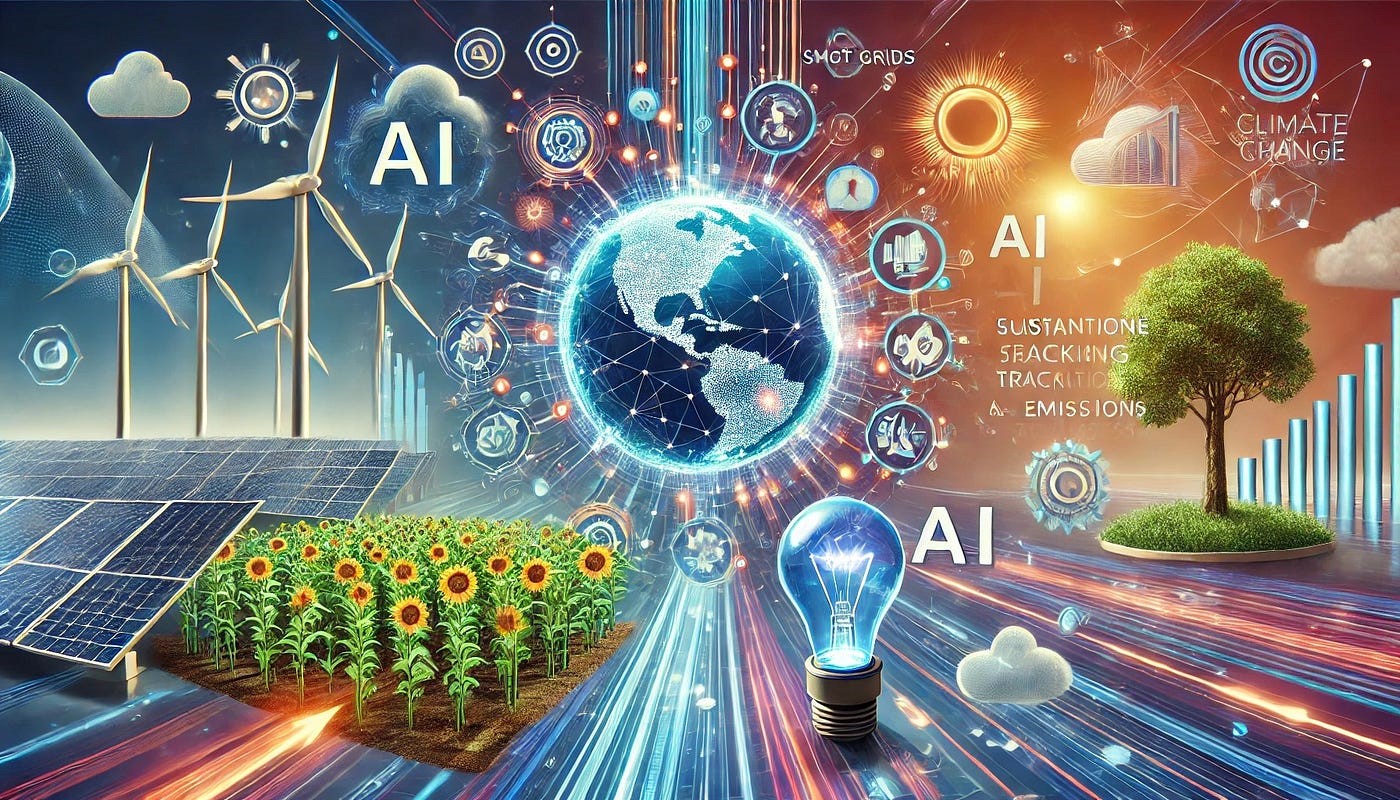
- Smart Grid Management: Balances electricity supply and demand efficiently
- Predicting Renewable Energy Output: Forecasts solar, wind, and hydro energy production
- Reducing Industrial Waste: AI finds ways to cut emissions and improve efficiency in factories
- Optimizing Transportation: Plans fuel-efficient routes for trucks, ships, and planes
These applications lower emissions and make energy systems cleaner.
3. Monitoring the Environment and Natural Resources
AI can track changes in the environment to guide climate action:
- Detecting Deforestation: Satellites and AI spot illegal logging or land-use changes
- Observing Ice and Sea Levels: Monitors glaciers and oceans to detect rising water levels
- Tracking Greenhouse Gases: Identifies sources of carbon dioxide and methane emissions
- Mapping Vulnerable Areas: Helps policymakers prioritize areas at risk from climate change
This allows for better planning and targeted climate interventions.
4. Supporting Sustainable Agriculture and Food Security
Agriculture is both affected by climate change and a contributor to it. AI can help farmers reduce their environmental impact while improving yields:
- Precision Farming: AI suggests the right amount of water, fertilizer, and pesticides
- Early Detection of Crop Stress: Spots disease or drought effects early
- Managing Soil and Forest Carbon: Helps capture carbon and improve land health
- Reducing Waste: AI optimizes harvesting and distribution to prevent losses
Sustainable agriculture reduces greenhouse gases and strengthens global food security.
Why AI Matters for Climate Change
AI is not a replacement for human action but a powerful tool to enhance it:
- Speed: Processes massive datasets faster than humans
- Accuracy: Detects patterns and trends that are difficult to see manually
- Scalability: Can be applied globally across energy, agriculture, industry, and disaster management
- Collaboration: Works alongside open science initiatives, governments, and communities
By using AI responsibly, we can make climate mitigation faster, smarter, and more effective.
The Future of AI in Climate Action
Looking ahead, AI could:
- Integrate multiple systems for a holistic climate response
- Predict tipping points like ice melt, ocean currents, or ecosystem collapse
- Provide real-time decision support for governments and businesses
- Empower local communities with actionable insights
AI has the potential to transform climate action worldwide if combined with human decision-making and policy support.
Conclusion
Artificial intelligence offers practical ways to respond to climate change. From predicting extreme weather to optimizing energy, monitoring the environment, and supporting sustainable agriculture, AI enhances our ability to act.
By using AI responsibly and combining it with human efforts, we can reduce emissions, protect natural resources, and prepare for a safer, more sustainable future.
Read Also: Keep your face towards the sunshine and shadows will fall behind you
Watch Also: https://www.youtube.com/@TravelsofTheWorld24











Leave a Reply