
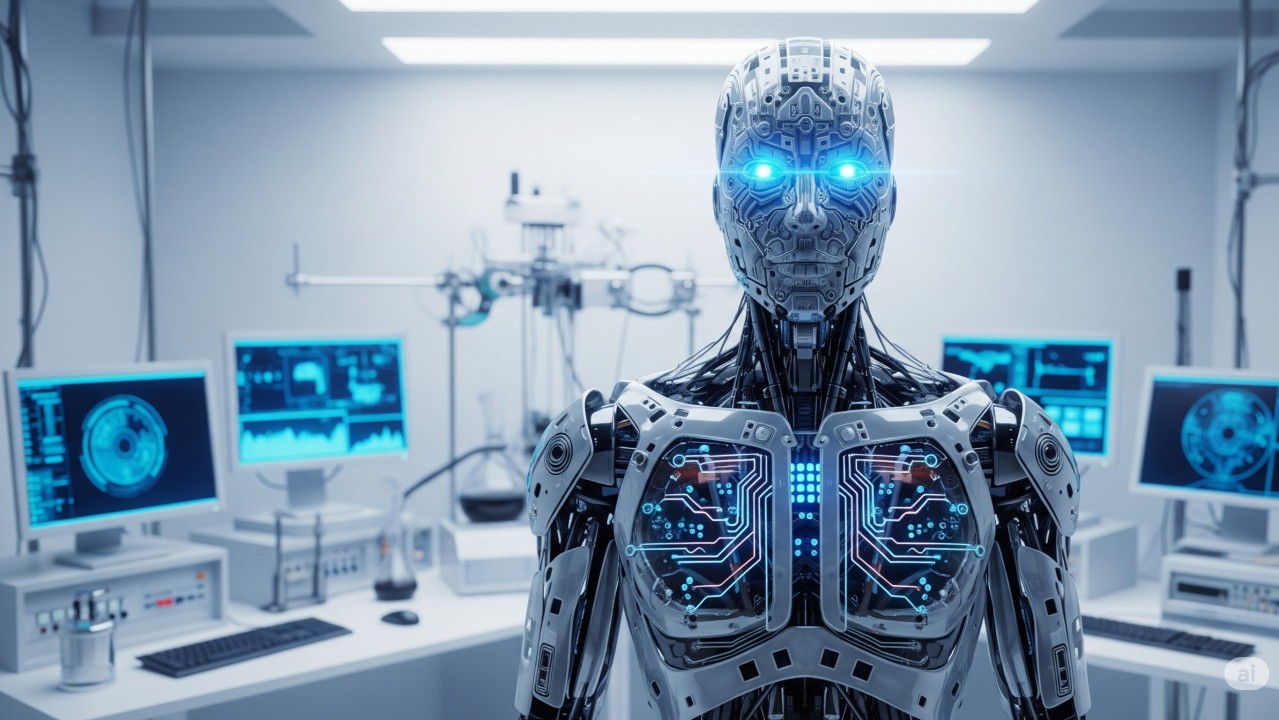
Artificial Intelligence, or AI, is everywhere today. From smartphones and smart speakers to self-driving cars and recommendation systems, AI seems to be doing amazing things. But have you ever stopped to ask: “Is AI really intelligent?”
The short answer is… not exactly like humans. AI can solve certain problems, process huge amounts of data, and even mimic some human behavior, but it doesn’t really “think” or “understand” the way people do.
In this article, we’ll explore what AI really is, how it works, what it can do, its limitations, and why the word “intelligence” might be a bit misleading.
What AI Really Means
At its core, AI is a set of computer programs designed to perform tasks that usually require human intelligence. This includes things like:
- Recognizing images or speech
- Translating languages
- Making recommendations
- Playing games
AI uses algorithms and data to make decisions or predictions. But it doesn’t “understand” or have consciousness like a human brain.
Types of AI
AI comes in different forms. Understanding these types helps us see its real abilities.
- Narrow AI (Weak AI)
- Designed for a specific task
- Examples: ChatGPT, Siri, recommendation systems
- Can’t do anything outside its designed purpose
- General AI (Strong AI)
- Theoretical AI that can think and learn like humans
- Doesn’t exist yet
- Superintelligent AI
- Hypothetical AI smarter than humans
- A popular topic in science fiction
So, the AI we use today is mostly narrow AI. It’s smart at one thing but dumb at everything else.
How AI Works
AI is powered by data and algorithms. Here’s a simple breakdown:
- Data Input
- AI learns from huge amounts of information.
- Example: A face recognition AI sees millions of faces to learn patterns.
- Processing
- AI uses algorithms to find patterns and make predictions.
- Example: Netflix uses AI to predict what movie you’ll like next.
- Output
- AI provides results, like recommendations, translations, or answers.
Machine Learning and Deep Learning
Most AI today uses two main techniques:
- Machine Learning (ML): AI learns from examples. The more data, the better it gets.
- Deep Learning (DL): A type of ML that uses neural networks (inspired by the human brain) to process complex patterns, like recognizing speech or images.
Even with these, AI doesn’t actually “think.” It just finds patterns and predicts outcomes.
Examples of AI in Daily Life
- Voice Assistants – Siri, Alexa, and Google Assistant can answer questions and follow commands.
- Content Recommendations – YouTube and Netflix suggest videos and shows.
- Chatbots – Customer service bots answer queries instantly.
- Image Recognition – Facebook tags people in photos automatically.
- Self-Driving Cars – AI helps detect objects and navigate roads.
All these are impressive, but they operate within strict limits. They don’t truly understand meaning or context like humans do.
Why AI Isn’t “Intelligent” Like Humans
1. No Consciousness
AI doesn’t have awareness, feelings, or understanding. It cannot think independently or experience emotions.
2. Limited Learning
AI can’t learn everything on its own. It needs large datasets and human guidance. Without data, it cannot function.
3. No Common Sense
AI struggles with tasks that humans find simple. For example, a chatbot may answer a question logically but fail in context understanding.
4. Pattern Recognition Only
AI is excellent at spotting patterns, but it doesn’t truly reason or innovate. It cannot create original ideas the way humans do.
Misconceptions About AI Intelligence
- AI Can Think Like Humans – False. AI simulates thinking by analyzing data.
- AI Has Emotions – False. AI can mimic emotions in responses but doesn’t feel.
- AI Can Solve Any Problem – False. AI is limited to the tasks it was trained for.
Why We Call It “Artificial Intelligence”
The term was coined in 1956 by John McCarthy. Back then, it meant creating machines that could do tasks requiring human intelligence. But over time, “intelligence” has been misunderstood. Today, AI is better described as advanced pattern recognition and prediction systems.
Strengths of AI
Despite not being truly intelligent, AI has several strengths:
- Speed and Accuracy – AI can process huge amounts of data faster than humans.
- Automation – AI handles repetitive tasks efficiently.
- Data Analysis – AI finds insights that humans might miss.
- Consistency – AI doesn’t get tired or distracted.
Weaknesses of AI
- Lack of Creativity – AI can generate content but doesn’t create original ideas independently.
- Bias – AI learns from data. If the data is biased, AI outputs can be biased too.
- Dependency on Data – Without quality data, AI fails.
- No Ethical Judgment – AI cannot decide what is right or wrong morally.
Can AI Become Truly Intelligent?
Experts disagree. Some believe that one day, we could develop general AI with human-like thinking. Others say human intelligence is too complex to replicate.
Challenges include:
- Understanding consciousness
- Integrating common sense
- Developing true creativity
Until these are solved, AI will remain “smart machines,” not intelligent beings.
AI in Popular Culture vs. Reality
Movies and TV often show AI as conscious beings:
- Ex Machina – AI with human-like consciousness
- Her – AI that feels emotions
- Terminator – AI that decides to take over the world
In reality, AI is much simpler. It follows rules, algorithms, and data. It cannot feel or make independent decisions.
How to Use AI Wisely
Since AI isn’t truly intelligent, we should use it as a tool, not a replacement for humans.
Tips:
- Use AI to automate boring tasks
- Use AI for data analysis and predictions
- Don’t rely on AI for ethical or emotional decisions
- Double-check AI outputs, especially in critical areas
AI and the Future of Work
AI is changing how we work:
- Automation is replacing repetitive jobs
- AI assists professionals in decision-making
- New jobs are being created around AI systems
Even though AI is powerful, human intelligence is still essential. Creativity, empathy, and judgment cannot be fully automated.
Simple Example
Think of AI like a calculator. A calculator can solve complex math instantly, but it doesn’t understand numbers. Similarly, AI can process huge data and make predictions, but it doesn’t “understand” the world.
Conclusion
AI is an incredible technology that can perform many tasks faster and more accurately than humans. But calling it “intelligent” can be misleading. True intelligence involves understanding, creativity, and consciousness—things AI does not have.
AI works best as a tool that assists humans. It can analyze data, automate work, and help in decision-making, but it cannot replace human thinking.
Read Also: Keep your face towards the sunshine and shadows will fall behind you
Watch Also: https://www.youtube.com/@TravelsofTheWorld24









Leave a Reply