
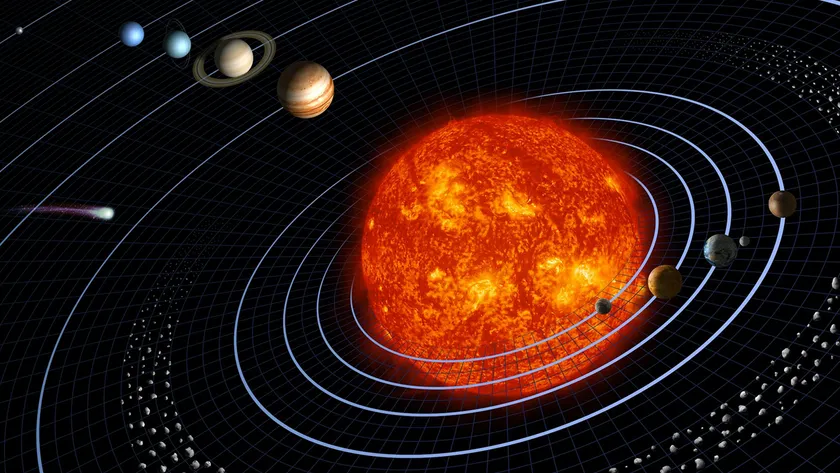
Our solar system is like our home in space. It includes the Sun, planets, moons, and many other objects all connected by gravity. Everything you see in the night sky that belongs to our system is part of this cosmic neighborhood.
Even though it may feel simple at first, the solar system is full of amazing facts and mysteries. Let’s explore it step by step in an easy way.
What Is the Solar System?
The solar system is made up of the Sun and everything that orbits around it.
This includes:
- 8 planets
- Dwarf planets
- Moons
- Asteroids
- Comets
- Dust and gas
All of these are held together by the Sun’s gravity.
The solar system formed about 4.6 billion years ago from a giant cloud of gas and dust.
The Sun: The Heart of Our System
At the center of everything is the Sun.
It is a huge ball of hot gas that produces light and heat. Without the Sun, life on Earth would not exist.
Some quick facts:
- It makes up about 99.8% of the solar system’s mass
- It is about 1.3 million times bigger than Earth
- It provides energy to all planets
The Sun’s gravity keeps all planets moving in their orbits.
The Eight Planets
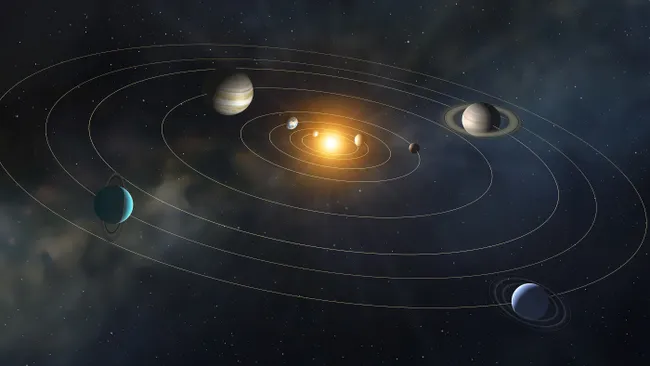
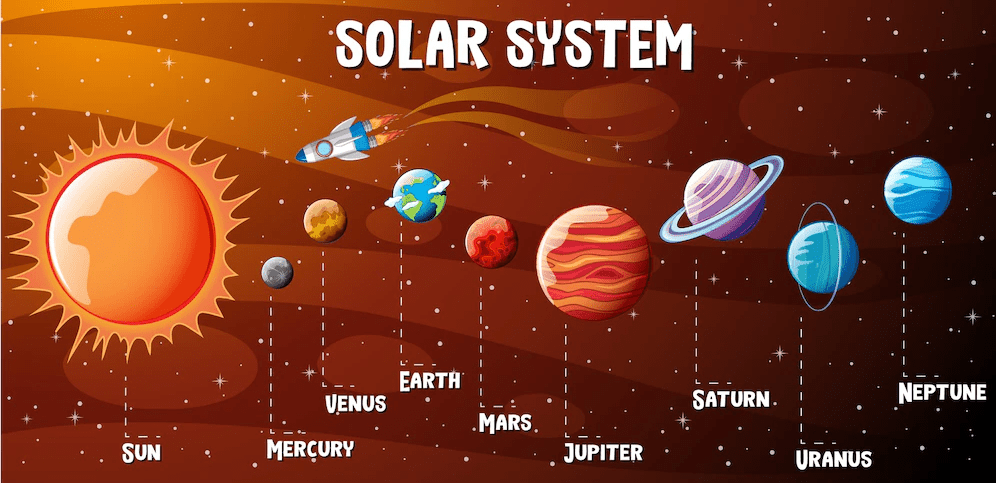
There are eight main planets in our solar system. They are divided into two groups.
Inner Planets (Rocky Planets)
These are close to the Sun and have solid surfaces.
- Mercury
- Closest to the Sun
- Very hot during the day and very cold at night
- Venus
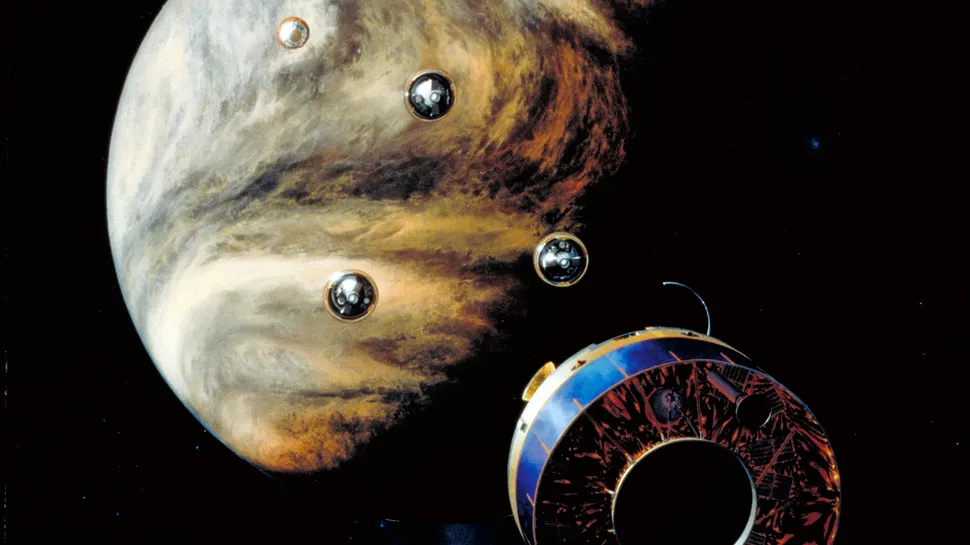
- Hottest planet
- Thick atmosphere traps heat
- Earth
- Our home
- Only known planet with life
- Mars
- Known as the Red Planet
- Has the largest volcano in the solar system
Outer Planets (Gas Giants and Ice Giants)
These are much larger and mostly made of gas or ice.
- Jupiter
- Largest planet
- Has a giant storm called the Great Red Spot
- Saturn
- Famous for its rings
- Uranus
- Rotates on its side
- Neptune
- Very cold and windy
Dwarf Planets
Besides the main planets, there are smaller ones called dwarf planets.
The most famous is Pluto.
Others include:
- Eris
- Haumea
- Makemake
- Ceres
These objects orbit the Sun but are not considered full planets.
The Solar System: Facts About Our Cosmic Neighborhood
Moons: Companions of Planets
Many planets have moons. Earth has one moon, but some planets have dozens.
For example:
- Jupiter has over 90 moons
- Saturn has more than 140 moons
Some moons are very interesting:
- Europa may have an ocean under its ice
- Titan has lakes of liquid methane
Asteroids and the Asteroid Belt
Asteroids are small rocky objects.
Most of them are found in the asteroid belt between Mars and Jupiter.
They vary in size:
- Some are tiny rocks
- Some are hundreds of kilometers wide
Comets: Cosmic Travelers
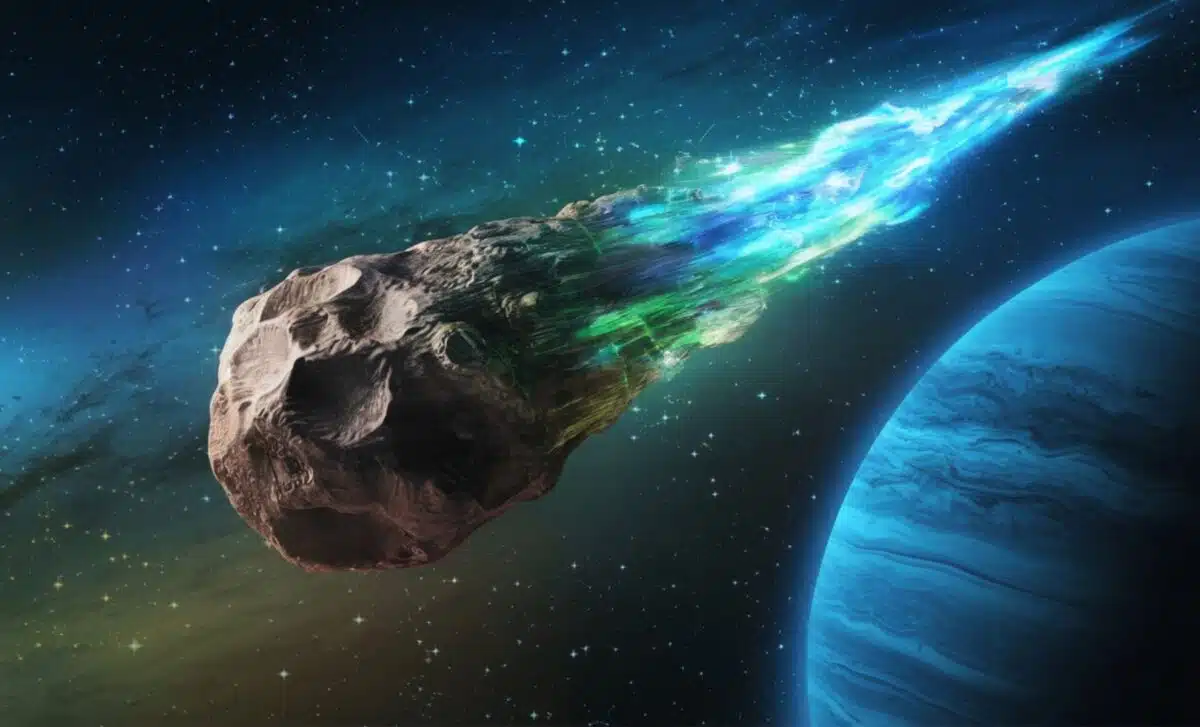
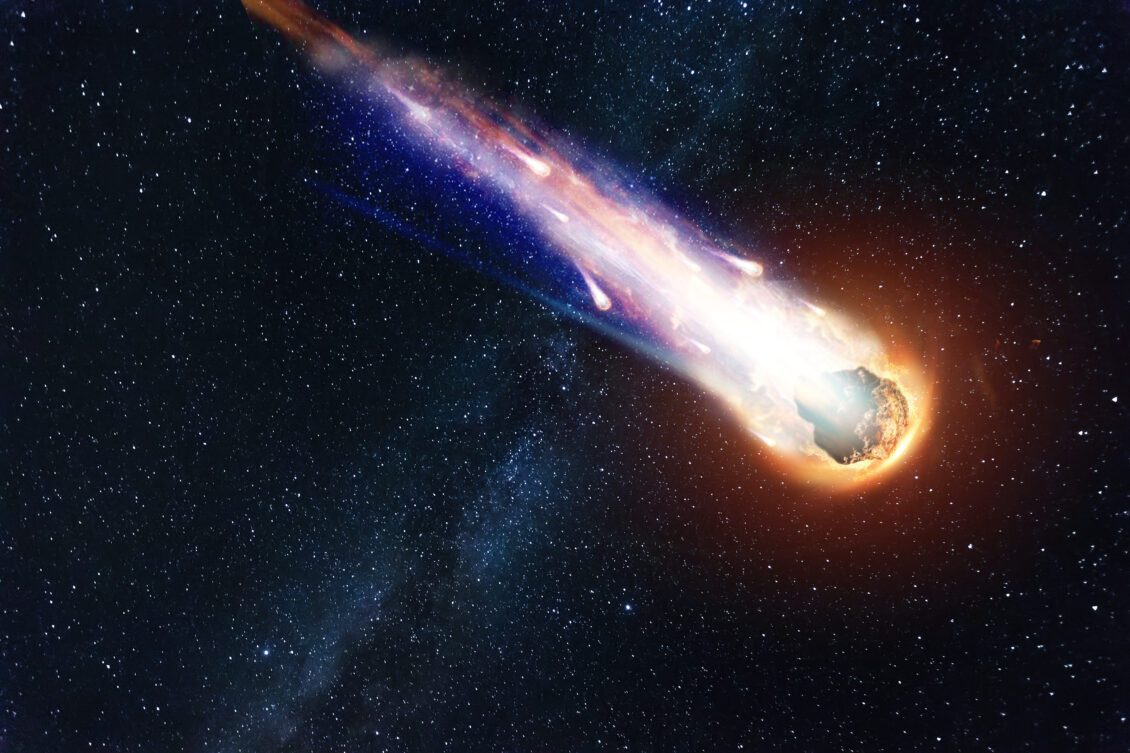
Comets are made of ice, dust, and rock.
When they come close to the Sun, they heat up and form a glowing tail.
They often come from distant regions like:
- The Kuiper Belt
- The Oort Cloud
The Kuiper Belt and Oort Cloud
Beyond Neptune lies the Kuiper Belt.
This area contains:
- Icy objects
- Dwarf planets like Pluto
Farther away is the Oort Cloud, a huge region filled with icy bodies. It is believed to be the source of long-period comets.
How Big Is the Solar System?
The solar system is extremely large.
- Light from the Sun takes about 8 minutes to reach Earth
- It takes hours to reach outer planets
- The outer edge may be billions of kilometers away
Even at high speed, it would take years to travel across it.
How Do Planets Move?
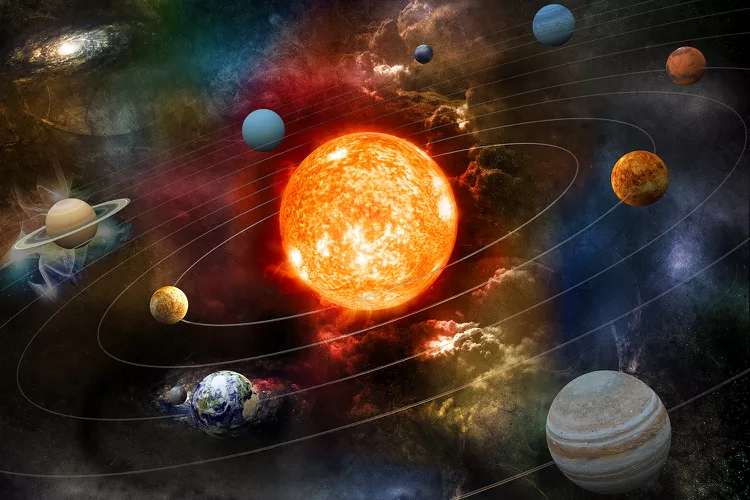
All planets orbit the Sun in paths called orbits.
These orbits are:
- Slightly oval-shaped
- Mostly in the same flat plane
Planets closer to the Sun move faster than those farther away.
The Solar System: Facts About Our Cosmic Neighborhood
Why Is Earth Special?
Among all planets, Earth is unique.
It has:
- Liquid water
- A breathable atmosphere
- Suitable temperature for life
So far, it is the only known planet where life exists.
Space Exploration
Humans have always been curious about space.
Organizations like NASA have sent missions to study the solar system.
Some famous missions:
- Apollo missions to the Moon
- Mars rovers exploring the Red Planet
- Voyager spacecraft traveling beyond the solar system
The Role of Gravity
Gravity is the force that holds the solar system together.
The Sun has the strongest gravity, keeping planets in orbit.
Planets also have gravity, which keeps their moons close.
Interesting Facts
Here are some fun facts:
- A day on Venus is longer than its year
- Jupiter could fit more than 1,000 Earths inside it
- Mars has dust storms that can cover the whole planet
- Neptune has the fastest winds in the solar system
Is There Life Elsewhere?
Scientists are searching for life beyond Earth.
They study:
- Mars for signs of past life
- Moons like Europa and Enceladus
- Distant exoplanets
The search is ongoing, and discoveries are being made all the time.
The Solar System in the Galaxy
Our solar system is part of the Milky Way.
This galaxy contains billions of stars, many with their own planets.
Our solar system is located in a small region called the Orion Arm.
Future of the Solar System
The solar system will not stay the same forever.
In about 5 billion years:
- The Sun will expand into a red giant
- It may swallow inner planets
- Later, it will shrink into a white dwarf
This is part of the natural life cycle of stars.
Why Should We Care?
Learning about the solar system helps us understand:
- Where we come from
- How planets form
- Our place in the universe
It also inspires curiosity and exploration.
Final Thoughts
The solar system is more than just planets orbiting the Sun. It is a complex and fascinating system full of variety and wonder.
From the hot surface of Mercury to the icy edge beyond Neptune, every part has its own story.
As technology improves, we will continue to learn more about this cosmic neighborhood we call home.
And maybe one day, we will explore it even more closely.
Read Also: Keep your face towards the sunshine and shadows will fall behind you
Watch Also: https://www.youtube.com/@TravelsofTheWorld24





Leave a Reply