
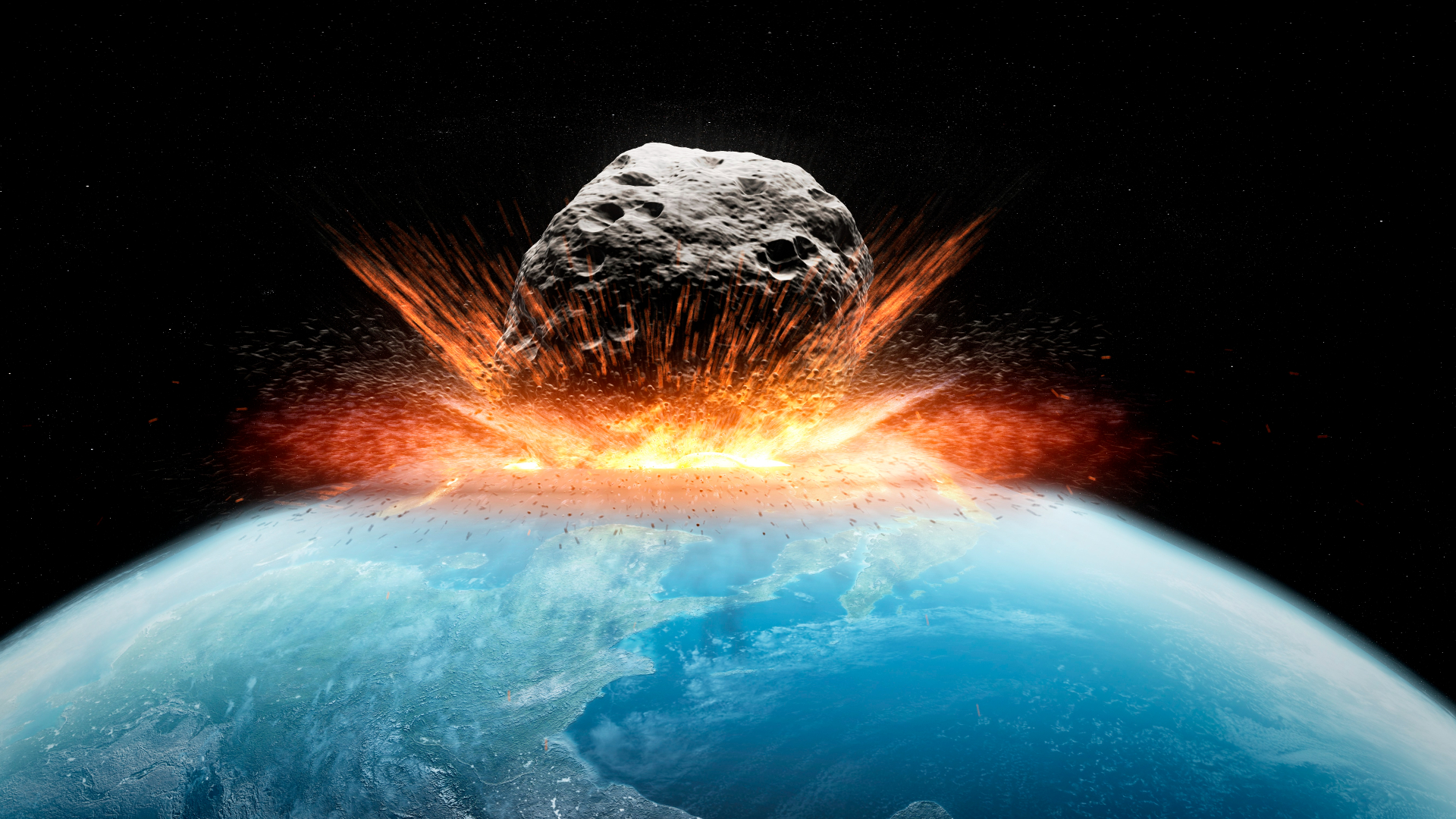
The idea of a massive asteroid striking Earth has long captured human imagination, from ancient myths to blockbuster movies. But how likely is such a catastrophic event in reality? Scientists and space agencies like NASA, ESA (European Space Agency), and other international organizations have devoted decades to studying near-Earth objects (NEOs) to understand the probabilities, risks, and potential consequences of asteroid impacts. While the chances of a collision with a large asteroid are low, the consequences of such an event could be devastating, making continuous monitoring and preparation a high priority.
What Are Asteroids and Near-Earth Objects?
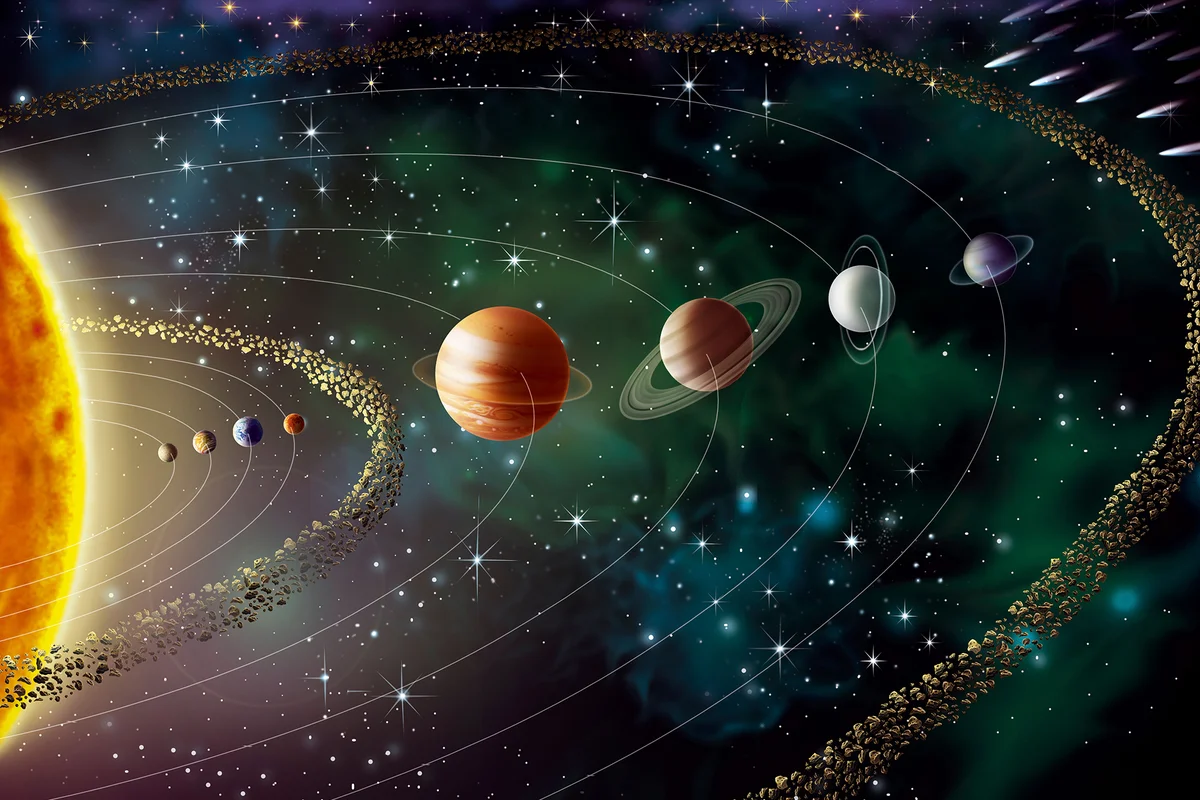
Asteroids are rocky remnants from the formation of the solar system about 4.6 billion years ago. Most reside in the asteroid belt, a vast region between Mars and Jupiter. These space rocks vary widely in size, from tiny meter-sized stones to enormous bodies hundreds of kilometers across.
A subset of asteroids, known as near-Earth objects (NEOs), have orbits that bring them close to Earth. Among these, potentially hazardous asteroids (PHAs) are defined based on two criteria:
-
Size: Generally larger than 140 meters in diameter. Asteroids of this size could cause regional destruction if they struck Earth.
-
Proximity: They come within 7.5 million kilometers (about 20 times the distance to the Moon) of Earth.
Smaller asteroids strike Earth frequently but typically burn up in the atmosphere, causing little to no damage. Large asteroids capable of global effects are extremely rare but are the focus of planetary defense efforts.
Frequency of Asteroid Impacts
To understand the chances of a big asteroid impact, scientists rely on both observations and statistical modeling:
-
Small Asteroids (1–20 meters): Impact Earth roughly once a year. Most explode in the atmosphere as bolides, producing fireballs and shockwaves but rarely causing injuries. For example, the 2013 Chelyabinsk meteor in Russia was about 20 meters across, injured over 1,500 people, and caused widespread property damage from broken glass.
-
Medium Asteroids (50–140 meters): Estimated to strike once every few thousand years. These could flatten cities or generate localized tsunamis if they impact oceans.
-
Large Asteroids (1 kilometer or more): Extremely rare, with an estimated impact probability of once every 500,000 to 1 million years. These could trigger global climate disruptions, widespread fires, and mass extinctions. The asteroid that contributed to the extinction of the dinosaurs 66 million years ago is thought to have been roughly 10 kilometers wide.
This hierarchy shows that while small impacts are frequent and mostly harmless, large-scale collisions are exceptionally rare but potentially catastrophic.
Factors Affecting the Risk of Impact
Several factors determine whether an asteroid will actually hit Earth:
-
Orbital Dynamics: Most asteroids have predictable orbits. Gravitational influences from planets, especially Jupiter, can nudge asteroids into Earth-crossing trajectories over time.
-
Size and Composition: A large, dense iron asteroid is more likely to survive atmospheric entry and strike the surface, whereas a smaller, porous rock may disintegrate.
-
Detection and Tracking: Modern telescopes and space missions improve risk assessment. Early detection can allow for deflection or evacuation strategies.
How Scientists Calculate Impact Probabilities
Astronomers use long-term orbital simulations to estimate the likelihood of impacts. Every time a new near-Earth asteroid is discovered, they calculate its trajectory and possible interactions with Earth over the next 100–200 years. Results are expressed in terms of probability, often extremely small, but the potential consequences mean even low-probability events are monitored closely.
The Torino Impact Hazard Scale and the Palermo Technical Impact Hazard Scale are tools used to communicate risk:
-
Torino Scale (0–10): Combines probability and potential damage to assess public risk. Most NEOs fall at level 0 (no risk) or 1 (merits careful monitoring).
-
Palermo Scale: Provides a logarithmic measure comparing the risk of a particular asteroid to the background risk posed by similar objects over time. Negative values indicate below-average risk.
Historical Evidence of Impacts
Earth’s geological record shows that asteroid impacts are a recurring natural event:
-
Chicxulub Crater, Mexico (66 million years ago): Likely caused mass extinction of dinosaurs; asteroid was ~10 km in diameter.
-
Tunguska Event, Siberia (1908): A 50–60 meter object exploded midair, flattening 2,000 square kilometers of forest.
-
Chelyabinsk Event, Russia (2013): A 20-meter object exploded in the atmosphere, injuring over 1,500 people.
These events demonstrate that smaller impacts are frequent and larger ones are rare but devastating.
Current Monitoring and Detection Programs
NASA and other space agencies maintain multiple initiatives to track asteroids:
-
NASA Planetary Defense Coordination Office (PDCO): Coordinates efforts to detect, track, and mitigate potentially hazardous objects.
-
NEOWISE Mission: Uses infrared imaging to detect NEOs and determine their size and composition.
-
Ground-Based Observatories: Pan-STARRS, Catalina Sky Survey, and others scan the sky nightly for moving objects.
-
International Collaboration: The European Space Agency, Japan, and other countries share data to provide early warnings.
Currently, over 30,000 NEOs have been discovered, with around 2,000 classified as potentially hazardous.
Mitigation Strategies
Even if the probability of a large impact is low, scientists have developed strategies for planetary defense:
-
Deflection Techniques: Missions like NASA’s DART (Double Asteroid Redirection Test) demonstrate the possibility of altering an asteroid’s trajectory by striking it with a spacecraft.
-
Gravitational Tractor: A spacecraft could hover near an asteroid, using its gravity to slowly shift the asteroid’s path.
-
Nuclear Detonation: In extreme cases, nuclear explosives could be used to fragment or nudge an asteroid.
Early detection remains the key. The more time available, the smaller the intervention required.
Why Awareness Matters
Even though catastrophic asteroid impacts are rare, the consequences justify investment in detection and mitigation:
-
Global Effects: A 1-kilometer asteroid could trigger worldwide climate disruptions, crop failures, and mass extinctions.
-
Regional Effects: Smaller asteroids could flatten cities or generate tsunamis.
-
Public Safety: Knowing potential threats allows for evacuation plans and informed emergency responses.
NASA and the United Nations emphasize that understanding asteroid risks is an essential component of global disaster preparedness.
The Odds of an Impact Today
Statistical studies provide perspective:
-
1 km asteroid: Roughly 1 in 500,000 chance per year.
-
500-meter asteroid: About 1 in 100,000 chance per year.
-
140-meter asteroid (city-level damage): About 1 in 10,000 chance per year.
For context, Earth is hit by tiny meteoroids almost daily, but they disintegrate harmlessly in the atmosphere. The probability of a truly catastrophic asteroid hitting in any given year is extremely low, but the sheer potential damage warrants vigilance.
Future Prospects
Detection capabilities continue to improve:
-
LSST (Vera C. Rubin Observatory): Expected to discover thousands of new NEOs with high precision.
-
Space-Based Infrared Telescopes: Can detect asteroids hidden from ground-based observations, including those approaching from the Sun’s direction.
-
Global Collaboration: Sharing data internationally increases early warning capabilities and improves preparedness.
As technology advances, scientists aim to identify virtually all large asteroids before they pose a threat, reducing the risk even further.
Conclusion
The chances of Earth being hit by a large asteroid are extremely low on a year-to-year basis, but the potential consequences are enormous. Historical evidence, statistical modeling, and modern detection programs all highlight the importance of vigilance, preparation, and continued investment in planetary defense.
Modern science has made it possible to detect and monitor asteroids with unprecedented accuracy. Missions like DART demonstrate that humanity is developing the tools to act if necessary. While Hollywood often dramatizes asteroid collisions, the real-world threat is measurable, predictable, and manageable — provided society continues to support detection, research, and international collaboration.
Understanding the odds of asteroid impacts reminds us that our planet exists in a dynamic solar system, where cosmic events, though rare, can shape the course of life on Earth. Vigilance, early detection, and readiness are our best safeguards against these celestial hazards.
Read Also: Keep your face towards the sunshine and shadows will fall behind you
Watch Also: https://www.youtube.com/@TravelsofTheWorld24





Leave a Reply