
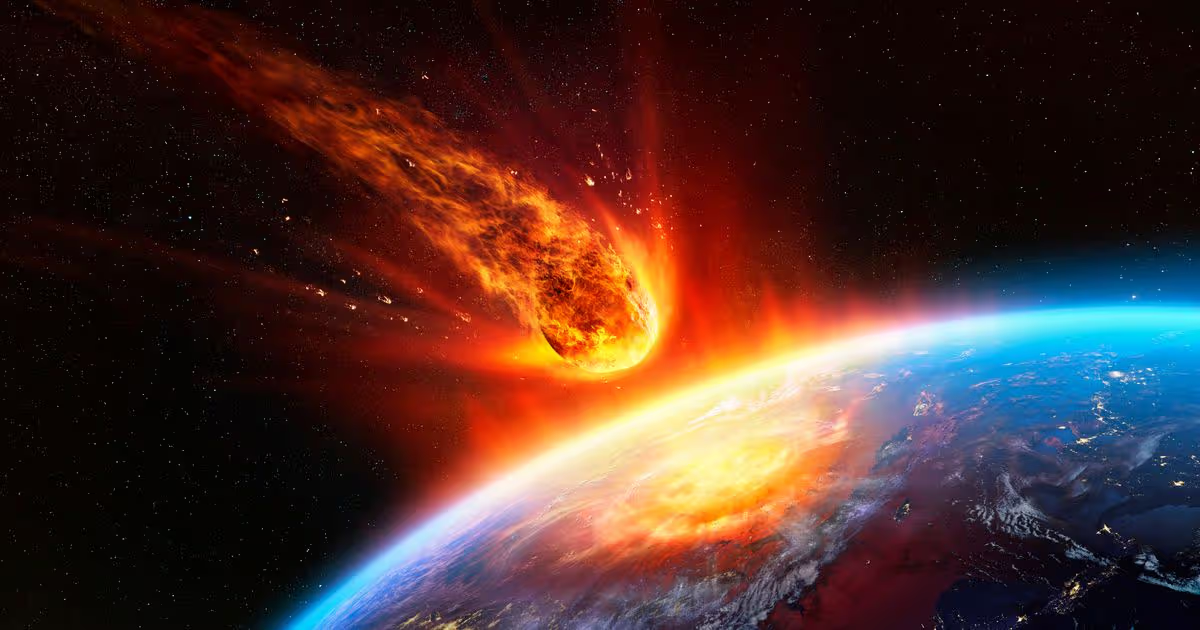
NASA has issued a stark warning after new calculations showed that a large asteroid passing through Earth’s orbital neighborhood could pose a serious threat if its trajectory were to change. According to space scientists, as many as 100 million people could be within a potential blast zone if such an asteroid were to strike Earth. While officials stress that there is currently no confirmed impact, the growing number of near-Earth objects (NEOs) and improved detection technology have raised renewed concern about planetary defense and humanity’s preparedness for a rare but devastating event.
Understanding the Asteroid Threat
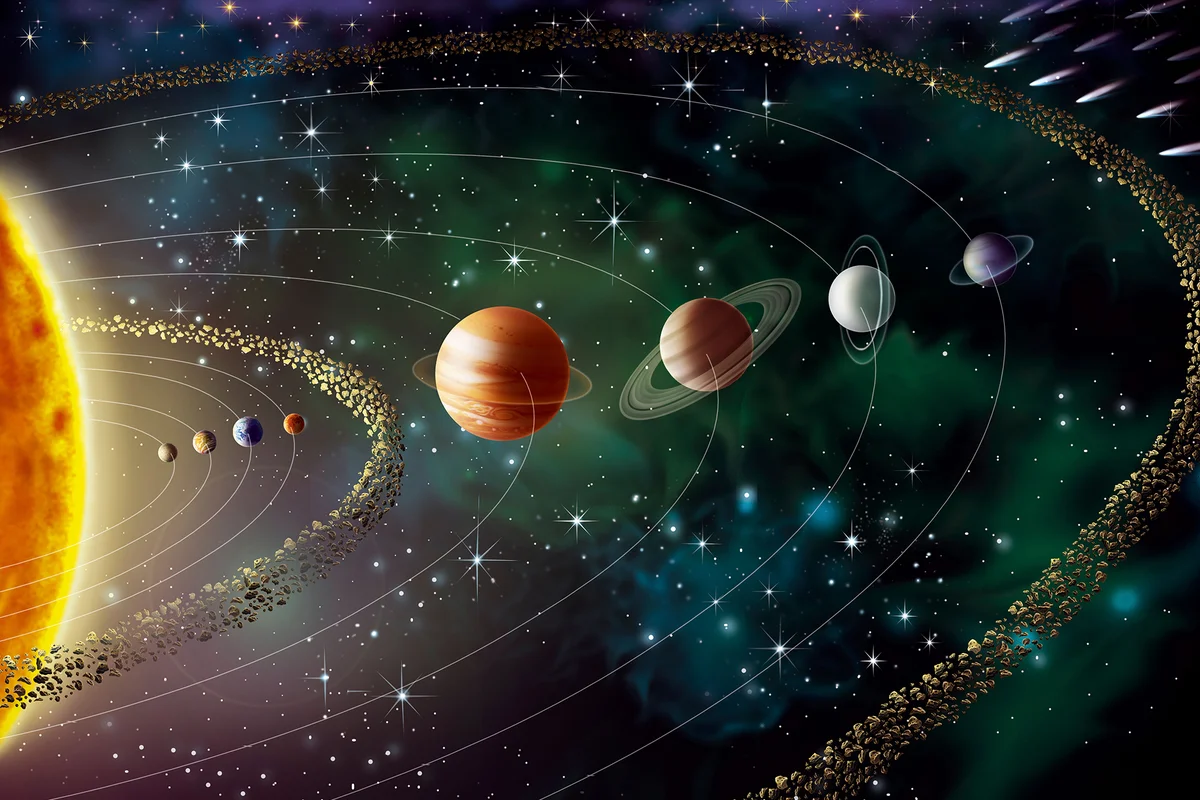
Asteroids are rocky remnants left over from the formation of the solar system about 4.6 billion years ago. Most of them orbit the Sun in the asteroid belt between Mars and Jupiter. However, some asteroids are nudged by gravitational forces into orbits that bring them closer to Earth. These are known as near-Earth asteroids (NEAs).
NASA closely monitors NEAs because even relatively small asteroids can cause significant destruction if they collide with Earth. An asteroid just a few hundred meters wide can release energy equivalent to hundreds of nuclear weapons upon impact. Larger objects, especially those over one kilometer in diameter, could have global consequences.
The warning involving “100 million people in the blast zone” refers not to an imminent disaster, but to impact-risk modeling. These models estimate how many people would be affected if a large asteroid struck near or within a populated region.
Why the Risk Is Increasing
Scientists are not claiming that Earth is suddenly more dangerous than before. Instead, the perceived risk is increasing because detection methods have improved. Modern telescopes, radar systems, and space-based observatories now identify far more asteroids than ever before.
NASA estimates that tens of thousands of near-Earth objects remain undiscovered, especially those in the 140-meter range — large enough to destroy a city. As detection improves, more objects are added to risk tables, and some initially show a small probability of impact until further observations rule them out.
In recent years, several asteroids have briefly appeared on NASA’s risk lists before being downgraded after additional tracking. These moments often trigger alarming headlines but are also signs that monitoring systems are working as intended.
What Does “Blast Zone” Really Mean?
The phrase “blast zone” does not necessarily imply a massive crater wiping out an entire continent. The effects of an asteroid impact depend on several factors:
-
Size and composition of the asteroid
-
Speed at impact
-
Angle of entry
-
Impact location (land, ocean, or airburst)
A large asteroid striking land could flatten cities hundreds of kilometers away, generate intense heat, and create shockwaves capable of destroying buildings. If the asteroid explodes in the atmosphere — similar to the 2013 Chelyabinsk meteor in Russia — it could still injure thousands through shattered glass and pressure waves, even without hitting the ground.
When NASA models worst-case scenarios, a densely populated region could place tens or even hundreds of millions of people within range of destructive effects, hence the 100-million figure.
Historical Perspective: Asteroid Impacts on Earth
Earth has experienced asteroid impacts throughout its history. The most famous example occurred about 66 million years ago, when a massive asteroid struck what is now the Yucatán Peninsula, contributing to the extinction of the dinosaurs.
More recent events show that smaller impacts are far more common:
-
Chelyabinsk (2013): A 20-meter asteroid exploded in the atmosphere, injuring over 1,500 people.
-
Tunguska (1908): A large airburst flattened 2,000 square kilometers of forest in Siberia.
These events highlight that even modest-sized asteroids can cause widespread damage, particularly if they occur over populated areas.
How NASA Tracks Potentially Dangerous Asteroids
NASA operates multiple asteroid detection programs, including ground-based observatories and space telescopes. One of the most important missions is NEOWISE, a space telescope that detects asteroids using infrared light. Infrared observations help scientists estimate an asteroid’s size more accurately than visible light alone.
Asteroids that come within 7.5 million kilometers of Earth and are large enough to cause regional damage are classified as potentially hazardous asteroids (PHAs). This classification does not mean an impact is likely — only that the object deserves close monitoring.
NASA maintains a continuously updated risk table that calculates the probability of future impacts over the next 100 years. Most objects on this list have extremely low probabilities, often less than one in a million.
Why Scientists Take Even Tiny Probabilities Seriously
A one-in-a-million chance may sound insignificant, but when the potential outcome involves millions of lives, scientists take it seriously. Planetary defense operates on long timelines — the earlier a threat is identified, the easier it is to mitigate.
If an asteroid were discovered decades in advance, even a small spacecraft could potentially alter its trajectory using a technique known as kinetic impact, gently nudging the asteroid so it misses Earth entirely.
This is why NASA emphasizes early detection rather than panic. The warning about possible blast zones is meant to underline the importance of preparation, not to suggest an unavoidable disaster.
NASA’s Planetary Defense Efforts
NASA has an entire division dedicated to planetary defense. In 2022, the agency successfully tested its first asteroid-deflection mission, DART (Double Asteroid Redirection Test). The mission deliberately crashed a spacecraft into a small asteroid moon, slightly altering its orbit.
The success of DART proved that humans can change the path of an asteroid, marking a historic milestone in planetary defense. While DART was a test and not a response to an actual threat, it demonstrated that technology exists to protect Earth if necessary.
Future missions aim to refine detection systems, improve tracking accuracy, and develop additional deflection strategies.
What Would Happen If an Asteroid Hit the Ocean?
Many people assume that an ocean impact would be less dangerous, but that is not always true. A large asteroid striking the ocean could generate massive tsunamis, potentially devastating coastal regions thousands of kilometers away.
However, recent studies suggest that tsunamis from asteroid impacts may be less severe than once feared, depending on the asteroid’s size and impact angle. Even so, coastal megacities would still face serious risks.
This uncertainty reinforces why NASA models multiple scenarios — land impacts, airbursts, and ocean strikes — to understand potential consequences.
Public Reaction and Media Coverage
Asteroid warnings often generate dramatic headlines, sometimes leading to unnecessary fear. NASA repeatedly emphasizes that no known asteroid currently poses a confirmed threat to Earth.
The “100 million people” figure is derived from hypothetical scenarios used to plan emergency responses and guide international cooperation. It is not a prediction of an actual event.
Still, public interest in asteroid threats has grown, driven by increased transparency and better communication from space agencies.
International Cooperation on Asteroid Defense
Asteroid threats are a global issue. An impact anywhere on Earth could affect the entire planet, either directly or through climate effects, supply-chain disruptions, or economic fallout.
NASA works closely with international partners, including the European Space Agency (ESA), to share data and coordinate response strategies. The United Nations also supports planetary defense initiatives, recognizing asteroid impacts as a global natural hazard.
Joint exercises and simulations help governments prepare for hypothetical scenarios, ensuring faster and more coordinated responses if a real threat emerges.
What Should Ordinary People Do?
For now, experts agree that there is no need for public alarm. Asteroid impacts of catastrophic scale are extremely rare, and detection capabilities are improving every year.
Instead, scientists encourage public awareness and support for space science. Funding asteroid detection programs and planetary defense research increases humanity’s ability to respond effectively.
Education is also crucial. Understanding how asteroid risks are assessed helps prevent misinformation and panic when headlines appear.
Looking Ahead: The Future of Asteroid Monitoring
NASA plans to launch more advanced detection missions in the coming years, including space-based infrared telescopes designed specifically to find hazardous asteroids earlier than ever before.
As technology improves, scientists expect to discover nearly all large near-Earth asteroids and significantly reduce uncertainty about potential impacts. This progress means that while we may hear more warnings, they actually reflect greater safety through better knowledge.
Conclusion
NASA’s warning that up to 100 million people could be in a potential blast zone underscores the seriousness with which scientists approach asteroid risks. While no immediate threat exists, the statement highlights why early detection, accurate modeling, and planetary defense research are essential.
Asteroid impacts are rare but potentially devastating natural events. Thanks to modern science, humanity is better prepared than ever before to detect and deflect dangerous objects. Rather than a cause for fear, NASA’s warning serves as a reminder that vigilance, investment in science, and global cooperation are key to protecting our planet.
Read Also: Keep your face towards the sunshine and shadows will fall behind you
Watch Also: https://www.youtube.com/@TravelsofTheWorld24





Leave a Reply