
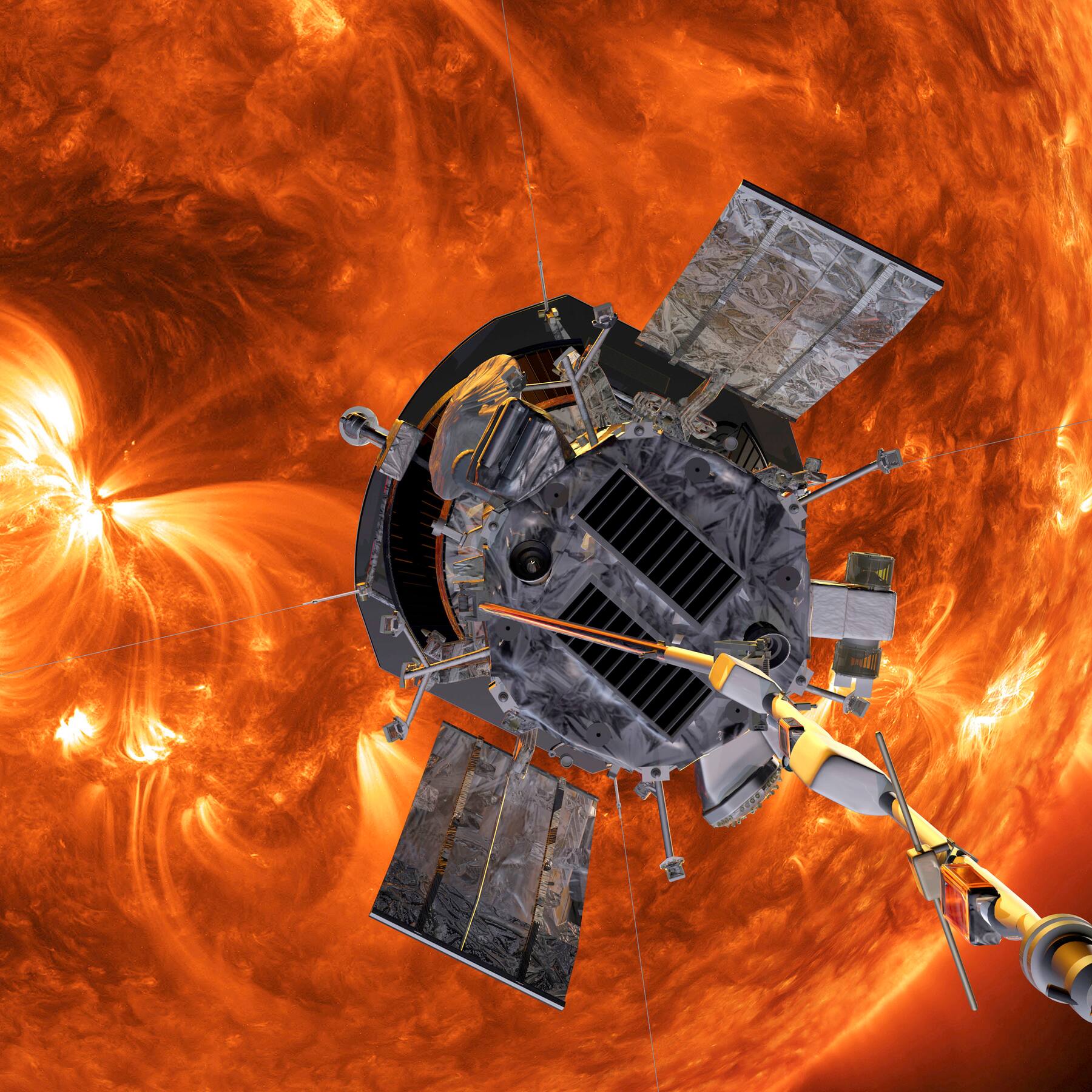
In a historic moment for space exploration, NASA’s Parker Solar Probe is making unprecedented strides in its mission to understand our star like never before. Launched in August 2018, the probe is now attempting the closest approach to the Sun any spacecraft has ever achieved. This daring maneuver promises to unlock new insights into solar phenomena, space weather, and the fundamental mechanics of our solar system.
The Mission’s Significance
The Sun, located approximately 93 million miles from Earth, is the primary driver of space weather and a critical factor influencing Earth’s climate and technological systems. Despite centuries of study, many aspects of the Sun remain a mystery. Questions such as why the solar corona—the Sun’s outer atmosphere—is hotter than its surface, or how solar winds accelerate to millions of miles per hour, continue to challenge scientists.
NASA’s Parker Solar Probe aims to answer these fundamental questions. By approaching closer than any previous mission, the probe can collect data in the Sun’s outer atmosphere, the corona, where intense magnetic fields and high-energy particles are generated. This is a region that was previously inaccessible, and direct measurements here are crucial for advancing our understanding of solar physics.
The Journey to the Sun
Achieving such proximity to the Sun is no small feat. The Parker Solar Probe must navigate extreme temperatures, intense radiation, and immense gravitational forces. To survive, it is equipped with a state-of-the-art heat shield known as the Thermal Protection System (TPS). This carbon-composite shield is about 4.5 inches thick and designed to withstand temperatures exceeding 2,500 degrees Fahrenheit, while keeping the instruments behind it at room temperature.
The spacecraft itself is relatively small, roughly the size of a small car, but it carries an array of sophisticated instruments designed to study magnetic fields, plasma waves, and energetic particles. These tools allow scientists to observe the Sun in ways never before possible, from measuring solar wind properties to capturing images of the corona.
Gravity Assists and Orbital Strategy
Reaching the Sun is not a straightforward journey. The Parker Solar Probe uses a series of gravity assists from Venus to gradually shrink its orbit around the Sun. Each flyby allows the probe to slow down relative to the Sun’s intense gravity, drawing it closer with each pass. Over seven years, the probe will make 24 close approaches to the Sun, eventually reaching a perihelion—or closest approach—of approximately 4 million miles from the solar surface. This distance is seven times closer than any previous spacecraft, including the Helios probes of the 1970s.
This orbital strategy is both ingenious and necessary. Without gravity assists, the spacecraft would need an impractical amount of fuel to counteract the Sun’s massive gravitational pull. By leveraging Venus’ gravity, NASA can reduce the probe’s speed relative to the Sun in a controlled manner, allowing it to safely approach the star while maximizing data collection opportunities.
Scientific Goals
The Parker Solar Probe has several primary scientific objectives. First, it seeks to trace the flow of energy and heat that causes the solar corona to reach millions of degrees, far hotter than the Sun’s visible surface. Understanding this mechanism could revolutionize solar physics, providing answers to questions that have puzzled scientists for decades.
Second, the probe aims to explore the acceleration and dynamics of the solar wind. This stream of charged particles affects space weather, which can have dramatic impacts on satellites, astronauts, and even power grids on Earth. By studying the origins of solar wind in situ, researchers hope to improve space weather forecasting and mitigate its potentially harmful effects.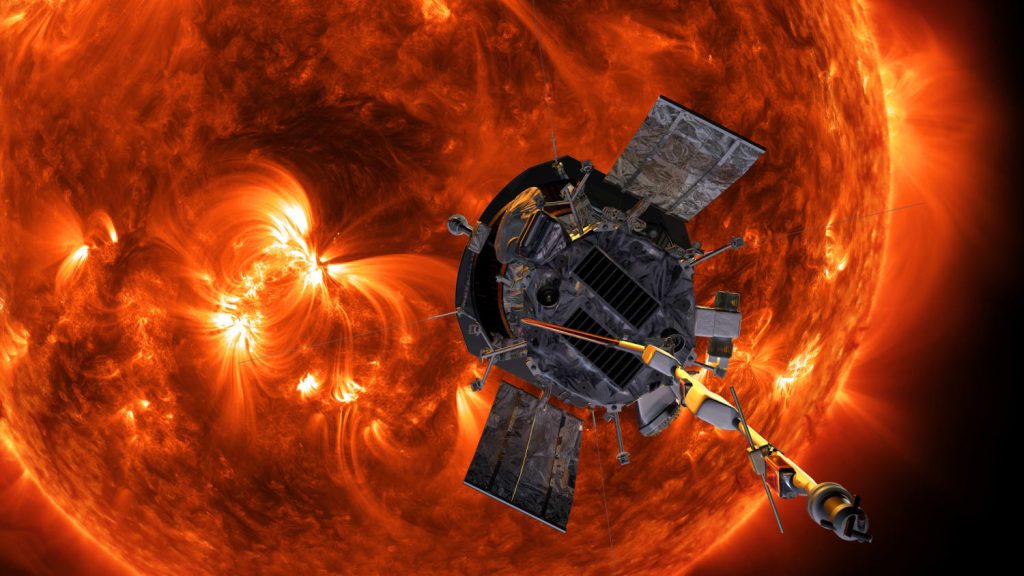
Third, Parker Solar Probe is set to study solar energetic particles, which are high-speed particles ejected from the Sun during solar flares and coronal mass ejections. These particles pose serious risks to astronauts, satellites, and even airline passengers on polar routes. Understanding how they are accelerated could enhance the safety of future space missions and provide insight into fundamental particle physics.
Recent Milestones
As the probe makes its record-breaking approach, it has already achieved significant milestones. During previous passes, Parker Solar Probe became the first human-made object to fly through the Sun’s corona, collecting unprecedented data on magnetic fields and solar wind patterns. These initial observations have already challenged existing theories, revealing unexpected magnetic structures and particle behaviors.
In its upcoming closest approach, the probe will operate at speeds exceeding 430,000 miles per hour, making it the fastest human-made object in history. This extreme velocity, combined with the intense solar environment, presents enormous technical challenges. NASA engineers have meticulously tested the spacecraft’s systems to ensure they can withstand these conditions while continuing to relay high-quality scientific data back to Earth.
Broader Implications
The Parker Solar Probe mission is not just about studying the Sun for academic purposes. Its findings have real-world applications that can affect technology and daily life on Earth. Space weather, driven by solar activity, can disrupt communication systems, GPS navigation, and power grids. By understanding the mechanisms behind solar storms and energetic particle emissions, scientists can develop better predictive models and mitigation strategies.
Additionally, the mission offers insights into fundamental astrophysical processes that are relevant far beyond our solar system. Stellar winds, magnetic fields, and particle acceleration are universal phenomena. Lessons learned from the Parker Solar Probe could inform our understanding of other stars, exoplanet environments, and even cosmic events like supernovae.
International Collaboration and Innovation
While the Parker Solar Probe is a NASA-led mission, it benefits from global collaboration. Instruments and technology have been developed with contributions from international partners, highlighting the shared human curiosity about our Sun and universe. This cooperation ensures that scientific discoveries are disseminated globally, enriching our collective knowledge.
The mission also represents a triumph of engineering innovation. The spacecraft’s heat shield, solar arrays, and autonomous navigation systems push the boundaries of what is technically possible. For example, the solar arrays are designed to extend and retract to manage the extreme heat, while autonomous systems allow the spacecraft to adjust its orientation without real-time input from Earth—a critical capability given the communication delay.
Looking Ahead
The Parker Solar Probe will continue its ambitious mission through the mid-2020s, with each successive perihelion bringing it closer to the Sun. Scientists are eager to see what new phenomena will be uncovered and how these findings will reshape our understanding of the star at the center of our solar system.
Beyond Parker, NASA is planning complementary missions, such as the European Space Agency’s Solar Orbiter, which will provide additional perspectives on the Sun’s poles and magnetic activity. Together, these missions are ushering in a golden age of solar exploration, providing unprecedented opportunities to study the star that sustains life on Earth.
Conclusion
The Parker Solar Probe’s closest-ever approach to the Sun marks a historic moment in human exploration and scientific discovery. By venturing into the Sun’s corona, traveling at unprecedented speeds, and enduring extreme conditions, the probe is providing data that could answer some of the most enduring questions in solar physics.
This mission is a testament to human ingenuity, curiosity, and the drive to explore the unknown. As Parker Solar Probe continues its journey, it not only deepens our understanding of the Sun but also inspires generations to look to the skies, reminding us of the vast mysteries that await discovery. The Sun, once an untouchable celestial body, is now within our reach, and with every orbit, we move closer to unveiling the secrets of our solar system’s heart.
Read Also: Keep your face towards the sunshine and shadows will fall behind you
Watch Also: https://www.youtube.com/@TravelsofTheWorld24





Leave a Reply