
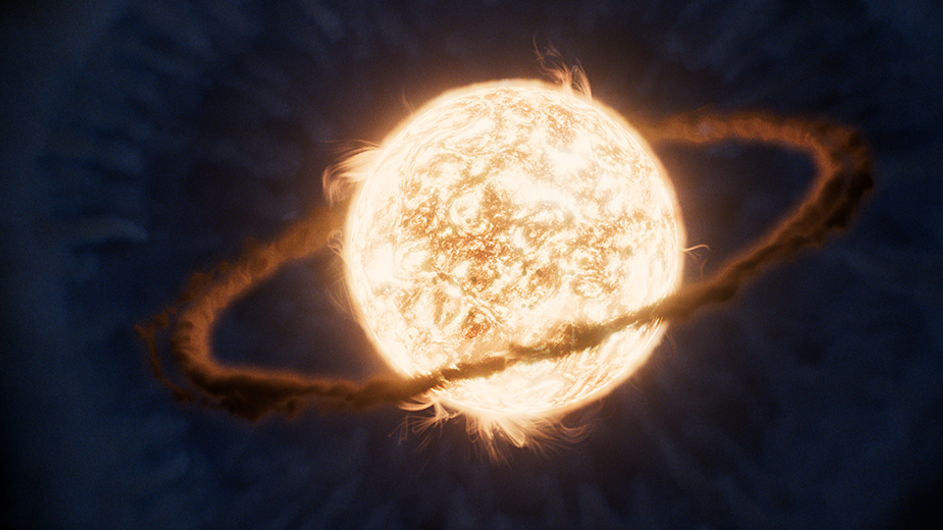
Astronomers studying a star that recently consumed one of its own planets have uncovered surprising details about the aftermath of such cosmic catastrophes. Using advanced observational tools and spectroscopic analysis, scientists have gained unprecedented insight into how stars interact with planetary material, revealing unexpected chemical signatures and clues about planetary composition and evolution.
This research not only sheds light on the violent processes that can occur in planetary systems but also challenges long-held assumptions about the fates of planets and the evolution of stars. The findings, recently published in a peer-reviewed journal, mark a significant step forward in understanding the complex interplay between stars and their orbiting worlds.
When Stars Swallow Planets
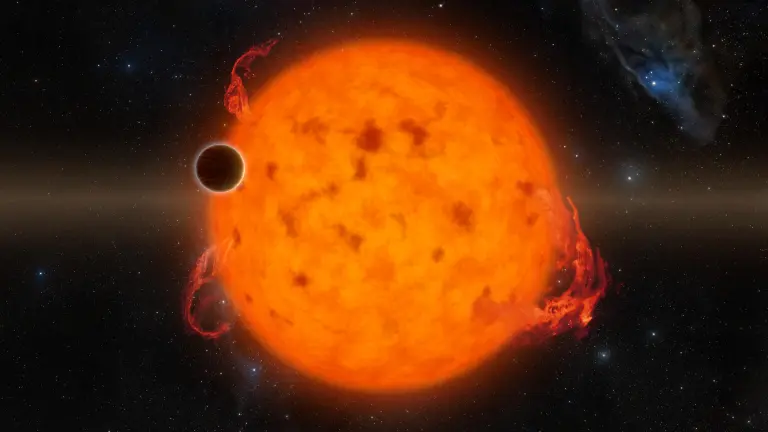
Stars are not passive observers of their planetary systems. Over time, gravitational interactions, orbital decay, and changes in stellar activity can cause planets to spiral inward, eventually being engulfed by their host stars. This process, known as planetary ingestion, is thought to be common, particularly in systems with aging stars.
When a planet is swallowed, the star’s outer layers can absorb planetary material, leading to measurable changes in the star’s chemical composition. Elements such as lithium, iron, magnesium, and other metals can appear in higher-than-expected concentrations in the stellar atmosphere. Studying these anomalies allows astronomers to identify which stars may have consumed planets in the past.
The Star in Focus
The star at the center of the study, a sun-like star located several hundred light-years from Earth, had long been suspected of undergoing unusual chemical enrichment. Researchers observed elevated levels of lithium—a fragile element that normally depletes in stellar atmospheres over time. The unexpected abundance of lithium suggested that the star had recently accreted planetary material.
By combining high-resolution spectroscopy with detailed stellar modeling, the team was able to reconstruct the likely scenario in which a planet, roughly the size of Neptune, was drawn into the star’s atmosphere. The chemical fingerprints left behind not only confirmed the ingestion event but also provided a rare glimpse into the planet’s internal composition.
Surprising Chemical Signatures
One of the most striking findings was the detection of an unusual ratio of heavy elements in the star’s atmosphere. While previous models predicted that planetary ingestion would leave a relatively uniform signature, the observed ratios indicated a more complex process.
In particular, the team found evidence of enhanced magnesium and iron relative to other metals, suggesting that the ingested planet had a differentiated structure—likely a rocky core surrounded by a thick layer of gaseous material. This provides strong evidence that the planet had undergone internal evolution similar to that of the gas giants and ice giants in our solar system.
“These chemical signatures give us a forensic view of a planet we can no longer see,” said Dr. Elena Martinez, lead author of the study. “By analyzing the star, we can reconstruct aspects of the planet’s structure, composition, and even its formation history.”
Implications for Planetary Evolution
The discovery has important implications for understanding planetary evolution and survival. Planetary ingestion events may not be rare, particularly for stars entering the later stages of their life cycles. As stars expand into red giants, their gravitational influence can destabilize planetary orbits, leading to collisions or ingestion.
Understanding which planets are at risk of being engulfed—and the effects on the host star—provides valuable insight into the long-term evolution of planetary systems. It also helps astronomers refine models of stellar chemical evolution and the life cycles of planets.
“This study shows that planetary ingestion can leave a lasting imprint on a star, and these imprints can teach us about the planets that once existed,” said Dr. Martinez. “It’s like reading the star’s diary.”
How Astronomers Detect Engulfed Planets
Detecting a planet that no longer exists requires indirect methods. Astronomers rely on precise measurements of a star’s light spectrum to identify anomalies in elemental abundances. By comparing the observed chemical composition to theoretical models of stellar evolution, they can infer whether the star has recently absorbed planetary material.
In addition to lithium enrichment, other indicators include unusual ratios of refractory elements—metals that condense at high temperatures and are commonly found in rocky planets. Combining these indicators allows researchers to distinguish planetary ingestion from other stellar processes that might alter chemical composition.
Unexpected Findings
In this study, the ingestion event revealed a surprising amount of diversity in the chemical signatures. Not only did the star show elevated lithium, but it also exhibited variations in elements that had previously been considered stable markers.
The data suggest that planetary ingestion is a more complex and dynamic process than previously thought. Factors such as the planet’s size, composition, orbital path, and the star’s internal mixing all contribute to the resulting chemical fingerprints.
“This challenges some of our assumptions about how stars and planets interact,” said Dr. Martinez. “We now realize that stars can preserve detailed memories of planets that were swallowed, but interpreting those memories requires careful analysis.”
Broader Impact on Exoplanet Studies
Studying engulfed planets provides a complementary approach to traditional exoplanet research, which relies on detecting planets that still orbit their stars. While telescopes like Kepler and TESS have revolutionized our knowledge of exoplanets, planetary ingestion events offer a unique window into the planets that were lost over cosmic time.
By understanding the frequency and outcomes of such events, astronomers can refine models of planetary system formation, migration, and stability. It also provides context for our own solar system, helping scientists predict the distant future of Earth and its neighboring planets as the Sun evolves.
Stellar Forensics: Reconstructing a Lost Planet
One of the most exciting aspects of this research is the ability to reconstruct details of a lost planet from its stellar remnants. By analyzing element ratios and comparing them to theoretical models of planetary differentiation, scientists can infer the planet’s internal structure, composition, and even aspects of its formation history.
In this case, the chemical evidence pointed to a planet with a substantial rocky core enveloped by a thick atmosphere—reminiscent of Neptune in our solar system. The findings suggest that planetary ingestion events may provide valuable benchmarks for understanding how planets differentiate and evolve before their demise.
“This is a form of cosmic archaeology,” explained Dr. Martinez. “We’re able to study planets that no longer exist, giving us insight into the diversity and complexity of planetary systems.”
Implications for the Fate of Our Solar System
The study also prompts reflection on the long-term fate of our own solar system. Billions of years from now, as the Sun expands into a red giant, inner planets like Mercury and Venus—and potentially Earth—could be at risk of being engulfed.
Observing other stars that have swallowed planets helps astronomers understand the physical processes involved and estimate timelines for potential planetary loss. It also highlights the dynamic and sometimes violent nature of planetary systems, where even seemingly stable orbits can change dramatically over time.
The Future of Planetary Ingestion Studies
Advances in observational technology and spectroscopy are enabling astronomers to study planetary ingestion events with increasing precision. Future telescopes, such as the James Webb Space Telescope (JWST) and next-generation ground-based observatories, will allow scientists to detect even subtler chemical signatures in distant stars.
Combining these observations with computer simulations of planetary orbits and stellar evolution will further improve our understanding of how planets interact with their host stars. Researchers hope that these studies will ultimately help answer fundamental questions about planetary formation, survival, and destruction across the galaxy.
Conclusion
The discovery of a planet swallowed by its star and the surprising chemical signatures it left behind underscores the dynamic, sometimes violent nature of planetary systems. By analyzing the star’s chemical composition, astronomers have gained unprecedented insight into the structure and evolution of a lost planet, providing a unique form of cosmic archaeology.
This research not only informs our understanding of exoplanets but also offers a glimpse into the distant future of our own solar system. Planetary ingestion events remind us that the universe is an ever-changing, dynamic place, where even planets can be temporary residents in the cosmic dance around their stars.
As observational techniques and modeling continue to improve, studies like this will deepen our understanding of the life cycles of planets and stars, revealing the hidden stories written in starlight.
Read Also: Keep your face towards the sunshine and shadows will fall behind you
Watch Also: https://www.youtube.com/@TravelsofTheWorld24









Leave a Reply