
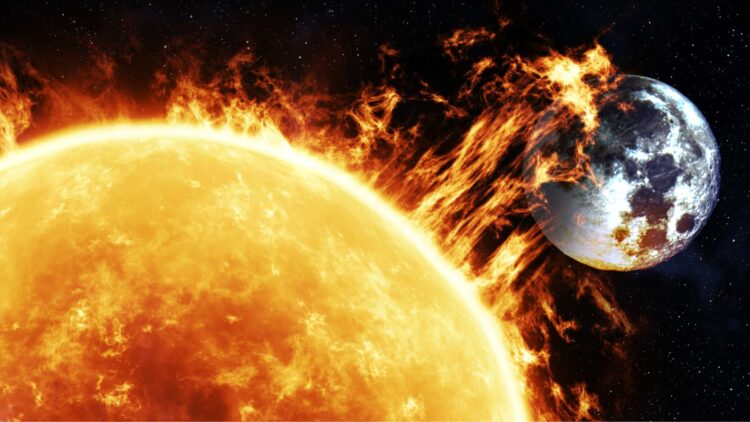
NASA has issued a warning about a series of new solar flares erupting from the Sun, cautioning that these high-energy bursts could potentially disrupt communications, satellite operations, and even power grids on Earth. Solar flares are sudden releases of magnetic energy on the Sun’s surface, capable of emitting intense radiation across the electromagnetic spectrum. While most flares are harmless to humans on the planet’s surface, they can interfere with modern technology that relies on satellites and radio signals.
NASA scientists have been closely monitoring the Sun’s activity using space-based observatories, including the Solar Dynamics Observatory (SDO) and the Solar and Heliospheric Observatory (SOHO). Recent observations indicate an increase in flare frequency and intensity, coinciding with the Sun’s 11-year activity cycle, which currently appears to be reaching a peak known as the solar maximum.
What Are Solar Flares?
Solar flares are explosive events on the Sun’s surface caused by sudden changes in magnetic fields. These events release energy equivalent to millions of hydrogen bombs in a matter of minutes, producing X-rays, ultraviolet radiation, and energetic particles. Flares are classified based on their X-ray brightness in the 1 to 8 Angstrom range, with classes including A, B, C, M, and X—the latter being the most intense.
X-class flares, for example, have the potential to cause radio blackouts on Earth, interfere with GPS navigation, and even impact electrical power systems. M-class flares are moderately strong but can still affect communication and navigation systems. While solar flares themselves do not physically harm humans on Earth, they are a critical concern for technology-dependent societies.
The Current Solar Activity
NASA reports that the Sun has produced several M- and X-class solar flares in recent weeks, suggesting a period of heightened activity. Scientists attribute this surge to the Sun approaching the peak of its 25th solar cycle, which is expected to reach its maximum intensity over the next few years.
During solar maximum, the frequency of sunspots, solar flares, and coronal mass ejections (CMEs) increases. Sunspots are dark regions on the Sun’s surface associated with strong magnetic fields, and their presence often correlates with higher flare activity. The current solar cycle has seen an unusually rapid buildup of sunspots, prompting heightened monitoring and readiness from space weather experts.
How Solar Flares Affect Earth
When a solar flare occurs, the Sun emits bursts of X-rays and ultraviolet radiation that travel at the speed of light, reaching Earth in just over eight minutes. These radiation bursts can ionize the Earth’s upper atmosphere (ionosphere), leading to temporary disturbances in radio communications.
High-frequency (HF) radio signals, used by aviation, maritime operations, and amateur radio operators, are particularly vulnerable. Shortwave radio, GPS navigation, and satellite communication networks can all experience signal degradation during intense flare events. In extreme cases, X-class flares can cause brief blackouts of radio communication across entire regions.
Coronal mass ejections, which often accompany powerful flares, can send billions of tons of solar plasma hurtling toward Earth. If directed at the planet, these charged particles interact with Earth’s magnetic field, potentially triggering geomagnetic storms that affect satellites, power grids, and navigation systems.
Historical Examples of Solar Flare Disruption
Solar flares and geomagnetic storms have impacted Earth several times in recorded history. One of the most famous events, the Carrington Event of 1859, produced auroras visible near the equator and caused telegraph systems to fail across Europe and North America.
More recently, in 1989, a geomagnetic storm caused by a solar flare triggered a widespread power outage in Quebec, Canada, leaving millions without electricity for several hours. Satellite operators have occasionally had to shut down sensitive instruments to protect them from solar radiation, and GPS systems have experienced temporary disruptions during strong solar events.
These examples underscore the need for vigilance as the Sun enters periods of heightened activity.
NASA’s Monitoring Efforts
NASA maintains constant surveillance of solar activity using advanced instruments aboard space observatories. The Solar Dynamics Observatory captures high-resolution images of the Sun in multiple wavelengths, allowing scientists to track the development of sunspots and flares.
The SOHO spacecraft and the Parker Solar Probe provide complementary data, observing the Sun’s corona and measuring solar wind and particle emissions. By combining these data sources, scientists can predict the potential impact of solar events on Earth with increasing accuracy.
NASA collaborates closely with the National Oceanic and Atmospheric Administration (NOAA) and the U.S. Space Weather Prediction Center (SWPC) to issue alerts and forecasts for governments, businesses, and the public.
Potential Impacts on Technology
Modern society is highly dependent on technology that can be disrupted by solar flares. Satellite-based communication, GPS navigation, aviation, and even banking networks rely on stable, uninterrupted signals.
During strong flare events, GPS signals may degrade, affecting aviation, shipping, and emergency response. Satellites in low Earth orbit and geostationary orbit can experience malfunctions, including temporary shutdowns or orientation issues due to charged particles impacting onboard electronics.
Power grids are another concern. Geomagnetically induced currents from solar storms can overload transformers, damage substations, and trigger blackouts. Utilities and energy operators monitor solar activity closely and may take preventive measures to protect infrastructure during significant events.
Mitigation and Preparedness
To minimize the effects of solar flares, NASA and partner agencies have established several strategies. Satellite operators can temporarily shut down sensitive instruments or adjust satellite orientation to reduce exposure to charged particles. Airlines can reroute flights that rely on polar routes, where communication disruptions are more likely.
Power companies can implement protective measures to safeguard transformers and adjust grid loads to prevent damage. Amateur radio operators and other HF users are advised to monitor space weather alerts and adjust frequencies during active periods.
Public awareness campaigns also play a role. By understanding the risks and potential impacts, communities and businesses can better prepare for short-term disruptions caused by solar events.
Future Solar Cycle Predictions
Solar scientists predict that the current solar cycle, Solar Cycle 25, will peak in the mid-2020s, producing the highest likelihood of solar flares, sunspots, and geomagnetic storms. While exact predictions are challenging, historical patterns provide useful guidance for preparedness.
Researchers continue to refine models of solar activity, using both observational data and advanced simulations. Improved forecasting allows governments, businesses, and satellite operators to anticipate disruptions and implement timely safeguards.
Space Weather and Human Spaceflight
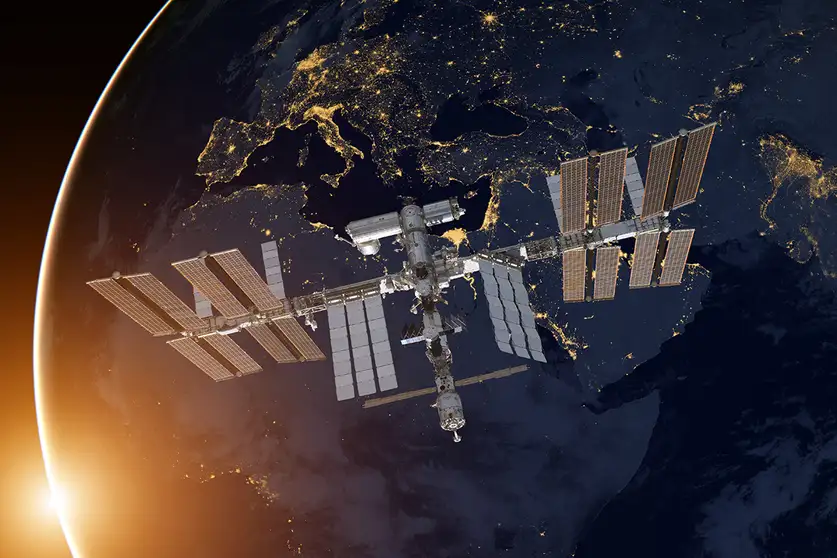
Solar flares are not only a concern for Earth-based technology; they also pose risks for astronauts. High-energy radiation from flares can damage spacecraft electronics and pose health risks to crew members aboard the International Space Station or traveling beyond Earth’s protective magnetosphere.
NASA incorporates space weather monitoring into mission planning, scheduling extravehicular activities (spacewalks) to avoid periods of heightened solar activity. For future Artemis lunar missions and Mars expeditions, radiation shielding and early-warning systems will be essential to protect astronauts from flare-related exposure.
The Importance of Global Coordination
Solar flares are a global phenomenon, and their effects can cross borders. International coordination is critical for monitoring, forecasting, and mitigating impacts on satellites, communications, and power systems.
NASA collaborates with international space agencies, including ESA (European Space Agency), JAXA (Japan), and ISRO (India), to share real-time data on solar activity. Joint efforts ensure that early warnings are disseminated worldwide, enabling coordinated response strategies.
Public Awareness and Action
NASA emphasizes that while solar flares can disrupt technology, they do not pose an immediate threat to human life on Earth. Nonetheless, preparedness is crucial for minimizing economic and operational impacts.
Members of the public can monitor solar activity through NASA’s Space Weather Prediction Center, which provides real-time alerts, forecasts, and educational resources. Businesses and critical infrastructure operators are encouraged to follow guidelines issued by NOAA and other space weather authorities.
The Broader Significance of Solar Research
Studying solar flares and their effects on Earth is not only about risk management; it also enhances our understanding of fundamental astrophysical processes. Solar research informs the design of resilient spacecraft, advanced communication systems, and robust power infrastructure capable of withstanding space weather events.
By observing and analyzing solar activity, scientists gain insights into magnetic fields, plasma behavior, and energy transfer in extreme conditions—knowledge that extends beyond space weather to fields such as fusion energy and astrophysics.
Conclusion
NASA’s warning about new solar flares underscores the ongoing vulnerability of modern technology to space weather. As the Sun approaches the peak of its current activity cycle, the likelihood of disruptive flares increases, affecting satellite communications, GPS navigation, aviation, and power systems.
Through constant monitoring, early-warning systems, and international cooperation, scientists are working to mitigate these effects and protect both terrestrial and orbital infrastructure. While solar flares cannot be prevented, preparedness, awareness, and advanced forecasting allow society to respond effectively to these natural events.
As humanity becomes ever more dependent on space-based technology, understanding and adapting to solar activity is essential. NASA’s warnings serve as both a caution and a call to action, reminding us of our connection to the Sun and the ongoing need for vigilance in a technologically interconnected world.
Read Also: Keep your face towards the sunshine and shadows will fall behind you
Watch Also: https://www.youtube.com/@TravelsofTheWorld24





Leave a Reply