
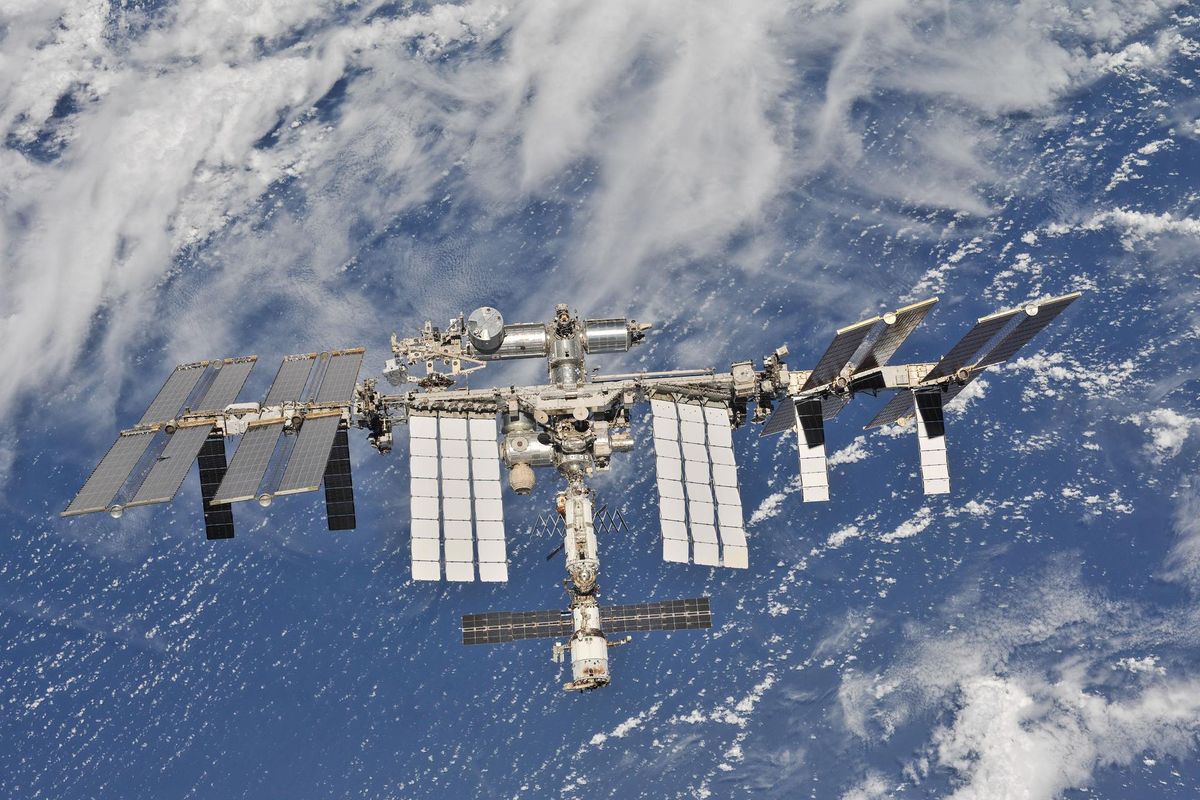
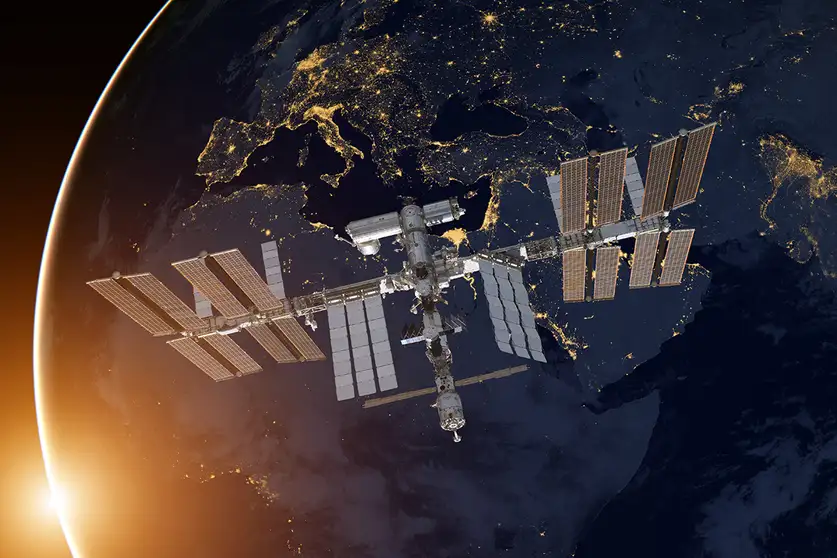
NASA has announced plans to open the International Space Station (ISS) to private tourists, marking a historic shift in the way humans can access space. For over two decades, the ISS has been a hub for scientific research, technological development, and international cooperation, but until now, access was largely limited to astronauts from national space agencies. The decision to welcome private individuals represents a major step toward commercializing low Earth orbit and expanding humanity’s presence in space.
According to NASA, the move is part of a broader strategy to transition the ISS into a platform for commercial activity, while continuing to conduct groundbreaking research. By allowing tourists to visit the station, NASA hopes to generate revenue that will support ongoing operations and fund future deep-space missions, including lunar exploration under the Artemis program.
Why the ISS Is Opening to Tourists
The International Space Station, orbiting roughly 408 kilometers (253 miles) above Earth, is one of the most complex engineering achievements in human history. Built collaboratively by NASA, Roscosmos, ESA, JAXA, and CSA, the station has been continuously inhabited since November 2000. Over the years, it has hosted thousands of experiments in microgravity, biotechnology, physics, and Earth observation.
However, maintaining the ISS is expensive, with annual operational costs exceeding $3 billion. Opening the station to private tourists is a way to diversify funding sources while giving ordinary citizens the opportunity to experience space firsthand. Private access also aligns with NASA’s goal of encouraging commercial spaceflight, helping to stimulate the growing space economy.
NASA officials emphasize that tourism will be carefully regulated to ensure safety and minimize disruption to ongoing scientific missions. Tourists will undergo rigorous medical screening and training, and visits will be coordinated to integrate smoothly with the schedules of professional astronauts.
How Space Tourism Will Work
Private individuals will be able to travel to the ISS aboard commercially operated spacecraft, such as SpaceX’s Crew Dragon capsule. These vehicles are already certified to carry astronauts to the station and have completed multiple successful missions.
Tourists will typically spend between one and two weeks aboard the ISS, participating in guided activities and viewing Earth from orbit—a perspective described by astronauts as life-changing. They will also have the opportunity to observe scientific experiments and interact with crew members.
Training will be conducted at NASA facilities and partner training centers, focusing on zero-gravity adaptation, emergency procedures, and basic scientific operations. Safety protocols will mirror those used for astronauts, including pre-flight quarantine, spacecraft familiarization, and contingency drills.
The Cost of Visiting Space
While the opportunity to visit the ISS is groundbreaking, it comes with a significant price tag. Industry reports suggest that trips could cost between $50 million and $70 million per person, depending on mission length and services included.
Despite the high cost, there is growing demand from private citizens, entrepreneurs, and celebrities who view space travel as both a personal achievement and a symbol of technological progress. As the commercial space sector matures, prices are expected to gradually decrease, making orbital tourism more accessible to a broader audience in the coming decades.
Expanding the Space Economy
Opening the ISS to tourists is part of NASA’s larger plan to support a robust commercial space economy. By creating opportunities for private enterprise in low Earth orbit, the agency aims to encourage companies to develop new technologies, conduct private research, and even manufacture goods in microgravity.
This approach is already yielding results. Companies like SpaceX, Axiom Space, and Blue Origin are actively developing services to transport people and cargo to the ISS. Future possibilities include microgravity laboratories, space-based manufacturing, and orbital research facilities funded by private investment. Tourism is just the first step in a larger vision of a commercially viable space industry.
A Unique Experience
Tourists aboard the ISS will experience life as few humans have. The station’s microgravity environment allows visitors to float freely, conduct simple experiments, and witness Earth from space—a view often described as profoundly moving.
Astronauts consistently report that seeing Earth from orbit changes their perspective on life, fostering a sense of global unity and environmental awareness. NASA hopes that tourists will share these experiences with the world, inspiring a new generation of scientists, engineers, and space enthusiasts.
In addition to sightseeing, tourists may participate in structured activities, such as observing scientific experiments, capturing high-resolution Earth imagery, or learning the basics of orbital mechanics from seasoned astronauts. These experiences provide both educational and personal enrichment.
Safety First
NASA stresses that safety remains the top priority. Space travel carries inherent risks, including exposure to microgravity, radiation, and the challenges of launch and re-entry. To mitigate these risks, tourists will receive extensive training, spacecraft will undergo rigorous testing, and operations will be monitored by mission control.
Medical screenings will ensure that participants are physically capable of withstanding the stresses of space travel. Spacecraft are equipped with life-support systems, emergency evacuation protocols, and backup communication channels to handle contingencies.
The experience of astronauts and early private passengers has already demonstrated that space tourism can be conducted safely when proper protocols are followed. NASA is committed to applying these lessons to ensure every tourist’s journey is as safe and comfortable as possible.
International Collaboration
The ISS is a symbol of international cooperation, and tourism will be no exception. NASA will work with partner agencies, including Roscosmos (Russia), ESA (Europe), JAXA (Japan), and CSA (Canada), to coordinate visits and ensure compliance with operational standards.
This collaborative approach ensures that tourism does not interfere with critical scientific research and that all activities aboard the station respect the shared stewardship of this unique orbital laboratory. It also highlights the potential for future commercial partnerships between nations in space.
Potential Impact on Science
While tourism is a major development, NASA emphasizes that scientific research remains the ISS’s primary mission. Tourists will be carefully integrated into station operations so that their presence does not disrupt ongoing experiments.
In some cases, tourism may even benefit science by generating additional funding for research projects. Revenue from private visits can help maintain laboratory equipment, support long-term missions, and enable new experiments that might otherwise be financially unfeasible.
The ISS’s role as a research platform is therefore expected to remain central, with tourism complementing rather than replacing its scientific mission.
The Future of Orbital Tourism
NASA’s decision to open the ISS to tourists is just the beginning. As commercial spacecraft become more advanced and costs gradually decline, more people will have the opportunity to experience space.
In the next decade, orbital hotels, private space stations, and long-term commercial habitats may become a reality. The ISS itself may serve as a model for how private and public partnerships can operate in low Earth orbit, setting standards for safety, operations, and international collaboration.
NASA’s efforts also support the development of technologies necessary for deep-space tourism, including trips to the Moon and eventually Mars. Experience gained from orbital tourism will inform spacecraft design, life support systems, and training protocols for future explorers.
Inspiring the Next Generation
Perhaps the most profound impact of opening the ISS to tourists will be cultural. Seeing private citizens travel to space may inspire young people around the world to pursue careers in science, engineering, and technology.
NASA hopes that these journeys will ignite curiosity about the universe and reinforce the value of space exploration. Just as the Apollo program inspired generations, space tourism on the ISS has the potential to create a new wave of interest in STEM fields.
By allowing ordinary people to participate in humanity’s journey into space, NASA is fostering a sense of shared ownership and excitement about our future among the global public.
Conclusion
NASA’s plan to open the International Space Station to tourists marks a historic milestone in human space exploration. By welcoming private individuals into low Earth orbit, the agency is helping to commercialize space while maintaining the ISS’s role as a hub for scientific research and international cooperation.
Tourists will experience the wonders of microgravity, witness Earth from orbit, and participate in activities aboard one of humanity’s most extraordinary achievements. At the same time, rigorous safety protocols, training programs, and operational planning will ensure that these missions are conducted responsibly.
Ultimately, NASA’s initiative is more than a luxury experience—it is a strategic investment in the future of space exploration, inspiring innovation, expanding the space economy, and giving humanity a tangible connection to the cosmos. The era of orbital tourism has arrived, and the International Space Station is at its forefront.
Read Also: Keep your face towards the sunshine and shadows will fall behind you
Watch Also: https://www.youtube.com/@TravelsofTheWorld24






Leave a Reply