
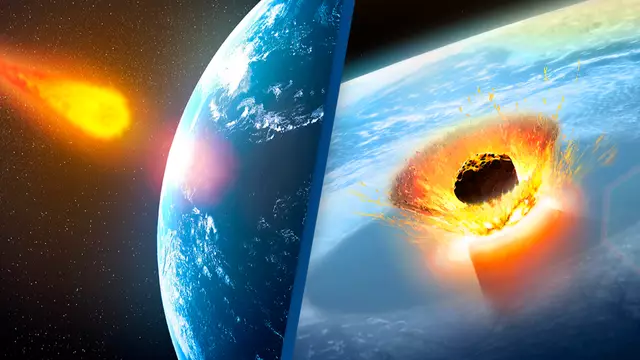
NASA, the United States’ premier space agency, recently addressed a hypothetical yet critical question: what would happen if Earth faced an existential threat from space? From massive asteroids to rogue comets and other celestial hazards, NASA’s Planetary Defense Coordination Office (PDCO) has developed a range of strategies, simulations, and response protocols to protect the planet.
While the scenario of an impending global catastrophe remains extremely rare, the agency treats it with the same seriousness as any other space mission. This article explores NASA’s plans, technology, collaborations, and public outreach aimed at preventing a potential extinction-level event.
Understanding Planetary Threats
The universe is filled with objects that, if on a collision course with Earth, could cause massive destruction. Some of the main threats include:
1. Near-Earth Asteroids (NEAs)
-
Asteroids that orbit close to Earth’s path
-
Can range from tens of meters to kilometers in diameter
-
Large ones can cause regional or global devastation
2. Comets
-
Highly volatile objects from the outer solar system
-
Travel at extremely high speeds
-
Detection is more challenging due to unpredictable trajectories
3. Solar Events and Space Weather
-
Solar flares or coronal mass ejections (CMEs) can disrupt satellites, power grids, and communications
-
While not causing extinction, they can impact modern civilization significantly
4. Cosmic Threats
-
Rare but possible threats include gamma-ray bursts or rogue celestial bodies
-
Long-term monitoring helps identify potential risks in advance
NASA’s work in planetary defense primarily focuses on asteroids and comets because they are the most immediate and tangible threats.
NASA’s Planetary Defense Coordination Office (PDCO)
The PDCO is responsible for detecting, tracking, and responding to near-Earth objects (NEOs) that could threaten the planet. Its core functions include:
-
Monitoring Space Objects
-
Using ground-based and space-based telescopes
-
Tracking the trajectory, size, and composition of potential threats
-
-
Analyzing Impact Risk
-
Calculating probabilities of collision
-
Running simulations of impact scenarios, including regional and global effects
-
-
Coordinating Response
-
Working with national and international partners
-
Planning potential deflection or mitigation missions
-
-
Public Communication
-
Educating the public and providing alerts about credible threats
-
Ensuring transparency and preparedness
-
Early Detection: Humanity’s First Line of Defense
NASA emphasizes that early detection is critical. Detecting an asteroid or comet years or decades before a potential impact greatly increases options for mitigation.
Detection Methods
-
Optical telescopes: Scan the night sky for moving objects
-
Infrared observations: Measure size and composition, even for dark asteroids
-
Radar imaging: Refines orbit and shape information
-
International collaborations: ESA, JAXA, and other agencies provide additional observation coverage
NASA maintains a growing catalog of NEOs, ensuring that most potentially hazardous objects are detected in advance.
Mitigation Strategies: What NASA Would Do
NASA has devised several methods to prevent an asteroid from striking Earth, depending on its size, trajectory, and lead time:
1. Kinetic Impactors
-
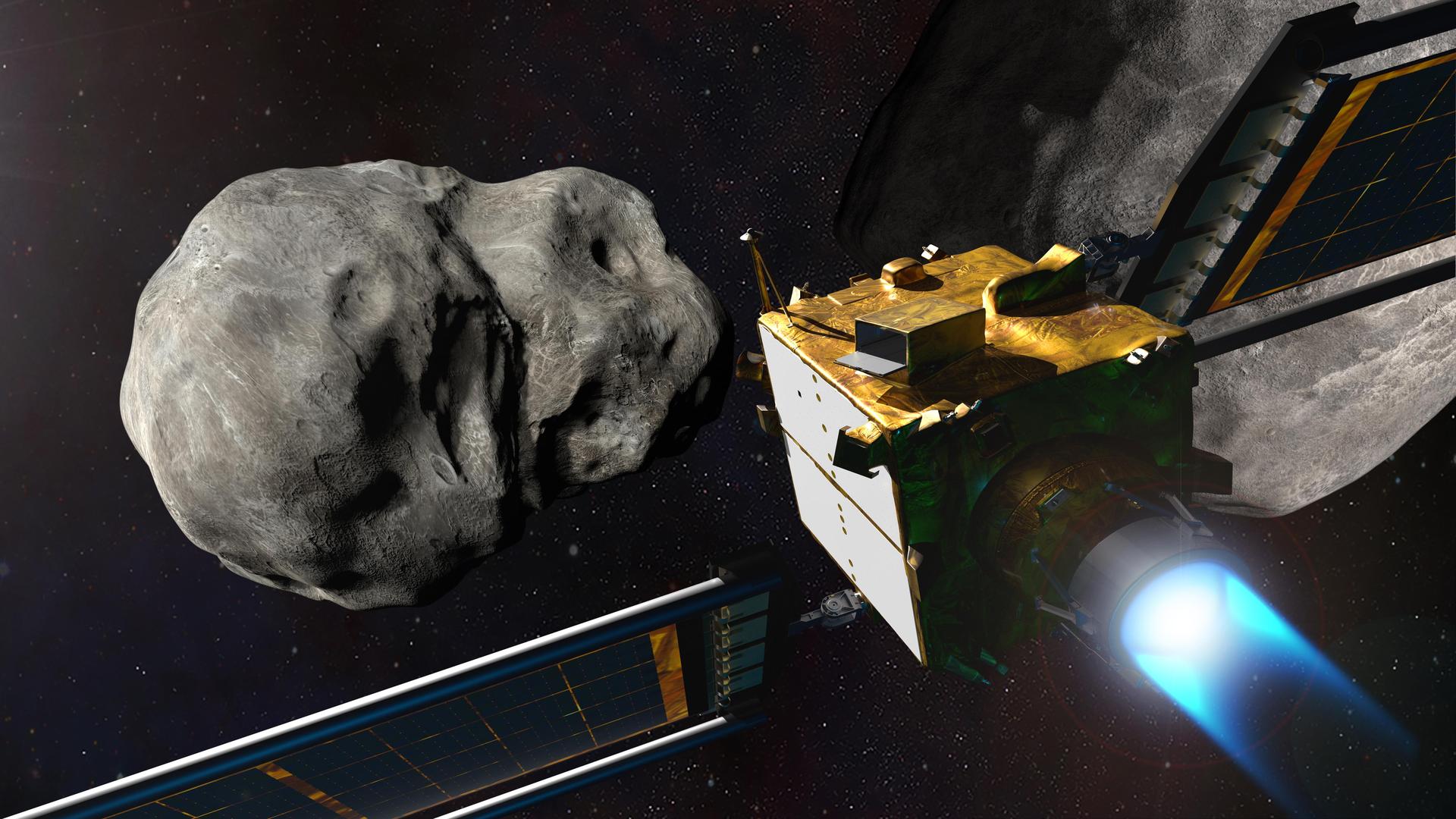
Spacecraft collide with an asteroid at high speed to alter its trajectory
-
Successfully tested in NASA’s DART mission, which nudged the asteroid Dimorphos
2. Gravity Tractors
-
A spacecraft hovers near an asteroid, using its gravitational pull to slowly alter the asteroid’s course
-
Effective for long-term, precise deflection
3. Nuclear Options
-
In extreme cases, nuclear devices could change an asteroid’s speed or break it into smaller pieces
-
Used as a last resort due to potential fragmentation risks
4. Evacuation and Civil Defense
-
For short-notice threats that cannot be deflected, NASA works with emergency management agencies
-
Evacuation plans focus on minimizing casualties in regions likely to be affected
Simulating Extinction-Level Scenarios
NASA regularly runs computer simulations and tabletop exercises to prepare for worst-case scenarios:
-
Models the effects of asteroid impacts on climate, infrastructure, and population
-
Tests the effectiveness of deflection missions under different conditions
-
Coordinates with international partners to practice a coordinated response
-
Helps refine public safety protocols and communication strategies
These exercises ensure that decision-makers are ready should an actual threat emerge.
International Collaboration
Planetary defense is a global concern. NASA works with multiple agencies:
-
European Space Agency (ESA): Provides telescopes, data, and backup support
-
Japanese Aerospace Exploration Agency (JAXA): Contributes observation satellites
-
United Nations Office for Outer Space Affairs (UNOOSA): Helps coordinate international policies and responses
International collaboration increases monitoring coverage, response capacity, and public awareness.
Public Education and Outreach
NASA emphasizes education and transparency:
-
Social media updates and live streams during NEO observations
-
Educational campaigns explaining asteroid risk, deflection missions, and emergency preparedness
-
Collaboration with schools and science organizations to inspire future scientists and engineers
Clear communication is vital to prevent panic and ensure public understanding of realistic risks.
Technology and Innovation in Planetary Defense
NASA’s approach combines advanced technology and innovation:
-
Space-based infrared telescopes detect dark, hard-to-see asteroids
-
Artificial intelligence predicts trajectories and potential impact scenarios
-
Autonomous spacecraft can conduct precise deflection missions
-
Data sharing networks improve global situational awareness
These innovations make Earth more resilient to cosmic threats than ever before.
Past Examples and Lessons Learned
Historical events show the importance of planetary defense:
-
Tunguska Event (1908): A mid-sized asteroid exploded over Siberia, flattening 2,000 square kilometers of forest
-
Chelyabinsk Meteor (2013): A 20-meter meteor injured over 1,500 people in Russia
-
While these events were localized, they illustrate the potential consequences of undetected space objects
NASA’s work aims to prevent such events from causing widespread or catastrophic damage in the future.
Future Missions and Plans
NASA is preparing for a future where humanity can actively defend Earth:
-
NEO Surveyor Mission: Will detect and track smaller, darker asteroids
-
Artemis Program: Lunar missions help develop deep-space technologies applicable to planetary defense
-
Advanced deflection concepts: Laser ablation and autonomous kinetic impactors are being studied
-
Global emergency protocols: Coordinated planning with governments and international agencies
These initiatives ensure Earth remains protected from celestial hazards while advancing space exploration technology.
Challenges in Planetary Defense
Despite advanced technology, challenges remain:
-
Detection limits: Small, dark, or fast-moving objects are harder to spot
-
Short warning times: Some objects may only be discovered months before impact
-
International coordination: Rapid global decision-making is essential
-
Public perception: Avoiding panic while ensuring preparedness is complex
Addressing these challenges requires innovation, planning, and collaboration across disciplines.
Key Takeaways
NASA’s approach to an existential threat includes:
-
Early Detection: Spotting potential hazards decades in advance
-
Mitigation: Using spacecraft, gravity, or nuclear deflection techniques if necessary
-
Simulation and Preparedness: Testing scenarios to refine response strategies
-
International Collaboration: Coordinating globally for observation, mitigation, and emergency response
-
Public Communication: Educating and informing the public responsibly
This multi-layered approach ensures Earth is as protected as possible from celestial threats.
Conclusion
While the scenario of the world facing an imminent asteroid or comet impact is rare, NASA treats planetary defense as a serious scientific and strategic priority. By combining early detection, advanced technology, international collaboration, and public outreach, the agency has developed a framework to protect Earth from potential cosmic disasters.
From kinetic impactors like DART to comprehensive monitoring networks and international coordination, NASA is preparing for every possibility. While no catastrophic event is currently predicted, these measures ensure humanity is ready for even the most extreme scenarios, turning a potentially existential threat into a challenge that science and technology can meet.
Ultimately, NASA’s efforts demonstrate the power of preparedness, innovation, and global collaboration, reinforcing the importance of science not just for exploration, but for the survival of our planet.
Read Also: Keep your face towards the sunshine and shadows will fall behind you
Watch Also: https://www.youtube.com/@TravelsofTheWorld24








Leave a Reply