
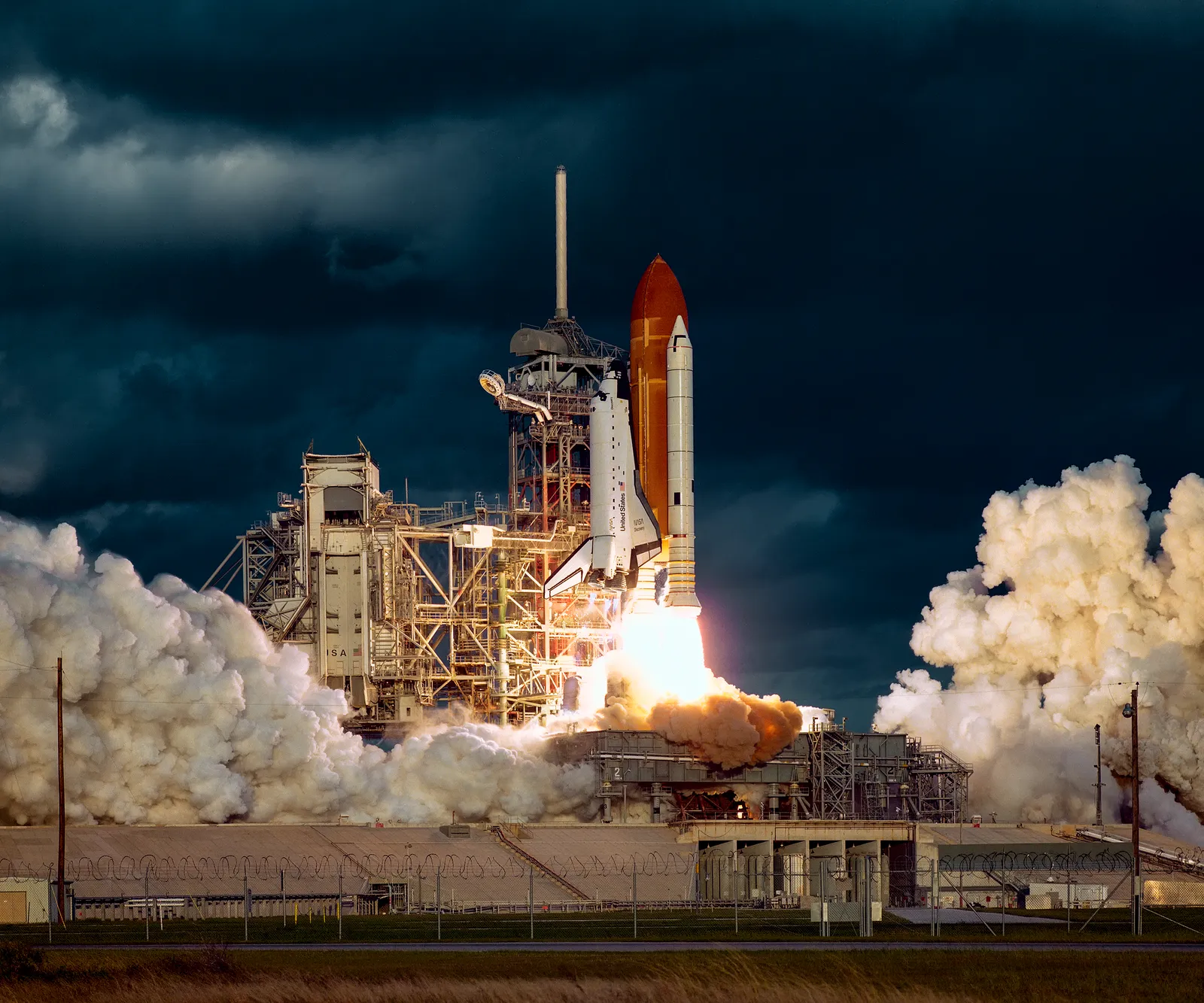
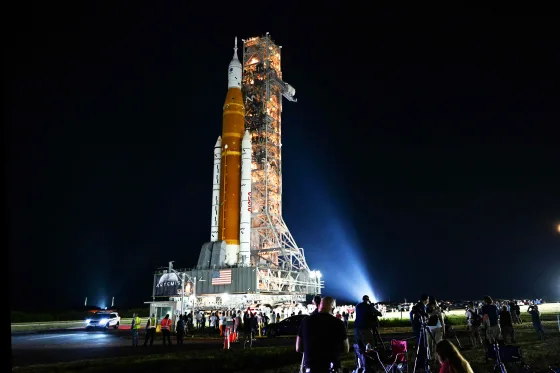
On November 21, 2025, a major milestone was reached at NASA: the rocket for Artemis 2 — the first crewed lunar mission under the Artemis Program — was fully assembled. In a dramatic moment at the Kennedy Space Center (KSC), the agency’s ground‑crew stacked the Orion spacecraft atop the Space Launch System (SLS) rocket, completing the construction of the launch vehicle that will carry astronauts around the Moon.
This article explores what this assembly milestone signifies, the technologies behind the rocket, what’s next for Artemis 2, and why this mission is a crucial stepping stone toward returning humans to the lunar neighborhood — and eventually beyond.
What Happened: The Final Assembly
-
The Orion crew module was hoisted and integrated atop the SLS rocket during operations inside the legendary Vehicle Assembly Building (VAB), High Bay 3.
-
This stacking marks the completion of the rocket as a fully assembled launch vehicle ready for final checks, testing, and eventual rollout to the launch pad.
-
With that final connection made, Artemis 2 transitions from build phase into pre‑launch preparations — including system integration tests, launch rehearsals, and verification of all spacecraft systems.
For the first time in decades, humans may soon ride a NASA rocket around the Moon — a prospect made tangible by this assembly.
The Rocket: SLS + Orion — What Powers Artemis 2
The Space Launch System (SLS)
-
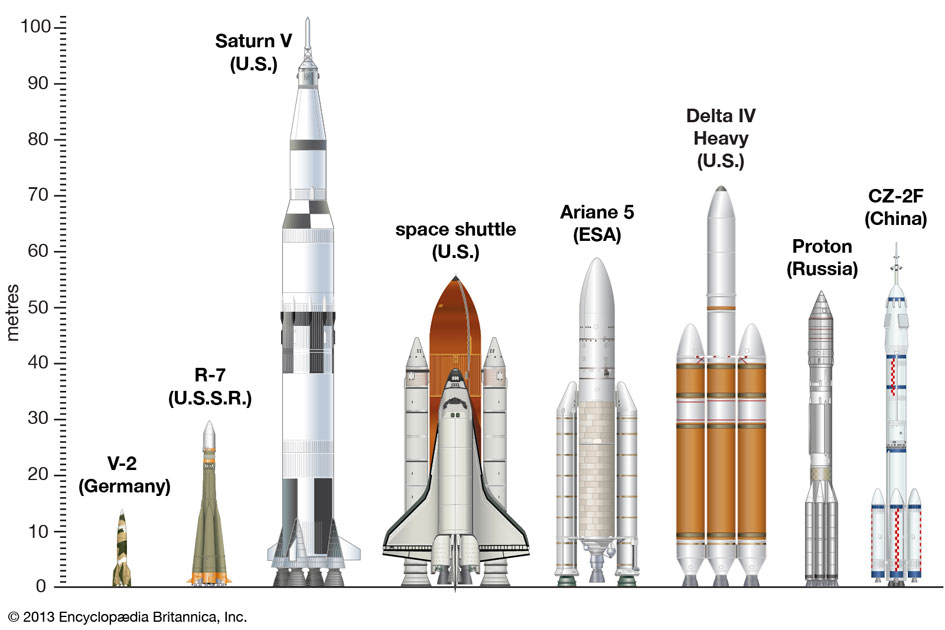
The SLS is a “mega‑rocket,” designed to launch deep‑space missions. Its core stage burns super-cooled liquid hydrogen and oxygen, and is paired with two massive solid rocket boosters that deliver around 75 % of the thrust at liftoff.
-
The boosters each stand about 177 ft (54 m) tall.
-
When fully fueled and assembled with Orion, SLS will give Artemis 2 the power needed to send four astronauts on a lunar flyby and then return them safely to Earth.
The Orion Spacecraft
-
Orion is not just a spacecraft — it’s a deep‑space crew vehicle and habitat, built for voyages far beyond low‑Earth orbit. Its design includes advanced life-support, radiation shielding, navigation systems, and the largest heat shield ever built for a human spacecraft.
-
For Artemis 2, Orion will carry a crew of four: three NASA astronauts and a Canadian Space Agency astronaut.
-
During the mission, Orion will loop around the Moon on a “free‑return trajectory,” using the Moon’s gravity to sling back toward Earth — a key safety feature for early crewed deep‑space missions.
What Artemis 2 Means: Why This Mission Matters
1. First Crewed Lunar Mission in Over 50 Years
Artemis 2 will be the first time humans travel beyond low‑Earth orbit since the last of the Apollo missions in 1972. The fully stacked rocket signals that NASA’s return to the Moon is no longer a distant plan — it’s nearly reality.
2. A Test of Deep‑Space Systems
Artemis 2 isn’t just a “space joyride.” It’s a critical test of hardware, operations, life‑support, navigation, communication — everything future lunar landings will depend on. Success means confidence for upcoming missions like Artemis 3 and beyond.
3. Foundation for Sustained Lunar Presence — and Mars
By proving rocket, spacecraft, and ground‑system capabilities, Artemis 2 sets the stage for establishing a long-term human presence around the Moon — orbiting stations, lunar landers, research outposts — and eventually prepping for Mars.
4. Inspiration & Global Interest
The assembled rocket is a symbol. A visible sign of human ambition, international cooperation, and progress. It reminds people worldwide that human spaceflight is alive — and that the Moon is no longer just a distant dream.
What’s Next: Countdown to Launch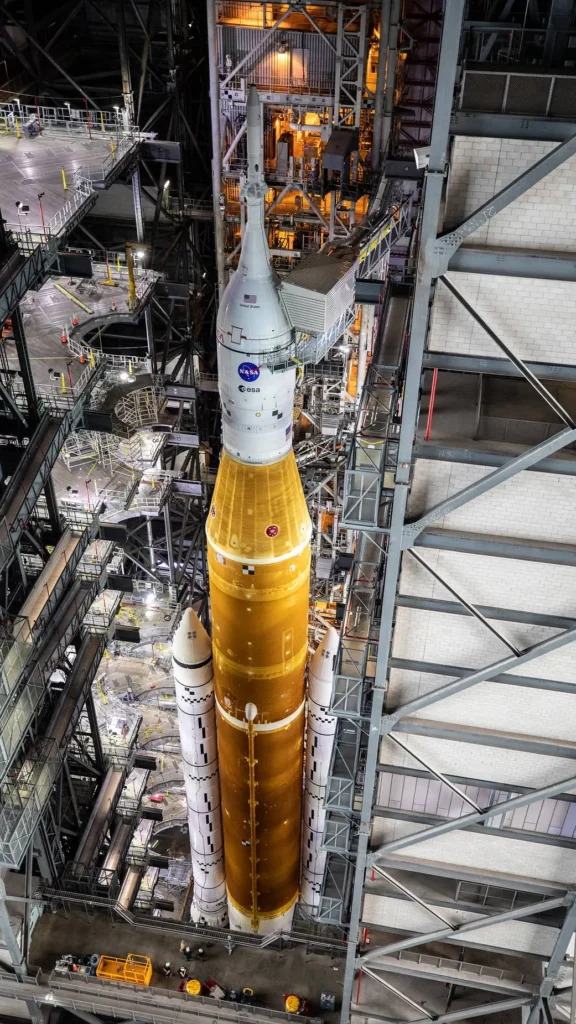
With the rocket assembled, the next phases include:
-
Integrated Testing and Checkouts: All systems — propulsion, avionics, life support, communications — must be tested as a complete system under simulated mission conditions.
-
Rollout to Launch Pad: After final closeouts, the rocket will be transported to Launch Pad 39B at Kennedy Space Center for final launch preparations and fueling.
-
Crew Rehearsals & Countdown Dry‑Runs: The astronaut crew will practice launch procedures, emergency drills, and mission operations prior to launch.
-
Launch Window (Likely 2026): NASA has targeted an early‑2026 launch for Artemis 2, depending on readiness and all systems passing final tests.
Challenges & Why Caution Still Matters
As with any large human spaceflight mission, Artemis 2 carries risk:
-
The rocket is powerful — but launching humans beyond Earth requires flawless coordination of many complex systems.
-
Deep‑space radiation, life‑support duration, navigation, reentry — each brings its own engineering and human‑factors challenges.
-
Because this will be the first crewed flight of the SLS + Orion system, thorough testing and rehearsal are critical; no shortcuts are acceptable.
NASA’s decision to assemble and stack the rocket is a vote of confidence — but only if all subsequent checks and tests are equally rigorous.
What to Watch — Broader Implications
-
Public & International Engagement: As launch approaches, expect renewed global interest, media coverage, and excitement around lunar exploration.
-
Commercial & Scientific Opportunities: Succeeding with Artemis 2 could encourage more commercial entities and international partners to plan missions around the Moon, low‑orbit stations, research labs, or even tourist flights.
-
Long-Term Lunar Strategy: If Artemis 2 goes well, it will strengthen NASA’s timeline for returning humans to the lunar surface, building orbital infrastructure, and preparing for Mars missions.
-
STEM Inspiration: For students, engineers, dreamers — there’s no better motivator than a giant rocket stacking up for launch to the Moon.
Conclusion: A Giant Step — Assembling Hope for Moon and Beyond
The successful stacking of Artemis 2’s rocket — SLS topped with Orion — is more than a technical milestone. It’s a statement: that humanity is still dreaming big, still investing in exploration, still preparing to go beyond Earth.
With this rocket assembled, NASA has transformed long‑term plans into a concrete reality. If everything goes to plan, Artemis 2 will reignite human lunar travel, open new possibilities for science and exploration, and bring us one step closer to becoming a multi‑planet species.
Read Also: Keep your face towards the sunshine and shadows will fall behind you
Watch Also: https://www.youtube.com/@TravelsofTheWorld24







Leave a Reply