
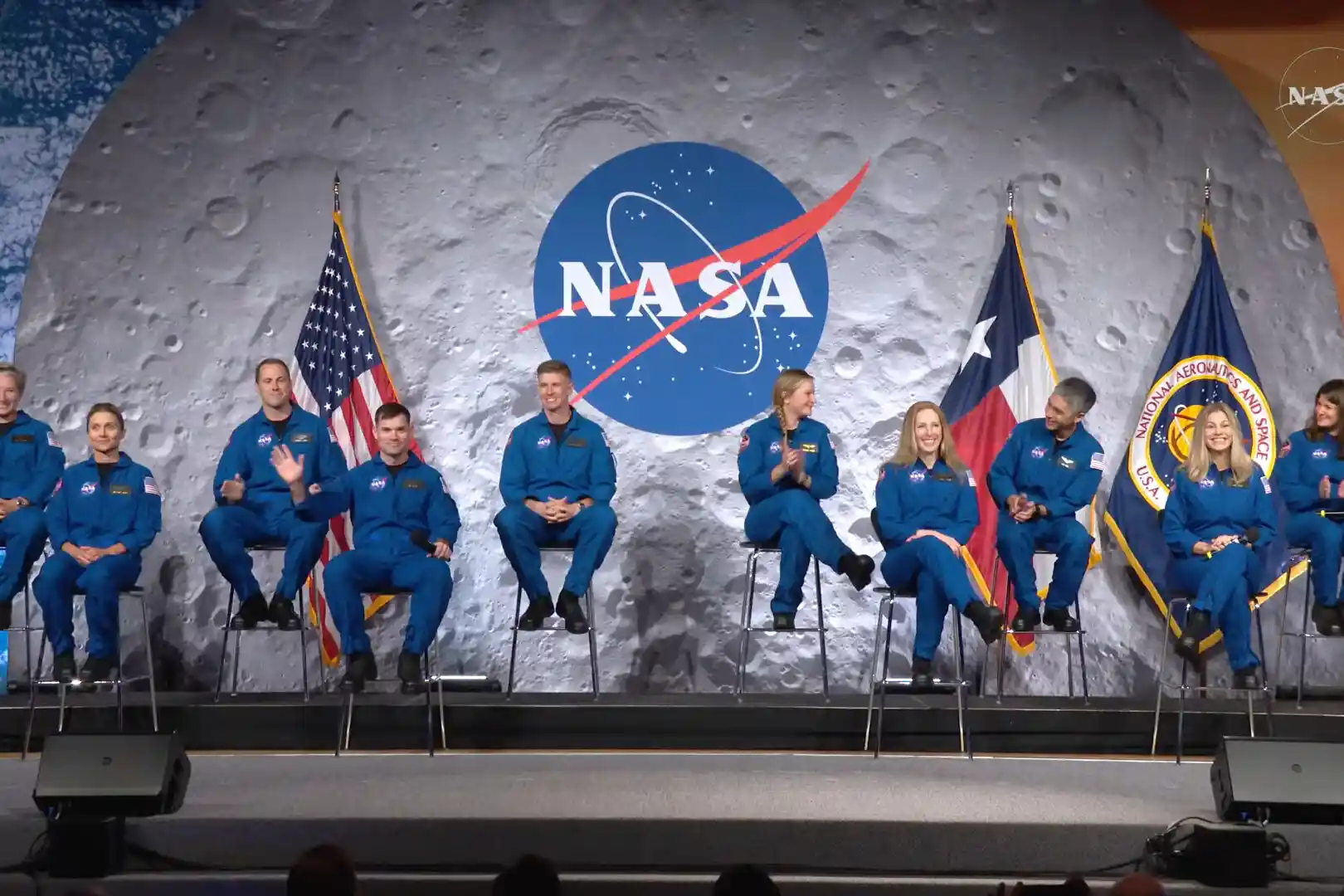
Women Outnumber Men in NASA’s Newest Astronaut Class
The 10 astronaut candidates, six of them women, will begin two years of training before becoming eligible for missions to low-Earth orbit and perhaps one day to the moon and Mars.
NASA needs more astronauts to send to new space stations, the moon and maybe even Mars.
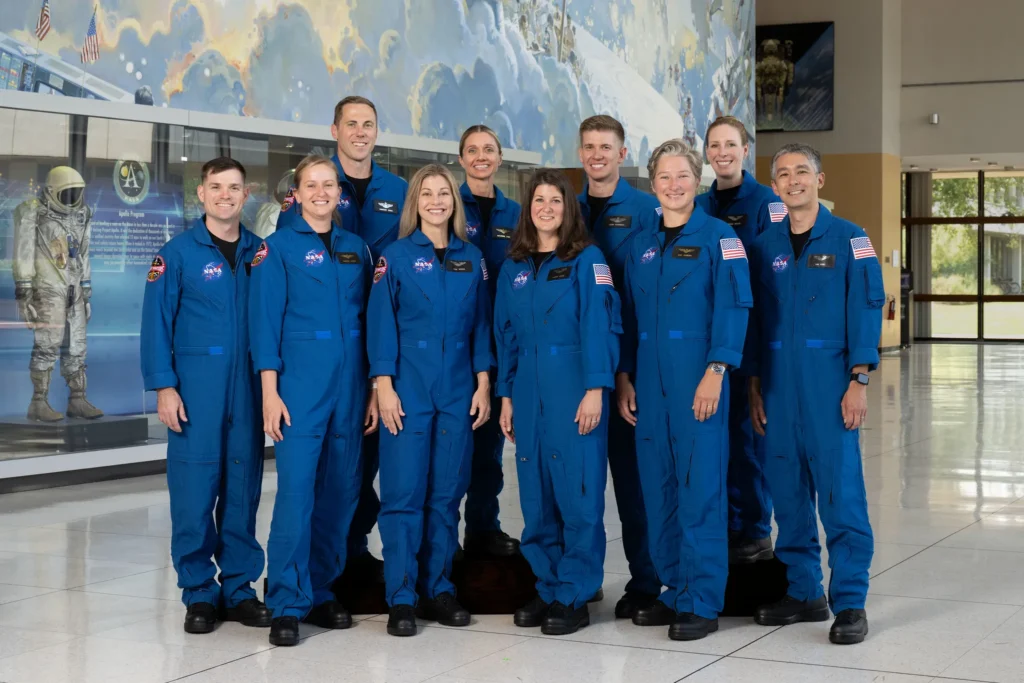
On Monday, the space agency introduced the 10 newest additions who hope to make those journeys in the coming years:
Ben Bailey, 38, Charlottesville, Va.
Lauren Edgar, 40, Sammamish, Wa.
Adam Fuhrmann, 35, Leesburg, Va.
Cameron Jones, 35, Savanna, Il.
Yuri Kubo, 40, Columbus, In.
Rebecca Lawler, 38, Little Elm, Texas
Anna Menon, 39, Houston
Dr. Imelda Muller 34, Copake Falls, N.Y.
Erin Overcash, 34, Goshen, Ky.
Katherine Spies, 43, San Diego
One of them — Ms. Menon, an engineer at SpaceX — has already flown to low-Earth orbit as one of the crew members on the private Polaris Dawn mission last year, which used a SpaceX Crew Dragon capsule. With her crew mate Sarah Gillis, Ms. Menon holds the record for the highest altitude reached by any female astronaut. She also follows her husband, Anil, who was one of the 10 people chosen in the last class of astronauts in 2021.
“One of these 10 could actually be one of the first Americans to put their boots on the Mars surface, which is very, very cool,” Sean Duffy, the acting NASA administrator, said during the ceremony on Monday at NASA’s Johnson Space Center in Houston.
Six of the 10 astronaut candidates are women, the first time that women outnumbered men.
Senator Ted Cruz of Texas noted that disparity while highlighting that he is a father to two teenage daughters.
“I’m particularly proud of all the women here, and the fact that with Artemis, America is going to put the first woman on the surface of the moon in the history of mankind,” he said.
Seven of the 10 have served in the military, including four of the six women. Three of them have previously worked with NASA. Ms. Overcash, a Navy pilot, trained with the U.S. women’s rugby team. Mr. Kubo, an engineer at a hydrogen energy company, played professional ultimate Frisbee in Indianapolis.
Dr. Muller, an anesthesiologist and formerly a Navy lieutenant, said she started getting involved with diving medicine, and that led to work at NASA’s Neutral Buoyancy Laboratory, a giant swimming pool where astronauts rehearse spacewalks.
“All the things that I loved about diving really translated over to space as well,” she said. “I felt very at home there, and that’s when I was driven to apply.”
This was her second try. By the time she was invited to a second round of interviews, the possibility seemed plausible.
Then she missed the phone call from Joe Acaba, the head of the astronaut office at NASA, because she was studying for her board medical exam. “By the time I realized that I had missed the call, it was one or two o’clock in the morning,” she said.
She called back in the morning, and Mr. Acaba told her the good news. “I think the thing that sticks out the most is he asks you if you if you still want the job,” Dr. Muller said. “And it’s hard to imagine that you could say no at that point.”
Officially, they are “astronaut candidates” who will begin two years of training before becoming full-fledged graduates. They will learn to fly NASA’s T-38 jet planes. And because Russia is NASA’s main partner on the International Space Station, they will also learn to speak Russian.
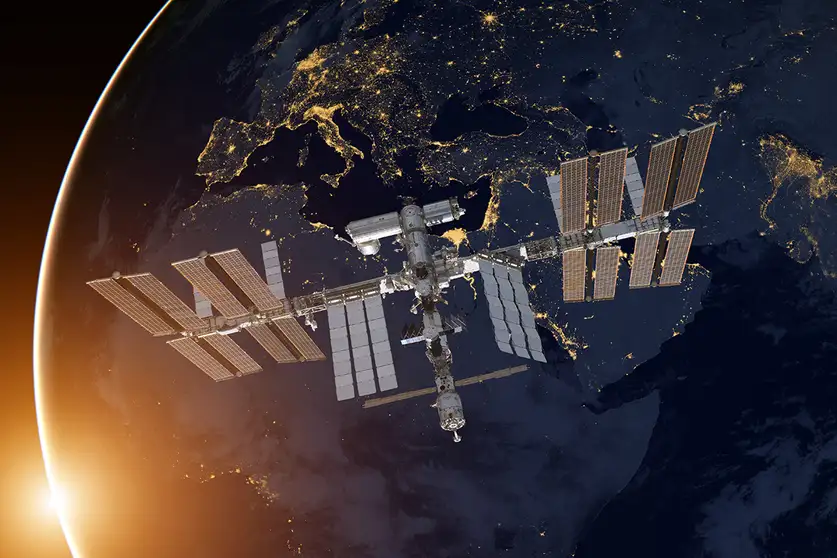
At present, the most common space assignment for NASA astronauts is a stay at the space station.
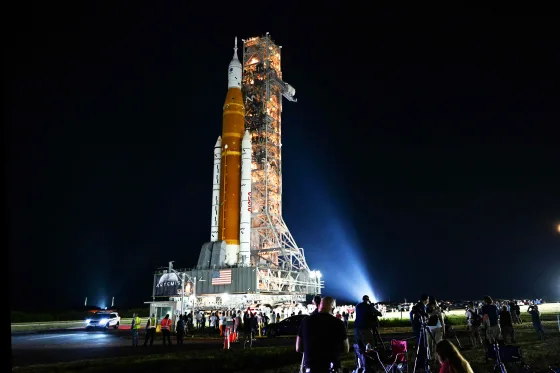
But NASA is aiming farther with the Artemis program, which was announced during the first Trump administration to return American astronauts to the lunar surface. For the Artemis II mission, scheduled for early next year, four astronauts will swing around the moon without landing before returning to Earth.
That will be the first trip by any astronauts beyond low-Earth orbit since the end of the Apollo moon landings in 1972.
Artemis III, currently scheduled for 2027, though it will probably slip to 2028 or later, is to land two NASA astronauts on the moon in the south polar region. Mars could be an even farther destination, but the first trips there are not likely to begin until at least the 2030s.
NASA astronauts will continue to travel to low-Earth orbit even after the expected retirement of the International Space Station in 2030. They will work on commercial space stations currently under development. NASA is also planning an outpost called Gateway that will orbit the moon and serve as a waypoint en route to the lunar surface.
 NASA typically seeks applications once every few years. The first, in 1959, were seven military pilots for Project Mercury. This is NASA’s 24th group of astronauts.
It was selected after Donald J. Trump became president again in January, and the federal government, including NASA, eliminated most of its diversity efforts.
The opportunity to apply to be an astronaut opened a year and a half ago. At that time, during the Biden administration, NASA sought to cast a wide net for applications. More than 8,000 people applied.
April Jordan, the NASA official then in charge of the selection process, and Victor Glover, one of the astronauts assigned to Artemis II, went on a media tour promoting the diversity of NASA’s astronauts. Both Ms. Jordan and Mr. Glover are Black.
In a visit to The New York Times, Mr. Glover last year pointed to the diversity of backgrounds among current astronauts and said the percentage of Black astronauts was higher than the percentage of Black people in the broader science and technology work force.
“Our office looks the way it looks because of this intentionality, and thinking about our biases and how it may affect who we hire,” Mr. Glover said. “I think that’s a huge victory.”
However, the latest group appears to be less racially diverse than other recent selection groups.
“You just have to look at the picture,” said Garrett Reisman, a former NASA astronaut. He said it was “very encouraging” that there were more women than men.
A NASA spokesman said Mr. Kobo’s father was Japanese but that she did not know the racial and ethnic backgrounds of the other astronaut candidates.
Dr. Reisman was not involved in selecting this astronaut class but had taken part previously. He said that the final 100 or so candidates were all highly qualified, and in the past, racial and ethnic diversity was a consideration in making the final selections.
“One of the single greatest superpowers we have is convincing a young child that this can happen to them,” Dr. Reisman said. “I think it’s going to be harder to do that part of the job if you don’t have representatives from these American communities.”
Kenneth Chang, a science reporter at The Times, covers NASA and the solar system, and research closer to Earth.
Read Also: Keep your face towards the sunshine and shadows will fall behind you
Watch Also: https://www.youtube.com/@TravelsofTheWorld24





Leave a Reply