
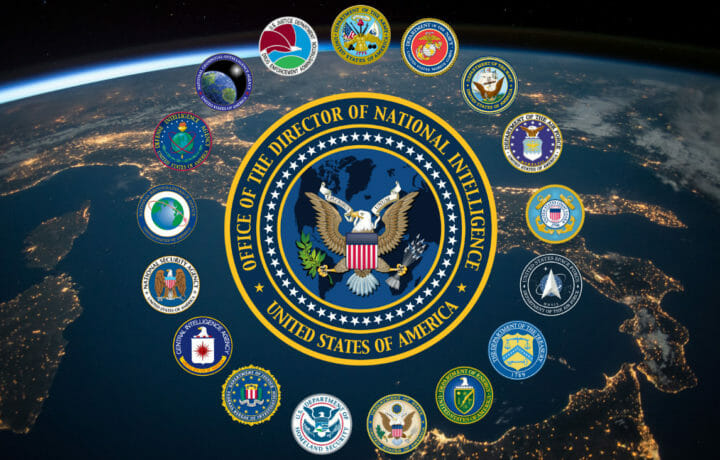
The United States Intelligence Community (IC) is a group of government agencies that work together to collect, study, and share information about threats to the United States. Their main job is to help keep the country safe. They do this by gathering intelligence about foreign governments, terrorist groups, cyber threats, military activities, and many other issues that could affect national security.
The Intelligence Community supports leaders such as the President, members of Congress, military commanders, and other officials by giving them accurate and timely information. This helps leaders make better decisions about defense, foreign policy, and national safety.
The Intelligence Community includes 18 different organizations, each with its own role and area of focus. Some agencies collect intelligence from satellites, some analyze information, and others carry out special operations.
How the Intelligence Community Started
The modern U.S. Intelligence Community began after World War II. During the war, the United States realized that good intelligence was very important for national security. After the war ended, the government decided to build a stronger and more organized intelligence system.
In 1947, the U.S. passed the National Security Act, which created new national security institutions. One of these was the Central Intelligence Agency (CIA). The CIA became the main agency responsible for collecting and analyzing foreign intelligence.
Over time, new agencies were created to deal with different types of intelligence such as signals, satellites, and military information. After the September 11 attacks in 2001, the government made major changes to improve coordination between agencies. In 2004, the position of the Office of the Director of National Intelligence (ODNI) was created to lead and coordinate the entire Intelligence Community.
The 18 Agencies in the Intelligence Community
The Intelligence Community is made up of 18 organizations from different parts of the government. Each agency has a specific mission.
Some of the most well-known agencies include:
-
Central Intelligence Agency (CIA) – Focuses on collecting foreign intelligence and conducting covert operations.
-
National Security Agency (NSA) – Specializes in signals intelligence, which means monitoring communications and protecting U.S. cyber systems.
-
Federal Bureau of Investigation (FBI) – Handles intelligence related to domestic threats such as terrorism and espionage inside the United States.
-
Defense Intelligence Agency (DIA) – Provides intelligence about foreign militaries and supports the U.S. military.
-
National Geospatial-Intelligence Agency (NGA) – Uses satellite images and maps to track activities around the world.
-
National Reconnaissance Office (NRO) – Designs and operates spy satellites.
-
**Department of Homeland Security intelligence units – Focus on protecting the United States from threats at home.
-
**Department of State intelligence units – Provide information about global political developments.
Other intelligence units exist within branches of the military, such as the Army, Navy, Air Force, and Marine Corps. Together, these agencies share information and work as one community.
The Main Jobs of the Intelligence Community
The Intelligence Community has several key responsibilities that help protect the country.
1. Collecting Intelligence
One of the most important tasks is gathering information. Intelligence can come from many sources, including:
-
Satellite images
-
Phone or internet communications
-
Reports from diplomats
-
Information from informants or allies
-
Open sources like news and social media
Different agencies specialize in different types of intelligence. For example, the NSA focuses on electronic communications, while the CIA often gathers information through human sources.
2. Analyzing Information
Once intelligence is collected, experts analyze it. Analysts study large amounts of data to find patterns, understand events, and predict possible threats.
For example, analysts may look at military movements in another country or examine cyber activity from hackers. Their job is to turn raw data into clear reports that leaders can understand.
3. Supporting National Security Decisions
Intelligence reports help government leaders make important decisions. The President and other officials receive daily briefings that summarize key intelligence findings.
These briefings might include information about global conflicts, terrorist threats, economic issues, or cybersecurity risks. By understanding these risks early, leaders can take action to protect the country.
4. Counterterrorism
Preventing terrorism is one of the Intelligence Community’s biggest priorities. After the September 11 attacks, intelligence agencies increased cooperation and information sharing.
They work to identify terrorist groups, track their activities, and stop attacks before they happen. Agencies often cooperate with international partners to track threats across borders.
5. Cybersecurity and Digital Threats
Today, many threats come from cyberspace. Hackers may try to steal information, disrupt infrastructure, or influence elections.
Agencies like the National Security Agency and cybersecurity teams within the government monitor digital threats and help protect networks from cyber attacks.
6. Monitoring Global Events
The Intelligence Community also studies political, economic, and military developments around the world. This helps the United States understand global changes and prepare for future challenges.
For example, intelligence agencies may track nuclear programs, military exercises, or political instability in different regions.
How Intelligence Is Shared
Because the Intelligence Community includes many agencies, sharing information is very important. In the past, agencies sometimes kept information separate, which created gaps.
After 9/11, reforms were made to improve coordination. The Office of the Director of National Intelligence now oversees the community and helps agencies share information more effectively.
Joint task forces, shared databases, and regular meetings allow analysts and officers from different agencies to collaborate.
Oversight and Accountability
Since intelligence agencies have powerful tools and access to sensitive information, they are closely monitored by the government.
Oversight comes from several places:
-
The President and executive branch officials
-
The U.S. Congress, especially intelligence committees
-
Independent inspectors general inside each agency
-
U.S. courts in certain cases
These systems are designed to ensure that intelligence work follows the law and respects civil liberties.
Challenges Facing the Intelligence Community
The Intelligence Community faces many modern challenges. The world is constantly changing, and new threats appear quickly.
Some of the biggest challenges include:
-
Cyber warfare and digital espionage
-
Terrorism and extremist networks
-
Competition with powerful nations
-
Disinformation campaigns online
-
Rapid technological change
To deal with these issues, intelligence agencies continue to develop new tools, technologies, and partnerships.
The Importance of the Intelligence Community
The United States Intelligence Community plays a vital role in national security. By collecting and analyzing information from around the world, it helps leaders understand risks and make informed decisions.
Its work often happens behind the scenes, but it has a major impact on protecting the country, preventing conflicts, and maintaining global stability.
Through cooperation between its many agencies, the Intelligence Community remains one of the most important parts of the U.S. national security system.
Read Also: Keep your face towards the sunshine and shadows will fall behind you
Watch Also: https://www.youtube.com/@TravelsofTheWorld24





Leave a Reply