
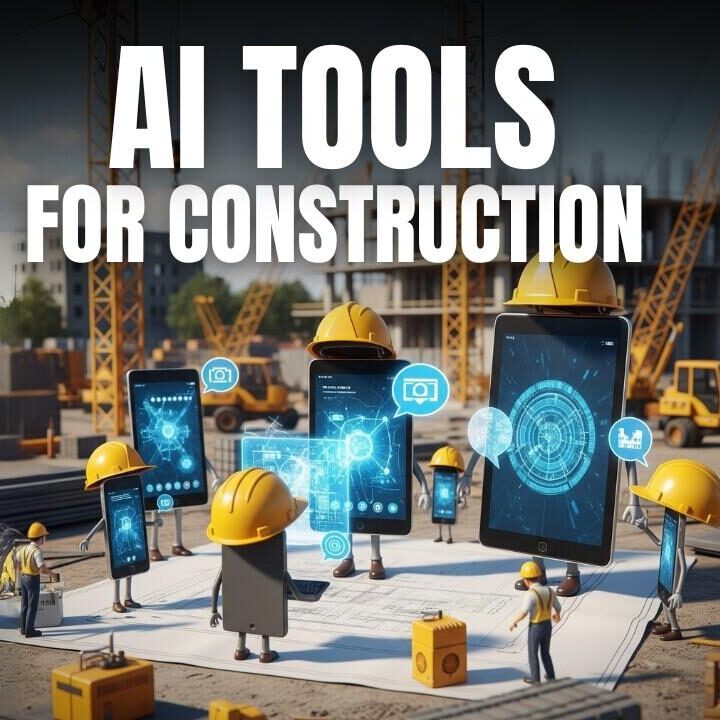
Construction projects are becoming bigger, faster, and more complex. Managing schedules, budgets, materials, and safety can be overwhelming.
AI tools help construction professionals:
-
Plan projects more efficiently
-
Monitor progress in real-time
-
Predict risks and delays
-
Optimize resource use
-
Improve safety and reduce costs
By 2026, AI is expected to be a standard part of construction workflows worldwide, including in design, planning, and project management.
Section 1: How AI is Transforming Construction
AI can assist in several ways:
-
Project Planning: AI can create detailed schedules and suggest optimal workflows.
-
Design & Architecture: AI tools can generate 3D models, layouts, and even suggest material choices.
-
Risk Management: AI predicts safety hazards or potential project delays.
-
Cost Optimization: AI helps control budgets and reduce material waste.
-
Monitoring & Automation: AI can track progress with drones or cameras and automate reporting.
Section 2: Top 7 AI Tools for Construction in 2026
1. Smartvid.io
What it does: Uses AI to analyze images and videos from construction sites for safety and progress tracking.
Use cases:
-
Detect safety hazards in real-time
-
Monitor worker compliance with safety rules
-
Track construction progress with photo and video analysis
Why it’s useful: Improves safety and reduces risk of accidents.
2. ALICE Technologies
What it does: AI-driven construction scheduling and simulation platform.
Use cases:
-
Create optimal project schedules
-
Simulate construction workflows
-
Predict potential delays and resource conflicts
Why it’s useful: Helps project managers make better decisions and save time.
3. Doxel
What it does: Uses AI and autonomous drones/robots to track project progress.
Use cases:
-
Compare 3D scans of sites with project plans
-
Identify errors or delays automatically
-
Provide real-time reporting
Why it’s useful: Reduces manual site inspections and improves accuracy.
4. Buildots
What it does: AI platform for construction project monitoring and analytics.
Use cases:
-
Track project progress with AI cameras
-
Automate progress reporting
-
Detect deviations from the construction plan
Why it’s useful: Keeps projects on schedule and helps managers respond faster.
5. PlanRadar
What it does: AI-powered construction documentation and task management software.
Use cases:
-
Track defects or issues
-
Assign tasks and monitor completion
-
Centralize project documentation
Why it’s useful: Improves communication between teams and ensures accountability.
6. Pype
What it does: AI tool for construction document and workflow automation.
Use cases:
-
Automate compliance documentation
-
Extract data from project files
-
Track contractor submissions and approvals
Why it’s useful: Reduces paperwork and keeps projects compliant with regulations.
7. Procore AI
What it does: AI-enhanced construction management platform with predictive analytics.
Use cases:
-
Predict project risks and delays
-
Track budgets and spending trends
-
Provide insights for decision-making
Why it’s useful: Helps construction managers make data-driven decisions and avoid costly mistakes.
Section 3: How to Use AI Tools Effectively in Construction
-
Start with one or two tools: Don’t overwhelm teams by adopting everything at once.
-
Integrate with existing workflows: AI works best when it complements current project management systems.
-
Train staff: Workers and managers should know how to use AI features effectively.
-
Monitor outputs: AI is smart, but human verification ensures accuracy.
-
Focus on safety and efficiency: Use AI to reduce risk and improve project timelines.
Section 4: Advantages of AI in Construction
-
Time-saving: Faster project planning, monitoring, and reporting
-
Cost reduction: Optimized resource allocation and reduced waste
-
Improved safety: Early detection of hazards
-
Better accuracy: Automated monitoring reduces human error
-
Enhanced decision-making: Data-driven insights help managers act faster
Section 5: Challenges to Consider
-
Initial investment: AI tools can be expensive to implement
-
Training needs: Teams must learn to use AI effectively
-
Data quality: AI requires accurate and complete data to work well
-
Integration: AI systems must work seamlessly with existing tools
Despite these challenges, AI adoption in construction is increasing rapidly because the benefits outweigh the drawbacks.
Section 6: Future of AI in Construction (2026 and Beyond)
By 2026, AI in construction is expected to:
-
Monitor entire projects in real-time using drones and sensors
-
Predict delays before they happen
-
Automate more routine tasks, from reporting to quality control
-
Improve collaboration across remote construction teams
-
Suggest design improvements using AI-powered simulations
Construction professionals who adopt AI early will have a major advantage in efficiency, safety, and cost management.
Conclusion
AI is transforming construction by making planning, monitoring, and project management smarter and faster.
Top AI tools for construction in 2026 include:
-
Smartvid.io – Safety and progress monitoring
-
ALICE Technologies – Project scheduling and simulation
-
Doxel – Autonomous site tracking
-
Buildots – Progress analytics
-
PlanRadar – Documentation and task management
-
Pype – Workflow automation and compliance
-
Procore AI – Predictive analytics for projects
By integrating these tools responsibly, construction teams can save time, reduce costs, enhance safety, and make better decisions. AI is no longer optional—it’s becoming essential for modern construction.
Read Also: Keep your face towards the sunshine and shadows will fall behind you
Watch Also: https://www.youtube.com/@TravelsofTheWorld24













Leave a Reply