
The chemical industry has always depended on experiments. Traditionally, chemists would mix different ingredients, test them in labs, adjust conditions, and repeat the process many times. This trial-and-error approach takes a lot of time, money, and effort.
Now, things are changing fast because of Artificial Intelligence (AI). AI is helping scientists predict results before even stepping into the lab. Instead of guessing and testing endlessly, companies can now use data and smart algorithms to find the best formulations quickly.
Studies show that AI can reduce development time by up to 50% and cut costs significantly.
Because of this, industries like pharmaceuticals, polymers, energy, and agriculture are rapidly adopting AI.
This article explains in a simple way how AI is used in chemical formulations, the technologies behind it, real-world examples, challenges, and what the future looks like.
What is Chemical Formulation?
Before understanding AI’s role, let’s keep it simple.
Chemical formulation means combining different substances in the right proportions to create a final product.
Examples:
- Medicines (tablets, syrups)
- Paints and coatings
- Cosmetics (creams, shampoos)
- Plastics and polymers
- Battery materials
The goal is always the same:
👉 Get the best performance, safety, cost, and stability.
Why Traditional Methods Are Slow
In the past, chemists relied on:
- Manual experiments
- Design of experiments (DoE)
- Experience-based decisions
But there are problems:
- Thousands of possible combinations
- Complex chemical interactions
- High cost of lab testing
- Long development cycles
Even small changes in temperature or concentration can completely change results.
This is where AI becomes powerful.
How AI Helps in Chemical Formulations
AI changes the process from trial-and-error → prediction-driven design.
1. Predicting Properties Before Testing
AI models can predict how a formulation will behave.
For example:
- Will it dissolve properly?
- Is it stable?
- Is it toxic?
These predictions are made using patterns from past data.
Techniques used:
- Machine learning
- Neural networks
- QSPR models (link structure to properties)
Some models can reach over 90% accuracy in predicting material properties.
👉 This means fewer experiments and faster decisions.
2. Finding the Best Formulation Faster
Imagine thousands of ingredient combinations.
AI can:
- Test all possibilities virtually
- Suggest the best mix
- Avoid bad combinations
One key method is:
- Bayesian optimization (smart searching)
Instead of random testing, AI focuses only on promising options.
3. Discovering New Materials
AI doesn’t just improve existing formulas—it can create new ones.
Generative AI can:
- Design new molecules
- Suggest new materials
- Predict their performance
For example:
- AI has discovered millions of new crystal structures for energy and electronics.
👉 This would take decades using traditional methods.
4. Optimizing Chemical Processes
AI also improves how chemicals are made.
It helps in:
- Choosing the best temperature and pressure
- Reducing waste
- Increasing yield
Example:
- AI improved manufacturing efficiency and reduced costs in chemical processes by around 30%.
5. Scaling from Lab to Industry
A formula that works in a lab may fail in a factory.
AI helps by:
- Predicting scale-up issues
- Adjusting conditions for large production
- Reducing risks during manufacturing
Key AI Technologies Used
Let’s break down the main technologies in simple terms.
1. Machine Learning (ML)
ML learns from past data.
It is used for:
- Property prediction
- Quality control
- Failure detection
Example:
Predicting whether a polymer will be strong or weak.
2. Deep Learning (DL)
This is a more advanced type of ML.
It is useful for:
- Complex chemical interactions
- Molecular design
- Image-based analysis
3. Reinforcement Learning (RL)
Think of it like learning by trial and reward.
AI tries different actions and improves over time.
Used for:
- Reaction optimization
- Process control
4. Generative AI
This is the most exciting area.
It can:
- Create new molecules
- Suggest innovative formulations
Used in:
- Drug discovery
- Advanced materials
Real-World Applications
1. Pharmaceuticals
AI is transforming drug formulation.
It helps:
- Predict drug stability
- Improve solubility
- Reduce side effects
In one case, AI screened thousands of compounds and found a useful drug in just 48 hours.
2. Polymers and Materials
AI is used to design:
- Stronger plastics
- Biodegradable materials
- Self-healing coatings
This helps industries like automotive and packaging.
3. Energy and Batteries
AI improves:
- Battery life
- Electrolyte composition
- Energy efficiency
Example:
AI-designed battery materials increased performance and reduced cost.
4. Agrochemicals
AI helps create:
- Safer pesticides
- Better fertilizers
- Environment-friendly chemicals
5. Sustainability and Green Chemistry
AI helps reduce environmental impact by:
- Minimizing waste
- Lowering energy use
- Designing eco-friendly materials
Automated and Smart Laboratories
One of the biggest advancements is self-driving labs.
These labs:
- Run experiments automatically
- Analyze results instantly
- Improve formulations continuously
Some systems can perform over 1,000 experiments per day.
👉 This speeds up innovation massively.
Challenges of AI in Chemical Formulation
Even though AI is powerful, there are still some problems.
1. Lack of Good Data
AI needs high-quality data.
But in chemistry:
- Data is limited
- Often private
- Sometimes inconsistent
About 78% of industrial data is not easily accessible.
2. Black Box Problem
AI models can give results, but:
- It’s hard to understand how they work
- Regulators need clear explanations
This is a big issue in industries like pharmaceuticals.
3. High Cost of Implementation
- AI systems need computing power
- Skilled experts are required
- Setup costs can be high
4. Safety Concerns
Chemical processes can be dangerous.
Companies are careful before trusting AI systems in real production.
5. Gap Between Research and Industry
From discussions in industry communities, many AI solutions are still in research and not fully used in real factories.
Future of AI in Chemical Industry
The future looks very exciting.
1. Fully Autonomous Discovery
AI + robotics will:
- Design
- test
- improve formulations automatically
No human intervention needed in many steps.
2. AI + Quantum Computing
This will allow:
- Better simulation of molecules
- Faster discovery of new materials
3. Digital Twins
Factories will have virtual copies.
AI will:
- Simulate processes
- Predict failures
- Optimize operations
4. Sustainable Chemistry
AI will play a key role in:
- Recycling plastics
- Reducing carbon emissions
- Creating eco-friendly chemicals
Simple Example to Understand
Think of making a shampoo.
Old method:
- Mix ingredients
- Test
- Fail
- Try again
AI method:
- Analyze past data
- Predict best formula
- Test only the best options
👉 Result: Faster, cheaper, better product.
Conclusion
AI is changing the chemical industry in a big way.
It is helping to:
- Reduce time and cost
- Improve product quality
- Discover new materials
- Make processes more efficient
Instead of relying only on experiments, companies now use data and smart algorithms to guide decisions.
However, challenges like data availability, transparency, and safety still need to be solved.
In the future, AI will likely become a core part of every chemical lab and factory. It will not replace chemists, but it will make their work faster, smarter, and more innovative.
Final Thoughts
In simple words:
👉 AI turns chemistry from guessing → knowing
👉 It saves time, money, and resources
👉 It opens doors to discoveries we couldn’t imagine before
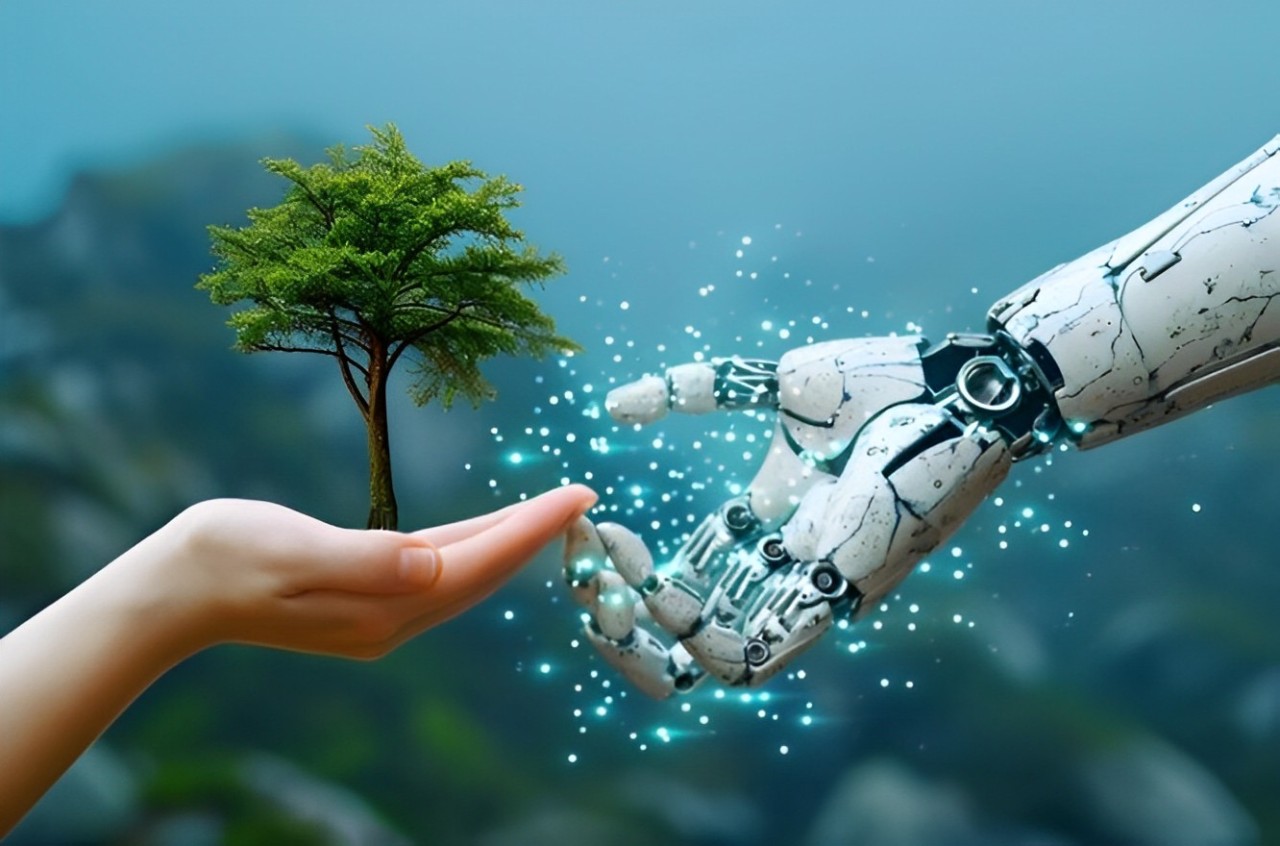
The combination of human expertise and AI power is what will truly shape the future of the chemical industry.
Read Also: Keep your face towards the sunshine and shadows will fall behind you
Watch Also: https://www.youtube.com/@TravelsofTheWorld24










Leave a Reply