
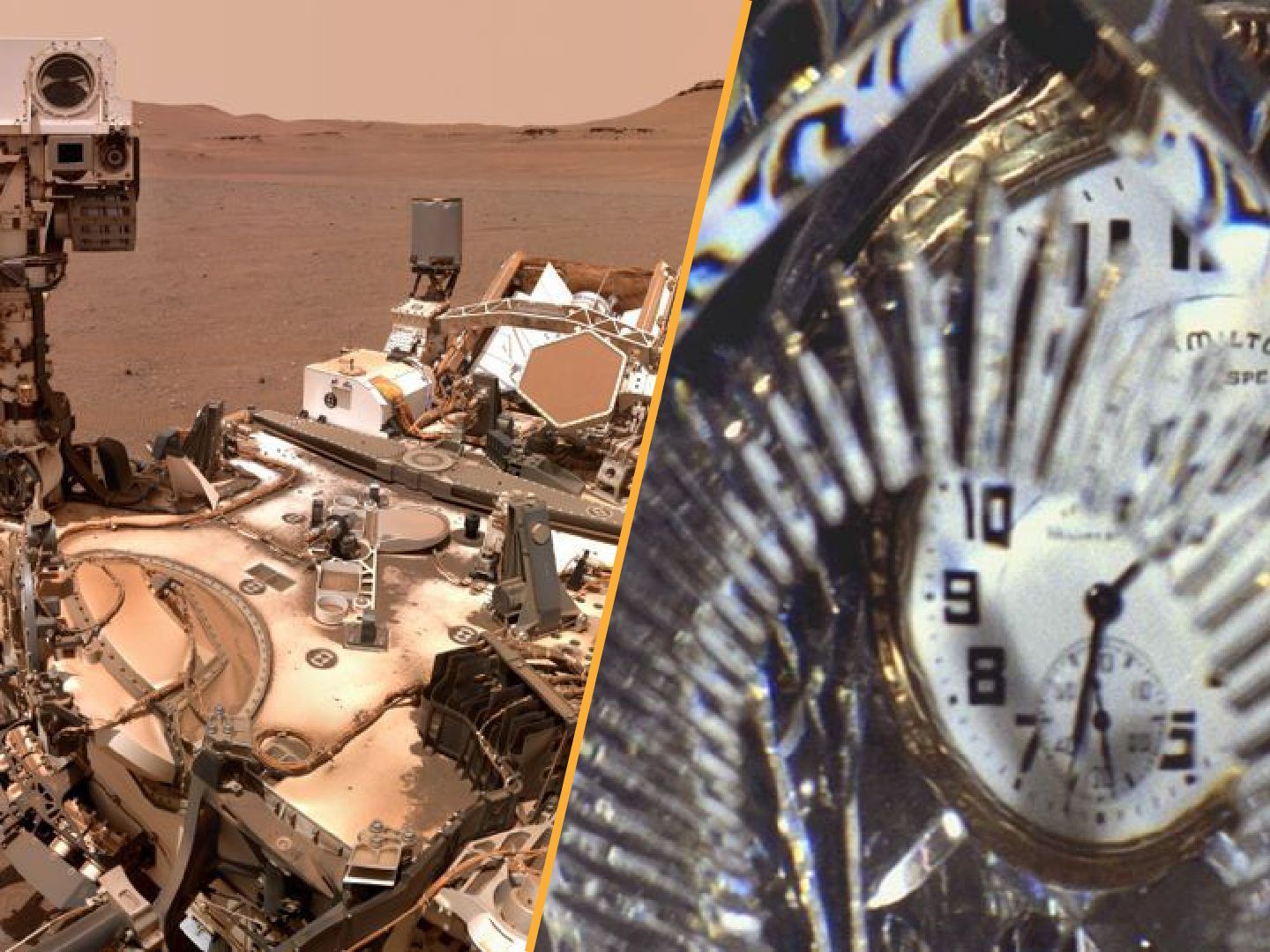
In 2025, two major scientific developments captured global attention and ignited public curiosity: NASA’s announcement of the most compelling evidence yet suggesting Mars may once have hosted life, and a breakthrough in physics where scientists created the first visible “time crystals.” These discoveries come from very different fields — planetary science and quantum materials — yet both push the boundaries of human knowledge and hint at worlds far stranger than everyday experience.
Part I — Mars: The Most Tantalizing Clue to Ancient Life
For decades, Mars has been the focus of intense scientific study and exploration. From early flybys to powerful rovers exploring the Red Planet’s surface, NASA’s missions have continually searched for evidence of water, habitability, and any signs that life once arose there. In 2025, researchers announced discoveries that may represent the strongest evidence collected so far suggesting ancient microbial life on Mars — though researchers remain cautious about jumping to final conclusions.
The Perseverance Mission and Jezero Crater
NASA’s Perseverance rover landed in Jezero Crater in 2021 with the specific goal of seeking signs of ancient life and collecting rock samples that could one day be returned to Earth. Jezero was chosen because it was once a lake — a place where water flowed and may have created conditions suitable for life. Over the years, Perseverance has been exploring a diverse landscape of old river channels, deltas, and layered rock formations that preserve a detailed history of water activity.
The “Cheyava Falls” Rock — The Best Hint Yet
In July 2024, Perseverance drilled into a rock dubbed Cheyava Falls and extracted a sample known as Sapphire Canyon. After a year of careful analysis by scientists, NASA reported that this sample contains features interpreted as potential biosignatures — chemical and structural clues that resemble those formed by microbial processes on Earth.
The evidence comes from micron‑scale features in the rock — tiny nodules enriched in minerals like iron phosphate and iron sulfide, and organic carbon that appear to line up in patterns similar to those associated with microbial activity in ancient sediments on Earth. When such minerals interact in very specific ways with organic compounds, they can form textures that scientists have seen in Earth’s oldest fossilized ecosystems.
In the words of one researcher: “This is the closest we have ever come to discovering life on Mars.” However, scientists emphasize that while these signatures are tantalizing, they are not yet confirmed as proof of life. Other chemical and geological processes could potentially explain some of the features seen in the rocks.
What Makes This Discovery Special
There are several reasons why scientists find this result so significant:
1. Organic Molecules Found
Organic carbon — carbon combined with hydrogen and sometimes other elements — is a key ingredient for life as we know it. Perseverance detected organic material in the Cheyava Falls sample.
2. Mineral Textures Resembling Microbial Activity
The specific mineral textures observed in the rock mimic patterns that, on Earth, are tightly linked with microbial ecosystems in ancient lakebeds.
3. Rocks Collected for Future Return
Importantly, the sample has been sealed and stored for eventual return to Earth through the Mars Sample Return mission (a collaboration between NASA and the European Space Agency). Once on Earth, scientists can use far more sensitive laboratory instruments to test the rock for signs of life.
Why It’s Not Yet Proof
Despite the excitement, scientists remain careful. The mineral textures and organic matter might still be produced by non‑biological processes. Mars’ unique environment — with its complex interactions between water, minerals, and radiation — can create structures that mimic what would otherwise be interpreted as biosignatures. Only Earth‑based analysis with more advanced tools can help decide whether these patterns truly point to life.
The Bigger Picture
Even if the Cheyava Falls sample does not prove life existed on Mars, it unquestionably strengthens the case that Mars once possessed habitable environments — watery, temperate settings that could have supported microbial life billions of years ago. This also provides priority targets for future missions and sample return efforts that may one day answer the biggest question in planetary science: Did life ever originate beyond Earth?
Part II — Visible Time Crystals: A New Phase of Matter
In a completely different realm of science — quantum physics and materials science — researchers announced a breakthrough that makes one of the most exotic theoretical concepts visible to the human eye: the time crystal.
What Is a Time Crystal?
Most people are familiar with ordinary crystals, like diamonds or salt, where atoms are arranged in regular patterns in space. A time crystal, on the other hand, has a pattern that repeats in time instead of space. This means the system changes in a predictable, rhythmic way that breaks time‑translation symmetry — a concept that, until recently, was considered purely theoretical.
In simple terms, while normal matter is static in its lowest energy state, a time crystal continues to evolve rhythmically without consuming energy. Think of it as something that naturally “ticks” or oscillates even when left alone. This is deeply counterintuitive because it seems to defy our everyday expectations about how matter and energy should behave.
First Visible Time Crystals
Time crystals had been produced in labs before, but they were microscopic or required very specific quantum systems to observe. In a 2025 experiment, scientists succeeded in creating time crystals that are visible under ordinary light. These were made using liquid crystals — the same kind of materials found in LCD screens — illuminated in such a way that the resulting patterns became visible to the naked eye or under a simple microscope.
When light interacts with the liquid crystal material, it causes molecules to form stable, repeating structures in time — creating a pattern that pulses rhythmically, like a never‑stopping wave. These patterns can be seen directly and were described as “psychedelic stripes” that behave like time crystals when illuminated.
Why This Matters
The creation of visible time crystals is exciting for multiple reasons:
A New Phase of Matter
Time crystals represent a new kind of physical phase that doesn’t fit into traditional categories like solid, liquid, or gas. Their periodic motion in time is a fundamentally novel behavior.
Possibilities in Quantum Technology
Time crystals could find applications in quantum computing and advanced data storage, where maintaining coherent motion or rhythm over time is valuable. They might also be used for anti‑counterfeiting — for example, embedded in banknotes as a highly secure authentication pattern.
Deeper Understanding of Nonequilibrium Physics
Most states of matter we encounter are at or near equilibrium — they settle down into stable configurations. Time crystals, by contrast, are actively oscillating systems that challenge our understanding of how matter behaves far from equilibrium.
Not a Perpetual Motion Machine
It’s important to note that time crystals do not violate the laws of thermodynamics or act as perpetual motion machines in the classical sense. Even though they exhibit repeating motion, they do not generate usable energy or perform work continuously without input. Instead, they exist in special quantum conditions that allow these rhythms to persist without traditional energy exchange.
Why These Discoveries Matter
Taken together, these two breakthroughs — Mars biosignature clues and visible time crystals — represent a dramatic expansion of human scientific exploration:
1. Pushing Boundaries of Habitability
The Mars findings may be our best clue yet that life once existed beyond Earth, deepening our understanding of planetary habitability, the origins of life, and where it might arise elsewhere in the cosmos.
2. Inspiring Future Missions
Finding compelling potential biosignatures drives future space exploration, including sample return missions and technologies for detecting life on other worlds. It fuels public interest and investment.
3. Revealing New Physics
The creation of visible time crystals opens new doors in physics and materials science, creating novel states of matter that could one day lead to technological leaps in quantum devices, sensors, and secure communication systems.
4. Expanding Human Imagination
Both discoveries — one reaching into the ancient past of a neighboring planet, the other exploring the dynamics of time itself — challenge us to broaden our understanding of reality and redefine what’s possible. They remind us that science continually reveals surprises.
In Summary
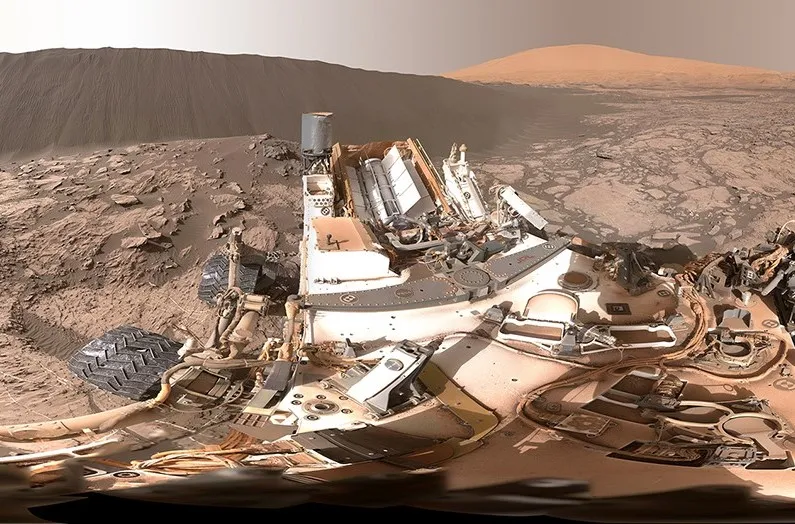
On Mars: NASA’s Perseverance rover has uncovered potential biosignatures in a rock sample — patterns and minerals that are the strongest hint yet of ancient microbial life on the Red Planet. However, researchers emphasize that confirmatory analysis on Earth is needed before declaring that life has been found.
In Physics: Scientists have constructed the first time crystals visible to the human eye using liquid crystals and light — a new phase of matter with rhythmic behavior in time that may have future applications in quantum technology and beyond.
Both achievements mark major milestones in human scientific exploration, bridging worlds from the ancient past of Mars to the frontiers of quantum physics.
Read Also: Keep your face towards the sunshine and shadows will fall behind you
Watch Also: https://www.youtube.com/@TravelsofTheWorl







Leave a Reply