

In early 2025, astronomers monitoring near‑Earth objects (NEOs) drew global attention when data indicated that a newly discovered asteroid, 2024 YR4, briefly showed a 3.1 percent chance of colliding with Earth in December 2032 — one of the highest impact probabilities ever calculated for a tracked space rock. This scenario raised concerns among scientists, policymakers, and the public, leading to heightened planetary‑defense monitoring and international coordination.
However, while the number — 3.1 percent — sounds high, it requires careful context: this was a temporary probability during a phase when observations were still limited and scientists were refining the asteroid’s path. With additional data, that probability has since dropped dramatically, and the asteroid is not considered a direct threat to Earth at this time.
In this article, we’ll explain how impact risks like this are measured, why that 3.1 percent figure emerged, what the current scientific understanding is, and what this means for Earth’s safety. We’ll also examine how agencies like NASA and the European Space Agency (ESA) track and refine asteroid trajectories — and how such risks become part of planetary defense planning.
What Is Asteroid 2024 YR4?
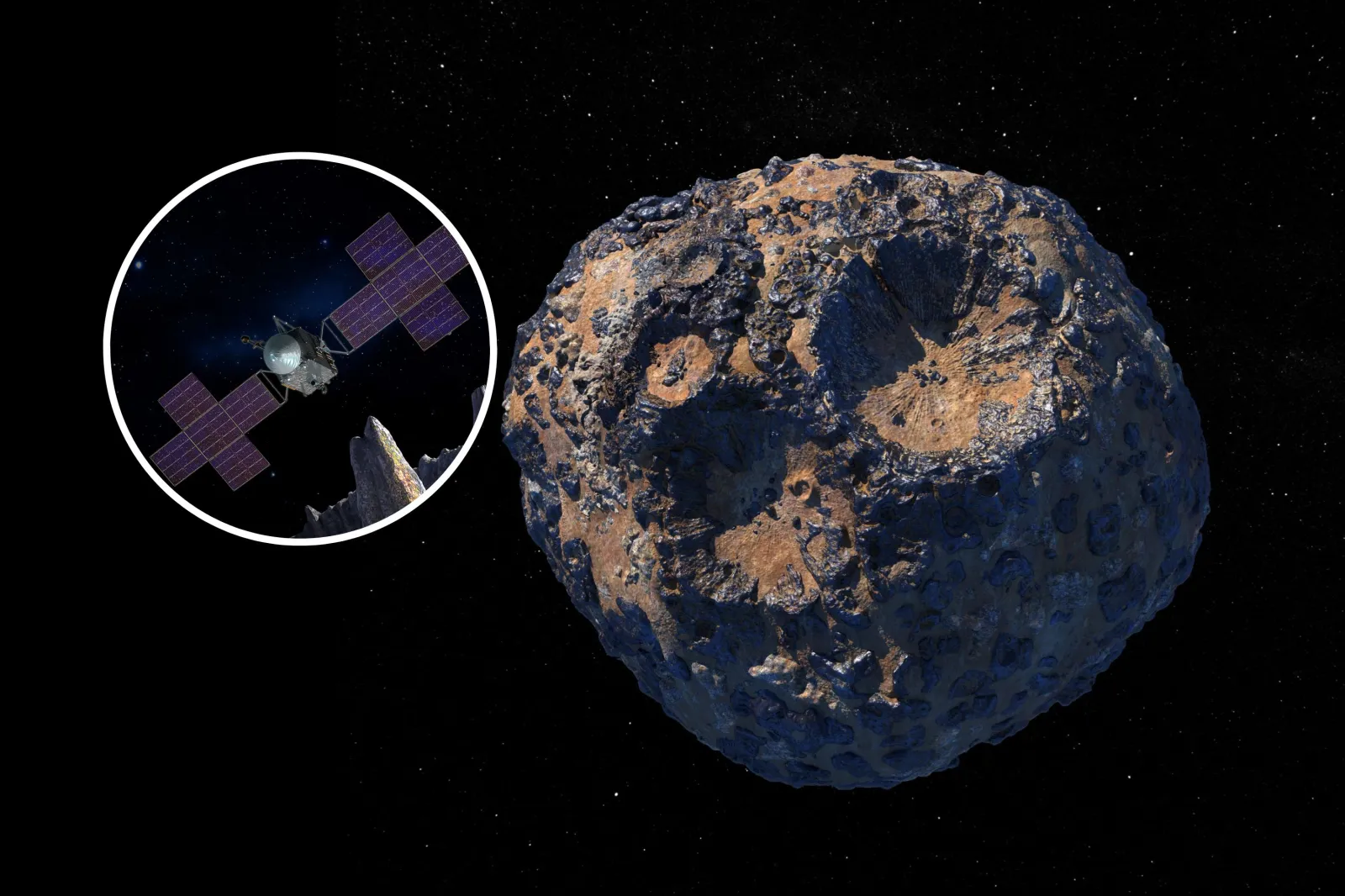
Asteroid 2024 YR4 is a near‑Earth asteroid, meaning its orbit around the Sun brings it into the vicinity of Earth’s orbit. It was first discovered on December 27, 2024, by telescopes scanning the sky for objects that might one day intersect with Earth’s path.
Initial observations estimated the asteroid’s size at roughly 40–90 meters (about 130–300 feet) — comparable to a large office building or a small hill. Updated observations using the James Webb Space Telescope and other instruments refined that estimate to about 53–67 meters in diameter.
An asteroid of this size — while not large enough to threaten global civilization — is still significant enough that, if it were to hit Earth, it could cause localized destruction: leveling a city, generating powerful airbursts, or triggering regional devastation.
How Scientists Measure Impact Risk
When a new asteroid is discovered, astronomers begin by tracking its movements over days, weeks, and months. Each new observation helps refine the asteroid’s orbit — including its velocity, direction, and the gravitational effects of nearby planets.
These observations feed into orbital simulation models, which project all the possible paths the asteroid might take in the future. Because early data is limited, there can be a range of uncertainty — a “cloud” of possible trajectories — and some of those paths might intersect Earth’s orbit on a future date.
As a result, scientists calculate impact probability — the chance that one of those potential paths could lead to a collision. These probabilities are usually expressed as a percentage or a ratio, such as 1 in 32 (which corresponds to about 3.1 percent).
When an asteroid’s impact probability exceeds 1 percent, international notification protocols are triggered — meaning space agencies formally alert each other and share data through networks like the International Asteroid Warning Network (IAWN) and the United Nations Office for Outer Space Affairs (UNOOSA).
Why the 3.1 % Figure Appeared
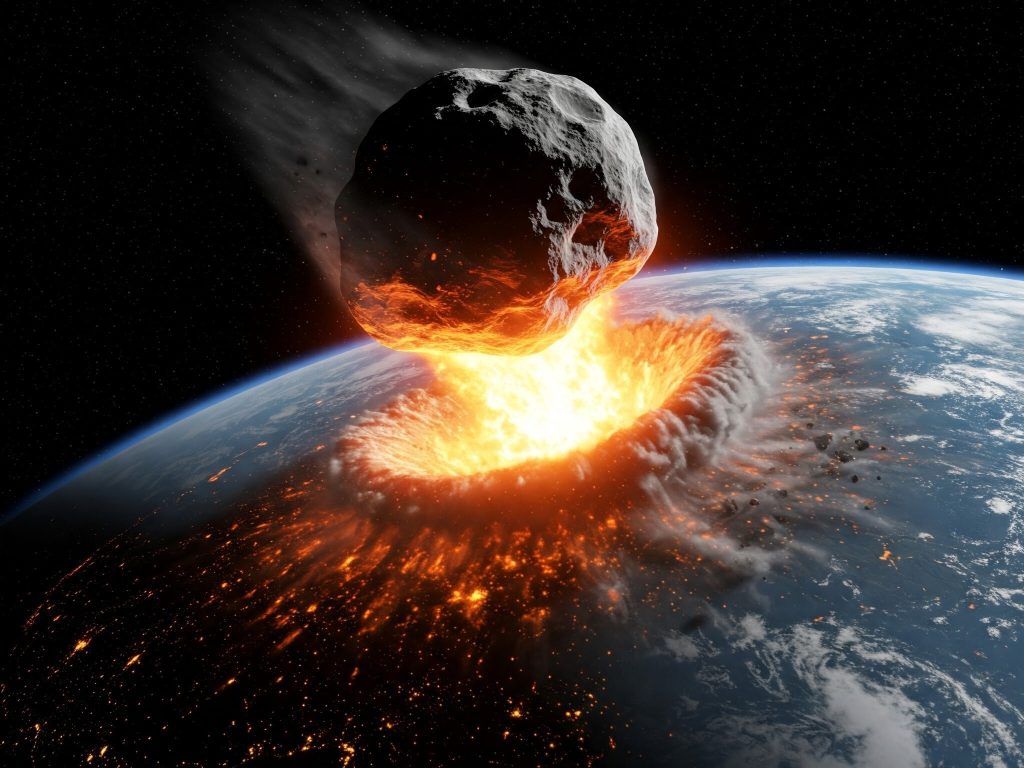
In February 2025, orbital simulations for 2024 YR4 showed that the probability of impact on December 22, 2032 had at one point risen to about 3.1 percent (or roughly 1 in 32 odds). This was reported by NASA’s Center for Near Earth Object Studies (CNEOS) and reflected how uncertainties in the asteroid’s orbit overlapped with Earth’s position on that future date.
This 3.1 percent figure was significant for two main reasons:
-
It exceeded the 1 percent threshold that prompts formal notifications and planetary‑defense discussions internationally.
-
It was higher than the impact chance ever previously recorded for a near‑Earth asteroid of this size under modern surveys — surpassing even earlier notable cases like 99942 Apophis in the 2000s.
However, scientists were quick to stress that this did not mean a collision was imminent or even likely. Instead, it reflected the early stage of observations and a wide uncertainty range in the asteroid’s projected path.
Bruce Betts, chief scientist at the Planetary Society, told media that such percentages often “edge up” as more observations are gathered, but they typically fall rapidly toward zero once enough data constrains the asteroid’s orbit.
Current Understanding: Risk Has Declined Sharply
As astronomers continued to observe 2024 YR4 — including with advanced infrared data from the James Webb Space Telescope — the uncertainties in its orbit were greatly reduced. By early April 2025, updated risk assessments showed that the impact probability had dropped drastically to well below 0.001 percent for Earth on the 2032 date.
In other words, refined data now indicate that asteroid 2024 YR4 poses no significant impact risk to Earth in 2032 or beyond. However, the asteroid remains of scientific interest, not because it threatens Earth, but because its observed behavior offered a real‑world test of planetary defense monitoring systems.
Interestingly, with continued refinement of the asteroid’s orbit, scientists found a slightly higher probability that it could intersect the Moon on the same date, with estimates around 3–4 percent — though that scenario also remains unlikely and would not affect Earth.
What Would an Impact Do?
While current data show no impact risk, scientists have still modelled what would happen if an asteroid like 2024 YR4 were to hit Earth.
An impact from an object ~50–70 meters in diameter could result in:
-
A powerful airburst in the atmosphere, potentially creating shockwaves that could damage structures and injure people over tens of miles.
-
Localized destruction at ground level if the asteroid did not break up fully before impact.
-
Energy release measured in megatons of TNT — much greater than most conventional explosions but much less than global extinction events.
For perspective, the 2013 Chelyabinsk event — from an asteroid about 20 meters wide — created a powerful shockwave that damaged thousands of buildings and injured more than 1,500 people in Russia. An object more than twice as large would release many times more energy.
Planetary Defense: Monitoring and Mitigation
NASA and other space agencies have developed a coordinated planetary‑defense framework to handle asteroid impact risks:
-
NASA’s Planetary Defense Coordination Office (PDCO) leads detection, tracking, and characterization of near‑Earth objects.
-
International Asteroid Warning Network (IAWN) shares data among global observatories.
-
Space Mission Planning Advisory Group (SMPAG) brings space agencies together for possible mitigation strategies if needed.
Observations from ground‑based telescopes, infrared space telescopes, and radar systems all feed into automated systems like NASA’s Sentry impact monitoring system, which continually updates risk assessments as new data come in.
In rare situations where an asteroid shows a real impact probability years or decades in advance, scientists could plan deflection missions, such as the DART (Double Asteroid Redirection Test) mission, which proved that a spacecraft could change an asteroid’s trajectory. While there is no need for such action with 2024 YR4, the case demonstrates planetary‑defense preparedness.
Why Risk Estimates Change Over Time
A key point in understanding asteroid impact probabilities is that early estimates often carry significant uncertainties. Just after discovery, astronomers have only a short observation arc (days or weeks) and limited data. This means the possible range of future positions — a “cloud of uncertainty” — can include Earth in some simulations.
As more data are collected over weeks and months, that uncertainty shrinks dramatically and the true trajectory becomes clearer — often reducing the estimated impact risk to near zero. This is exactly what happened with 2024 YR4: early estimates briefly showed a measurable probability, but subsequent observations ruled out the threat.
Asteroid impact probabilities do not steadily increase as impact approaches; instead, they fluctuate as data refines models, and they generally settle toward zero or near‑zero values once enough observations accumulate.
Conclusion: No Imminent Threat
In summary:
-
Asteroid 2024 YR4 briefly showed an impact probability of about 3.1 percent for a possible encounter on December 22, 2032 — one of the highest early estimates ever recorded for a tracked asteroid.
-
That figure reflected early uncertainties in the asteroid’s orbit, not a confirmed risk.
-
With more observations — especially from advanced telescopes — scientists have refined its path and now consider the impact risk for Earth negligible.
-
The asteroid remains scientifically interesting but does not pose a known threat to Earth.
-
This case showcased how planetary‑defense tracking systems work and why international observation coordination is important for early detection and assessment.
While headlines about percentages can make asteroid risks sound alarming, scientists emphasize that such estimates are part of the natural process of improving understanding as new data arrives. Earth is not in imminent danger from this object, and continued monitoring ensures that any real threats would be identified long before they become emergencies.
Read Also: Keep your face towards the sunshine and shadows will fall behind you
Watch Also: https://www.youtube.com/@TravelsofTheWorld24







Leave a Reply