
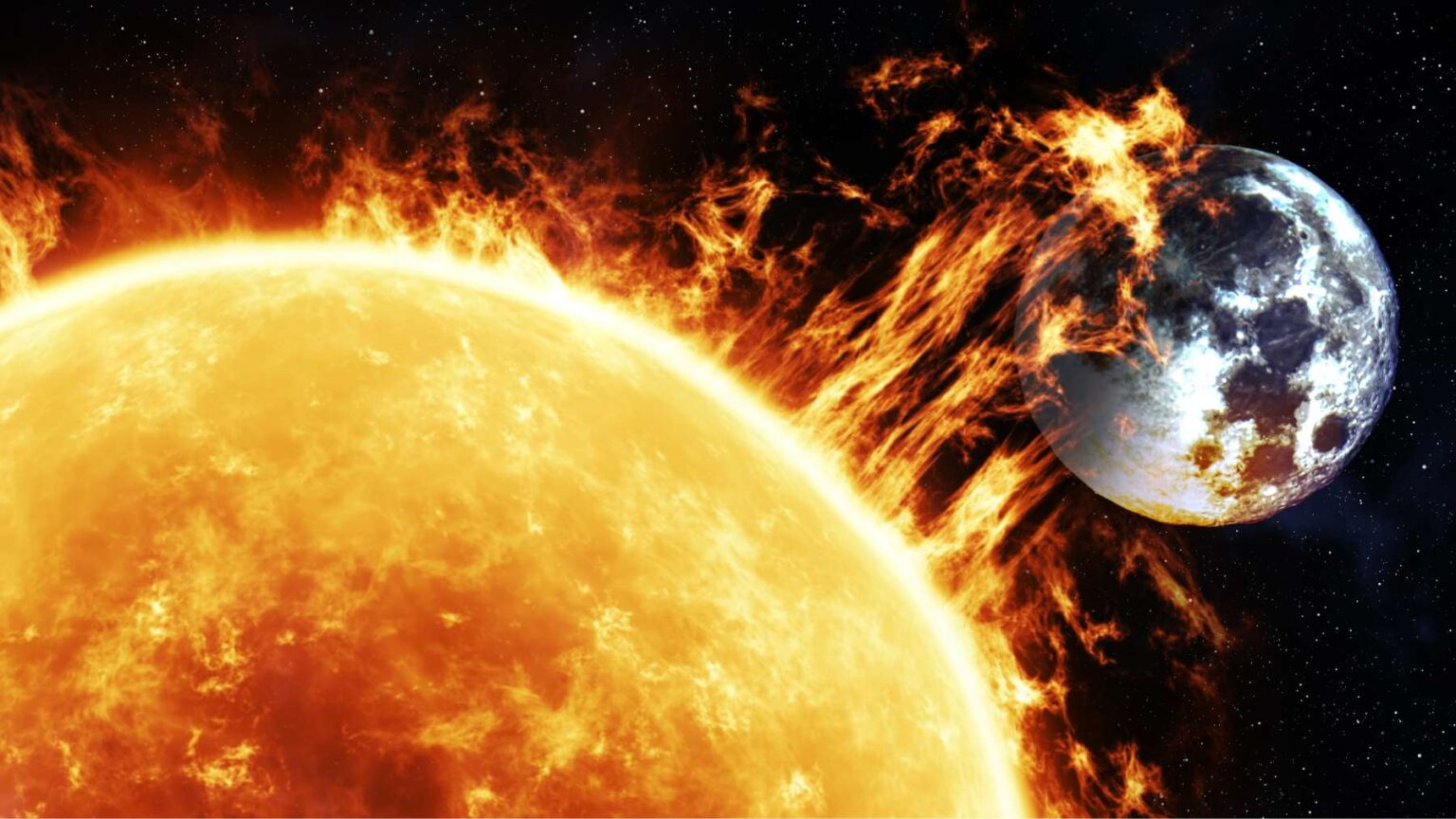
NASA, the U.S. space agency responsible for studying the Sun and space weather, has recently issued a warning that new and powerful solar flares — bursts of energy from the Sun — could interfere with communications and technological systems on Earth. These warnings come as part of ongoing observations of the Sun’s activity, which is increasing as we approach the peak of the Sun’s natural 11-year solar cycle.
What Are Solar Flares?
The Sun, a massive ball of hot gas and plasma, constantly releases energy and particles into space. Sometimes, magnetic energy on the Sun’s surface builds up and releases suddenly, creating a solar flare — one of the most powerful explosions in our solar system. These flares can release huge amounts of energy across the electromagnetic spectrum, including X-rays, ultraviolet light, and radio waves.
Solar flares are classified based on their intensity: A, B, C, M, and X, with X-class flares being the most intense and potentially impactful. The number that follows the letter — like X1.2 or X2.7 — indicates strength within the class. Higher numbers mean more intense events.
Recent Solar Activity Observed by NASA
In 2025, NASA’s Solar Dynamics Observatory (SDO) and other space instruments detected two strong X-class solar flares coming from a highly active region on the Sun’s surface known as AR4087. One was categorized as X1.2, followed shortly by a more intense X2.7 flare — the most powerful so far this year.
These intense flares form when vast magnetic field lines on the Sun twist, snap, and release energy. When this release happens near large sunspots — dark, magnetically active areas on the Sun’s surface — it can lead to especially energetic solar flares.
Why Solar Flares Matter to Earth
Although the Sun is about 150 million kilometers away from Earth, the radiation from solar flares travels at the speed of light and reaches our planet in about eight minutes. Most of this radiation doesn’t directly harm people on the ground, because Earth’s atmosphere and magnetic field protect us. However, the radiation can affect the upper atmosphere — especially a region called the ionosphere, which plays a key role in long-range radio communication.
When a strong solar flare hits the ionosphere, it increases ionization — meaning it adds electric charge to atoms and molecules. This change can disturb radio waves that transmit communication signals, especially high-frequency (HF) radio waves used by ships, aircraft, ham radio operators, and some military communications. In some recent events, this has caused radio blackouts lasting up to ten minutes in affected regions.
Strong flares can also affect satellites and GPS systems by disturbing signal transmission. The increased radiation and energetic particles can interfere with satellite electronics, reducing the accuracy of navigation systems and disrupting some forms of satellite communication.
Solar Flares and Coronal Mass Ejections (CMEs)
Often, solar flares are accompanied by another phenomenon called a coronal mass ejection (CME). A CME is a huge bubble of solar plasma and magnetic field that is blown into space. While the radiation from a flare hits Earth quickly, CMEs travel more slowly — typically reaching Earth one to three days later if they are directed toward our planet.
When a CME reaches Earth, it interacts with our magnetic field and can cause a geomagnetic storm — a disturbance in Earth’s magnetic environment. Geomagnetic storms can produce spectacular auroras (northern and southern lights) but can also induce electrical currents in power grids, disrupt satellite orbits, and interfere with radio and navigation signals.
These geomagnetic storms are categorized from minor (G1) to severe (G5) based on their intensity. A strong CME hitting Earth can push conditions into the moderate (G2) or strong (G3) range, making communication disruptions and navigation errors more likely.
Recent Solar Flares and Communication Disruptions
In multiple recent events — including the X2.7 flare recorded in May 2025 and a strong X1.2 flare in June 2025 — communication systems were already affected. High-frequency radio transmissions were disrupted as the ionosphere became highly ionized and absorbed radio signals before they could reach distant receivers.
Although these disruptions were temporary and limited in duration, they show how solar activity can influence technology that modern society relies on. Aviation, maritime communication, emergency services, and military systems all depend on reliable radio communication, and disruptions — even brief — can have significant consequences.
Potential Effects on GPS, Satellites, and Power Systems
Solar activity doesn’t only affect radio communications. GPS signals, which help billions of devices determine location, can become less accurate or temporarily degraded when the ionosphere is disturbed by a strong solar flare or geomagnetic storm. Satellites in orbit are also vulnerable; increased charged particles can damage sensitive electronics, disrupt data transmission, or increase atmospheric drag, which slowly alters satellite orbits.
In extreme cases — especially if a strong CME causes a severe geomagnetic storm — power grid infrastructure on Earth’s surface can be affected. Geomagnetically induced currents (GICs) can flow through long power lines, stressing transformers and other components. Historic events like the Carrington Event of 1859 — the strongest geomagnetic storm on record — are believed to have caused significant disruptions in telegraph systems at the time. A similar event today could affect modern electrical infrastructure, although modern power systems are better prepared and protected than they were in the past.
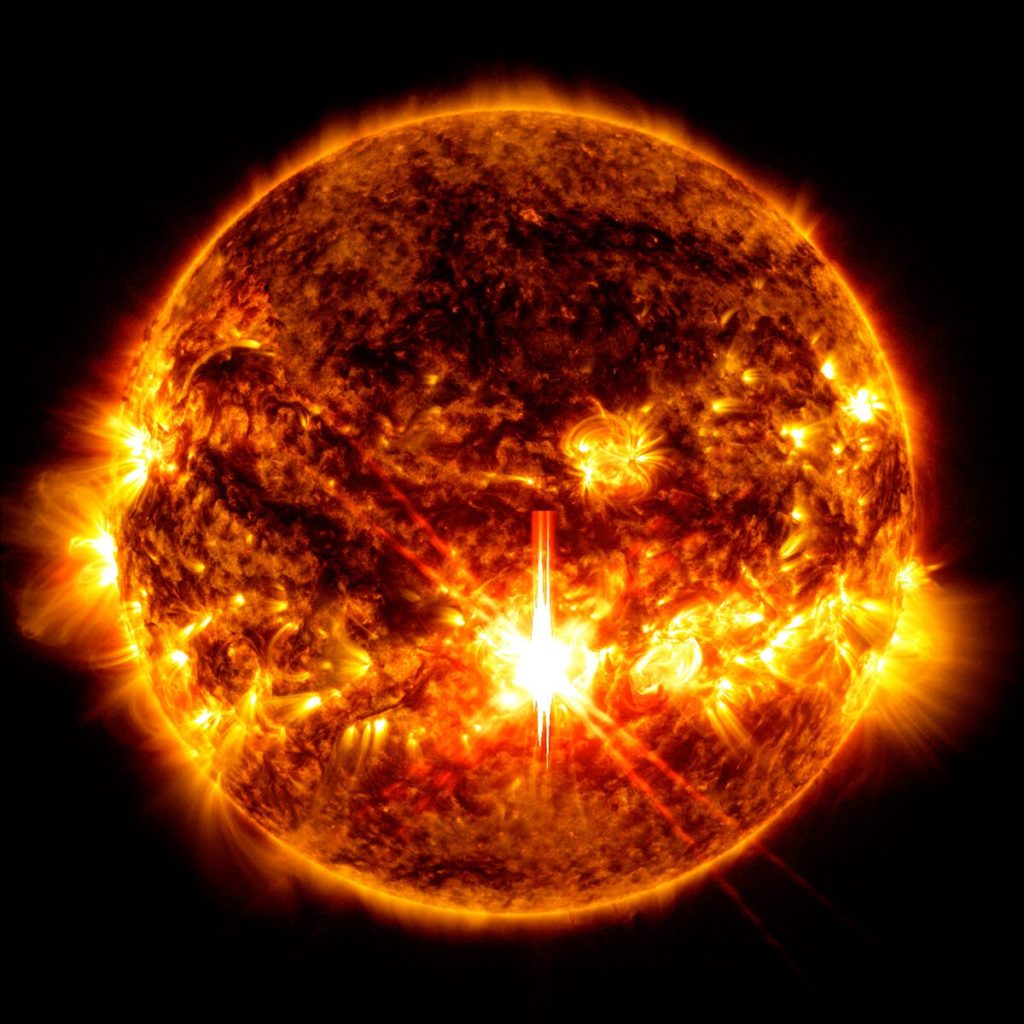
Why Solar Activity Is Increasing
The Sun goes through an approximately 11-year cycle of activity, swinging between periods of low and high activity known as solar minimum and solar maximum. During solar maximum, sunspots and solar eruptions — including strong flares and CMEs — are more common.
NASA and other space weather agencies, including the U.S. National Oceanic and Atmospheric Administration’s Space Weather Prediction Center, monitor this cycle closely. Current observations suggest that the Sun is in a phase of heightened activity, with more frequent eruptions expected as we reach or approach the peak of the current cycle.
This increase means that solar flares and related space weather events will likely become more common in the coming months and years, raising the chances that Earth and our technologies will experience more effects.
What Scientists Are Doing to Prepare
NASA, NOAA, and other space weather agencies constantly observe the Sun using multiple spacecraft and ground-based instruments. Tools like the Solar Dynamics Observatory, the Parker Solar Probe, and various solar observatories provide scientists with real-time data about solar activity.
This data is used to forecast solar activity and space weather events, giving satellite operators, power grid managers, aviation authorities, and others the ability to prepare and respond. For example, satellite operators can put spacecraft into safe mode, and airlines can adjust polar flight routes to reduce exposure to radiation.
There is also ongoing research into better understanding and predicting solar flares. Scientists are developing models that can forecast when dangerous solar flares are likely to occur with greater accuracy, which would provide more advanced warning and improve mitigation strategies.
What This Means for Everyday Life
For most people, solar flares and space weather events won’t cause noticeable effects on daily life. The radiation from solar flares doesn’t harm people through Earth’s atmosphere, and even many technological systems are designed to withstand normal variations in space weather.
However, disruptions to communication systems, GPS navigation, and satellite operations can have real consequences. Airline flights over polar regions already adjust operations when space weather is intense. Ham radio operators and long-distance communication services may experience blackouts at certain frequencies. And in rare cases, power grid operators may take preventive steps to reduce the risk of equipment damage during strong geomagnetic storms.
Conclusion
NASA’s warning that new solar flares could disrupt communications on Earth is a reminder of how closely connected our planet is to the Sun’s activity. As the Sun’s activity increases during its current cycle, strong solar flares, coronal mass ejections, and geomagnetic storms are more likely to occur, with potential impacts on radio communication, GPS, satellites, and — in extreme cases — power infrastructure.
Space weather scientists continue to monitor and study these phenomena, improving forecasting and mitigation strategies to protect technology and infrastructure. While most effects are temporary and manageable, understanding space weather remains vital in our increasingly connected and technology-dependent world.
Read Also: Keep your face towards the sunshine and shadows will fall behind you
Watch Also: https://www.youtube.com/@TravelsofTheWorld24





Leave a Reply