
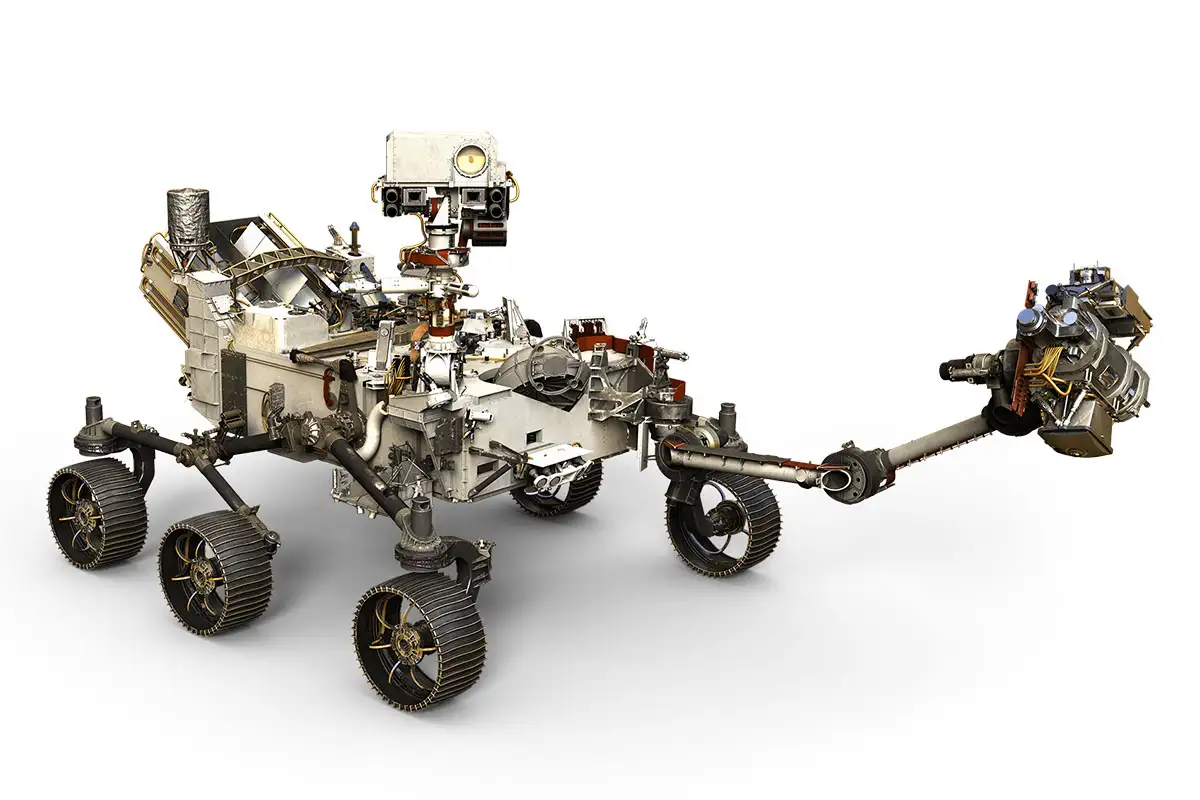
Humanity’s fascination with Mars stretches back centuries. Often called the Red Planet for its reddish hue caused by iron oxide on its surface, Mars has captivated scientists, writers, and dreamers alike. Over the decades, robotic missions have revealed that Mars is more dynamic and Earth-like than previously imagined. From ancient riverbeds and vast canyons to evidence of ice caps and seasonal changes, the planet holds tantalizing clues about its past—and possibly about life itself. NASA’s next major step in exploring Mars is the Perseverance rover, designed to search for signs of ancient life, collect samples, and prepare the way for future human exploration.
The Mission Overview
NASA’s Perseverance rover is part of the Mars 2020 mission, launched on July 30, 2020, aboard an Atlas V rocket from Cape Canaveral, Florida. It successfully landed on Mars on February 18, 2021, in the Jezero Crater, an ancient river delta that may have once hosted a lake. Scientists selected this site because its geology suggests it was once a habitable environment with water—one of the essential ingredients for life.
The rover’s mission is ambitious and multi-faceted. Its primary goals include:
-
Searching for signs of ancient life: Perseverance is equipped to detect chemical, mineralogical, and geological evidence of past microbial life.
-
Characterizing the planet’s climate and geology: Understanding Mars’ past environment helps scientists assess its habitability and evolution.
-
Collecting samples for future return to Earth: The rover is designed to gather rock and soil samples that could one day be brought back for detailed laboratory analysis.
-
Preparing for human exploration: Perseverance carries technology demonstrations, such as the MOXIE experiment, which converts carbon dioxide into oxygen, a key step toward sustaining humans on Mars.
Advanced Technology on Perseverance
Perseverance represents the pinnacle of modern robotic exploration, featuring an array of advanced instruments, cameras, and systems. Some key components include:
1. Mastcam-Z: A zoomable camera system capable of capturing high-resolution images and 3D panoramas, helping scientists analyze the planet’s surface in incredible detail.
2. SuperCam: A versatile instrument that can identify the mineral composition of rocks and soil using laser-induced breakdown spectroscopy, imaging, and remote sensing. It allows scientists to detect organic compounds that may hint at past life.
3. PIXL (Planetary Instrument for X-ray Lithochemistry): This instrument uses X-ray fluorescence to determine the elemental composition of Martian rocks at a microscopic level. PIXL can detect biosignatures, the chemical fingerprints left by life.
4. SHERLOC (Scanning Habitable Environments with Raman & Luminescence for Organics and Chemicals): Designed to detect organic molecules and minerals associated with watery environments, SHERLOC uses ultraviolet light to analyze rocks and soil.
5. RIMFAX (Radar Imager for Mars’ Subsurface Experiment): A ground-penetrating radar that examines the subsurface structure of Mars, revealing layers of rock, sediment, and potential water ice deposits.
6. MOXIE (Mars Oxygen In-Situ Resource Utilization Experiment): A groundbreaking technology demonstration that converts carbon dioxide from Mars’ thin atmosphere into oxygen. This experiment is a critical step toward enabling human exploration of the planet.
The Landing Challenge
Landing on Mars is notoriously difficult, often referred to as “seven minutes of terror” due to the rapid sequence of entry, descent, and landing. The atmosphere on Mars is less than 1% as dense as Earth’s, making it challenging to slow a spacecraft using traditional parachutes alone.
Perseverance’s landing system incorporated a combination of:
-
Aeroshell and heat shield to survive the intense heat during atmospheric entry
-
Parachute system to slow descent in the thin atmosphere
-
Sky crane maneuver, a novel technique that lowered the rover safely onto the Martian surface using cables from a hovering descent stage
This complex process succeeded flawlessly, marking a major engineering triumph and ensuring the rover could begin its critical mission.
Searching for Signs of Life
The core goal of Perseverance is astrobiology, the study of life beyond Earth. While no evidence of life has been discovered on Mars to date, several lines of evidence suggest the planet may have been habitable in the past:
-
Ancient river channels and deltas
-
Mineral deposits formed in water, including clays and carbonates
-
Seasonal methane emissions in the atmosphere, which could indicate microbial activity
Perseverance is specifically tasked with studying biosignatures—physical or chemical traces left by ancient microbial life. This includes microscopic textures in rocks, organic molecules, and mineral compositions that could indicate the presence of life billions of years ago.
By targeting the Jezero Crater, a site rich in sedimentary rocks formed by water, Perseverance is positioned to maximize its chances of detecting such evidence. Scientists hope that these investigations will reveal whether life ever existed on Mars and provide insights into how life emerges on planets.
Sample Collection for Future Return
A major innovation of the Mars 2020 mission is collecting rock and soil samples for eventual return to Earth. Perseverance carries 43 sample tubes, which it will fill with carefully selected specimens from rocks and soil.
These samples will be stored in a cache on the Martian surface for a future mission—likely a collaboration between NASA and ESA—to retrieve and transport them to Earth. Once analyzed in terrestrial laboratories, these samples could answer questions about the Red Planet’s geology, climate history, and potential habitability in unprecedented detail.
This Mars Sample Return campaign represents one of the most complex space exploration projects ever conceived, involving multiple spacecraft and international collaboration. Success could provide humanity with its first hands-on materials from another planet, opening a new era of planetary science.
Supporting Human Exploration
While Perseverance is primarily a robotic mission, it plays a key role in preparing for future human missions to Mars. The MOXIE experiment, for example, demonstrates in-situ resource utilization, converting CO₂ into oxygen. This technology could allow astronauts to breathe on Mars and produce rocket fuel for the return journey.
Additionally, Perseverance provides critical data on Martian terrain, radiation levels, and dust activity, all of which are essential for designing safe habitats, vehicles, and protective suits for human explorers.
By mapping hazards and testing new technologies, the rover lays the foundation for a sustainable human presence on Mars, a long-term goal of NASA’s interplanetary program.
Scientific Discoveries Already Made
Since landing, Perseverance has exceeded expectations. Some notable findings and milestones include:
-
High-resolution imagery of Jezero Crater, revealing intricate river channels, delta formations, and sediment layers that suggest Mars once hosted liquid water
-
Detection of organic molecules in rocks, providing tantalizing hints about the planet’s potential for past life
-
Studying atmospheric conditions, including dust storms and seasonal changes, helping scientists understand Martian weather patterns
-
Testing autonomous navigation systems that allow the rover to traverse the terrain with minimal human input, a critical capability for future missions
These early results demonstrate that Perseverance is not only meeting its objectives but also opening new scientific questions about Mars’ past and its potential for life.
The Broader Context: Mars Exploration
Perseverance is part of a long lineage of Mars exploration missions, building on knowledge gained from predecessors:
-
Viking 1 and 2 (1976): Conducted the first landings and soil analysis on Mars
-
Pathfinder and Sojourner (1997): Demonstrated low-cost robotic exploration and rover mobility
-
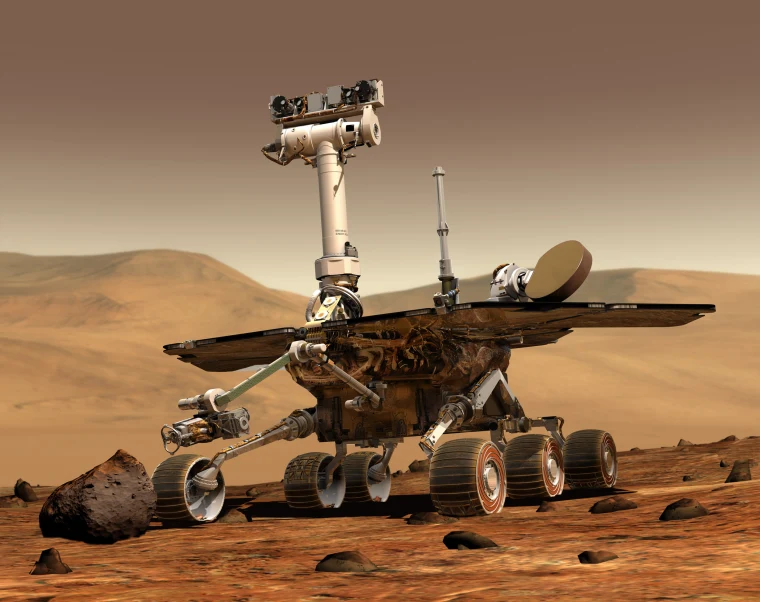
Spirit and Opportunity (2004): Revealed evidence of ancient water and habitability conditions
-
Curiosity (2012): Advanced understanding of Mars’ geology and chemistry
Perseverance continues this legacy, combining lessons learned with new technology to take the next step in the quest to answer one of humanity’s most profound questions: Did life ever exist beyond Earth?
International Collaboration and Public Engagement
Mars exploration is increasingly a global endeavor. NASA collaborates with ESA, JAXA, and other space agencies to share data, technology, and expertise. These partnerships ensure that scientific discoveries are maximized and benefit the global community.
Perseverance also engages the public through innovative outreach programs, such as the “Name the Rover” campaign, which allowed students to submit names and learn about space science. NASA’s commitment to education and public engagement ensures that the excitement and inspiration of Mars exploration reach millions of people worldwide.
Looking Ahead
The Mars 2020 mission with Perseverance is just the beginning. Over the next few years, the rover will continue to explore Jezero Crater, collect and cache samples, and provide critical data for human exploration. The eventual Mars Sample Return mission could revolutionize our understanding of the planet and answer questions that have intrigued scientists for decades.
Future human missions to Mars are still decades away, but Perseverance brings us closer to that reality by demonstrating the feasibility of complex robotic operations, in-situ resource utilization, and long-term scientific exploration.
Conclusion
NASA’s Perseverance rover represents the cutting edge of planetary exploration. By searching for signs of ancient life, collecting samples for return to Earth, and testing technologies for future human missions, Perseverance is tackling some of the most profound scientific and engineering challenges in history.
Mars is no longer a distant point of light in the sky; it is a world that is slowly revealing its secrets. With Perseverance leading the way, humanity is taking tangible steps toward understanding whether life exists beyond Earth, preparing for the first human missions, and pushing the boundaries of what is possible in space exploration.
The Red Planet, once the realm of speculation and science fiction, is now within our reach—and Perseverance ensures that the search for life on Mars is more detailed, precise, and ambitious than ever before.
Read Also: Keep your face towards the sunshine and shadows will fall behind you
Watch Also: https://www.youtube.com/@TravelsofTheWorld24







Leave a Reply