
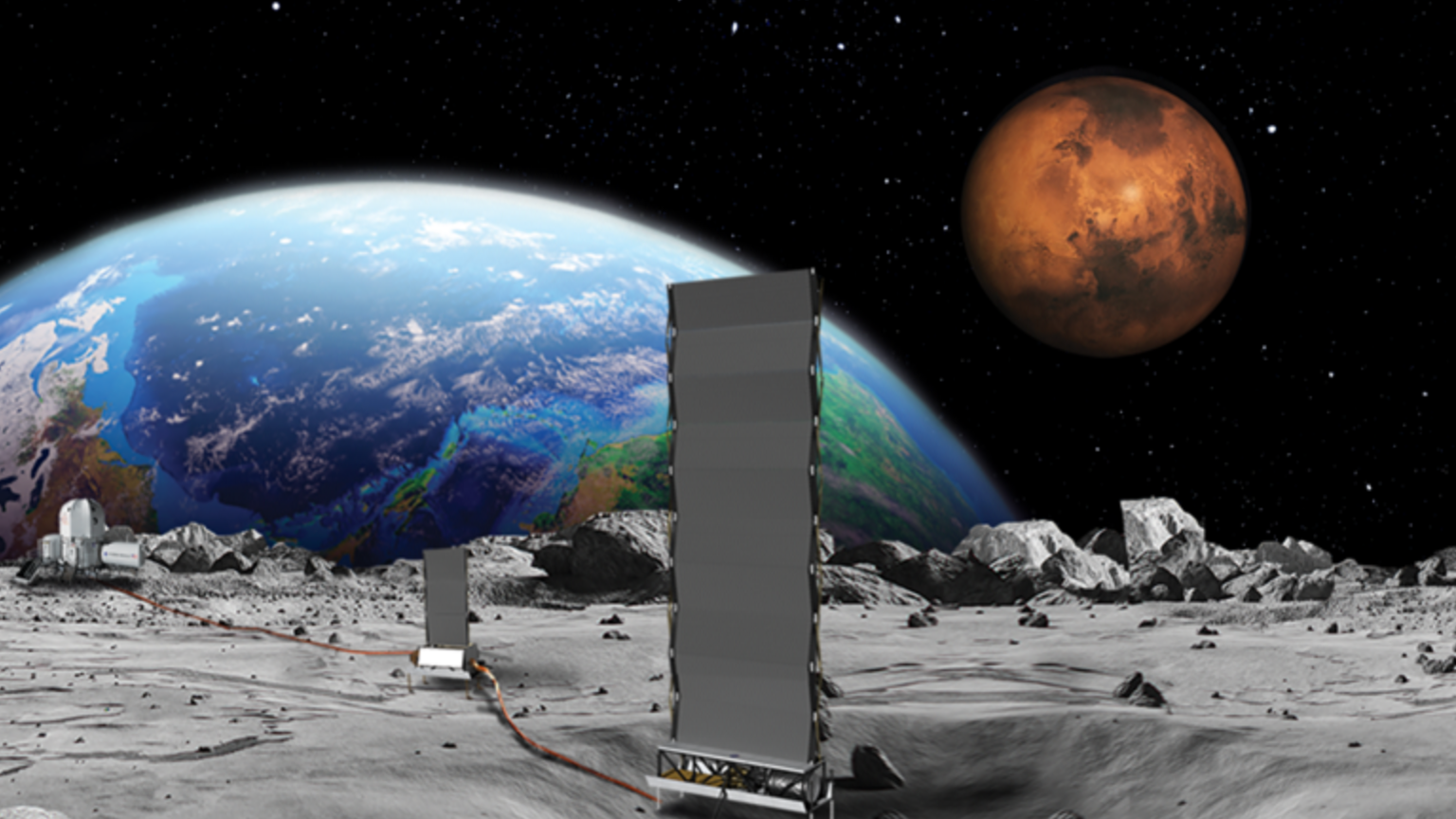
NASA is reportedly planning to place a nuclear reactor on the Moon by the end of this decade, a move that could mark a historic turning point in humanity’s return to the lunar surface. According to US media reports, the space agency is accelerating efforts to develop a compact nuclear power system capable of supporting long-term human and robotic missions on the Moon as part of its broader Artemis program.
If successful, the initiative would make the United States the first nation to deploy a functioning nuclear reactor on another celestial body. The project reflects growing recognition that traditional solar power alone may not be sufficient to sustain continuous lunar operations, especially as space agencies prepare for permanent bases and eventual missions to Mars.
Why the Moon Needs Nuclear Power
One of the biggest challenges of operating on the Moon is power generation. Unlike Earth, the Moon experiences extreme temperature variations and long periods of darkness. A single lunar night lasts approximately 14 Earth days, making solar energy unreliable for continuous operations.
While batteries can store solar power, their capacity is limited, and maintaining large battery systems in harsh lunar conditions presents significant technical difficulties. Dust accumulation, radiation exposure, and temperature extremes further reduce the efficiency and lifespan of solar infrastructure.
A nuclear reactor, on the other hand, can provide a steady, reliable source of electricity regardless of lighting conditions. It can operate continuously for years without refueling, making it an ideal solution for powering habitats, scientific instruments, communication systems, and resource extraction facilities.
The Reactor Concept: Small, Safe, and Powerful
According to reports, NASA’s lunar nuclear reactor would not resemble the massive nuclear power plants found on Earth. Instead, it would be a compact, low-power fission reactor designed specifically for space use.
The reactor is expected to generate enough electricity to power a small lunar base, supporting life support systems, heating, scientific equipment, and potentially even lunar mining operations. Engineers emphasize that the design prioritizes safety, with multiple layers of shielding and passive cooling systems that prevent overheating without human intervention.
The reactor would likely be buried beneath the lunar surface or placed behind natural shielding such as regolith (Moon soil) to protect astronauts from radiation. The Moon’s lack of atmosphere and geological activity actually makes it a relatively stable environment for nuclear systems compared to Earth.
Artemis Program and Long-Term Lunar Presence
The nuclear reactor plan is closely tied to NASA’s Artemis program, which aims to return astronauts to the Moon and establish a sustained human presence there. Unlike the Apollo missions of the 1960s and 1970s, Artemis is designed for long-term exploration rather than short visits.
NASA plans to build lunar habitats, research stations, and infrastructure near the Moon’s south pole, a region believed to contain water ice in permanently shadowed craters. Water ice is a critical resource, as it can be converted into drinking water, breathable oxygen, and rocket fuel.
A nuclear power source would be essential for operating in these shadowed regions, where sunlight is scarce or nonexistent. It would enable continuous scientific research and resource utilization, laying the groundwork for future missions deeper into the solar system.
US Media Reports and Government Support
US media outlets report that NASA is working closely with the Department of Energy (DOE) to develop the lunar reactor. The DOE has decades of experience in nuclear technology and has previously collaborated with NASA on space power systems.
Government officials view nuclear power as a strategic capability in space, particularly as global competition intensifies. China and Russia have both announced ambitious lunar exploration plans, including the possibility of building their own Moon bases in the coming decades.
By deploying a nuclear reactor on the Moon first, the United States could gain a significant technological and geopolitical advantage, reinforcing its leadership in space exploration and setting international standards for off-world nuclear systems.
Safety Concerns and Public Debate
Despite its potential benefits, the idea of placing a nuclear reactor on the Moon has sparked debate and concern among some members of the public. Critics worry about the risk of launch accidents, radioactive contamination, and long-term environmental impacts.
NASA officials stress that the reactor would not be activated until it safely reaches the lunar surface. During launch and transit, the nuclear fuel would remain in a stable, non-reactive state, reducing the risk of radiation release in the event of a launch failure.
Historically, NASA has successfully launched nuclear-powered systems, including radioisotope thermoelectric generators (RTGs) used on missions like Voyager, Cassini, and the Mars rovers. These missions have demonstrated that nuclear materials can be handled safely in space when proper precautions are taken.
Learning From Past Nuclear Space Technology
Nuclear power in space is not a new concept. During the Cold War, both the United States and the Soviet Union experimented with nuclear reactors and radioisotope systems to power satellites and deep-space missions.
However, most previous systems were relatively small and designed for limited applications. A lunar reactor capable of supporting human habitats represents a significant leap in complexity and scale.
Advances in materials science, computer modeling, and autonomous control systems now make it possible to design reactors that are safer, lighter, and more efficient than ever before. These technological improvements are a key reason NASA believes a lunar reactor is now feasible.
Enabling Science, Industry, and Exploration
The availability of reliable power could dramatically expand the scope of lunar science. Researchers would be able to operate advanced laboratories, deep-drilling equipment, and long-duration experiments that are currently impossible with intermittent power.
Beyond science, nuclear power could support early lunar industries, such as extracting oxygen from Moon soil or processing water ice into fuel. These activities would reduce reliance on Earth-based supply missions, lowering costs and increasing mission sustainability.
In the long term, the Moon could serve as a testing ground for technologies needed for Mars exploration. A nuclear reactor on the Moon would provide valuable data on how such systems perform in low-gravity, high-radiation environments over extended periods.
International Law and Space Governance
Placing a nuclear reactor on the Moon also raises legal and ethical questions. The Outer Space Treaty of 1967, which governs international space activities, prohibits weapons of mass destruction in space but allows the peaceful use of nuclear power for exploration.
NASA maintains that the lunar reactor would be used strictly for civilian and scientific purposes. Transparency and international cooperation will likely play a key role in ensuring the project complies with international law and avoids diplomatic tensions.
Some experts argue that clear guidelines for nuclear power in space will become increasingly important as more nations and private companies expand their off-world activities.
Timeline: Why 2030 Matters
US media reports suggest that NASA aims to deploy the reactor by around 2030, aligning with later phases of the Artemis program. This timeline allows for extensive testing on Earth, demonstration missions, and gradual integration with lunar infrastructure.
The next few years will be critical, as engineers finalize reactor designs, conduct safety reviews, and select potential landing sites. Budget approvals and political support will also play a major role in determining whether the project stays on schedule.
While delays are always possible in complex space programs, NASA officials appear confident that the technology can be ready within the decade.
Public Perception and the Future of Space Power
Public reaction to the nuclear reactor plan has been mixed, ranging from excitement about technological progress to concern about safety and environmental impact. Supporters argue that nuclear power is essential for meaningful human expansion beyond Earth.
As humanity pushes further into space, energy demands will continue to grow. Solar power alone may not be sufficient for deep-space missions, permanent settlements, or industrial-scale operations.
The Moon reactor could represent the beginning of a new era in space power—one where nuclear energy enables sustained exploration and transforms science fiction concepts into reality.
A Historic Step Beyond Earth
If NASA succeeds in placing a nuclear reactor on the Moon by 2030, it will mark one of the most significant milestones in space exploration since the Apollo era. The project symbolizes a shift from short-term missions to long-term presence beyond Earth.
More than just a power source, the reactor would be a foundation for humanity’s future in space—supporting science, exploration, and eventual journeys to Mars and beyond.
As US media reports highlight growing momentum behind the plan, the coming years may determine whether the Moon becomes not just a destination, but a permanent outpost for human civilization.
Read Also: Keep your face towards the sunshine and shadows will fall behind you
Watch Also: https://www.youtube.com/@TravelsofTheWorld24





Leave a Reply