
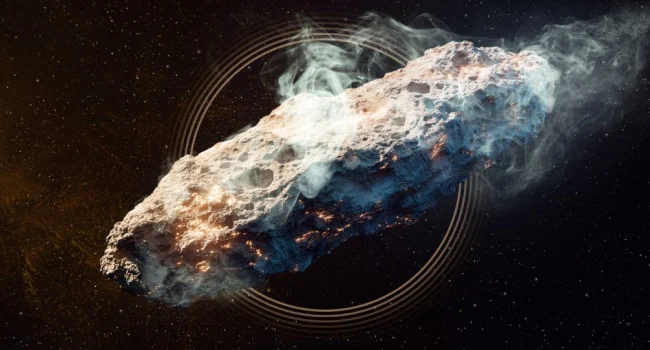
NASA is currently monitoring an extraordinary interstellar visitor that has entered our solar system, while at the same time warning about a solar event sending a direct hit of charged particles toward Earth. The convergence of these two cosmic phenomena highlights both the dynamic nature of our local space environment and the importance of vigilance in understanding objects and energy streams from beyond our solar system.
Interstellar visitors—objects originating from outside the solar system—are extremely rare. Their detection offers scientists the opportunity to study material from distant star systems and gain insight into the formation and evolution of planetary systems beyond our own. Simultaneously, solar flares and coronal mass ejections (CMEs) emanating from the Sun can interact with Earth’s magnetic field, potentially disrupting communications, satellites, and power grids.
The Interstellar Visitor
The interstellar object, currently under close observation by NASA’s Planetary Defense Coordination Office and other research teams, exhibits an unusual trajectory and high velocity inconsistent with solar system-bound objects. First detected by ground-based telescopes, its hyperbolic orbit confirms that it is not gravitationally bound to the Sun.
While prior interstellar visitors, such as ‘Oumuamua in 2017 and comet Borisov in 2019, generated widespread interest, each new object provides unique data. Preliminary spectroscopic analysis suggests that this visitor may contain materials not commonly found in our solar system, including a high concentration of volatile ices and possible carbon-based compounds.
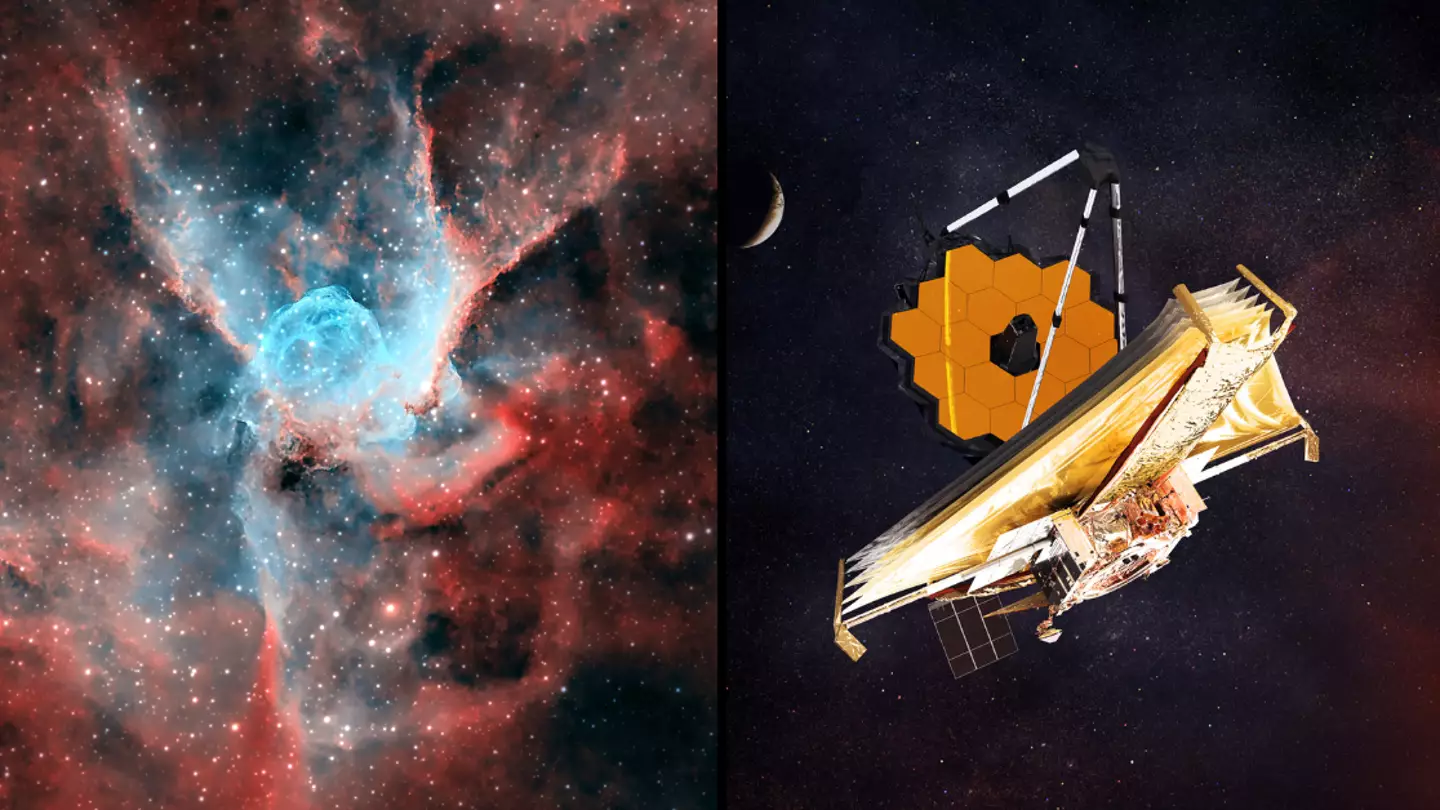
NASA has deployed both ground-based and space-based observatories, including the Hubble Space Telescope, to track its trajectory and composition. The data collected will help astronomers understand the diversity of planetary and cometary systems across the galaxy.
Direct Hit from the Sun
At the same time, the Sun is emitting a solar flare accompanied by a coronal mass ejection directed toward Earth. These events, part of the Sun’s natural activity cycle, release streams of charged particles and electromagnetic radiation that travel through space at millions of kilometers per hour.
When these particles reach Earth, they can interact with the magnetosphere, producing geomagnetic storms. These storms can disrupt satellite communications, GPS systems, and high-frequency radio transmissions, and in severe cases, induce electrical surges in power grids. NASA and NOAA’s Space Weather Prediction Center are issuing real-time alerts and recommendations to mitigate potential impacts.
How Interstellar Objects Are Detected
Detecting interstellar objects requires a combination of high-sensitivity telescopes, precise astrometry, and rapid follow-up observations. These objects are often small, faint, and moving at extremely high velocities, making early detection challenging.
Once detected, astronomers calculate orbital parameters to determine whether the object is bound to the Sun or on an interstellar trajectory. Observations of brightness, spectral composition, and shape help classify the object as either comet-like, asteroid-like, or an unusual hybrid.
NASA’s rapid response to such discoveries involves collaboration across multiple agencies and observatories worldwide. The aim is to maximize scientific data collection before the object leaves the solar system.
Solar Flares and Their Effects on Earth
Solar flares and CMEs are caused by sudden releases of magnetic energy in the Sun’s atmosphere. These events emit radiation across the electromagnetic spectrum, including X-rays and ultraviolet light, as well as streams of energetic particles.
Upon reaching Earth, solar flares can ionize the upper atmosphere, disrupting radio communications and GPS signals. CMEs, carrying billions of tons of solar plasma, interact with Earth’s magnetic field to produce geomagnetic storms. These storms can affect satellites, communication networks, and even induce currents in power grids.
NASA monitors the Sun using spacecraft such as the Solar Dynamics Observatory (SDO), the Parker Solar Probe, and the Solar and Heliospheric Observatory (SOHO). These instruments provide data on solar activity, helping predict potential impacts on Earth and in space.
Why Studying Interstellar Objects Matters
Interstellar visitors are of immense scientific value because they originate from planetary systems beyond our own. Studying them provides clues about the composition, structure, and dynamics of distant systems, potentially revealing processes that differ from those observed locally.
Spectroscopic analysis can identify the chemical makeup of these objects, including the presence of water, organic molecules, and rare metals. Understanding their physical properties—such as shape, rotation, and surface reflectivity—also informs theories of planetary formation and evolution.
Moreover, interstellar objects offer a rare opportunity to test our models of the galaxy’s dynamical processes, including how objects are ejected from star systems and how they traverse interstellar space.
Tracking the Interstellar Visitor
NASA has coordinated multiple observatories to ensure continuous tracking of the interstellar object. High-resolution imaging allows scientists to measure its size, rotation rate, and activity, such as the release of gas or dust. Observations over time help refine its trajectory and predict future positions.
The combined data also allow for comparisons with previous interstellar visitors. Differences in chemical composition, brightness variations, and structural features may indicate diverse origins, offering insights into the formation environments of other star systems.
The Sun’s Activity and Timing
Interestingly, the interstellar visitor’s passage coincides with heightened solar activity. Scientists note that while the solar flare and CME do not pose a direct threat to the object, monitoring both phenomena simultaneously offers an unprecedented chance to study how interstellar objects respond to varying solar radiation and particle flux.
This dual observation could reveal subtle effects on surface composition or the behavior of volatile materials as the object passes through regions of increased solar radiation. Such data may also improve understanding of space weather impacts on small bodies in the solar system.
Protecting Technology on Earth
NASA and NOAA issue advisories when solar events are expected to impact Earth. Satellite operators may adjust orientation or temporarily shut down sensitive instruments to reduce exposure. Airlines flying polar routes may modify flight paths to maintain reliable communications.
Power grid operators monitor geomagnetically induced currents to prevent potential damage to transformers and substations. Amateur radio operators and maritime communications systems are advised to switch to alternate frequencies during periods of high solar activity.
These precautions help mitigate the technological risks posed by solar flares and CMEs, ensuring minimal disruption to critical infrastructure.
Implications for Space Exploration
Understanding both interstellar objects and solar activity is critical for the safety of current and future space missions. Astronauts aboard the International Space Station (ISS) are shielded from most solar radiation, but powerful flares and CMEs can increase radiation exposure and disrupt communications.
For future deep-space missions, including Artemis lunar expeditions and Mars missions, accurate space weather forecasting is essential. Similarly, studying interstellar objects provides baseline knowledge about the hazards posed by high-velocity dust, radiation, and micro-meteoroids that may accompany such visitors.
Scientific Opportunities
The simultaneous occurrence of an interstellar visitor and a direct solar hit creates unique scientific opportunities. Researchers can:
-
Observe how charged particles from the Sun interact with interstellar material.
-
Study potential changes in surface chemistry or outgassing from the object.
-
Compare solar radiation effects on a moving body versus stationary satellites.
-
Gather complementary data for modeling planetary system dynamics and solar interactions.
Such observations could lead to breakthroughs in astrophysics, planetary science, and space weather forecasting.
Historical Context
The discovery of interstellar objects is relatively recent. ‘Oumuamua, detected in 2017, was the first confirmed visitor from another star system, exhibiting a hyperbolic trajectory and unusual elongated shape. Comet Borisov, discovered in 2019, showed typical cometary features but originated outside the solar system.
Each subsequent detection adds to our understanding of the frequency and diversity of interstellar objects. The current visitor provides an additional dataset that may help answer questions about the formation and evolution of planetary systems across the Milky Way.
Future Monitoring and Research
NASA continues to monitor the interstellar visitor as it travels through the solar system. Follow-up observations with ground-based telescopes and space-based instruments will track its path, composition, and potential activity.
Simultaneously, space weather teams are closely watching the solar flare and CME, issuing updates and forecasts to affected sectors. Advanced modeling predicts the arrival time of charged particles, allowing satellite operators, utilities, and communication networks to implement protective measures.
Together, these efforts illustrate the importance of continuous observation, rapid response, and interdisciplinary collaboration in understanding and responding to cosmic events.
Conclusion
The simultaneous occurrence of an interstellar visitor and a direct solar hit highlights the dynamic nature of our solar environment. NASA’s scrutiny of the interstellar object promises valuable insights into planetary systems beyond our own, while careful monitoring of solar activity ensures the protection of Earth-based technologies and space assets.
These cosmic events serve as a reminder of the interconnectedness of the solar system and the galaxy. By studying interstellar visitors and solar activity in tandem, scientists can advance our understanding of both distant worlds and the Sun’s influence on Earth, paving the way for safer, more informed space exploration.
As our observational capabilities continue to improve, the combined study of interstellar objects and solar phenomena will remain a priority, offering unprecedented opportunities to explore the universe from our own cosmic backyard.
Read Also: Keep your face towards the sunshine and shadows will fall behind you
Watch Also: https://www.youtube.com/@TravelsofTheWorld24





Leave a Reply