
What Defines a Planet? Understanding Our Solar System and Beyond
From our earliest childhood lessons to advanced astronomy studies, the term “planet” is one of the most familiar in science. But what exactly defines a planet? Is it merely a celestial body that orbits a star, or are there more specific criteria? The concept of a planet has evolved over time, influenced by scientific discoveries, technological advances, and debates within the astronomical community. Understanding what a planet is requires exploring its historical context, current definitions, and the variety of planetary types in our universe.
Historical Understanding of Planets
The idea of planets has existed for millennia. Ancient civilizations observed celestial objects that moved differently from the fixed stars in the night sky. The word “planet” comes from the Greek word “planētēs”, meaning “wanderer,” reflecting these objects’ wandering motion relative to stars.
-
Ancient Astronomy: Civilizations such as the Babylonians, Greeks, and Egyptians identified planets like Mercury, Venus, Mars, Jupiter, and Saturn. These planets were visible to the naked eye and often associated with mythology and gods.
-
Geocentric Model: For centuries, the prevailing belief was that Earth was the center of the universe, and planets orbited Earth. This model influenced philosophical and scientific thought for over a millennium.
-
Heliocentric Revolution: In the 16th century, Nicolaus Copernicus proposed that planets, including Earth, orbit the Sun. This heliocentric model revolutionized astronomy and laid the foundation for modern planetary science.
As telescope technology improved, astronomers discovered new celestial bodies, including Uranus (1781), Neptune (1846), and Pluto (1930), prompting the need for clearer definitions.
The Modern Definition of a Planet
In 2006, the International Astronomical Union (IAU) provided the most widely accepted definition of a planet in the context of our Solar System. According to the IAU, a celestial body is considered a planet if it meets three criteria:
-
Orbits the Sun: The object must revolve around the Sun and not another planet.
-
Sufficient Mass for Self-Gravity: The object must have enough mass for its self-gravity to overcome rigid body forces, forming a nearly round or spheroidal shape.
-
Cleared Its Orbital Neighborhood: The planet must dominate its orbit, meaning it has removed smaller objects and debris in its orbital path through gravitational influence.
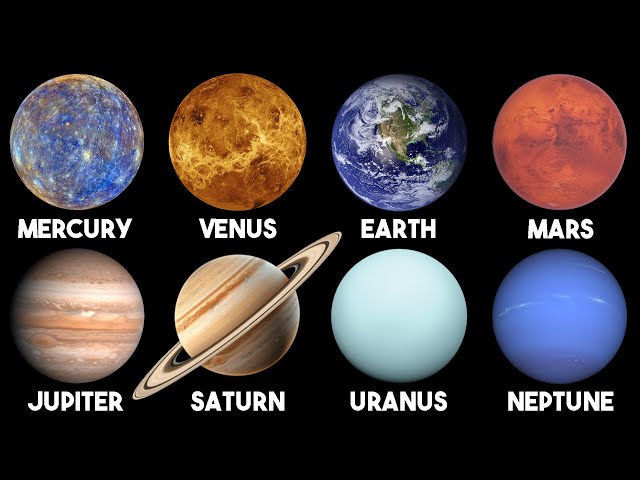
Using this definition, our Solar System has eight recognized planets: Mercury, Venus, Earth, Mars, Jupiter, Saturn, Uranus, and Neptune. Pluto, once considered the ninth planet, was reclassified as a dwarf planet because it has not cleared its orbital neighborhood.
Characteristics of Planets
Planets share several key characteristics that distinguish them from other celestial objects:
1. Spherical Shape
Planets are generally spherical due to hydrostatic equilibrium, the balance between gravity and the material’s structural strength. This is why large asteroids and irregularly shaped bodies are not considered planets.
2. Orbital Motion
Planets revolve around a star, such as the Sun, in a relatively stable orbit. This motion follows the laws of celestial mechanics, particularly Kepler’s laws of planetary motion, which describe orbital shapes, speeds, and periods.
3. Gravitational Dominance
A planet must be massive enough to clear its orbit of debris, distinguishing it from smaller bodies like asteroids or comets. This gravitational dominance ensures the planet maintains a relatively unobstructed path around its star.
4. Composition
Planets vary widely in composition, leading to the main categories of planets:
-
Terrestrial Planets: Rocky surfaces, smaller sizes, and dense atmospheres. Examples: Mercury, Venus, Earth, Mars.
-
Gas Giants: Massive planets with thick gaseous atmospheres and small solid cores. Examples: Jupiter, Saturn.
-
Ice Giants: Composed primarily of heavier volatile substances (ices) with thick atmospheres. Examples: Uranus, Neptune.
Dwarf Planets
Not all round, orbiting bodies qualify as planets. Dwarf planets meet the first two criteria of planetary status (orbiting the Sun and spherical shape) but have not cleared their orbital neighborhood.
Examples of dwarf planets:
-
Pluto: Reclassified in 2006, located in the Kuiper Belt.
-
Eris: A distant object similar to Pluto but slightly smaller.
-
Ceres: Located in the asteroid belt between Mars and Jupiter.
Dwarf planets broaden our understanding of planetary diversity and highlight the complexity of defining celestial objects.
Exoplanets: Planets Beyond Our Solar System
The discovery of exoplanets, planets orbiting stars beyond the Sun, has expanded our definition and understanding of planets. Thousands of exoplanets have been discovered since 1995, varying in size, composition, and orbit. Some are:
-
Hot Jupiters: Gas giants orbiting very close to their stars, with high temperatures.
-
Super-Earths: Rocky planets larger than Earth, potentially with diverse atmospheres.
-
Rogue Planets: Planets not orbiting any star, drifting through space independently.
These discoveries show that planets exist in a wide variety of forms, challenging astronomers to develop flexible definitions that encompass the diversity of planetary systems in the universe.
How Planets Form
Planets form through a process called planetary accretion within protoplanetary disks surrounding young stars:
-
Nebular Collapse: Gas and dust collapse under gravity to form a star and surrounding disk.
-
Planetesimal Formation: Dust grains collide and stick together, forming larger bodies called planetesimals.
-
Protoplanet Growth: Planetesimals merge to form protoplanets.
-
Clearing the Orbit: The protoplanets accumulate mass and clear debris along their orbits, becoming fully fledged planets.
The composition and location within the disk often determine whether a planet becomes terrestrial, gas giant, or ice giant.
Planetary Atmospheres and Habitability
Planets may have atmospheres ranging from thin, almost nonexistent layers to dense, thick envelopes:
-
Earth: Supports life due to a balanced atmosphere, liquid water, and moderate temperatures.
-
Venus: Extremely thick CO₂ atmosphere, causing a runaway greenhouse effect.
-
Mars: Thin atmosphere, insufficient to retain heat or protect from cosmic radiation.
Atmospheric studies are critical for assessing habitability and understanding planetary evolution. They also guide the search for life beyond Earth, focusing on exoplanets with Earth-like atmospheres.
The Role of Moons and Rings
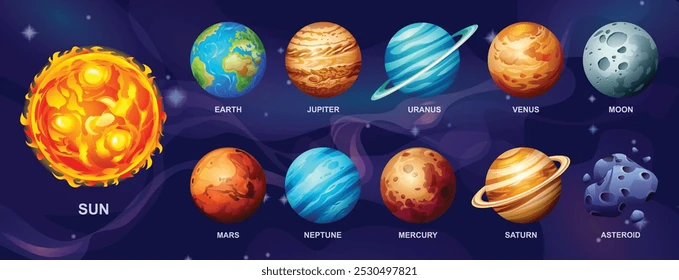
Some planets are accompanied by natural satellites (moons) or ring systems, which influence their dynamics and appearance:
-
Moons: Earth has one moon; Jupiter has over 90. Moons can affect tides, rotational stability, and geological activity.
-
Rings: Composed of ice and rock particles, rings are most prominent around Saturn but also exist around Jupiter, Uranus, and Neptune.
These features demonstrate the complexity and diversity of planetary systems.
Planetary Classification Challenges
Defining a planet is not without controversy. Some challenges include:
-
Clearing the Orbit: Objects like Pluto raise debates about whether orbital dominance should be a defining criterion.
-
Exoplanets: Planets orbiting other stars may have vastly different characteristics, complicating the definition.
-
Rogue Planets: Planets not orbiting any star challenge the traditional orbit-based definition.
Astronomers continue to refine definitions to accommodate new discoveries, ensuring the concept of a planet remains scientifically meaningful.
Conclusion
A planet is a fascinating and complex celestial object, defined not just by orbiting a star but also by its size, shape, and gravitational influence. From the rocky terrestrial planets to the massive gas giants, dwarf planets, and distant exoplanets, the diversity of planetary bodies illustrates the richness of our universe. Understanding planets helps scientists study planetary formation, climate, habitability, and the potential for life beyond Earth.
As telescopes and space missions continue to advance, our knowledge of planets will expand, potentially redefining what it means to be a planet. Whether within our Solar System or across the galaxy, planets remain central to our quest to understand the cosmos and our place within it.
Read Also: Keep your face towards the sunshine and shadows will fall behind you
Watch Also: https://www.youtube.com/@TravelsofTheWorld24






Leave a Reply