

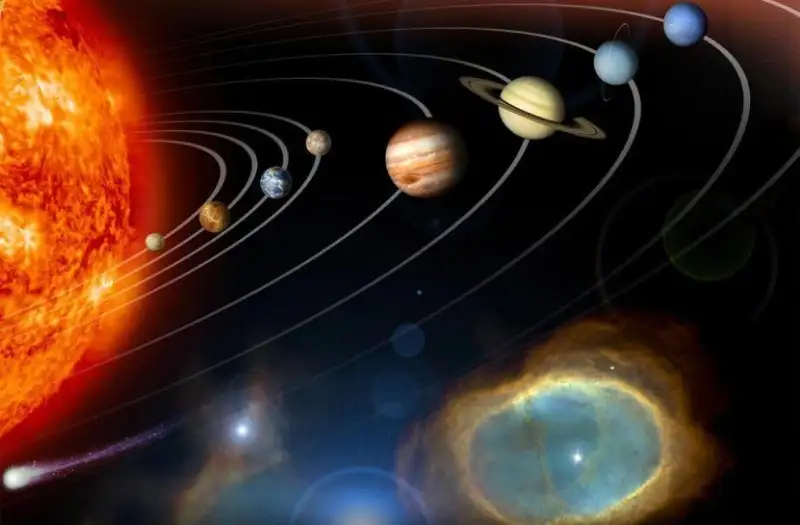
Pluto was considered the ninth planet in our Solar System, a small, icy world orbiting the Sun at the outer edges of the planetary neighborhood. Discovered in 1930 by astronomer Clyde Tombaugh, Pluto captured the imagination of scientists, students, and the public alike. Its demotion to a “dwarf planet” in 2006 by the International Astronomical Union (IAU) sparked controversy, debate, and even outrage, fundamentally changing how we classify planets. This pivotal decision not only lowered the official planet count in our Solar System but also exposed the complexities and inconsistencies in astronomical classification.
Discovery of Pluto
Pluto was discovered at the Lowell Observatory in Arizona after a systematic search for a ninth planet, originally hypothesized to explain irregularities in Neptune and Uranus’s orbits. Tombaugh identified Pluto as a faint, moving object against the backdrop of distant stars.
-
Distance from the Sun: About 5.9 billion kilometers (3.7 billion miles).
-
Orbital Period: 248 Earth years.
-
Physical Characteristics: Small, icy, and rocky, with a diameter of about 2,377 kilometers (1,477 miles).
Initially hailed as the ninth planet, Pluto was celebrated for expanding the boundaries of our Solar System and challenging scientists to explore beyond Neptune.
The Growing Questions About Pluto
As telescope technology advanced, astronomers discovered several other objects in the Kuiper Belt, a region beyond Neptune populated with icy bodies. Some of these objects, such as Eris, Haumea, and Makemake, were similar in size to Pluto.
This raised key questions:
-
If Pluto is a planet, should these other Kuiper Belt Objects also be classified as planets?
-
How do we define what a planet truly is?
These questions became pressing as more trans-Neptunian objects (TNOs) were discovered, each challenging the notion of Pluto as a unique planet.
The 2006 IAU Definition
In response to the growing ambiguity, the IAU held a historic meeting in 2006 to establish a formal definition of a planet. According to the IAU, a celestial body must meet three criteria to be classified as a planet:
-
Orbit the Sun: The object must revolve around the Sun.
-
Sufficient Mass for a Round Shape: Gravity must pull the object into a nearly spherical shape.
-
Cleared Its Orbital Neighborhood: The object must dominate its orbit, removing smaller debris.
Pluto meets the first two criteria but fails the third, as it shares its orbital region with other Kuiper Belt Objects. Consequently, Pluto was reclassified as a “dwarf planet”, reducing the number of official planets in our Solar System from nine to eight.
Characteristics of Pluto
Even though Pluto is no longer a planet by IAU standards, it remains a fascinating world:
-
Atmosphere: Pluto has a thin atmosphere primarily of nitrogen, with traces of methane and carbon monoxide, which expands as it approaches the Sun.
-
Surface: Its surface is icy and varied, featuring mountains, plains, and valleys. NASA’s New Horizons mission in 2015 revealed detailed images of the famous Tombaugh Regio, or “heart-shaped” region.
-
Moons: Pluto has five known moons: Charon, Styx, Nix, Kerberos, and Hydra, with Charon being the largest, almost half Pluto’s size.
-
Temperature: Extremely cold, averaging around -229°C (-380°F).
Pluto’s complex geology, atmosphere, and moons demonstrate that planetary classification does not capture the full diversity of celestial bodies.
Why Pluto’s Demotion Matters
Pluto’s reclassification has implications far beyond semantics:
1. Scientific Clarity
A formal definition ensures consistency in research, allowing scientists to categorize and study celestial bodies systematically. Distinguishing planets from dwarf planets helps refine planetary formation models and understand Solar System evolution.
2. Education and Public Perception
The demotion of Pluto sparked widespread debate and media coverage, highlighting how scientific decisions impact public perception. Pluto remains iconic in culture, showing that scientific classification does not diminish public interest or affection.
3. Kuiper Belt Research
Pluto’s reclassification highlighted the importance of the Kuiper Belt, encouraging further exploration of trans-Neptunian objects. Understanding these distant bodies provides insight into the early Solar System and planetary formation.
Other Dwarf Planets
Pluto is not alone in the dwarf planet category. Other notable examples include:
-
Eris: Slightly smaller than Pluto but more massive, discovered in 2005.
-
Haumea: Known for its elongated shape and fast rotation.
-
Makemake: Another large Kuiper Belt Object with a bright surface.
-
Ceres: Located in the asteroid belt between Mars and Jupiter, it was the first dwarf planet discovered (1801).
Dwarf planets share many characteristics with full-fledged planets, yet they do not dominate their orbits, distinguishing them within the classification system.
The Debate Continues
Despite the IAU’s decision, the debate over Pluto’s status continues:
-
Pro-Pluto Arguments: Many argue that Pluto meets all criteria for a planet except orbital dominance, which may be an arbitrary measure. Cultural attachment and public interest also fuel arguments for planetary status.
-
Scientific Arguments: Astronomers emphasize the need for a clear, objective definition. Orbital clearing is a measurable, scientific criterion that distinguishes planets from smaller bodies.
Some scientists propose geophysical definitions, focusing on intrinsic properties like mass, shape, and composition rather than orbital dominance. This approach would include Pluto, dwarf planets, and even rogue planets.
Cultural Impact
Pluto’s demotion resonated far beyond the scientific community:
-
Education: Textbooks were rewritten, sparking debates in classrooms worldwide.
-
Media and Pop Culture: Pluto remains a beloved character in cartoons, films, and literature.
-
Public Engagement: The controversy increased public interest in astronomy and planetary science, showing how scientific debates can inspire curiosity.
Even if it is no longer officially a planet, Pluto continues to hold a special place in the public imagination.
Future Exploration
Pluto is not just a distant curiosity; it is a gateway to understanding the outer Solar System:
-
New Horizons Mission: Provided high-resolution images and data about Pluto’s surface, atmosphere, and moons.
-
Kuiper Belt Studies: Exploration of Kuiper Belt Objects continues to shed light on the early Solar System.
-
Exoplanet Research: Studying distant icy bodies helps astronomers understand similar objects in other star systems.
Future missions may uncover even more dwarf planets, reinforcing the need for adaptable and inclusive planetary definitions.
Lessons Learned
The story of Pluto teaches several important lessons about science and discovery:
-
Science Evolves: Definitions change as our knowledge expands. Pluto’s reclassification reflects the dynamic nature of science.
-
Classification Matters: Clear, consistent categories help scientists study complex systems and communicate findings.
-
Public Engagement is Valuable: Controversies like Pluto’s status can inspire public interest and support for space exploration.
-
Diversity in the Solar System: Pluto is a reminder that our Solar System is more varied and complex than simple planetary counts suggest.
Pluto may have lost its planetary title, but it remains central to understanding our cosmic neighborhood.
Conclusion
The demotion of Pluto marked a significant shift in astronomy, reducing the Solar System’s planet count from nine to eight. While the IAU definition brought scientific clarity, it also sparked debate, cultural discussion, and ongoing research into dwarf planets and the Kuiper Belt. Pluto continues to captivate scientists and the public alike, proving that planetary classification is more than a label—it’s a window into the universe’s complexity.
As our understanding of the Solar System and exoplanets grows, the debate over Pluto and other celestial bodies will likely continue. What remains clear is that Pluto’s story, from its discovery to its demotion, highlights the evolving nature of science and the enduring fascination of our universe. Whether officially a planet or a dwarf planet, Pluto will always hold a place in human imagination and scientific exploration.
Read Also: Keep your face towards the sunshine and shadows will fall behind you
Watch Also: https://www.youtube.com/@TravelsofTheWorld24













Leave a Reply