
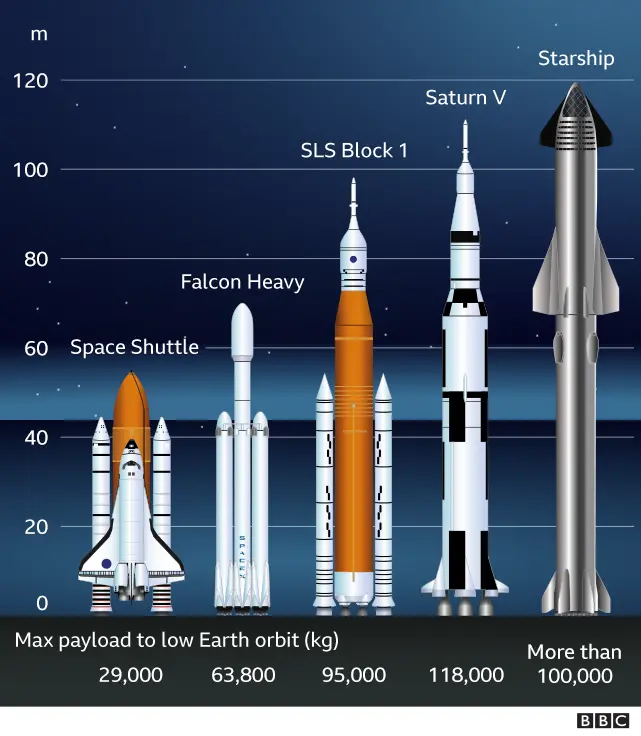
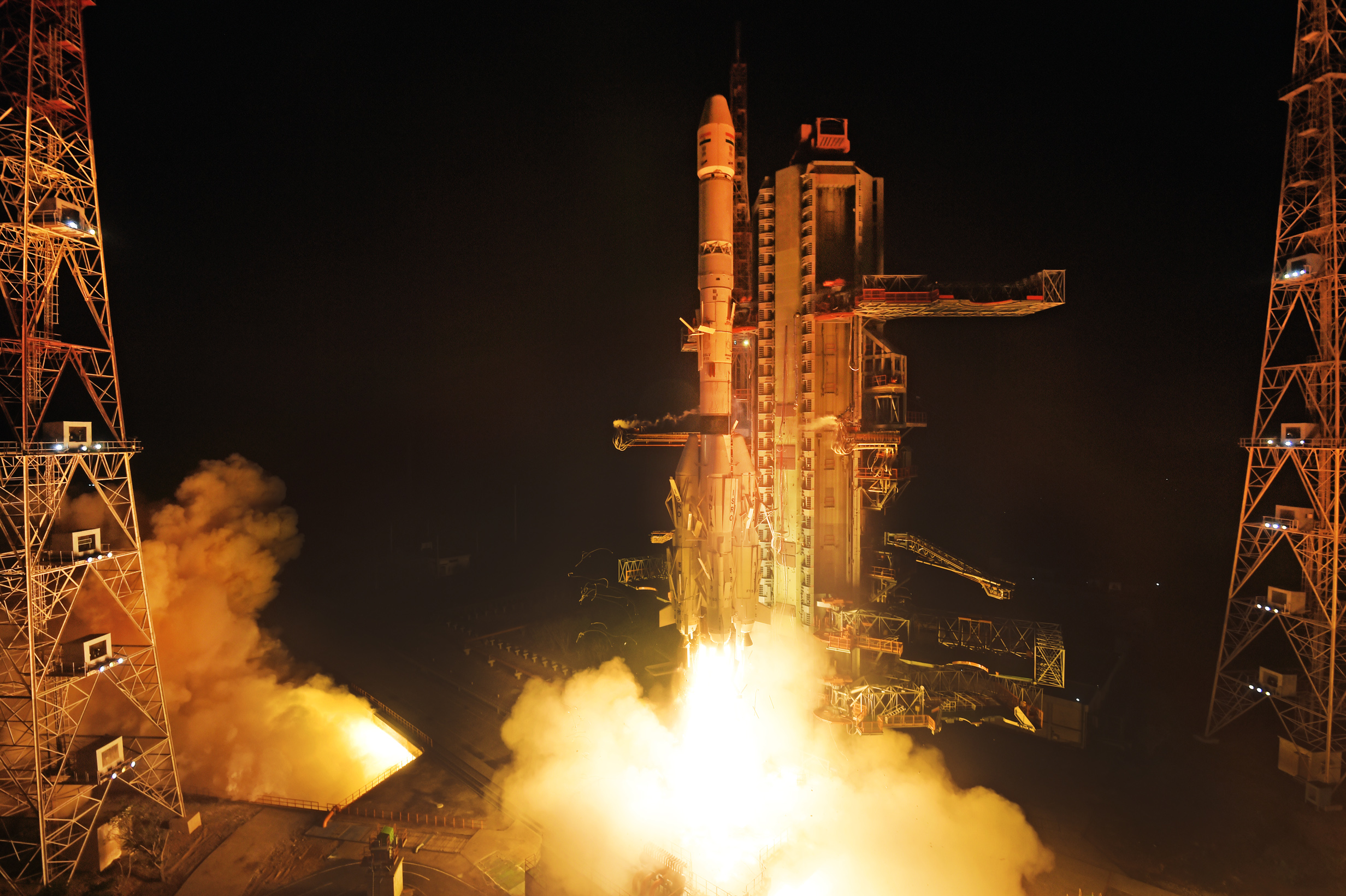
NASA has unveiled its Space Launch System (SLS), the most powerful rocket in its history, marking a historic milestone in human space exploration. This gigantic launch vehicle represents the culmination of years of engineering, technological innovation, and international collaboration, and it is designed to carry astronauts and cargo to the Moon and beyond.
The debut of the SLS sets the stage for the Artemis program, which aims to return humans to the lunar surface and lay the groundwork for future Mars missions. This article explores the SLS’s design, mission objectives, technological innovations, and the broader implications of this monumental achievement.
The Space Launch System: A New Giant in Rocketry
The SLS is a super-heavy-lift rocket built to transport astronauts aboard the Orion spacecraft, as well as large cargo and equipment needed for long-duration missions. Key specifications include:
-
Height: 98 meters (322 feet), taller than the Statue of Liberty
-
Lift capacity: Up to 130 metric tons to low Earth orbit
-
Thrust at liftoff: More than 8.8 million pounds
-
Crew and cargo: Designed to carry both astronauts and supplies for deep-space missions
By combining unprecedented power with precision engineering, the SLS surpasses any rocket previously flown by NASA, positioning the agency for sustained lunar exploration.
Key Components of the SLS
The SLS integrates multiple advanced systems to ensure maximum performance and reliability:
1. Core Stage
-
Houses four RS-25 engines, repurposed from the Space Shuttle program
-
Contains liquid hydrogen and liquid oxygen fuel tanks
-
Provides main thrust during the initial ascent
2. Solid Rocket Boosters (SRBs)
-
Two massive boosters supply additional thrust for liftoff
-
Derived from Shuttle-era technology, redesigned for enhanced lift and safety
-
Crucial for overcoming Earth’s gravity in the first two minutes of flight
3. Interim Cryogenic Propulsion Stage (ICPS)
-
Sends the spacecraft on a trajectory toward lunar orbit
-
Uses liquid hydrogen and oxygen for high-efficiency propulsion
-
Allows precise orbital insertion and course corrections
4. Orion Spacecraft
-
Designed for human spaceflight beyond low Earth orbit
-
Equipped with life support, navigation, and safety systems
-
Capable of returning astronauts safely to Earth after lunar missions
The Artemis Program and the Role of SLS
The SLS is central to NASA’s Artemis program, which aims to:
-
Return humans to the Moon for the first time since Apollo
-
Land the first woman and next man on the lunar surface
-
Establish a sustainable lunar presence through habitats and the Gateway orbital platform
-
Prepare for future crewed missions to Mars
SLS’s unmatched lift capacity enables Artemis missions to transport both astronauts and large amounts of cargo, including lunar landers and research equipment.
Debut Mission: Artemis I
The SLS made its first flight during the Artemis I mission, an uncrewed test flight:
-
Objective: Test the integrated performance of SLS and Orion in deep-space conditions
-
Trajectory: Lunar flyby and return to Earth
-
Duration: Several weeks, providing critical data on propulsion, navigation, and reentry
The success of Artemis I confirmed SLS’s readiness for crewed missions, demonstrating reliability, safety, and performance.
Technological Innovations in SLS
The SLS incorporates cutting-edge technologies that enhance efficiency, safety, and performance:
-
RS-25 Engines: High-efficiency liquid-fuel engines with longer burn times
-
Solid Rocket Boosters: Provide additional thrust for launch and improved stability
-
Cryogenic Propellant Systems: Maintain liquid hydrogen and oxygen under extreme conditions
-
Advanced Avionics: Computer-guided navigation for precise trajectory and orbital insertion
These technologies enable SLS to carry larger payloads farther than any previous NASA rocket.
Safety and Redundancy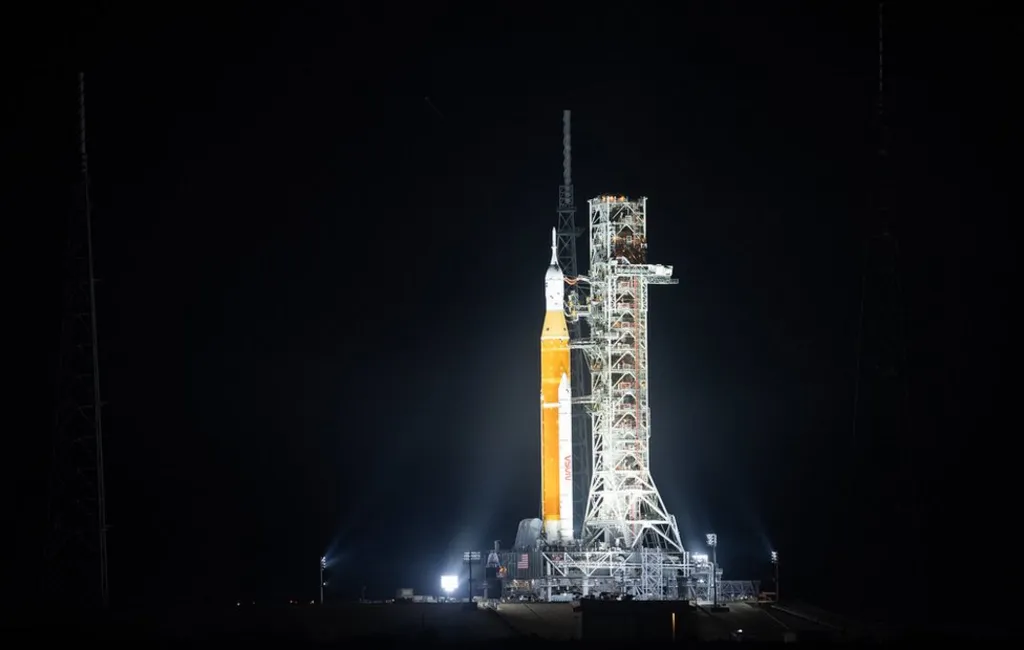
Safety is paramount in deep-space missions. SLS features:
-
Multiple redundant systems to prevent single-point failures
-
Abort protocols to protect astronauts during launch
-
Extensive engine and booster testing
-
Real-time telemetry monitoring from Mission Control to detect anomalies
These measures ensure astronauts and cargo remain safe throughout the mission.
International Collaboration
The Artemis program involves international partnerships:
-
ESA (European Space Agency): Provides service modules for Orion
-
CSA (Canadian Space Agency) and JAXA (Japan Aerospace Exploration Agency): Contribute robotics and logistics support
-
Collaboration ensures shared expertise, resources, and enhanced mission success rates
International involvement reflects the global nature of modern space exploration.
Impact on Human Space Exploration
SLS enables long-duration lunar missions with:
-
Larger crews and cargo capacity
-
Construction of lunar habitats and infrastructure
-
Preparation for future Mars exploration
-
Opportunities for scientific experiments and resource utilization studies
It represents a leap forward in NASA’s ability to conduct sustained missions beyond Earth orbit.
Economic and Commercial Implications 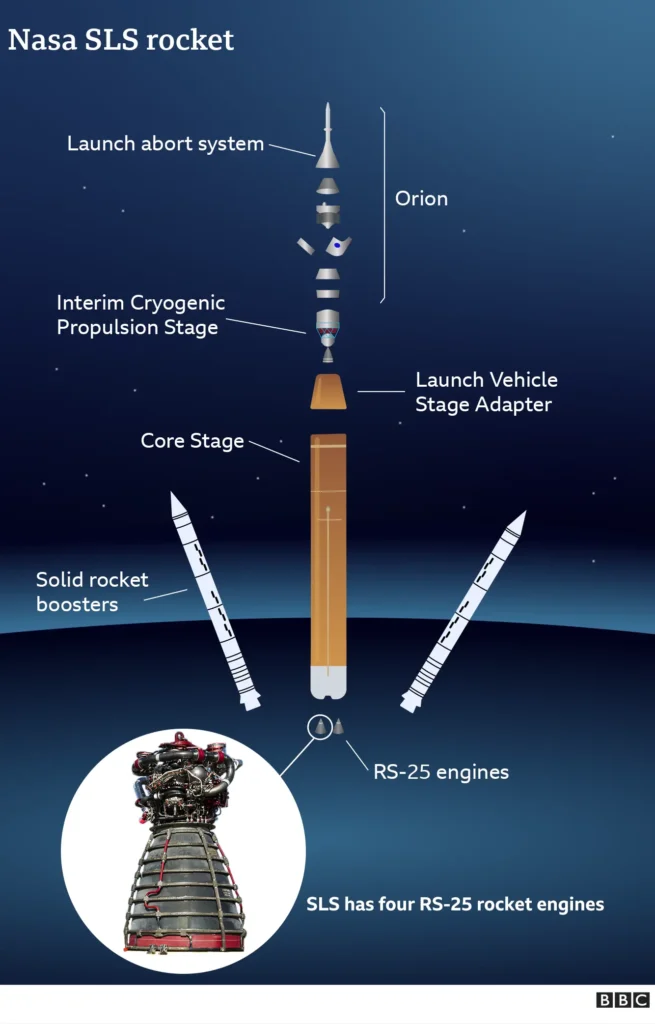
The SLS also has significant effects on the space economy:
-
Stimulates manufacturing, engineering, and STEM job creation
-
Encourages private-sector innovation and collaboration
-
Supports commercial lunar logistics and research partnerships
By combining government and private-sector efforts, SLS strengthens the broader space industry.
Environmental Considerations
NASA has addressed environmental concerns:
-
Efficient propellant use reduces emissions
-
Careful trajectory planning minimizes space debris
-
Incorporates reusable technologies where feasible
Balancing performance and environmental responsibility is a key consideration in modern rocket design.
Challenges in Development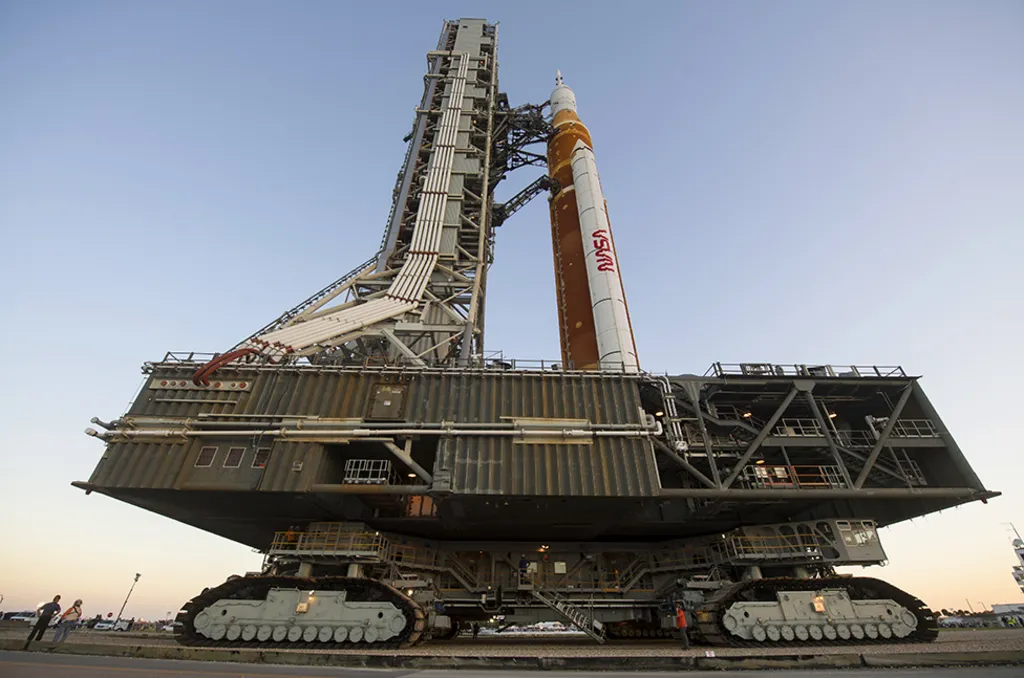
The SLS program overcame multiple challenges:
-
Integrating Shuttle-era engines with new booster designs
-
Managing cryogenic fuel storage and flow under extreme conditions
-
Achieving unprecedented thrust while ensuring safety
-
Coordinating international and domestic manufacturing
These challenges highlight NASA’s engineering expertise and commitment to deep-space exploration.
Public Engagement and Inspiration
The SLS debut captured global attention:
-
Live broadcasts, educational content, and social media coverage
-
Inspires future generations to pursue careers in STEM and space exploration
-
Reinforces the idea that space exploration is a shared human endeavor
Future Missions: Artemis II and III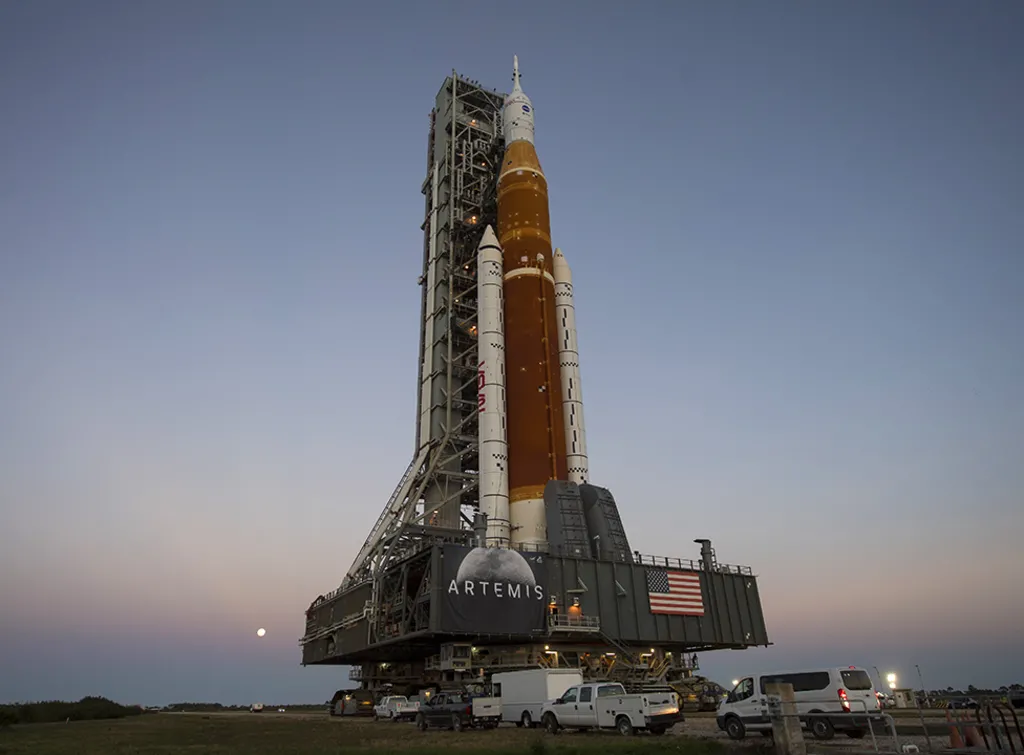
The success of SLS sets the stage for upcoming missions:
-
Artemis II: First crewed lunar flyby to test life support and navigation
-
Artemis III: Crewed lunar landing, including the first woman on the Moon
-
Subsequent missions aim to establish sustainable lunar operations and prepare for Mars
SLS will continue evolving with upgraded engines, boosters, and payload capabilities.
The Legacy of SLS
SLS represents a new era of human spaceflight:
-
Surpasses Saturn V in flexibility and adaptability
-
Combines proven legacy technology with modern innovation
-
Ensures NASA maintains leadership in deep-space exploration
Its debut is a historical milestone, marking humanity’s return to the Moon after decades and opening the door to interplanetary exploration.
Conclusion
NASA’s giant new SLS Moon rocket is not just a launch vehicle—it is a symbol of human ambition, technological prowess, and international cooperation. Its debut lays the foundation for Artemis missions, lunar exploration, and future journeys to Mars, demonstrating that returning to the Moon is achievable.
With unparalleled lift capacity, advanced safety systems, and state-of-the-art technology, SLS represents the future of human space exploration. The rocket’s successful debut inspires the world and underscores humanity’s unwavering drive to explore the cosmos.
Read Also: The Race to 300 mph: Will Hennessey or Koenigsegg Break the Speed Record in 2025?
Watch Also: https://www.youtube.com/@TravelsofTheWorld24





Leave a Reply