
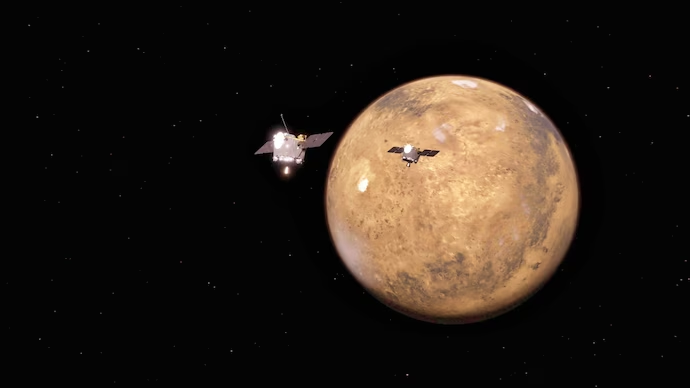
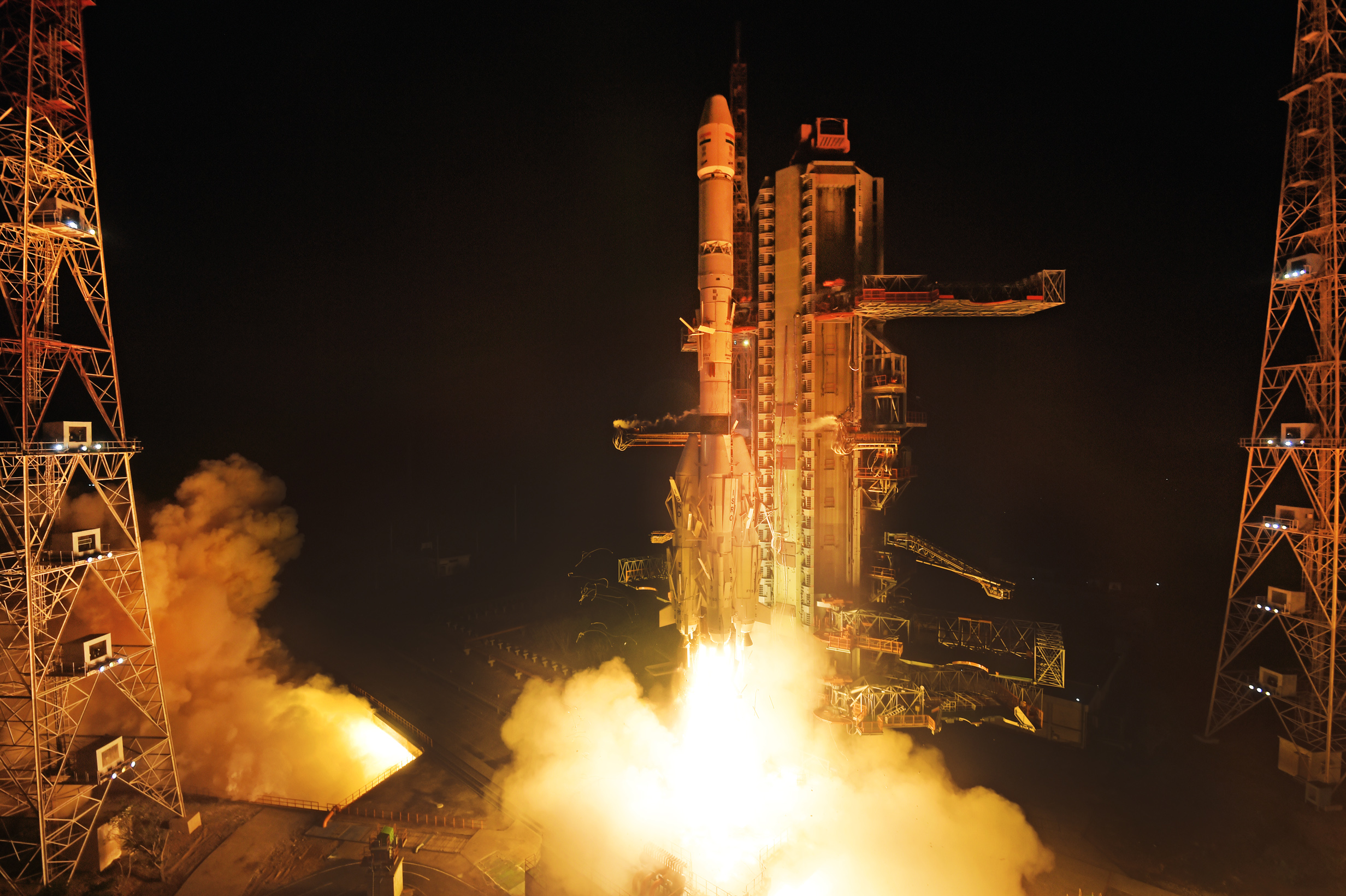
NASA is gearing up for one of the most exciting planetary science missions of the decade: the launch of twin ESCAPADE spacecraft, two small but powerful probes designed to unravel the mysteries of Mars’ magnetosphere. While the Red Planet has been explored by orbiters, landers, and rovers for decades, its magnetic environment remains one of the least understood aspects of its planetary system. With ESCAPADE, NASA aims to change that—and potentially rewrite what we know about how Mars lost its atmosphere and became the cold, dry world we see today.
ESCAPADE, which stands for Escape and Plasma Acceleration and Dynamics Explorers, is a dual-spacecraft mission consisting of two nearly identical satellites named Blue and Gold. Although small in size, these spacecraft are packed with advanced scientific instruments that will allow researchers to study the Red Planet’s plasma environment in unprecedented detail. The mission is set to launch soon as part of NASA’s growing use of small, cost-effective spacecraft designed to deliver big science at a fraction of traditional mission costs.
A Mission With a Purpose: Understanding Mars’ Magnetic Mystery
For decades, scientists have wondered how Mars transformed from a warm, wet planet with rivers, lakes, and possibly oceans into the barren desert world we see today. One of the leading theories suggests that Mars lost most of its atmosphere to space billions of years ago after its global magnetic field disappeared. Without a protective magnetic shield like Earth’s, the planet was exposed to constant blasts of solar wind—streams of charged particles from the Sun capable of stripping away atmospheric gases.
NASA’s MAVEN mission has already provided key insights into this atmospheric loss, but ESCAPADE aims to go deeper by examining the magnetic and plasma processes that still shape the Martian atmosphere today. By flying two spacecraft simultaneously, scientists can observe how the solar wind interacts with Mars in real time, something no previous mission has been able to do.
Why Two Spacecraft Instead of One?
The dual-spacecraft design is a major strength of the ESCAPADE mission. By having two identical probes flying in separate but coordinated orbits, scientists can compare conditions at different points around the planet at the exact same moment. This is crucial because the Martian magnetosphere is not static—it changes rapidly as the solar wind fluctuates.
The two spacecraft will map:
-
Variations in Mars’ magnetic fields
-
Flows of charged particles through the upper atmosphere
-
How solar wind influences atmospheric escape
-
Plasma structures that form around the planet during solar storms
-
Interactions between crustal magnetic fields and the solar environment
In essence, Blue and Gold will act like two weather stations orbiting Mars, providing synchronized data that allow researchers to build a 3D understanding of the planet’s magnetic system.
The Instruments Onboard ESCAPADE
Each spacecraft carries three major scientific instruments:
1. EMAG — ElectroMagnetometer
This instrument measures magnetic fields surrounding Mars. Since Mars no longer has a global magnetic field, EMAG will focus on studying:
-
Remnant crustal magnetic hotspots
-
The induced magnetosphere created by solar wind interactions
-
Fluctuations caused by solar storms and coronal mass ejections
These measurements will show how localized magnetic fields still influence atmospheric escape.
2. EESA — ElectroStatic Analyzer
EESA measures ion and electron populations to determine how plasma moves around Mars. It will track:
-
Solar wind particles entering the atmosphere
-
Ionized particles escaping into space
-
How energetic particles accelerate due to magnetic processes
Understanding this particle motion is key to determining how Mars continues to lose atmospheric gases today.
3. EUVM — Extreme-Ultraviolet Monitor
This sensor measures the Sun’s extreme ultraviolet radiation, which plays a major role in heating and expanding the Martian atmosphere. EUV radiation can energize particles enough for them to escape Mars’ gravity.
With these instruments combined, ESCAPADE will deliver a complete picture of how the Martian atmosphere behaves under the influence of the Sun.
How the Spacecraft Will Travel to Mars
NASA is using a small spacecraft platform built by Rocket Lab, known for its lightweight and efficient interplanetary systems. The twin satellites will launch together, travel through interplanetary space side-by-side, and then separate upon reaching Mars.
Once in Martian orbit, Blue and Gold will maneuver into elliptical paths that bring them close to the upper atmosphere before swinging far away into Mars’ magnetotail. This orbit design allows them to observe every major region of the magnetosphere.
The spacecraft will then gradually adjust their positions to maintain a balanced separation distance—close enough to gather correlated data, but far enough to provide different perspectives.
Why the ESCAPADE Mission Matters
Although Mars is one of the most studied planets in the solar system, its plasma environment remains surprisingly mysterious. The mission’s findings may help answer some of the biggest questions in planetary science:
1. How Fast Is Mars Still Losing Its Atmosphere?
Even today, atmospheric particles continue to escape into space. ESCAPADE will measure this escape more accurately than any previous mission.
2. Did Solar Wind Transform Mars?
Researchers believe the solar wind played a major role in turning Mars from a warm, wet planet into a cold desert. ESCAPADE will quantify that influence.
3. How Will Human Missions Be Affected?
Understanding the plasma environment helps engineers design better protection for future astronauts, satellites, and communication systems around Mars.
4. Can We Compare It to Exoplanets?
Studying Mars’ atmospheric loss helps scientists understand the habitability of planets around other stars—especially those close to their sun’s radiation.
A Low-Cost Mission With High-Value Science
One of the most significant aspects of ESCAPADE is its cost efficiency. Instead of spending hundreds of millions of dollars on a single large spacecraft, NASA chose to use:
-
Small satellites
-
Commercial spacecraft technology
-
A streamlined development process
This allows ESCAPADE to deliver groundbreaking science at a fraction of the cost of traditional missions. It also demonstrates NASA’s growing shift toward nimble, innovative, and faster-to-launch spacecraft.
What Happens After Arrival?
Once the spacecraft reach Mars and calibrate their instruments, the science phase will officially begin. Expected mission highlights include:
• Monitoring Solar Storms in Real Time
During powerful solar events, ESCAPADE will watch how the magnetosphere compresses and how rapidly atmospheric particles are stripped away.
• Mapping Crustal Magnetic Hotspots
Some parts of Mars retain strong local magnetic fields from billions of years ago. These areas may act as “mini-magnetospheres,” protecting the atmosphere underneath.
• Studying Day-to-Night Plasma Movement
Mars experiences significant changes between its sunlit side and its dark side. The twin spacecraft will observe how plasma flows across these regions.
• Building a Complete 3D Model of Mars’ Magnetic System
Using synchronized data, scientists will assemble the first-ever full model of Mars’ magnetosphere.
A New Era of Mars Exploration
ESCAPADE adds an important layer to humanity’s understanding of Mars. While rovers explore the surface and orbiters map the planet from above, ESCAPADE focuses on the invisible environment that surrounds Mars—one that plays a crucial role in:
-
Atmospheric evolution
-
Climate history
-
Potential habitability
-
Future human exploration
By combining small-satellite innovation with advanced plasma science, NASA is opening new doors for planetary research.
Conclusion
The launch of NASA’s twin ESCAPADE spacecraft marks a major milestone in Mars exploration. These compact probes will conduct the most detailed study ever of the Martian magnetosphere, uncovering how the Sun continues to shape the planet’s atmosphere today. Their synchronized measurements will provide new insights into atmospheric escape, magnetic interactions, and the long-term evolution of Mars.
Read Also: Keep your face towards the sunshine and shadows will fall behind you
Watch Also: https://www.youtube.com/@TravelsofTheWorld24





Leave a Reply