
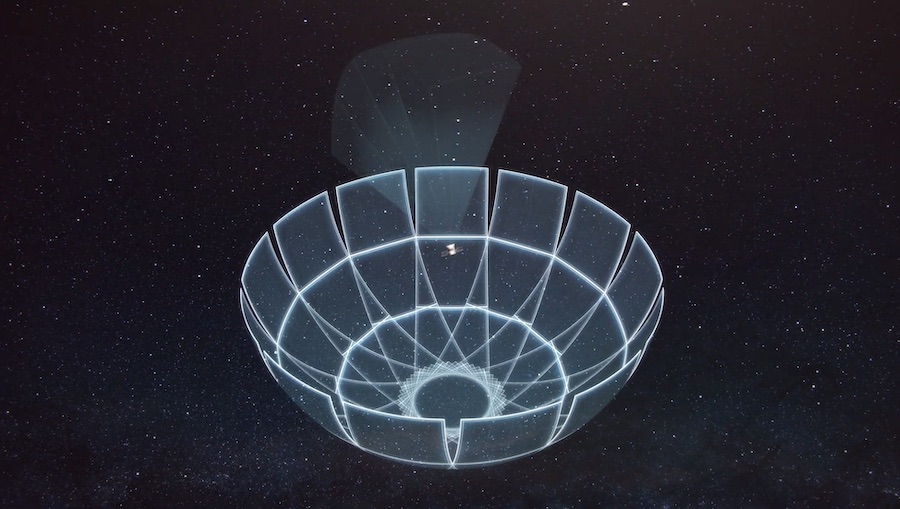
NASA has announced an extension of the TESS (Transiting Exoplanet Survey Satellite) mission, citing its remarkable success in detecting new exoplanets and the wealth of data generated during its ongoing all-sky survey. Originally launched in 2018, TESS was designed to monitor bright stars across nearly the entire sky to identify exoplanets using the transit method, where a planet passes in front of its host star, causing a small but measurable dip in brightness.
With this extension, TESS can continue its survey for several more years, providing astronomers with critical information to understand planetary systems, their formation, and their potential habitability.
TESS Mission Overview
TESS is a space-based telescope with a primary goal of discovering exoplanets orbiting nearby, bright stars:
-
Launch Date: April 18, 2018
-
Orbit: Highly elliptical 13.7-day orbit around Earth, allowing long, uninterrupted observations
-
Instruments: Four wide-field cameras capable of monitoring millions of stars
-
Primary Objective: Detect small dips in stellar brightness caused by transiting exoplanets
Unlike the Kepler mission, which focused on a single patch of sky, TESS’s all-sky survey strategy enables it to detect planets around brighter and closer stars, making follow-up observations more feasible with ground-based telescopes and the upcoming James Webb Space Telescope (JWST).
Midway Through the All-Sky Survey
NASA reports that TESS is now roughly halfway through its planned all-sky survey, which is organized in sectors:
-
Each sector covers a 24° x 96° region of the sky
-
TESS observes each sector for 27 days, capturing light curves for thousands of stars
-
The mission aims to survey over 85% of the sky during its primary and extended missions
The first half of the survey has already yielded thousands of planet candidates, including Earth-sized planets, super-Earths, and mini-Neptunes, significantly expanding our knowledge of the diversity of planetary systems.
Scientific Achievements So Far
TESS’s impact on exoplanet science has been substantial:
-
Exoplanet Discoveries:
-
Over 5,000 candidate exoplanets identified
-
Hundreds of confirmed planets, some of which are in their stars’ habitable zones
-
-
Stellar Studies:
-
Continuous light curves enable detailed studies of stellar activity, rotation, and flares
-
Helps astronomers understand how star variability affects planetary environments
-
-
Follow-Up Opportunities:
-
TESS targets are generally bright and nearby, facilitating follow-up with spectroscopic and imaging instruments
-
Supports atmospheric characterization of exoplanets using JWST and ground-based telescopes
-
The mission’s high-precision photometry has already transformed our understanding of planetary formation and system architecture.
Reasons for Mission Extension
NASA’s decision to extend TESS is based on several factors:
-
Abundance of Targets: Many stars remain unobserved or partially observed, providing additional opportunities for planet detection
-
Operational Health: TESS continues to operate well beyond its design life, with cameras and instruments functioning nominally
-
Scientific Value: Extended operations increase the chances of detecting long-period planets, including those similar to Earth in their orbit
-
Community Demand: The astronomical community highly values TESS data for follow-up research and collaboration
The extension allows TESS to continue filling gaps in our understanding of nearby planetary systems, particularly in regions not covered by Kepler or ground-based surveys.
Technology Behind TESS
TESS relies on advanced technology to achieve its goals:
-
Wide-Field Cameras: Four CCD cameras cover a total 24° x 96° field of view, enabling simultaneous monitoring of thousands of stars
-
Precision Photometry: Measures tiny brightness changes as small as 0.01%, sufficient to detect Earth-sized planets around small stars
-
Highly Elliptical Orbit: Allows continuous observation for nearly two weeks without interruption from Earth or Moon shadows
-
Autonomous Data Collection: Captures and stores massive amounts of light curve data, which is then transmitted to NASA’s ground stations for analysis
These features make TESS uniquely suited to detect transiting exoplanets around bright, nearby stars, complementing other missions like Kepler and JWST.
Collaboration and Data Sharing
TESS operates as a public science mission, providing open access to its data:
-
Researchers worldwide can analyze TESS light curves to identify planet candidates
-
Citizen scientists contribute via platforms like Planet Hunters, discovering additional planets and phenomena
-
Data supports multi-disciplinary studies, including stellar physics, planetary atmospheres, and astrobiology
This collaborative approach enhances the mission’s scientific return and fosters global engagement in space science.
Looking Ahead: TESS’s Extended Mission Goals
During its extended mission, TESS aims to:
-
Complete the All-Sky Survey: Cover remaining sectors and revisit previously observed regions
-
Search for Long-Period Planets: Extend observation periods to identify planets with orbits similar to Earth or Mars
-
Monitor Known Exoplanets: Refine orbital parameters and detect potential additional planets in known systems
-
Support JWST and Ground-Based Observations: Provide precise transit timing for follow-up studies
-
Study Stellar Variability: Continue monitoring stars for flaring activity and rotation studies, crucial for understanding habitability
These goals ensure TESS remains a key contributor to exoplanet science for years to come.
Impact on Exoplanet Research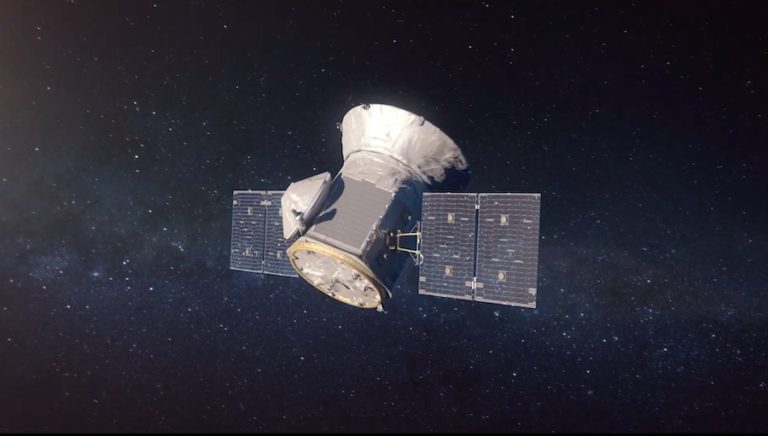
TESS is shaping the field of exoplanetary science in several ways:
-
Expanding the catalog of known planets around bright, nearby stars
-
Enabling detailed follow-up observations for atmospheric studies and habitability analysis
-
Complementing missions like JWST and CHEOPS for multi-wavelength characterization
-
Encouraging cross-disciplinary research, including planetary formation, dynamics, and stellar physics
Its extended mission will likely reveal hundreds of additional exoplanets, including those in the habitable zone, advancing the search for potentially life-supporting worlds.
Public Engagement and Inspiration
TESS also plays an important role in inspiring public interest:
-
Live updates and data releases engage students and enthusiasts
-
Citizen science projects allow the public to participate in exoplanet discovery
-
High-quality imagery and animations of planetary systems capture imaginations worldwide
The mission demonstrates how space exploration can connect science and society, fostering curiosity and education.
Conclusion
The extension of NASA’s TESS mission reflects its success and ongoing potential in exoplanet research. Halfway through its all-sky survey, TESS has already revolutionized our understanding of planetary systems, discovering thousands of candidate exoplanets and providing invaluable data for scientists worldwide.
With continued observations, TESS will:
-
Complete its all-sky survey
-
Detect long-period and Earth-like planets
-
Support atmospheric and follow-up studies
-
Contribute to stellar research and habitability analysis
TESS’s extended mission ensures that NASA remains at the forefront of planet-hunting efforts, inspiring new discoveries and expanding our knowledge of worlds beyond our solar system.
The mission highlights the power of advanced technology, global collaboration, and public engagement in exploring the universe and pursuing the enduring question: Are we alone in the cosmos?
Read Also: Keep your face towards the sunshine and shadows will fall behind you
Watch Also: https://www.youtube.com/@TravelsofTheWorld24







Leave a Reply