
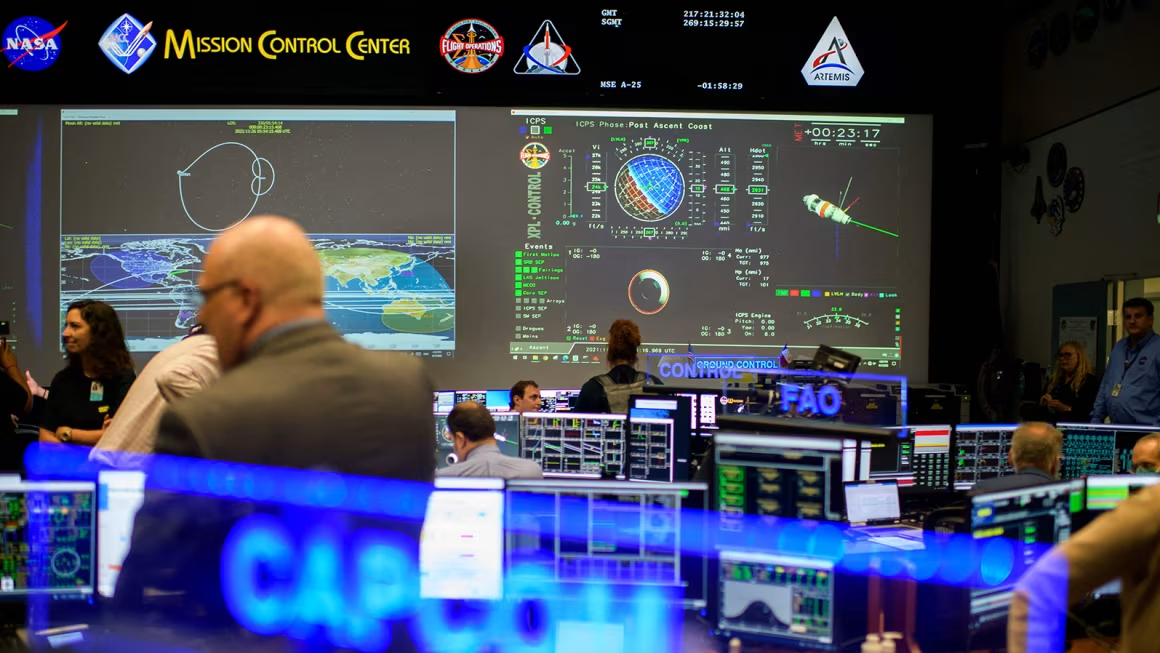
NASA recently experienced a brief disruption in communication with the International Space Station (ISS) due to a power outage at Mission Control in Houston, Texas. While the incident was temporary and did not pose any danger to the astronauts onboard, it highlights the complexities and challenges of managing a spacecraft orbiting hundreds of kilometers above Earth. The agency swiftly restored communication and confirmed that all systems aboard the station were functioning normally.
This article examines the incident in detail, the systems affected, and the protocols NASA follows to ensure the safety and continuity of operations aboard the ISS.
The Incident: What Happened
On the day of the outage, Mission Control in Houston experienced a localized power disruption that briefly interrupted the flow of telemetry and communication signals between Earth and the ISS. As a result:
-
Ground controllers temporarily lost real-time contact with the station
-
Automated backup systems aboard the ISS maintained critical functions
-
Astronauts continued their scheduled activities safely
-
Communication was restored within minutes after backup systems were engaged
NASA described the outage as a routine technical incident, emphasizing that there was no risk to the crew or the station.
The Role of Mission Control
Mission Control Houston is the nerve center for ISS operations, responsible for:
-
Monitoring spacecraft systems
-
Coordinating astronaut activities and experiments
-
Managing orbit adjustments and docking procedures
-
Ensuring communication with international partners
A disruption at Mission Control can momentarily interrupt the flow of information, but the ISS is equipped with redundant systems to maintain operations autonomously.
 How the ISS Remains Safe During Communication Loss
The ISS is designed to withstand temporary communication interruptions. Key features include:
1. Automated Systems
-
Life support systems continue running without manual input
-
Power, temperature, and oxygen levels are maintained
-
Automated navigation and orientation systems prevent drift
2. Backup Communication Channels
-
The station uses multiple communication paths, including Tracking and Data Relay Satellites (TDRS)
-
Astronauts can contact ground control through alternative frequencies
-
Backup systems ensure minimal disruption in mission-critical operations
3. Crew Training
-
Astronauts are trained to operate independently for extended periods without direct ground support
-
Emergency procedures cover communication outages, system anomalies, and medical scenarios
These measures ensure that astronauts remain safe even when temporary outages occur on Earth.
Timeline of the Outage
-
Morning of the incident: Power outage occurs at Mission Control, briefly disrupting communications
-
Immediate response: Controllers switch to backup power systems and alternate communication pathways
-
Minutes later: Real-time contact with the ISS is restored
-
Post-incident checks: Systems on the station are verified, and normal operations resume
NASA confirmed that all scheduled scientific experiments continued without interruption.
Communication Infrastructure Between Earth and the ISS
The ISS relies on a complex network of communication systems to maintain a constant link with Earth:
-
Tracking and Data Relay Satellites (TDRS) orbit Earth, relaying signals between the ISS and ground stations
-
Primary ground stations like Mission Control Houston and international centers coordinate commands
-
Redundant communication lines allow continued operations if one path fails
This robust infrastructure allows the ISS to remain operational even during temporary outages or technical glitches on Earth.
Impact on Operations and Experiments
Despite the brief communication loss, most activities aboard the ISS were unaffected:
-
Scientific experiments: Automated systems continued data collection
-
Extravehicular activities (spacewalks): None were scheduled during the outage, avoiding risk
-
Routine maintenance: Astronauts continued daily tasks using pre-planned procedures
-
International collaborations: Partners in Russia, Europe, and Japan maintained independent monitoring
NASA’s planning ensures minimal operational impact during short disruptions, emphasizing redundancy and contingency planning.
Lessons Learned
Although the outage was brief, NASA treats every incident as a learning opportunity. Key takeaways include:
-
System Redundancy is Critical: The ISS and Mission Control have multiple backup systems to prevent mission failures.
-
Crew Preparedness: Astronauts are trained to handle communication lapses and maintain operations independently.
-
Rapid Response: Mission Control protocols allow quick restoration of power and communications.
-
International Coordination: Redundant systems across partner nations provide additional safety nets.
Such lessons inform the design of future spacecraft and deep-space missions where communication delays are longer and real-time intervention may not be possible.
Historical Context: Previous Communication Interruptions
NASA has experienced communication disruptions before, including:
-
Satellite relay failures
-
Ground system outages
-
Solar storms affecting signal transmission
In each case, the redundancy and preparedness of both crew and ground teams ensured that safety and mission integrity were never compromised.
Technological Measures to Prevent Future Outages
NASA continually upgrades Mission Control and ISS systems to minimize risks:
-
Dual power grids and backup generators
-
Advanced satellite relay systems with multiple paths to Earth
-
Enhanced monitoring software to detect anomalies instantly
-
Training simulations for crew and controllers for a variety of emergency scenarios
These measures make temporary outages less likely to affect operations, reinforcing NASA’s safety-first approach.
Astronaut Perspective
Astronauts aboard the ISS are trained to remain calm and continue operations during communication lapses:
-
Regular drills simulate loss-of-contact scenarios
-
Crew members rely on pre-programmed checklists for essential functions
-
The recent incident was handled seamlessly, demonstrating the effectiveness of training and onboard systems
Astronauts reported that daily activities were largely uninterrupted and that the incident was a routine technical challenge rather than an emergency.
International Collaboration and Safety
The ISS is operated jointly by NASA, Roscosmos (Russia), ESA (Europe), JAXA (Japan), and CSA (Canada). A communication outage in one country:
-
Activates collaborative backup procedures
-
Allows international partners to monitor and coordinate the station’s status
-
Ensures that scientific operations and crew safety remain uninterrupted
The incident reinforces the importance of global cooperation in space operations.
Public Communication and Transparency
NASA quickly informed the public and media about the outage:
-
Statements clarified that no crew members were in danger
-
Social media updates provided reassurance and details
-
Transparency demonstrates NASA’s commitment to trust and accountability
By proactively sharing information, NASA ensures that public confidence in space operations remains high.
Future Implications
While the outage was minor, it underscores the need for robust infrastructure as space missions become more complex:
-
Deep-space missions to the Moon and Mars will rely on longer, more delayed communications
-
Autonomous systems on spacecraft must handle longer periods without ground intervention
-
Lessons from the ISS outage inform designs for lunar gateways and Martian habitats
This event demonstrates NASA’s proactive approach to addressing potential risks in future exploration.
Conclusion
NASA’s brief loss of contact with the ISS due to a power outage at Mission Control was handled efficiently, with no impact on astronaut safety or mission operations. The incident highlights the importance of:
-
Redundant communication systems
-
Astronaut training for emergency scenarios
-
International collaboration and coordination
-
Transparent public communication
As human space exploration continues to expand, these principles will be critical for ensuring safety, mission success, and public trust. The ISS remains a shining example of resilient technology and careful planning, capable of withstanding unexpected technical challenges while continuing to advance science and discovery in orbit.
Read Also: Keep your face towards the sunshine and shadows will fall behind you
Watch Also: https://www.youtube.com/@TravelsofTheWorld24





Leave a Reply