
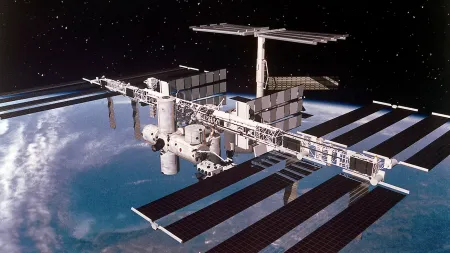
NASA is pioneering new technologies to stream video from space like never before, enabling scientists, educators, and the public to experience life aboard the International Space Station (ISS) and on future lunar missions. Delivering high-quality, near-real-time video from space presents unique challenges due to distance, bandwidth limitations, and signal reliability, but NASA’s latest plans aim to overcome these hurdles using advanced systems and infrastructure.
This article explores NASA’s approach, the technology behind video delivery from space, and the potential implications for exploration, education, and public engagement.
The Need for Space Video Delivery
Streaming video from space is not just for entertainment; it serves multiple critical purposes:
-
Scientific Observation
-
Cameras aboard the ISS capture phenomena such as Earth weather patterns, auroras, and cosmic events
-
High-definition video aids researchers in analyzing changes in the Earth’s climate and environment
-
-
Mission Monitoring
-
Video feeds provide mission control with a visual record of spacecraft and crew operations
-
Enhances safety and operational decision-making
-
-
Education and Outreach
-
Students and the public gain firsthand experience of life in space
-
NASA streams live events, such as spacewalks and experiments, to inspire future generations
-
-
Lunar Exploration
-
Cameras on lunar orbiters, landers, and eventually human missions will stream video back to Earth
-
Enables monitoring of landings, surface exploration, and scientific experiments in real-time
-
Technological Challenges
Streaming video from the ISS or the Moon involves significant technical challenges:
1. Distance and Signal Delay
-
The ISS orbits approximately 420 km (260 miles) above Earth, while the Moon is 384,400 km (238,855 miles) away
-
Signals take longer to travel, creating latency in live broadcasts
2. Bandwidth Limitations
-
High-definition video requires large data transfer rates
-
Limited bandwidth in space communications necessitates efficient compression and transmission methods
3. Reliability and Redundancy
-
Space systems must operate under harsh conditions, including radiation and temperature extremes
-
Redundant systems ensure continuous video transmission even during partial failures
NASA’s Solutions for Video Delivery
NASA is deploying several innovative solutions to enhance video delivery from space:
1. Optical Communications
-
Using laser-based systems instead of traditional radio frequencies
-
Offers much higher bandwidth, allowing high-definition video and large data files to be transmitted efficiently
-
Planned for future lunar missions and deep-space exploration
2. Advanced Compression Techniques
-
Video is compressed onboard spacecraft to reduce file size without sacrificing quality
-
Enables smoother streaming over limited bandwidth connections
3. Dedicated Satellite Relays
-
NASA leverages relay satellites like the Tracking and Data Relay Satellite (TDRS) network
-
These satellites ensure continuous communication between Earth and spacecraft
-
Future missions will expand relay networks to cover lunar surface operations
4. Edge Computing and Onboard Processing
-
Onboard computers preprocess video to remove noise and optimize clarity
-
Reduces the amount of data that needs to be sent to Earth, improving transmission efficiency
Applications for the International Space Station
The ISS is a proving ground for advanced video delivery technologies:
-
Live broadcasts of astronaut activities engage schools, universities, and the public
-
Cameras monitor microgravity experiments, structural elements, and robotic systems
-
Video feeds are integrated into Earth observation programs, helping track environmental changes
By testing these technologies on the ISS, NASA ensures reliability and performance before deploying them on lunar missions.
Applications for Lunar Missions
Streaming video from the Moon requires even more advanced technology:
-
Lunar orbiters and landers will transmit video of surface landings and exploration
-
Astronauts on Artemis missions will provide live feeds of EVA activities, research experiments, and lunar habitats
-
Optical communication networks will minimize latency and maximize data throughput, allowing near-real-time broadcasts
These advancements will allow the public to experience lunar exploration as it happens, promoting engagement and education.
Impact on Science and Exploration
Real-time video delivery has significant benefits for scientific research:
-
Allows instant monitoring of experiments, reducing the need for post-mission analysis
-
Supports collaborative international research, as scientists worldwide can observe experiments remotely
-
Enhances safety by providing mission control with immediate visual data for critical operations
Video from space also documents milestones in exploration, preserving history and inspiring new research initiatives.
Public Engagement and Education
NASA’s plans extend beyond scientific utility, focusing on public outreach:
-
Live streams of launches, spacewalks, and lunar missions engage millions of viewers
-
Educational programs use video content to teach physics, astronomy, and engineering concepts
-
Real-time video fosters interest in STEM careers, particularly among young students
By delivering high-quality video from space, NASA strengthens global interest in exploration and encourages the next generation of scientists and engineers.
Future Innovations
NASA continues to explore cutting-edge solutions for space video delivery:
-
Artificial Intelligence (AI) for real-time video enhancement and anomaly detection
-
Autonomous video switching systems to prioritize key visuals during live streams
-
Integration with virtual and augmented reality, allowing immersive experiences of spacewalks and lunar exploration
-
Expansion of optical and radio relay networks to ensure continuous connectivity for astronauts on the Moon
These innovations will make space video more interactive, immersive, and widely accessible.
Conclusion
NASA’s initiatives to advance video delivery from the ISS and the Moon represent a critical step forward in space exploration, scientific research, and public engagement. By overcoming technical challenges such as distance, bandwidth, and reliability, NASA ensures that high-quality, near-real-time video can support astronauts, scientists, and educators worldwide.
From live feeds of experiments aboard the ISS to the upcoming lunar missions under the Artemis program, video delivery technologies will provide unprecedented access to space, allowing humanity to observe, learn, and connect with the cosmos like never before. As NASA continues to innovate, streaming video from space will not only enhance science and exploration but also inspire generations around the world to look to the stars.
Read Also: The Race to 300 mph: Will Hennessey or Koenigsegg Break the Speed Record in 2025?
Watch Also: https://www.youtube.com/@TravelsofTheWorld24





Leave a Reply