
NASA’s Mars 2020 mission marked a historic step in humanity’s exploration of the Red Planet. Central to its success is a suite of advanced technologies provided by General Dynamics Mission Systems (GDMS), a key player in space systems and mission-critical communications. These technologies are helping the Perseverance rover not only navigate the Martian terrain but also conduct sophisticated experiments, relay data back to Earth, and support the broader goals of planetary science and future human exploration.
GDMS’s contributions demonstrate how public-private partnerships are essential for the success of modern space missions. By combining NASA’s scientific vision with industry-grade technology, Mars 2020 has advanced the frontier of interplanetary exploration.
Mars 2020 Mission Overview
The Mars 2020 mission, which launched on July 30, 2020, and landed on February 18, 2021, at Jezero Crater, carries several critical objectives:
-
Search for signs of ancient microbial life
-
Collect and store Martian rock and soil samples for potential return to Earth
-
Study the planet’s climate and geology
-
Test new technologies for future human exploration
The mission is centered around the Perseverance rover, which is equipped with instruments, cameras, and technology systems provided by NASA and industry partners like GDMS.
General Dynamics Mission Systems’ Role
GDMS contributed several mission-critical technologies for the Mars 2020 mission, particularly in communication, control, and data relay systems. These technologies ensure that Perseverance can:
-
Maintain constant communication with Earth-based mission control
-
Relay large amounts of data, including images, scientific measurements, and video streams
-
Operate in the harsh environment of Mars, with extreme temperatures and dust storms
-
Support autonomous rover operations
The company’s systems are designed for reliability and redundancy, crucial for a mission millions of miles away from Earth.
Key GDMS Technologies on Mars 2020
1. Advanced Communication Systems
GDMS provided communication modules that allow the rover to:
-
Send data via orbiters such as Mars Reconnaissance Orbiter (MRO) and Mars Odyssey
-
Maintain direct links with Earth when line-of-sight is available
-
Transmit high-volume scientific data efficiently
These systems use a combination of UHF and X-band radios, optimized for Mars’ distance and atmospheric conditions, ensuring minimal data loss.
2. Autonomous Navigation Support
The Perseverance rover relies on GDMS technology for its autonomous navigation capabilities:
-
Onboard processing of images and sensor data
-
Real-time obstacle detection and avoidance
-
Path planning for rough and uneven terrain
-
Reducing the need for Earth-based control commands, which are delayed by several minutes due to Mars’ distance
This autonomy allows the rover to traverse challenging Martian landscapes, explore craters, ridges, and riverbeds safely, and conduct experiments without constant human intervention.
3. Data Management and Relay
GDMS also provides robust data management systems, including:
-
Onboard data storage
-
Prioritization of mission-critical data
-
Coordination of relay via orbiters to ensure reliable delivery to Earth
Given that Perseverance generates terabytes of data, efficient storage and transmission are critical for mission success.
4. Environmental Resilience
Mars presents extreme challenges: temperatures ranging from -125°C to 20°C, high radiation levels, and pervasive dust storms. GDMS technology is engineered to:
-
Withstand thermal cycles
-
Resist dust infiltration
-
Maintain operational integrity during communication blackouts
This ensures Perseverance continues its scientific operations even under harsh Martian conditions.
Scientific Instruments Supported by GDMS
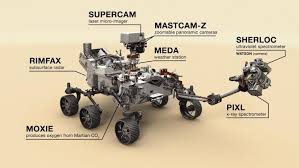
GDMS technology supports the operation of Perseverance’s advanced scientific instruments, including:
-
Mastcam-Z: High-resolution cameras for panoramic and stereoscopic imaging
-
SuperCam: Rock and soil analysis using laser-induced breakdown spectroscopy
-
PIXL (Planetary Instrument for X-ray Lithochemistry): Detailed elemental composition mapping
-
SHERLOC (Scanning Habitable Environments with Raman & Luminescence for Organics & Chemicals): Detects organic compounds and biosignatures
-
MOXIE (Mars Oxygen In-Situ Resource Utilization Experiment): Demonstrates oxygen production from CO₂
Without reliable communications and data systems, the results from these instruments could not be transmitted back to Earth for analysis.
The Importance of Industry Partnerships
NASA’s collaboration with GDMS highlights the importance of public-private partnerships in space exploration. Key benefits include:
-
Access to proven, mission-ready technologies
-
Expertise in military-grade communications and control systems
-
Reduced risk and cost for complex missions
-
Accelerated innovation by combining government science with commercial engineering
Such partnerships are becoming increasingly common as NASA pursues more ambitious missions, including Artemis lunar exploration and future Mars human missions.
Milestones Achieved on Mars
Since landing in Jezero Crater, Perseverance has:
-
Conducted multiple drill and sample collection operations
-
Captured high-resolution images of Martian rock formations
-
Deployed the Ingenuity helicopter, which has performed dozens of successful flights
-
Delivered continuous data streams to mission control via GDMS-supported communication systems
These achievements validate the robustness of the technology and the effectiveness of industry collaboration.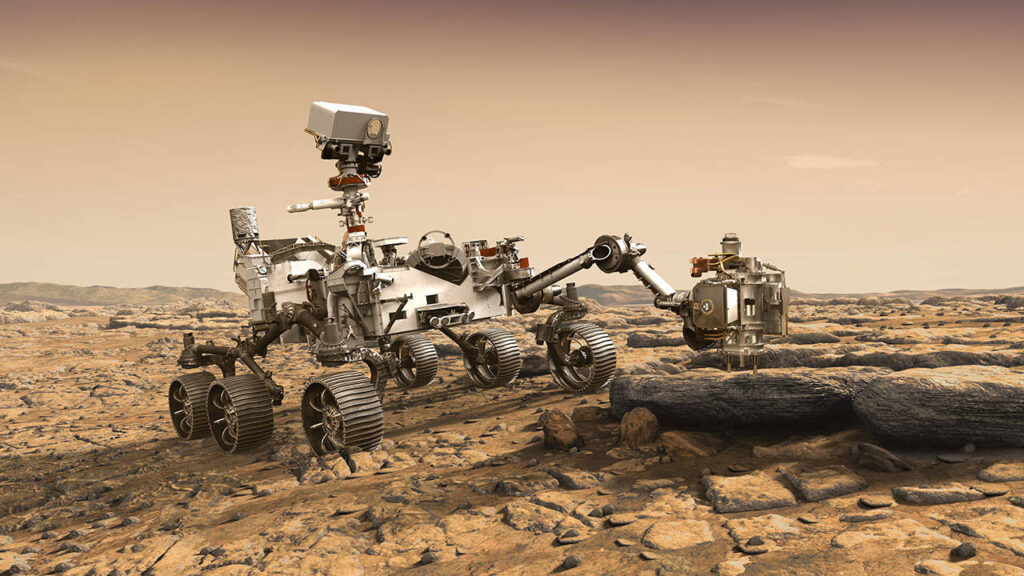
The Ingenuity Helicopter Connection
Ingenuity, the small Mars helicopter, relies indirectly on GDMS systems. While its flight control is autonomous, communication with Earth passes through:
-
Perseverance’s onboard relay system
-
Mars orbiters for data transmission
-
Earth-based mission control
This coordination demonstrates the integration of multiple systems working seamlessly, a testament to GDMS engineering and reliability.
Future Implications for Mars Exploration
GDMS technology on Mars 2020 lays the groundwork for future missions:
-
Sample Return Missions: Perseverance is collecting rock samples that could eventually be returned to Earth, requiring robust tracking, storage, and communication systems.
-
Human Exploration: Communication, navigation, and environmental resilience technologies will be critical for astronauts living and working on Mars.
-
Autonomous Systems: Lessons learned from Perseverance’s autonomous navigation will inform the development of next-generation Mars rovers and robotic explorers.
By demonstrating that commercial-grade technology can operate effectively in Mars’ hostile environment, GDMS helps pave the way for more frequent and complex missions.
Conclusion
The Mars 2020 mission represents a milestone in human exploration of the Red Planet, and General Dynamics Mission Systems’ contributions are a cornerstone of its success. From communications and data management to autonomous navigation and environmental resilience, GDMS technology ensures that Perseverance can perform groundbreaking scientific research while sending high-quality data back to Earth.
By combining NASA’s scientific vision with industry-grade technology, the Mars 2020 mission demonstrates the power of collaboration between government and private enterprise. The knowledge and experience gained will not only advance our understanding of Mars but also prepare humanity for the next era of exploration—sustained human presence on the Moon and eventually Mars.
As Perseverance continues to explore Jezero Crater and prepare for future sample return missions, GDMS technology remains a critical enabler, ensuring that each discovery, image, and data set reaches Earth safely. This mission is a vivid reminder that the Red Planet is no longer just a distant dream—it is a destination within our technological reach.
Read Also: Keep your face towards the sunshine and shadows will fall behind you
Watch Also: https://www.youtube.com/@TravelsofTheWorld24





Leave a Reply