
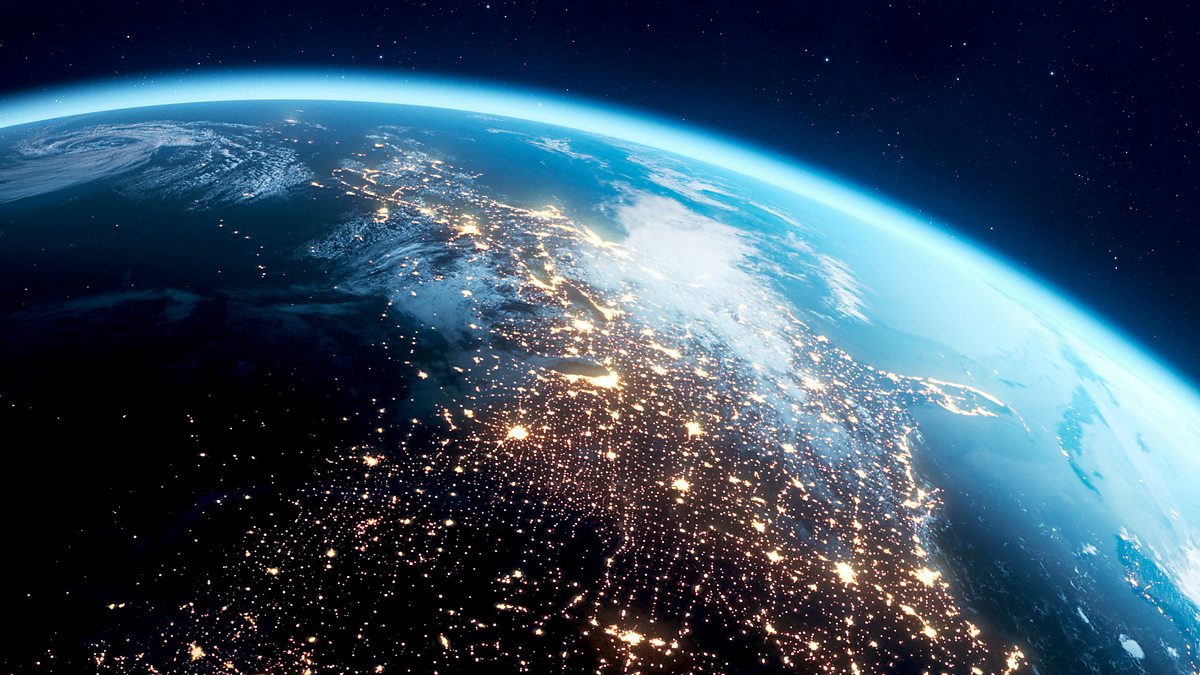
NASA study reveals when life on Earth will become impossible
A groundbreaking collaboration between NASA and Japanese researchers has pinpointed exactly when our planet will no longer be able to sustain life as we know it. The answer might surprise you with its distant timeline, but the scientific certainty behind it is both fascinating and sobering.
The billion-year countdown begins
You might have imagined Earth’s end coming from a massive asteroid, alien invasion, or even rogue AI taking over the world. While those scenarios remain possible, they’re unpredictable. What NASA researchers and scientists from Tōhō University in Japan have discovered is far more inevitable – and surprisingly gentle.
Avatar 3 reveals an intense excerpt announcing a monumental show on Pandora
Tom Cruise wins an Oscar and reminds us why he still dominates the ceremony even without a nomination
Their comprehensive study reveals that life on Earth will gradually suffocate due to oxygen depletion in approximately one billion years. Before you start panicking, remember that’s roughly 50 million generations from now. Your great-great-great (add about 49,999,950 more “greats”) grandchildren might need to worry about this, but you certainly don’t.
The culprit behind this slow extinction? Our very own Sun. As our star ages, it will become progressively hotter, setting off a chain reaction that will ultimately strip Earth of its life-sustaining atmosphere.
How the Sun will slowly cook our planet
The carbon dioxide disappearing act
Here’s where the science gets interesting. As the Sun grows hotter over the next billion years, it will gradually consume all the carbon dioxide (CO₂) in our atmosphere. You might think, “Great! No more greenhouse gas problems!” But hold that thought.
Without CO₂, plants can’t perform photosynthesis. No photosynthesis means no oxygen production. It’s like pulling the plug on Earth’s life support system, one molecule at a time.
The domino effect of atmospheric collapse
Once oxygen levels plummet, several catastrophic changes will cascade through our planet’s systems:
• The ozone layer will disappear, exposing Earth’s surface to deadly solar radiation
• Methane levels will skyrocket, accelerating the atmospheric transformation
• Surface temperatures will become incompatible with complex life forms
• Only anaerobic microorganisms might survive in isolated pockets
Think of it as Earth slowly reverting to its original state from billions of years ago – a barren, rocky planet with no signs of the incredible biological diversity we see today.
When will this transformation begin?
According to the research team, this atmospheric shift could start in as little as 10,000 years. In human terms, that’s an eternity – about 400 generations. But in planetary time scales, it’s barely a blink.
Once this process begins, there’s no going back. The researchers are adamant about this point: the slow countdown to Earth’s biological extinction will be irreversible. It’s not like flipping a switch; rather, it’s more like watching a candle slowly burn down to its base.
A philosophical wake-up call
Life’s precious fragility
This study serves as a powerful reminder of how extraordinary and temporary life on Earth really is. We often get caught up in daily routines, quarterly earnings, and weekend plans. How often do you step back and marvel at the incredible cosmic coincidence that allows you to read these words right now?
The research highlights what scientists call the “Goldilocks zone” – that perfect balance of conditions that makes Earth just right for life. Too hot, too cold, too much radiation, too little oxygen – any number of factors could have prevented life from emerging or thriving here.
Read Also: Keep your face towards the sunshine and shadows will fall behind you
Putting human timescales in perspective
When you consider that modern humans have only existed for about 300,000 years, and recorded history spans roughly 5,000 years, a billion-year timeline seems almost incomprehensible. Yet this research gives us something unique: a definitive expiration date for life on our planet.
Does this knowledge change how we should live? Some philosophers and scientists argue it should inspire us to treasure our time here even more. Others suggest it provides perspective on our current environmental challenges – while climate change is urgent and real, Earth’s capacity to support life extends far beyond our immediate concerns.
A Cult Science Fiction Soundtrack Celebrates Its 40th Anniversary and Remains One of the Most Addictive in Cinema
The new images from Christopher Nolan’s adventure film finally reveal Zendaya and Robert Pattinson in The Odyssey
What this means for humanity’s future
Before you start feeling too melancholic about Earth’s distant demise, consider this: if humanity survives for even a fraction of that billion-year timeline, we’ll likely have developed technologies and capabilities beyond our current imagination.
Space exploration, terraforming other planets, or even finding ways to extend Earth’s habitability – who knows what solutions future civilizations might discover? After all, we’ve gone from discovering fire to landing on the Moon in just a few thousand years.
The NASA-supported study doesn’t just predict doom; it provides a cosmic timeline that puts our existence into perspective. We’re living during an incredibly rare and precious period in Earth’s history when conditions are perfect for complex life to flourish.
Perhaps the most important takeaway isn’t about Earth’s eventual fate, but about appreciating the remarkable present moment we’re experiencing. In a universe that’s mostly cold, dark, and empty, we’re living on a vibrant, life-filled world during its biological prime.
Watch Also: https://www.youtube.com/@TravelsofTheWorld24





Leave a Reply