
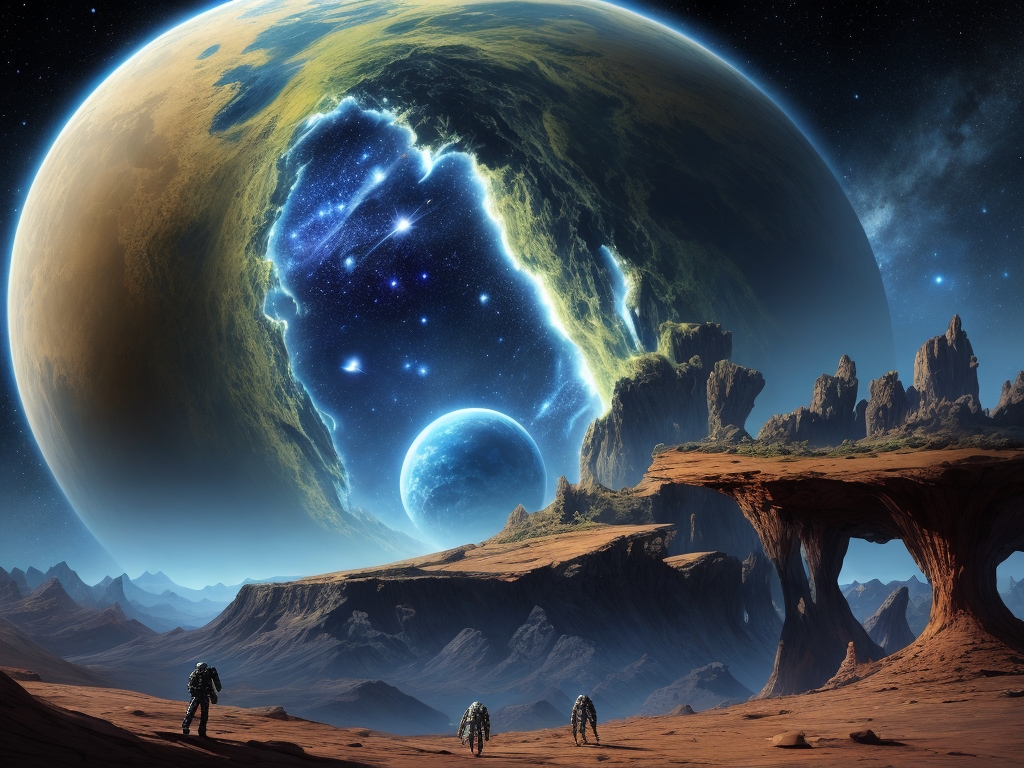
The possibility that we are not alone in the universe has inspired philosophers, scientists, writers, and dreamers alike. From ancient folklore to blockbuster films, from government declassification to eerie crop circles, aliens occupy a unique space where myth and speculation intersect with observable reality. The cultural narrative surrounding aliens is as much about us—our fears, hopes, and imagination—as it is about extraterrestrial life itself. In exploring alien myths, we encounter a strange tapestry of truths, misconceptions, and compelling fiction that reveals deep aspects of the human condition.
1. Ancient Beliefs and Early Encounters
Long before modern science emerged, ancient civilizations interpreted the sky through myth and religion. Celestial phenomena—such as comets, meteor showers, and planetary alignments—were often seen as messages from gods or supernatural beings. While ancient texts do not describe aliens in the modern sci‑fi sense, they do reflect a belief in otherworldly visitors.
For example, ancient Indian epics like the Mahabharata and Ramayana reference flying chariots (Vimanas) with remarkable technological capabilities. Some modern interpreters read these passages as ancient accounts of spacecraft, though most historians view them as symbolic or mythological. Similarly, Mayan cosmology speaks of beings from the sky, and Sumerian tablets mention the Anunnaki, deities said to come from heaven. These stories, whether literal or figurative, showcase early human attempts to understand the cosmos and our place within it.
The common thread in these early narratives is a mixture of awe and reverence. The idea of beings beyond Earth challenged ancient thinkers to reconcile human existence with the vastness of the unknown. Although these stories bear little resemblance to contemporary UFO reports, they laid the groundwork for celestial mythology that would evolve over millennia.
2. The Birth of Modern UFO Lore
The current mythology of aliens began in earnest in the mid‑20th century. After World War II, rapid technological advancement and the dawn of the atomic age intensified public interest in space and the possibility of contact with extraterrestrial civilizations. In 1947, an event occurred that would become a cornerstone of UFO lore: the Roswell incident.
In Roswell, New Mexico, an object crashed in the desert. Initial military press releases identified it as a “flying disc,” but officials quickly retracted the statement, claiming it was a weather balloon. The incident lay dormant in public memory until the late 1970s, when authors and UFO enthusiasts revived it as evidence of a government cover‑up of alien contact. Whether the object was merely a balloon or something inexplicable, Roswell became synonymous with UFO mythology and contributed to widespread belief that authorities hide secret truths about extraterrestrials.
Shortly thereafter, reports of “flying saucers” and other unidentified aerial phenomena (UAPs) proliferated. Pilots, civilians, and military personnel described strange lights, rapid maneuvers, and objects moving in ways that defied conventional explanation. In the 1950s and 1960s, movies like The Day the Earth Stood Still and Close Encounters of the Third Kind captured public imagination, blending scientific intrigue with cinematic spectacle. These stories shaped an entire cultural perception of aliens—typically as intelligent, advanced, and curious observers of Earth.
3. The Science Behind the Search
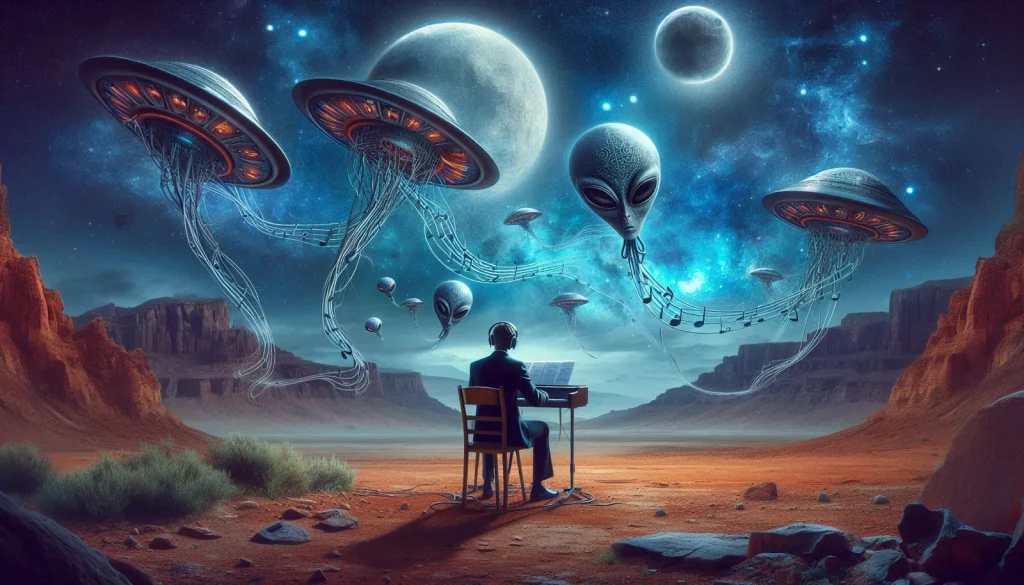
While much of popular alien mythology is rooted in speculation, serious scientific inquiry into extraterrestrial life is very real. Scientists ask fundamental questions: Is life unique to Earth? If not, where else might it arise? And how could we detect it?
In the search for life beyond Earth, researchers rely on astronomy, biology, chemistry, and planetary science. The discovery of exoplanets—planets orbiting stars outside our solar system—has been one of the most significant developments in recent decades. Thousands of these worlds have been identified, and many lie within their star’s “habitable zone”—a region where conditions might support liquid water, a key ingredient for life as we know it.
NASA’s Mars rovers, such as Perseverance, are actively searching for signs of ancient microbial life by analyzing rock samples and environmental conditions. Meanwhile, missions to icy moons like Europa and Enceladus focus on subsurface oceans that may harbor life. These scientific efforts are grounded in evidence and hypothesis testing, not sensational claims of flying saucers. Although no definitive proof of extraterrestrial life has yet been found, scientists continue to explore promising environments in our solar system and beyond.
The Search for Extraterrestrial Intelligence (SETI) uses large radio telescopes to listen for deliberate signals from distant civilizations. While the absence of confirmed signals does not rule out life elsewhere, it does highlight the vastness and silence of the cosmos. Scientists also study extreme environments on Earth—boiling hot springs, deep‑sea vents, arid deserts—to understand how life might survive under conditions previously considered uninhabitable.
4. Alien Abductions and Personal Testimonies
Perhaps the most controversial aspect of alien mythology involves claims of personal contact or abduction. Starting in the 1960s and 1970s, individuals began reporting experiences in which they were allegedly taken aboard alien spacecraft, subjected to medical examinations, and returned without explanation. One of the most famous accounts is that of Betty and Barney Hill, who in 1961 claimed to have been abducted by extraterrestrials while driving through rural New Hampshire.
Such testimonies often share common elements: bright lights, missing time, strange beings, and vivid dreams or memories recovered under hypnosis. Skeptics argue that these experiences are more likely products of sleep paralysis, false memory, or psychological phenomena rather than literal encounters with extraterrestrials. Sleep paralysis, for example, can produce vivid hallucinations, a feeling of being trapped, and a sense of an unseen presence—experiences that closely resemble many abduction narratives.
Nevertheless, these personal stories have become deeply embedded in alien lore and served as inspiration for films like Fire in the Sky and The X‑Files. Whether taken literally or symbolically, abduction narratives reveal something profound about fear, identity, and the human psyche. They reflect a desire to make sense of the inexplicable, even at the expense of empirical evidence.
Read Also: Keep your face towards the sunshine and shadows will fall behind you
5. Government Disclosure and Declassification
For decades, the idea that government agencies conceal evidence of alien contact has fueled conspiracy theories. Declassified documents and public statements by officials in recent years have only intensified public interest. In 2020 and 2021, the U.S. Department of Defense and other agencies released information regarding unidentified aerial phenomena encountered by military pilots and sensors. These reports confirmed that certain sightings could not be easily explained with current technology or known natural phenomena.
However, it is crucial to recognize the distinction between “unidentified” and “extraterrestrial.” An object or phenomenon that defies explanation is not necessarily of alien origin—it simply means that more data and analysis are needed. Some unidentified phenomena may ultimately be advanced human technology, atmospheric anomalies, or instrumentation errors.
Public hearings and media coverage of UAP reports brought renewed attention to the subject, encouraging transparency and scientific investigation. These disclosures blur the line between myth and reality in intriguing ways. They demonstrate that governments and researchers take reports of unexplainable phenomena seriously, even if definitive conclusions remain elusive.
6. Fiction’s Role in Shaping Belief
At the heart of alien mythology lies fiction—stories that stretch the imagination and probe deep questions about existence. Science fiction literature and film have given us a rich gallery of alien representations: from the benevolent E.T. and the wise Vulcans to the hostile Xenomorphs and inscrutable monolith‑builders of 2001: A Space Odyssey.
Fiction does not merely entertain; it reflects cultural anxieties and aspirations. During the Cold War, alien invasion stories mirrored fears of foreign threats and nuclear annihilation. In more recent times, narratives of alien contact often explore themes of unity, environmental stewardship, or technological transcendence. For example, stories about peaceful extraterrestrials who teach humanity to overcome conflict echo a universal longing for cooperation in a world fraught with division.
Science fiction also serves a practical purpose: it stimulates curiosity about science and inspires future generations of scientists and engineers. Many researchers in astronomy, physics, and aerospace fields cite science fiction as an early influence. Fiction pushes boundaries, prompts questions, and encourages exploration of possibilities that science has yet to confirm—or even conceive.
7. Why Alien Myths Persist
Why do alien myths endure across cultures and generations? Part of the answer lies in human psychology. We are pattern‑seeking creatures who dislike uncertainty. When faced with unexplained phenomena—whether lights in the sky or strange experiences in the night—many prefer stories that provide meaning, order, or excitement.
Alien myths also tap into fundamental existential questions: Are we alone? What is life? What will our future become? These questions have no easy answers, but aliens provide a narrative lens through which we examine them. Myths give shape to the unknown and allow us to grapple with ambiguity creatively.
Another reason alien mythology persists is media reinforcement. News stories, films, documentaries, and internet forums continuously recycle and reinterpret alien themes. Viral videos purporting to show UFOs or extraterrestrial life attract massive attention, regardless of credibility. Social media amplifies speculation, often blurring lines between fact and fiction. As a result, alien myths evolve rapidly, mutating with cultural trends and technological shifts.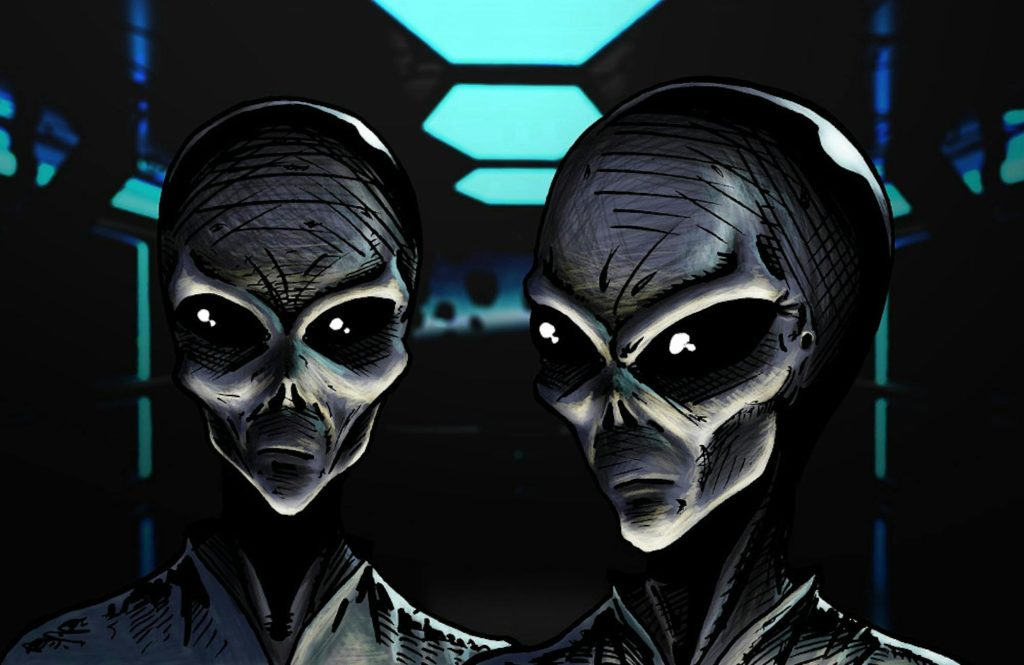
8. The Future of Alien Exploration
Looking forward, the search for extraterrestrial life will likely become more sophisticated and evidence‑based. Advancements in telescope technology, space probes, and analytical tools could yield critical breakthroughs. The James Webb Space Telescope, for instance, has provided unprecedented views of distant exoplanets, enabling scientists to analyze atmospheric composition for signs of life‑friendly conditions.
Future missions to Mars, Europa, Titan, and beyond may uncover biosignatures or even direct evidence of microbial life. Meanwhile, interstellar probes and advanced radio astronomy continue the search for intelligent signals from distant civilizations. Even if we never encounter beings with human‑like intelligence, the discovery of any life beyond Earth would transform our understanding of biology, evolution, and existence.
As the scientific search progresses, the myths that surround aliens may shift too. What was once pure speculation could become grounded in data and discovery. Or perhaps the mystery itself—what we do not yet know—will always be as compelling as any answer.
9. Conclusion: Between Myth and Reality
Alien myths are an amalgam of strange truths, speculative interpretation, and vivid fiction. Some elements are rooted in historical curiosity and scientific intrigue; others grow from imagination, fear, and storytelling. While there is no confirmed evidence of extraterrestrial visitation, the search for life beyond Earth remains one of humanity’s most profound scientific endeavors.
The enduring fascination with aliens speaks to our desire for connection, our fear of the unknown, and our unyielding pursuit of knowledge. Whether as a topic of serious scientific investigation or fertile ground for fiction, the idea of extraterrestrial life invites us to expand our horizons—both outward into the cosmos and inward into the essence of what it means to be human.
In the end, aliens may be real, fictional, or somewhere in between—but the myths they inspire tell us more about ourselves than about the distant reaches of space.
Watch Also: https://www.youtube.com/@TravelsofTheWorld24







Leave a Reply