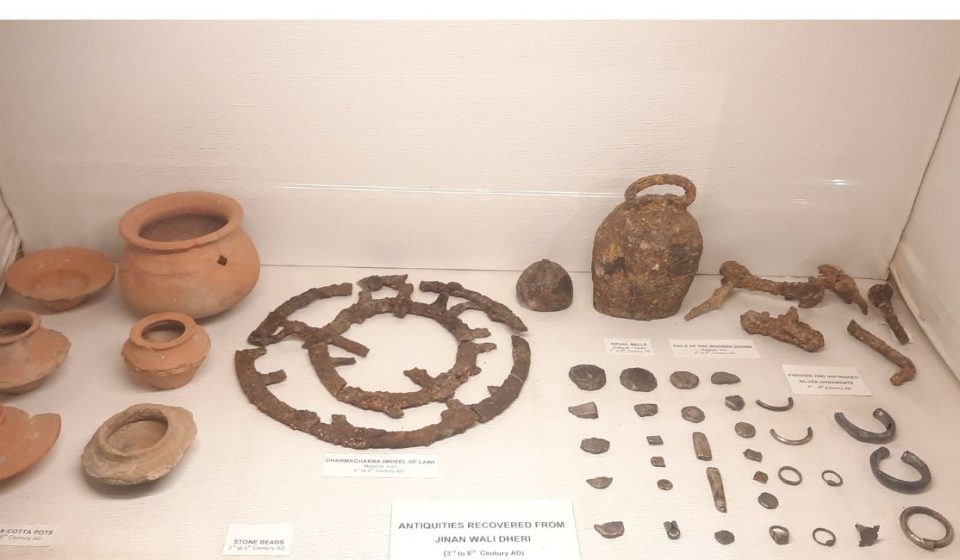

The ‘Mound of Demons’ – Life and Prayer in the Buddhist Monastery of Jinnan Wali Dheri. This case offers a distinctly different tenor from the previous cases. The figures do not possess a halo, are not of Buddhas and have no face. What you will encounter is only some corroded iron objects, which are essentially pots whose rim has crumbled, and a Bell in the iron material in an unmistakably shaped wheel of the dharmachakara. Apart from that, one can witness stone beads, numerous small silver objects, completed as well as some incomplete items, resembling the wares in a craftsman’s house.
A plaque is pasted below these items, which informs one with only two words as the description of the articles, namely “Antiquities from Jinnah Wali Dheri”. By this, one also happens to feel this as the humanest case in the museum. History Named in Fright. However, what is remarkable is the name of this monastery. “ According to locals, the site gained the appellation owing to several skeletons, believed to be of jinns or spirits that haunted the place.
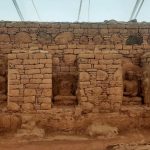
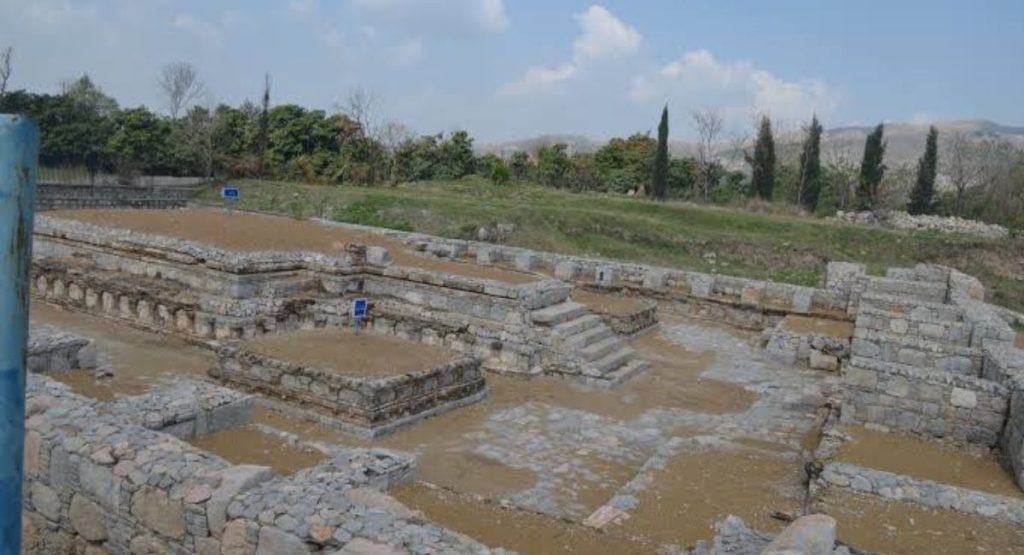
People stayed away from this sacred place for decades, even before its archaeological exploration, until the site yielded what was actually stored in it. A New Identity by Discovery As previously narrated, when the Archaeological Department began digging at the site in the beginning of the 21st Century, they uncovered 17 cells of a Buddhist Monastery and stupa complex with a large stupa, smaller stupas around, and a central hall. What sets Jinnah Wali Dheri apart from its counterpart, such as Jaulian, is not its walls lined with seated Buddhas but its murals inside the monastery’s corridor, paintings of the Buddha and devotees.
The antiquities displayed in the showcase depict the everyday life of those associated with this Buddhist monastery, be they monks or worshippers.
These archaeological pieces comprise coins from the era of Kushans, as well as a coin that was later in the circulation of White Huns, along with other artefacts such as pots, jewels, bowls and jars, which are at the Taxila Museum. The Details to Understand This is the picture of the items in one showcase that offer a detailed glimpse into the daily life and prayer in the Buddhist monastery of Jinnah Wali Dheri that flourished in the 3rd to 8th Centuries AD.
Read more at: https://www.discovernewsdaily24.com/taxila-museum-two-thousand-years-in-a-single-garden/
The clay pots with faded colours on the left in the 3rd-6th Century AD give you a sneak glimpse into the livelihood of monks who were residing in 17 cells for storing edible items like cereals. The iron wheel that we notice at the centre of the display is officially the dharmachakra, which represents the Buddha’s first sermons.
In this frame, it is shown as an incomplete, somewhat skeletal iron wheel of the Buddha’s first preachings, and was the centre piece for devotional purposes. The copper ritual bells, along with iron nails, dated in the 4th to 5th Centuries AD, testify to the fact that bells were used in the daily ritual activities. The nails, again of the iron material, probably were used for fastening wooden doors that once stood tall, guarding the cells of the monks. However, one must give preference to the various shapes and sizes of the complete and incomplete silver ornaments that are lined up as a whole in the showcase (3rd-5th Centuries AD), since their number and assortment is so huge that they might have a connection with craftsmen working in this monastery or pilgrims’ donations that were turned into devotional artefacts.
Reopening to Life After centuries of abandonment, of being secluded because of superstitions about jins and spirits, Jinnah Wali Dheri now has entered the realm of life again in its truest sense and is now open to people. In 2012, a US-funded site was thrown open to visitors. What was for centuries the subject of the village’s fright tales is currently a symbol of the domestic reality of a monastery. The humdrum reality of monks who just wanted to survive, and as the world around them evolved in leaps and bounds, were lost in the sands of time and became the ghost tales of a village, is evident from these pots, bells, beads and unfinished jewellery.
See Also: https://www.youtube.com/watch?v=iyU4cZor_Gg